
Emira
Revealed at Hethel on July 6, 2021, the Lotus Emira is a two-seat, mid-engined, rear-wheel-drive sports coupe. It introduced the Type 131 and represented an important step in Lotus design: the bodywork is more sculpted and usable than that of the Elise and Exige, while the cabin adds more comfort, technology, and everyday equipment. At launch, Lotus announced two petrol powertrains: a Toyota-associated 3.5-liter supercharged V6 and a 2.0-liter turbocharged four-cylinder supplied by Mercedes-AMG. Early cars were presented in First Edition specification, although model names, equipment, and engine availability varied by market and model year. The 2022 model year represents the Emira’s initial commercial period. Its significance lies in combining the traditional Lotus emphasis on steering response and chassis balance with a more modern grand-touring level of refinement.
What about the car you photographed?
Upload a photo to get a suggested make, model and likely year.
No account needed for the result · Publish only if you choose
Variants by year
Make: Lotus · Model: Emira
1 / 1 versions shown
2022
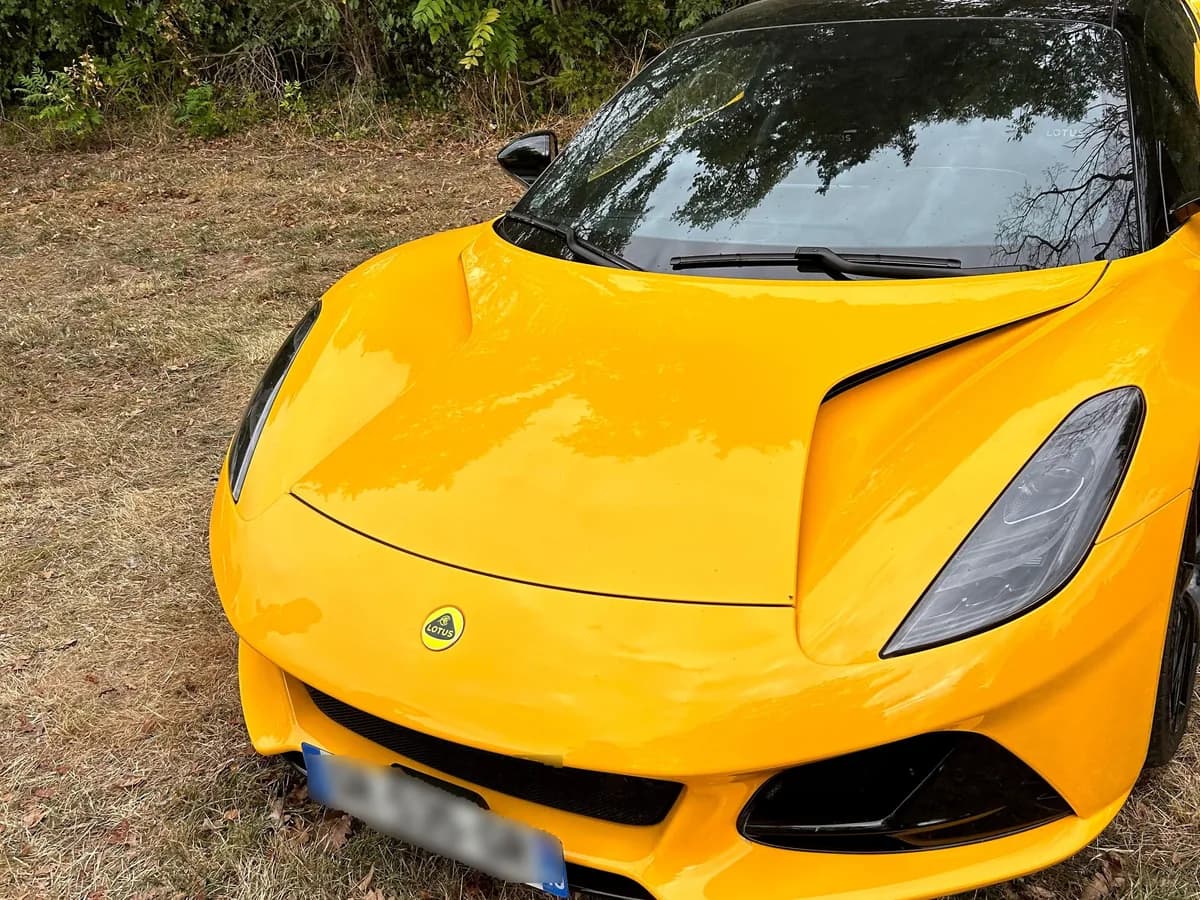
Lotus Emira photos
Model summary
Data from the ScanRacer library, organized to compare versions quickly.
Model introduction
Revealed at Hethel on July 6, 2021, the Lotus Emira is a two-seat, mid-engined, rear-wheel-drive sports coupe. It introduced the Type 131 and represented an important step in Lotus design: the bodywork is more sculpted and usable than that of the Elise and Exige, while the cabin adds more comfort, technology, and everyday equipment. At launch, Lotus announced two petrol powertrains: a Toyota-associated 3.5-liter supercharged V6 and a 2.0-liter turbocharged four-cylinder supplied by Mercedes-AMG. Early cars were presented in First Edition specification, although model names, equipment, and engine availability varied by market and model year. The 2022 model year represents the Emira’s initial commercial period. Its significance lies in combining the traditional Lotus emphasis on steering response and chassis balance with a more modern grand-touring level of refinement.
History
Lotus unveiled the Emira at Hethel in July 2021, as the company was preparing to end production of the Elise, Exige, and Evora. The new coupe was therefore intended to cover several roles at once rather than replace only one predecessor. Its development formed part of Lotus’s broader product renewal under new ownership, with the aim of reaching a wider audience while retaining a mid-engined layout and rear-wheel drive. Lotus also described the Emira as its final new petrol sports car before moving toward a more electrified range. That statement reflects the company’s launch positioning and should not be treated as a permanent summary of every later product-plan decision. Production of the first Emiras began in 2022 at Hethel in Norfolk. Early road cars used the 3.5-liter supercharged V6, available with a six-speed manual or, depending on specification and market, an automatic transmission. The 2.0-liter turbocharged four-cylinder later broadened the line-up and was paired with an eight-speed dual-clutch gearbox. Lotus also developed the Emira GT4 for customer racing. It is a separate competition specification, not simply a road-car trim level, and should be identified independently from standard road versions.
Generations
The Emira belongs to a single known generation, developed under the Type 131 code. Lotus’s official material presents it as an all-new car rather than as a new generation of an established model family already called Emira. It is therefore more accurate to describe the car as a first-generation or single-generation model than to list undocumented “Emira II” versions. Changes across the Emira’s life mainly concern engines, transmissions, equipment levels, and special editions. The underlying concept remains a two-seat coupe with a mid-mounted engine, rear-wheel drive, and a chassis intended to emphasize steering accuracy and balance. The supercharged 3.5-liter V6 was the launch configuration. A Mercedes-AMG-sourced 2.0-liter turbocharged four-cylinder later provided an alternative powertrain, coupled to an eight-speed dual-clutch transmission. Power figures and standard equipment can differ by market, model year, and trim, so specifications should not automatically be assigned to every car simply called an Emira. Within the supplied ScanRacer context, only one “Base” variant is listed for 2022. That catalog label should not be interpreted as proof that every market offered only one equipment or engine configuration in that year.
Key differences
The most important distinction between Emira cars is the powertrain. The supercharged 3.5-liter V6 was offered with a six-speed manual in some configurations and with an automatic transmission in others. The turbocharged 2.0-liter four-cylinder is paired with an eight-speed dual-clutch gearbox. These choices give the car different characters: the V6 delivers a distinctive mechanical response and sound, while the four-cylinder uses a more compact engine package and automated shifting. First Edition cars and later variants can also differ in wheels, brakes, interior equipment, upholstery, and chassis settings. Commercial names are not completely consistent across countries, however. Correct identification should therefore combine the model year, engine, gearbox, original documentation, and delivery market rather than relying on a badge alone. A 2022 car listed as “Base” in a catalog may represent a database classification rather than a universal description of every Emira specification sold that year.
Photo recognition
The Emira is first identified by its two-seat, mid-engined coupe profile, short front overhang, rear-set cabin, and large air intakes positioned behind the doors. Taut body surfaces and horizontal rear lamps emphasize its broad rear stance. The design carries visual themes introduced by the Evija electric hypercar, but the two cars belong to different categories and use different powertrain concepts. To distinguish an Emira from an Evora, focus on the side surfaces and front-end treatment. The Emira has more heavily sculpted side intakes and a newer cabin designed with greater everyday usability in mind. Inside, the central display, digital instrumentation, and modern center console help separate it from earlier Lotus sports cars. A V6 badge or visible exhaust outlets may provide useful clues, but they are not conclusive in every market or specification. The vehicle identification number, engine type, gearbox, and original build documentation provide a more reliable basis for confirming a particular car.
Important versions
The best-known early configuration is the Emira V6 First Edition, launched with the supercharged 3.5-liter V6 and an enhanced equipment package. It is one of the model’s principal launch forms, although availability and standard equipment differed between markets. The turbocharged 2.0-liter Mercedes-AMG four-cylinder represents the other major road-car powertrain and is distinguished by its eight-speed dual-clutch transmission. Lotus has also introduced later versions and special series, while the Emira GT4 was developed for customer racing. Those derivatives should not be projected backward onto the single “Base” variant recorded by ScanRacer for 2022, because catalog labels, market availability, and production timing are not necessarily identical.
References
- Lotus Emira: the most accomplished Lotus ever madeLotus Cars Press
- Lotus Emira model information and specificationsLotus Cars Press
- 2025 Lotus Emira Review, Pricing, and SpecsCar and Driver
- Lotus Emira brochureLotus Cars regional publication
- https://www.jdpower.com/cars/history/lotus/emirajdpower.com
- https://www.caranddriver.com/lotus/emira/caranddriver.com
- https://lotuspoland.com/en/emiralotuspoland.com
Technical specifications
Structured data available for versions linked to this model.
| Version | Power | Torque | Top speed | Drivetrain | Fuel |
|---|---|---|---|---|---|
| Base | 294.2 KW @ 6800 RPM400 HP @ 6800 RPM395 BHP @ 6800 RPM | 310 lb-ft @ - RPM420 Nm @ - RPM | 180 mph (290 km/h) | Rear Wheel Drive / 6-speed manual | Gasoline |
Frequently asked questions
- What years was the Lotus Emira produced?
- ScanRacer's referenced versions cover 2022.
- How many Lotus Emira examples are documented on ScanRacer?
- 6 published scans from 6 members, with the latest photo added in September 2026.
- What is the power output of the Lotus Emira?
- The sourced technical data lists 294.2 KW @ 6800 RPM400 HP @ 6800 RPM395 BHP @ 6800 RPM.
What about the car you photographed?
Upload a photo to get a suggested make, model and likely year.
No account needed for the result · Publish only if you choose