Lexus RC F 2014
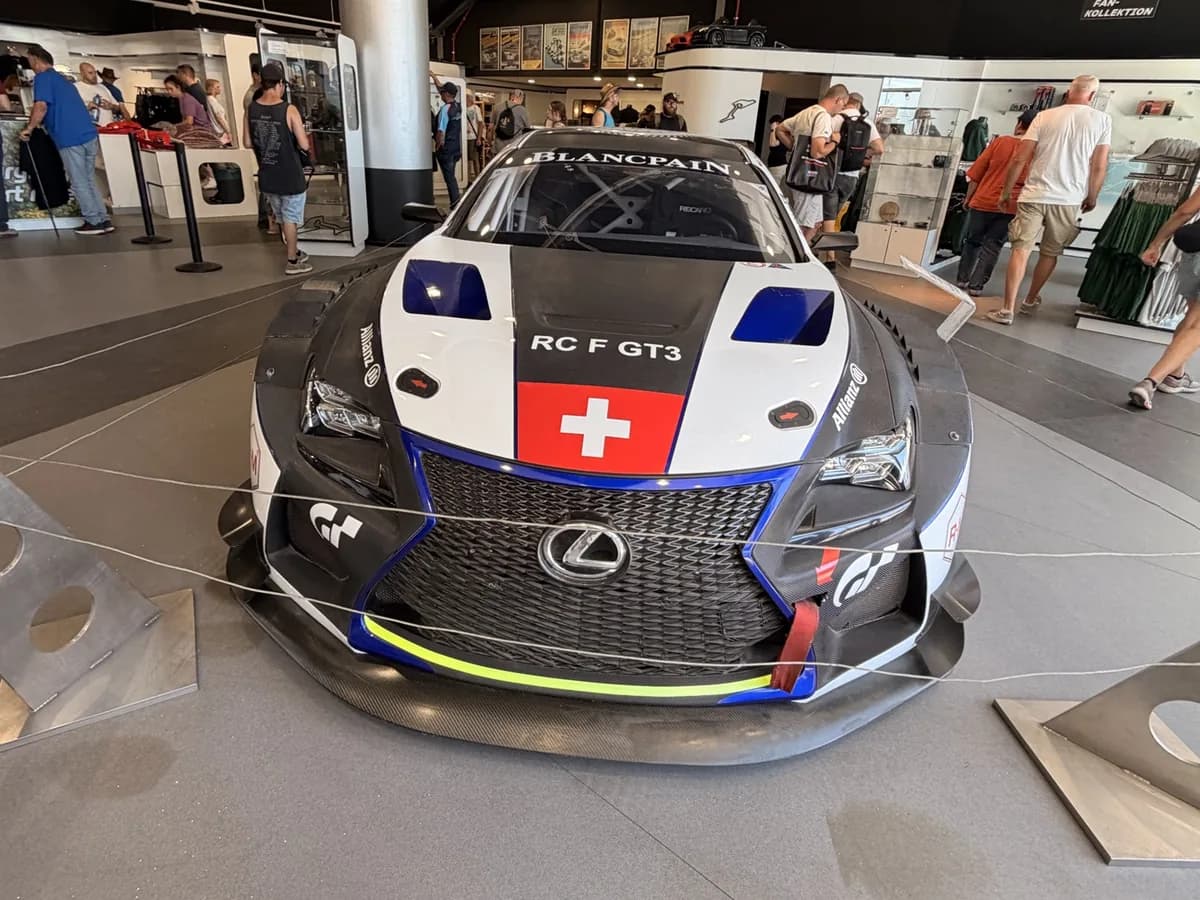
Unveiled at the Detroit auto show on January 14, 2014, the Lexus RC F was developed as the central performance model of the F range. It used the RC coupe as its starting point but added a naturally aspirated 5.0-liter V8, a wider body, upgraded brakes, revised suspension and more extensive aerodynamic work. Its visual identity included a double-spindle grille, cooling outlets, stacked quad exhaust outlets and an active rear spoiler. Power was sent to the rear wheels through an eight-speed automatic transmission. The RC F combined Lexus refinement with a distinctly sporting character, while its chassis, cooling systems and electronic controls were engineered for both road driving and occasional circuit use.
History
The RC F was developed from the RC coupe revealed at the Tokyo Motor Show in November 2013. Lexus positioned it as the successor to the performance work represented by the IS F and LFA, two cars that had established the brand’s sporting credibility. Its world premiere took place in Detroit in January 2014, with sales scheduled for the second half of the year. The Japanese launch followed on October 23, 2014. Converting the RC into an F model involved an updated 2UR-GSE V8, additional structural reinforcement, revised suspension components and dedicated cooling solutions. Lexus also developed an optional torque-vectoring differential that could vary the drive force between the rear wheels according to the selected mode. The result was intended to be a fast grand-touring coupe with the stability, braking capability and electronic control systems required for circuit driving.
Latest scans
Photos added by the community for this page.
Anecdotes
The F designation refers to Fuji Speedway, the Japanese circuit used by Lexus for part of its high-speed development work. During testing, the RC F also completed extensive running at the Nürburgring. Its engine could use an Atkinson-cycle combustion strategy under light loads before returning to Otto-cycle operation when performance was demanded. The approach was intended to combine the response of a naturally aspirated engine with improved efficiency in selected driving conditions.
Production
The RC F was unveiled in January 2014 and went on sale in Japan on October 23 of that year. Lexus announced a Japanese sales target of 30 units per month, but that figure was a commercial forecast rather than a worldwide production total. European launch preparations followed in late 2014, with UK customer deliveries scheduled to begin in February 2015. In North America, the car was presented and sold as a 2015 model even though its public debut took place in 2014. No reliable, clearly documented global production total has been used here. Figures repeated in classified advertisements or enthusiast forums are not sufficient evidence for an official production count.
Press reception
Automotive journalists generally credited the RC F with a strong mechanical identity and high build quality, while pointing to its considerable weight compared with several European rivals. Car and Driver praised the naturally aspirated V8, its sound and the coupe’s ability to build speed, but identified mass as the car’s main weakness. Road & Track highlighted the RC F’s composure on winding roads, rear traction on corner exit and stable chassis behavior, while noting that the automatic transmission and weight limited its ultimate circuit performance. The overall verdict was therefore mixed but respectful: the RC F was not always the quickest car on a specification sheet, yet it offered a distinctive engine, long-distance comfort and a convincing sporting grand-touring character.
Evolution
Variants
References
- LEXUS、高性能クーペRC FをワールドプレミアToyota Motor Corporation
Supports the January 2014 world premiere, RC-based development, F-brand context, engine, transmission, drivetrain, dimensions and carbon package.
- Lexus Launches All-new 'RC F' High-performance Coupe in JapanToyota Motor Corporation
Supports the October 23, 2014 Japanese launch, sales target, TVD modes, engine technology, brakes, wheels and launch specification.
- Lexus RC F Redefines the Daily Commute with Asphalt-Grinding Performance and Bold Head-Turning DesignLexus USA Newsroom
Supports the Detroit reveal date, design features, active rear spoiler, cooling ducts, forged wheels and interior details.
- The F Strikes Again: Lexus Unleashes the 2015 RC FLexus USA Newsroom
Supports the North American 2015 model designation, 467-hp rating, F-brand history, Nürburgring development and optional TVD.
- Lexus RC F: Functional BeautyLexus UK Media
Supports the design relationship with the LF-LC and LF-CC concepts, aerodynamic details, active spoiler operation and carbon-fiber weight reduction.
- 2015 Lexus RC F Tested!Car and Driver
Supports contemporary press evaluation of the V8, weight, acceleration, transmission and comparison with rivals.
- The Lexus RC F Is the Perfect Japanese Pony CarRoad & Track
Supports contemporary evaluation of road manners, track behavior, traction, weight, transmission and TVD.
- https://pressroom.lexus.com/2014-naias-lexus-rc-f-reveal/pressroom.lexus.com
Source found by OpenAI web search for this vehicle page.