
Murciélago
Unveiled at the Frankfurt Motor Show in September 2001, the Lamborghini Murciélago was the first entirely new car introduced during Lamborghini’s Audi-Volkswagen era. It became the brand’s flagship, using a longitudinally rear-mounted V12 and, according to Lamborghini, standard all-wheel drive. The original car used a 6.2-liter engine rated at 580 CV, while later derivatives added power, revised bodywork and weight-saving measures. Its name refers to a Spanish fighting bull remembered for surviving the arena because of its courage. Lamborghini identifies the Murciélago as a 2001–2009 flagship, with the range centered on coupé and roadster body styles. Development culminated in the LP640, LP650-4 Roadster and LP670-4 SuperVeloce. ScanRacer’s available model-year context runs from 2001 through 2009, covering the early coupé, roadster derivatives and later high-performance versions.
What about the car you photographed?
Upload a photo to get a suggested make, model and likely year.
No account needed for the result · Publish only if you choose
Variants by year
Make: Lamborghini · Model: Murciélago
8 / 8 versions shown
2009

2006
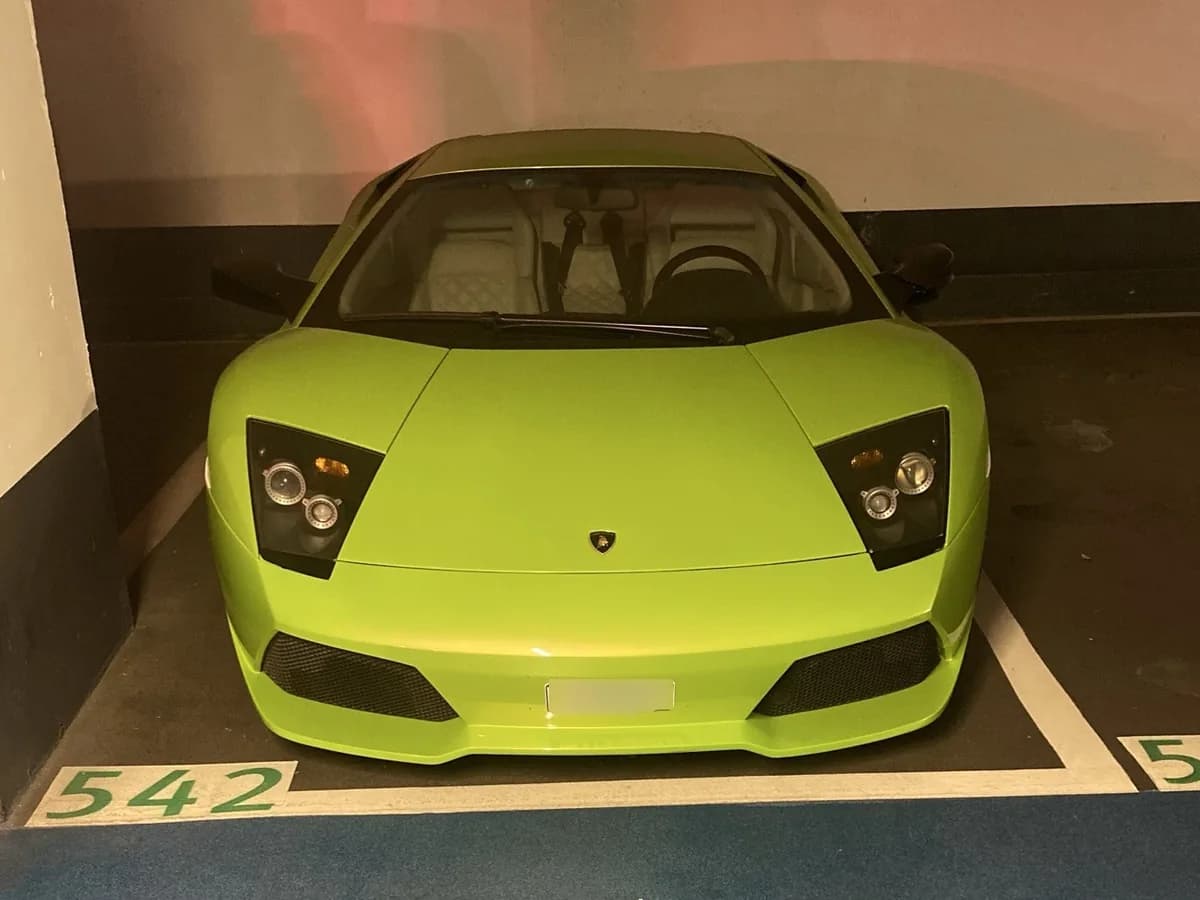 UR
2004

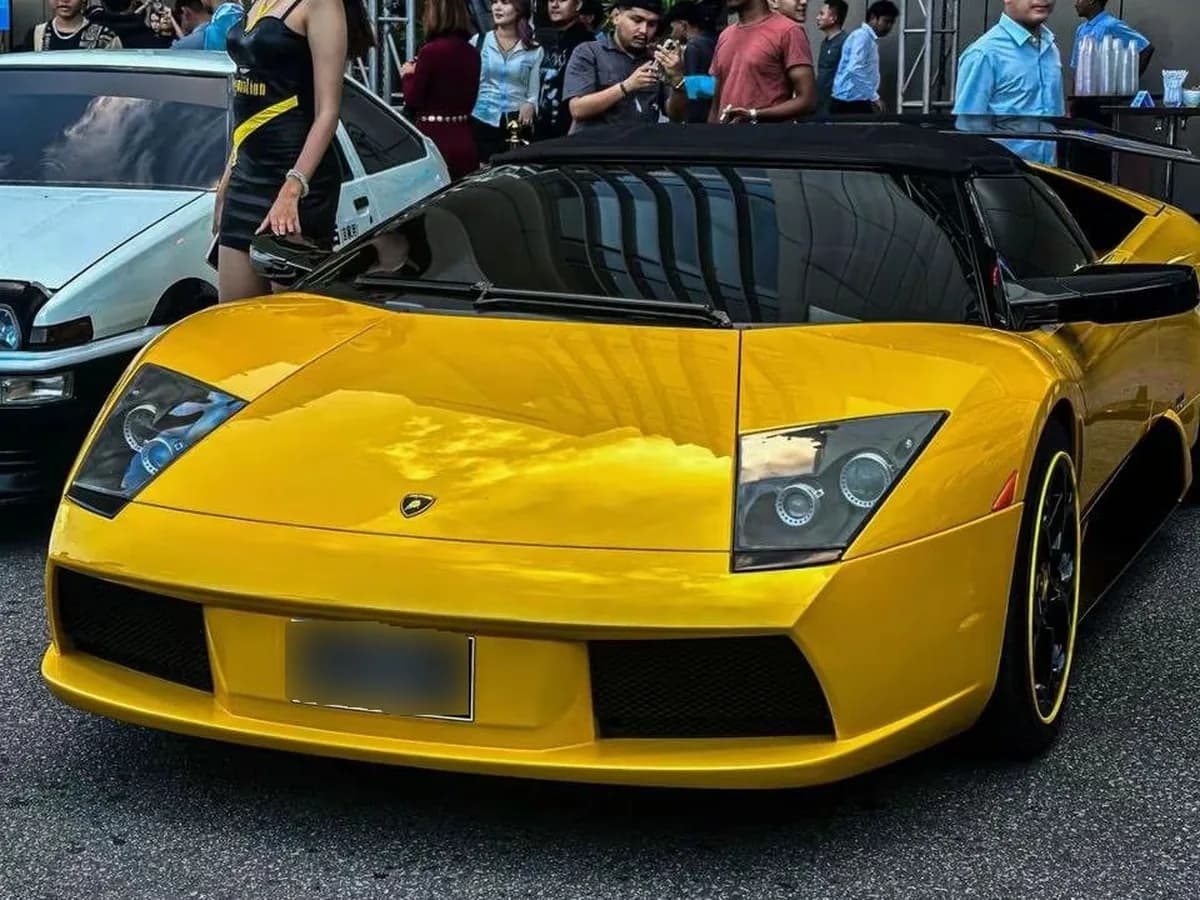
2002
 UR
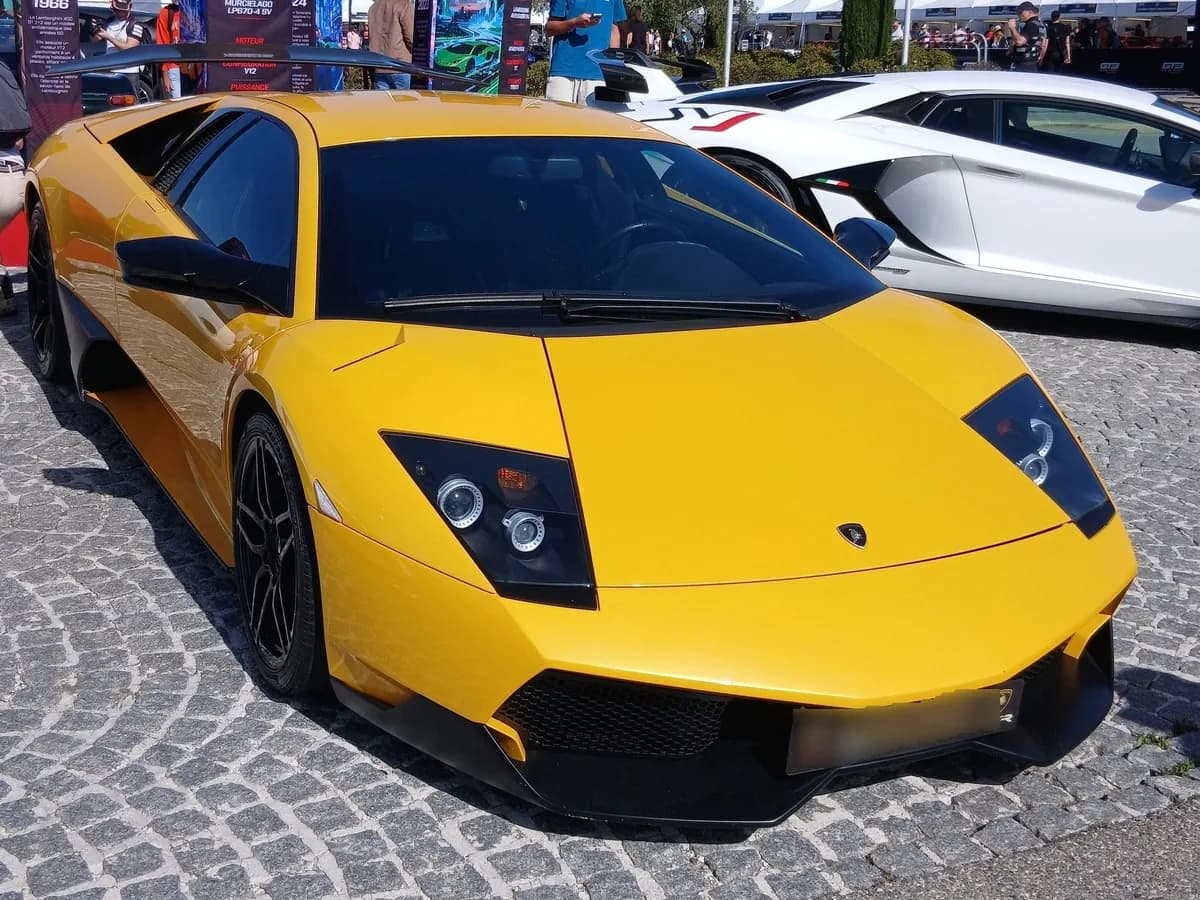
2001

Lamborghini Murciélago photos
Model summary
Data from the ScanRacer library, organized to compare versions quickly.
Model introduction
Unveiled at the Frankfurt Motor Show in September 2001, the Lamborghini Murciélago was the first entirely new car introduced during Lamborghini’s Audi-Volkswagen era. It became the brand’s flagship, using a longitudinally rear-mounted V12 and, according to Lamborghini, standard all-wheel drive. The original car used a 6.2-liter engine rated at 580 CV, while later derivatives added power, revised bodywork and weight-saving measures. Its name refers to a Spanish fighting bull remembered for surviving the arena because of its courage. Lamborghini identifies the Murciélago as a 2001–2009 flagship, with the range centered on coupé and roadster body styles. Development culminated in the LP640, LP650-4 Roadster and LP670-4 SuperVeloce. ScanRacer’s available model-year context runs from 2001 through 2009, covering the early coupé, roadster derivatives and later high-performance versions.
History
The Murciélago arrived in 2001, three years after Lamborghini joined the Audi-Volkswagen Group. Lamborghini describes it as the first entirely new model of that ownership period, while the Diablo still represented the company’s established V12 line. Luc Donckerwolke, who had overseen the Diablo’s redesign, was responsible for the Murciélago’s exterior design. The car retained a dramatic mid-mounted, longitudinally installed V12, while Lamborghini stated that permanent all-wheel drive was standard. At launch, its 6.2-liter V12 produced 580 CV. Lamborghini developed the model through a series of increasingly specialized derivatives rather than replacing it immediately. The roadster joined the range in the early 2000s, combining an open body with the company’s established twelve-cylinder tradition. The 2006 LP640 introduced a 640-CV engine along with extensive mechanical, bodywork and interior revisions. The LP650-4 Roadster represented a more exclusive and more powerful open-top interpretation, while the 2009 LP670-4 SuperVeloce focused on higher output, reduced weight and sharper performance. Lamborghini states that 4,099 Murciélagos were built before production ended. The Aventador, introduced in 2011, became its V12 successor. ScanRacer’s 2001–2009 range should therefore be read as the model’s principal production period in the supplied library context, not as a complete list of every limited edition or market-specific configuration.
Generations
The Murciélago was not officially divided into several generations with separate generation names. It is more accurate to describe one model family developed through successive phases. The first phase is the 2001 coupé, powered by a 6.2-liter V12 producing 580 CV. Its main visual identity includes the original body design, integrated side air intakes and the longitudinally mounted V12 with all-wheel drive. The next phase introduced the roadster and then the LP640 update. The LP640 was a substantial evolution rather than a wholly new generation: the engine grew to 6.5 liters and produced 640 CV, while Lamborghini specified broader mechanical, bodywork and interior changes. Both coupé and roadster versions were offered, with the open car receiving its own body and cabin treatment. The final phase centered on the SuperVeloce derivatives. The LP670-4 SV used a 6.5-liter V12 rated at 670 CV, combined with a claimed 100-kg weight reduction and extensive use of carbon fiber. Lamborghini’s historical specification lists 0–100 km/h in 3.2 seconds and a 342 km/h top speed. These phases are a practical editorial framework for understanding the model’s development; they should not be interpreted as official generation labels.
Key differences
Murciélago badges provide useful clues to the main technical differences. “LP” stands for “Longitudinale Posteriore,” referring to the engine’s longitudinal rear position. The number generally identifies the claimed output: the LP640 produces 640 CV, while Lamborghini lists 670 CV for the LP670-4 SV. The “-4” designation refers to all-wheel drive. The clearest body-style distinction is between coupé and roadster. The roadster replaces the fixed roof and uses bodywork and interior details tailored to the open configuration. The LP640 was more than a name change: Lamborghini described revisions to the mechanics, exterior design and cabin. The LP670-4 SuperVeloce added a stronger emphasis on outright performance through increased output, a claimed 100-kg weight reduction, carbon-fiber seat structures and more aggressive aerodynamic treatment. Limited editions, including the 40th Anniversary and LP640 Versace, should be treated separately from the regular production derivatives. Reliable identification requires checking equipment, factory documentation and original market specification. Paint color, aftermarket body parts or replacement wheels alone are not sufficient evidence of a factory special edition.
Photo recognition
Start identification with the overall shape: a two-seat supercar with a mid-mounted rear engine, very low proportions and Lamborghini’s characteristic scissor doors. The coupé has a fixed roof and a rear engine-cover treatment surrounding the back glass, while the roadster is immediately distinguished by its open cabin and dedicated rear structure. The side air intakes are another useful clue, although their design changed across the model’s development. The LP640 can usually be separated from the original car through revised exterior details and interior features, but exact equipment varied by market and specification. The LP670-4 SuperVeloce has a more overtly aggressive appearance, with larger aerodynamic elements, greater use of carbon fiber and a clear focus on weight reduction. Lamborghini also identifies carbon-fiber seat structures as part of the SV specification. Conversions require caution. A standard Murciélago fitted with an aftermarket exhaust, spoiler or wheels may imitate a higher-performance derivative. The chassis number, manufacturer plates and original delivery documentation are more reliable than visual details alone when confirming whether a car is an LP640, LP650-4 Roadster or LP670-4 SuperVeloce.
Important versions
The original 2001 Coupé is the starting point of the Murciélago family, using a 6.2-liter V12 rated at 580 CV. The Roadster followed with an open body and continued Lamborghini’s twelve-cylinder convertible tradition. The 2006 LP640 Coupé was the principal update, combining a 640-CV engine with mechanical and styling revisions. The LP650-4 Roadster offered a more exclusive interpretation of the open-top car. At the top of the regular range, the LP670-4 SuperVeloce added 670 CV, a claimed 100-kg weight reduction and carbon-fiber components. Lamborghini also identifies the 50-unit 40th Anniversary series and the 2006 LP640 Versace as notable special editions. These historical derivatives should be kept separate from the specific variants and model years represented in the supplied ScanRacer context.
References
- Lamborghini Murciélago: the first V12 engine of the new millenniumAutomobili Lamborghini
- Milestones: Murciélago, the expansionAutomobili Lamborghini
- Lamborghini Murciélago LP 640 CoupéAutomobili Lamborghini
- Lamborghini Murciélago RoadsterAutomobili Lamborghini
- Lamborghini Murciélago LP 670 SuperVeloceAutomobili Lamborghini
- Pre-Owned Lamborghini MurciélagoAutomobili Lamborghini
- https://preowned.lamborghini.com/es_es/models/murcielagopreowned.lamborghini.com
- https://www.lamborghini.com/it-en/news/lamborghini-murcielago-il-primo-motore-v12-del-nuovo-millenniolamborghini.com
Frequently asked questions
- What years was the Lamborghini Murciélago produced?
- ScanRacer's referenced versions cover 2001 - 2009.
- How many Lamborghini Murciélago examples are documented on ScanRacer?
- 11 published scans from 11 members, with the latest photo added in September 2026.
What about the car you photographed?
Upload a photo to get a suggested make, model and likely year.
No account needed for the result · Publish only if you choose