
Kia
Founded in Korea in December 1944 as Kyungsung Precision Industry, Kia began by producing bicycle parts before expanding into motorcycles, commercial vehicles and passenger cars. The company introduced its first passenger car, the Brisa, in 1974, then accelerated its international growth with the Pride from 1986-1987 and the Sportage in 1993. Kia’s transformation became especially visible during the 2000s, when design moved to the centre of its strategy and the company developed models specifically for Europe, including the cee’d. Today, Kia’s range covers city cars, sedans, SUVs, hybrid vehicles and battery-electric models. Its recent visual identity is guided by the “Opposites United” design philosophy, which uses contrasts between organic and technical forms, familiar proportions and more progressive details.
Models from A to Z
Amanti
Avella
Bongo
Borrego
Cadenza
Capital
Carens
Carnival

Ceed
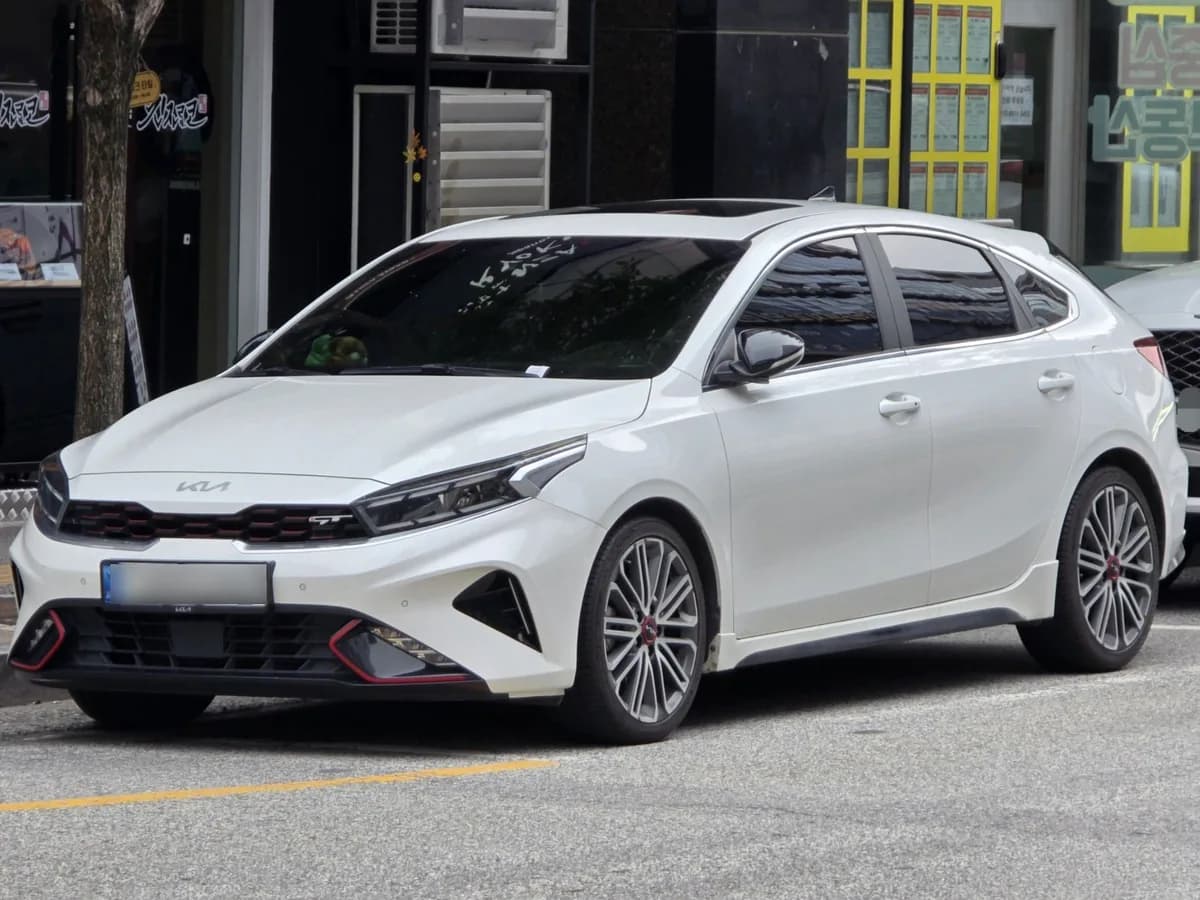
Cerato
Cerato Koup
Clarus
Concord
Credos
Elan
Enterprise
EV2
EV3
EV4
EV5

EV6
EV9

Forte
Forte sedan
Joice
K2
K3
K4
K5
K7
K8
K9
K900
KX Cross
KX1
KX3
KX5
KX7
Lotze
Magentis
Mentor
Mohave

Morning
Niro

Opirus

Optima
Pamax
Parktown
Pegas

Picanto
Potentia
Pregio
Pride
Qianlima
Quoris
Ray
Retona
Rio
Rondo
Sedona
Seltos
Sephia
Shuma
Soluto
Sonet

Sorento
Soul
Spectra
Sportage

Stinger

Stonic
Tasman
Telluride
Venga
Visto
X-Trek
Kia overview
Kia history
Kia’s history began in December 1944, when Kim Cheol-ho established Kyungsung Precision Industry. The company initially manufactured bicycle components, then introduced the Samchully bicycle in 1952 and the C-100 motorcycle in 1961. It later produced three-wheelers, trucks and engines before presenting the Brisa in 1974. Powered by an internally developed 1.0-litre engine, the compact Brisa became an important part of Korea’s early mass-motorisation period. During the 1980s, Kia returned to passenger cars with greater ambition. The Pride, produced from 1986 and exported internationally from 1987, became a major step in the company’s overseas expansion. In 1990, changing the corporate name from Kia Industries to Kia Motors reflected a clearer focus on automobiles. The Sephia, Kia’s first independently developed passenger car, entered production in 1992, followed by the Sportage in 1993. After financial difficulties in the late 1990s and Kia’s integration with Hyundai Motor in 1998, the company entered a period of substantial renewal. Peter Schreyer’s appointment in 2006 supported a design-led strategy. The Europe-focused cee’d, followed by vehicles such as the Soul, Niro and newer electric models, helped broaden Kia’s international profile. In 2021, the company adopted the shorter Kia name and introduced a brand direction increasingly centred on sustainable mobility.
Kia positioning
Kia initially built its reputation around accessible and versatile vehicles, but its positioning changed as the brand expanded internationally. The Pride and Sephia helped establish Kia in overseas markets, while the Sportage benefited from the growing demand for compact SUVs. In Europe, the cee’d represented an important step forward: it was designed, developed and built for European customers, particularly in the competitive C-segment. Since the 2000s, Kia has increasingly sought to differentiate itself through styling, equipment and warranty coverage rather than price alone. Its model mix includes city cars such as the Picanto and Rio, compact cars including the Ceed, Forte and K4, SUVs such as the Sportage, and electrified vehicles such as the Niro. The current strategy places greater emphasis on electrification, mobility services and more distinctive design. This does not make Kia a premium manufacturer across the entire range; it remains a mainstream brand, but one that has made a sustained effort to raise perceived quality, technology and visual appeal.
Recognizing a Kia in a photo
Identifying a Kia requires attention to generation and market, since names, engines and exterior details can differ between countries. Kia models from the 2000s are often associated with the “Tiger Nose” grille, which became a recognisable brand signature during Peter Schreyer’s design leadership. The grille is typically narrow and framed by swept-back headlamps, although its exact shape varies between sedans, SUVs and city cars. Recent Kia vehicles follow a different visual language through the “Tiger Face” and the “Opposites United” philosophy. Look for highly graphic daytime-running lights, sharply defined body surfaces, vertical or boomerang-style lighting signatures, and more assertive proportions on SUVs and electric vehicles. To distinguish models such as the Rio, Forte, Ceed and K4, the side-window outline, tailgate profile and rear-lamp design are usually more useful than the badge alone. Accurate identification still depends on the model year, body style and sales market, particularly for vehicles that changed names between regions or received different facelifts.
Important Kia models
Several models help trace Kia’s development. The Pride, introduced in the late 1980s, was a front-wheel-drive compact developed with Mazda and Ford and exported to the United States, Japan and Europe. It represents Kia’s transition toward a genuinely global automotive ambition. The Sportage, launched in 1993, was among the early compact SUVs designed with urban use in mind and remains one of the company’s long-running core nameplates. The Ceed, introduced in Europe in 2006 as the cee’d, was designed and built specifically for European customers. It strengthened Kia’s position in the compact-car segment. The Forte, Cerato and Rio represent compact sedans and small cars sold under different regional strategies, while the Optima served as a larger family sedan. The Niro, introduced from 2016, demonstrated Kia’s growing focus on hybrid powertrains and crossover practicality. More recent models such as the K4 and EV6 reflect changes in naming, body proportions and electrification. Together, these models show how Kia moved from value-oriented transportation toward a broader mainstream range with stronger design and technology ambitions.
References
- History | Kia Heritage ArchiveKia Corporation
- The Dream of Mobility on WheelsKia Heritage Archive
- A Renaissance Forged by Challenge and GritKia Heritage Archive
- Management as DesignKia Heritage Archive
- PrideKia Heritage Archive
- SportageKia Heritage Archive
- Ceed (1st Gen.)Kia Heritage Archive
- From Design to PhilosophyKia Corporation