
Grand Cherokee
The Jeep Grand Cherokee arrived as a 1993 model after a dramatic introduction at the 1992 Detroit auto show. Positioned above the Cherokee, it combined a unibody structure, a more refined cabin and genuine off-road ability. That formula helped establish the Grand Cherokee as one of the defining American SUVs of its era. Across successive generations, Jeep retained the model’s four-wheel-drive identity while steadily improving ride comfort, interior quality, safety equipment and electronic technology. The period covered here runs from the original 1993 ZJ through the final WK2 model years and the transition that began in 2021 with an all-new design. Equipment, drivetrains and trim names varied considerably by market and model year, so individual vehicles should be identified by their production specification rather than by the name alone. (media.stellantis.com)
What about the car you photographed?
Upload a photo to get a suggested make, model and likely year.
No account needed for the result · Publish only if you choose
Variants by year
Make: Jeep · Model: Grand Cherokee
6 / 6 versions shown
2021
2013
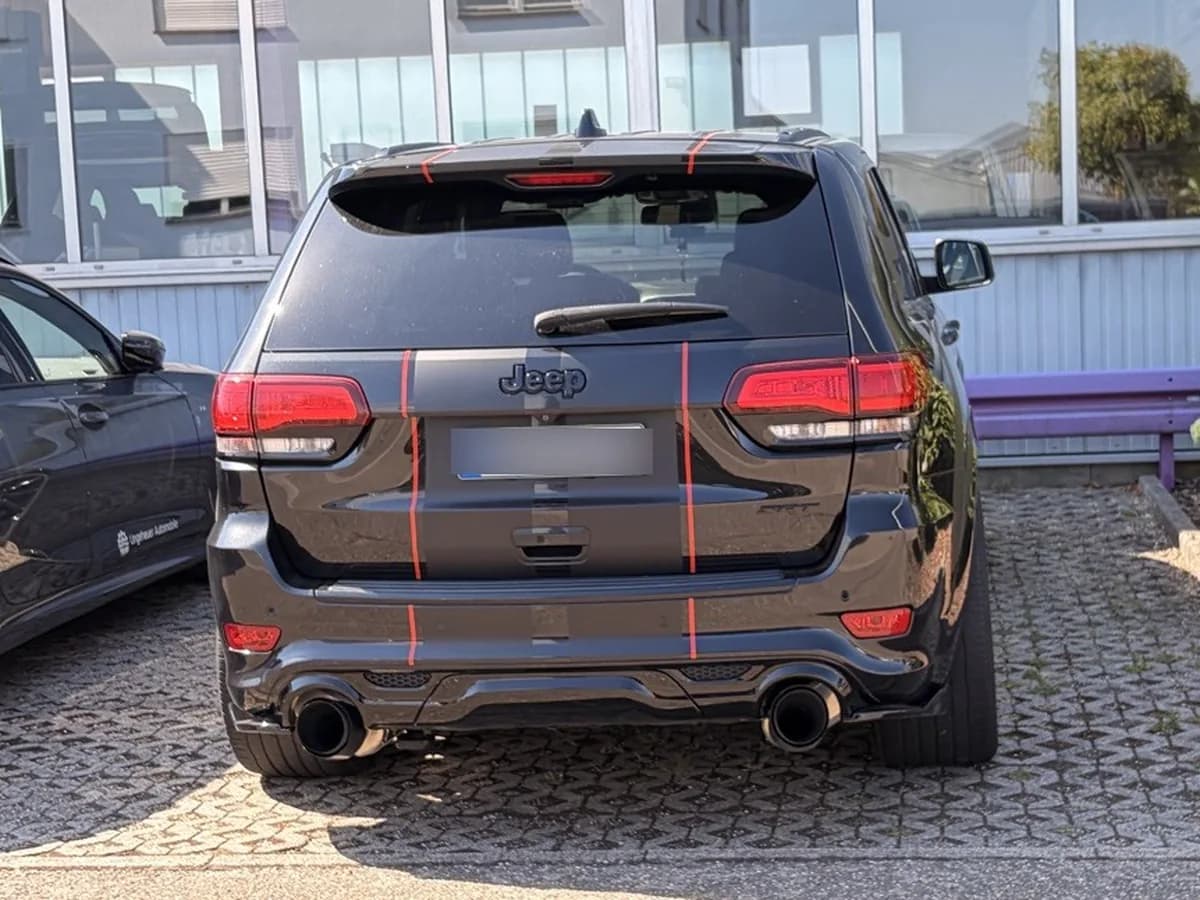
2010
2004
1998
1993
Jeep Grand Cherokee photos
Model summary
Data from the ScanRacer library, organized to compare versions quickly.
Model introduction
The Jeep Grand Cherokee arrived as a 1993 model after a dramatic introduction at the 1992 Detroit auto show. Positioned above the Cherokee, it combined a unibody structure, a more refined cabin and genuine off-road ability. That formula helped establish the Grand Cherokee as one of the defining American SUVs of its era. Across successive generations, Jeep retained the model’s four-wheel-drive identity while steadily improving ride comfort, interior quality, safety equipment and electronic technology. The period covered here runs from the original 1993 ZJ through the final WK2 model years and the transition that began in 2021 with an all-new design. Equipment, drivetrains and trim names varied considerably by market and model year, so individual vehicles should be identified by their production specification rather than by the name alone. (media.stellantis.com)
History
The Grand Cherokee was developed to replace the Grand Wagoneer with a more modern and upscale product. Its public debut on January 7, 1992, in Detroit became famous when an example was driven through the convention center’s glass entrance. Sold as a 1993 model, the ZJ introduced a formula that combined road comfort with serious off-road capability. Jeep highlighted its driver-side airbag, while its coil-spring suspension and multiple four-wheel-drive systems broadened the vehicle’s range of uses. (media.stellantis.com) The WJ, introduced for the 1999 model year, developed that concept with greater refinement and the Quadra-Drive system on selected configurations. The 2005 WK placed even more emphasis on road manners and offered, depending on specification, the 5.7-liter HEMI V8 and a performance-focused SRT8 derivative. (jeep.com) The next generation, launched for the 2011 model year, represented a major move upmarket. It introduced technologies such as Selec-Terrain and Quadra-Lift, followed later by Trailhawk and Trackhawk versions. In 2021, Jeep revealed an all-new generation, initially in three-row Grand Cherokee L form, making that model year a transition point between two distinct designs and engineering approaches. (jeep.com)
Generations
The first generation, identified by the ZJ code, mainly covers the 1993–1998 model years. It has relatively compact proportions, upright sides, the seven-slot grille and integrated bumpers. Grand Wagoneer and certain sport editions can complicate visual identification, however, so badges and equipment should also be checked. (jeep.com) The WJ covers 1999–2004. Its body is rounder and its cabin more carefully finished, while its overall shape remains clearly related to the ZJ. The WK, sold from 2005 through 2010, uses a more muscular design and an independent short-and-long-arm front suspension. It is commonly associated with HEMI engines and the SRT8 model, although powertrains and driveline combinations differed between markets. (jeep.com) The WK2 arrived for 2011 and gradually gained more sophisticated equipment, including Quadra-Lift air suspension and Selec-Terrain driving modes. Trailhawk, SRT and Trackhawk derivatives belong to this extended phase. In 2021, the Grand Cherokee L introduced a new generation with three seating rows; two-row models and launch timing varied by market, making the exact model year and body style important for identification. (jeep.com)
Key differences
The main generational differences involve structure, packaging and road behavior. The ZJ uses a boxier shape and a comparatively straightforward layout, while the WJ improves sound insulation, interior presentation and four-wheel-drive systems. The WK is distinguished by its independent front suspension and a stronger emphasis on road comfort without abandoning Jeep’s off-road focus. (jeep.com) The WK2 widens the gap with earlier models through more extensive electronics, systems such as Selec-Terrain and, on selected versions, Quadra-Lift air suspension. Trailhawk, SRT and Trackhawk derivatives serve very different purposes: technical off-road driving, road performance and outright power. The generation introduced in 2021 brought a new body and engineering package, including the three-row Grand Cherokee L. Exact equipment still depends on the market, production date and model-year specification. (jeep.com)
Photo recognition
To identify a Grand Cherokee, begin with the body shape and window proportions. The ZJ has relatively straight sides, thick pillars and integrated bumpers. The WJ uses rounder surfaces, softer-looking lamps and a more modern dashboard. The 2005 WK generally has more pronounced wheel arches and a sharper overall design; an SRT8 badge points to a performance model, although trim pieces may have been changed during the vehicle’s life. (jeep.com) The WK2 has a longer, lower-looking profile and usually features stretched headlamps. Trailhawk, SRT and Trackhawk badges can help, but they are not conclusive by themselves. Air suspension hardware, all-terrain tires and Brembo brakes may provide additional clues, yet the VIN, manufacturer label and original documentation remain more reliable. For 2021 vehicles, confirm whether the vehicle is a late WK2 or the new Grand Cherokee L, since both belong to the transition period and have substantially different bodies. (jeep.com)
Important versions
Laredo and Limited were used across multiple generations and generally identify trim levels rather than a specific generation. Overland represents a more luxurious specification on later vehicles. Trailhawk focuses on off-road performance and may combine Quadra-Lift air suspension, Quadra-Drive II, all-terrain tires and underbody protection. (jeep.com) SRT8 and later SRT models emphasize road performance, with upgraded brakes and V8 engines depending on the year. Introduced for 2018, the Trackhawk is identified by its supercharged 6.2-liter HEMI V8, dedicated cooling systems and Brembo braking hardware. Availability varied by country and model year, so these names should always be considered alongside the vehicle’s production date, market and technical documentation. (jeep.com)
References
- All-new 2021 Jeep Grand Cherokee Breaks New GroundJeep / Stellantis Media
- Why the Jeep Grand Cherokee Is ImportantCar and Driver
- 2018 Jeep Grand Cherokee SpecificationsJeep / FCA North America Media
- https://www.media.stellantis.com/ar-es/jeep/press/jeep-grand-cherokee-cinco-generaciones-del-emblematico-suvmedia.stellantis.com
- https://www.media.stellantis.com/es-es/jeep/press/el-nuevo-jeep-grand-cherokee-2021-abre-nuevos-horizontes-en-el-segmento-de-los-suv-de-gran-tamanomedia.stellantis.com
- https://www.media.stellantis.com/es-es/jeep/press/se-abre-la-ordenabilidad-del-nuevo-grand-cherokee-my17media.stellantis.com
Frequently asked questions
- What years was the Jeep Grand Cherokee produced?
- ScanRacer's referenced versions cover 1993 - 2021.
- How many Jeep Grand Cherokee examples are documented on ScanRacer?
- 3 published scans from 3 members, with the latest photo added in September 2026.
What about the car you photographed?
Upload a photo to get a suggested make, model and likely year.
No account needed for the result · Publish only if you choose