
E-Pace
Revealed on July 13, 2017, the Jaguar E-Pace was the British marque’s first compact SUV. Positioned below the F-Pace, it combined a five-door, five-seat body with sports-car-inspired styling and everyday practicality. Its design drew particularly on Jaguar’s F-Type, using a compact stance, a relatively low roofline and a familiar Jaguar grille treatment. At launch, market-dependent specifications included four-cylinder petrol and diesel engines, automatic transmissions and all-wheel drive on several configurations. The 2017 model year belongs to the E-Pace’s initial phase, before later changes to equipment, powertrains and electrification. It is therefore best understood as an early example of Jaguar’s move into the premium compact SUV segment rather than as a later facelifted version.
What about the car you photographed?
Upload a photo to get a suggested make, model and likely year.
No account needed for the result · Publish only if you choose
Variants by year
Make: Jaguar · Model: E-Pace
1 / 1 versions shown
2017
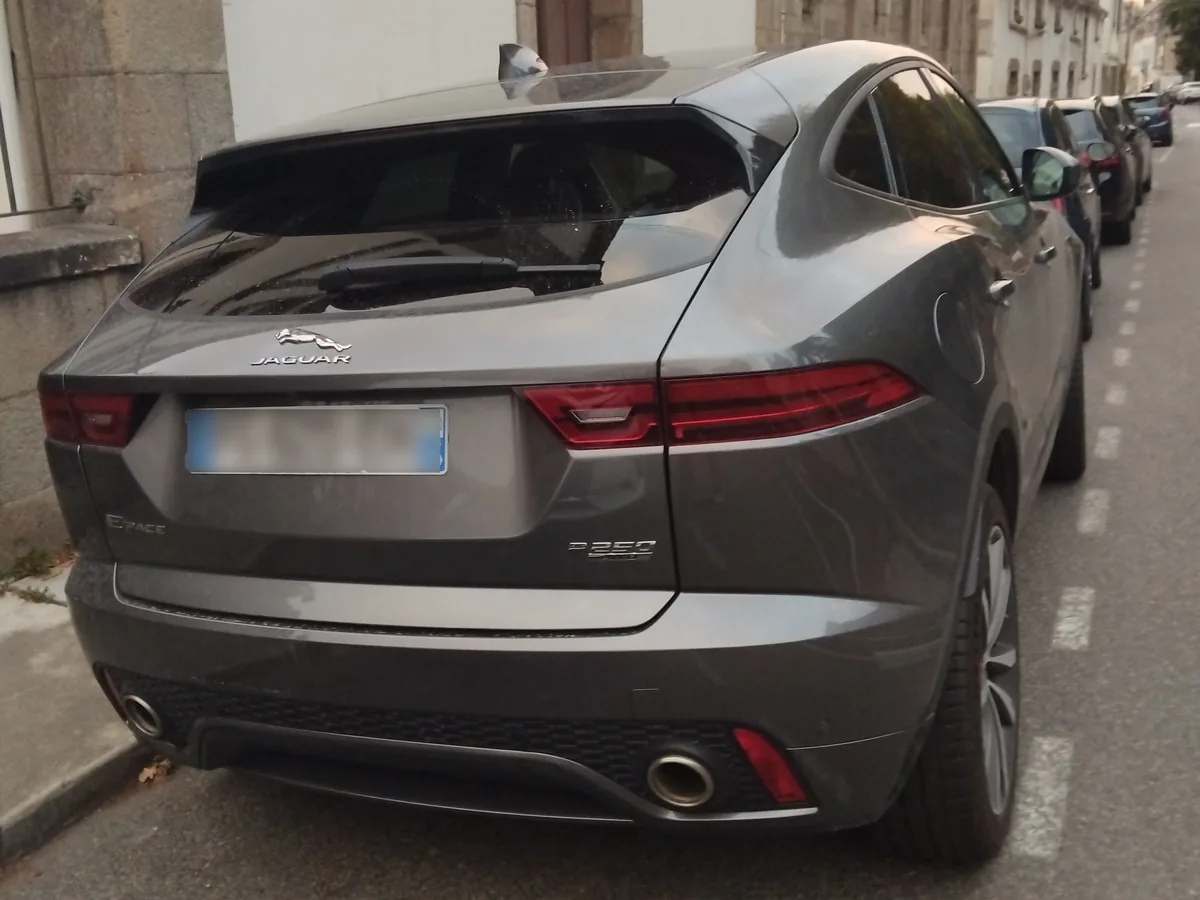
Jaguar E-Pace photos
Model summary
Data from the ScanRacer library, organized to compare versions quickly.
Model introduction
Revealed on July 13, 2017, the Jaguar E-Pace was the British marque’s first compact SUV. Positioned below the F-Pace, it combined a five-door, five-seat body with sports-car-inspired styling and everyday practicality. Its design drew particularly on Jaguar’s F-Type, using a compact stance, a relatively low roofline and a familiar Jaguar grille treatment. At launch, market-dependent specifications included four-cylinder petrol and diesel engines, automatic transmissions and all-wheel drive on several configurations. The 2017 model year belongs to the E-Pace’s initial phase, before later changes to equipment, powertrains and electrification. It is therefore best understood as an early example of Jaguar’s move into the premium compact SUV segment rather than as a later facelifted version.
History
The Jaguar E-Pace was officially revealed on July 13, 2017, during a period when Jaguar was rapidly expanding its SUV family. The F-Pace had established the brand in the segment, while the E-Pace targeted buyers seeking a smaller premium vehicle with everyday usability. Jaguar presented it as a five-seat SUV combining sports-car character with greater practicality and versatility. The design process focused on creating a distinctive compact model rather than simply scaling down the F-Pace. F-Type influences can be seen in the headlamp treatment, grille design and overall body profile. Beneath the bodywork, the E-Pace uses a transverse-engine architecture from Jaguar Land Rover’s wider technical portfolio. Automotive sources have noted its engineering relationship with the Range Rover Evoque and Land Rover Discovery Sport, while also describing Jaguar-specific chassis tuning and structural adaptations. Launch specifications differed by market and included Ingenium petrol and diesel engines, automatic gearboxes and all-wheel drive on several versions. Jaguar also highlighted a standard 10-inch touchscreen, connected functions and a towing capacity of up to 1,800 kg in suitable configurations. A substantial later update brought revised styling, interior technology and electrified powertrains, but that development belongs to a later stage of the model’s history rather than the 2017 launch specification.
Generations
The 2017 Jaguar E-Pace belongs to the model’s first generation. The available sources do not identify multiple separate generations during this period; instead, the E-Pace retained its basic architecture and overall identity while receiving equipment and powertrain revisions. It is therefore more accurate to describe distinct development phases than entirely new generations. The first phase covers vehicles introduced from 2017 onward. These cars are associated with Jaguar’s Touch Pro infotainment system, a 10-inch central touchscreen and a range of petrol and diesel engines whose outputs and transmissions varied by market. R-Dynamic versions brought sportier exterior and interior detailing, but they were trim treatments rather than a separate generation. A significant update arrived around 2020 and 2021, depending on market timing. It brought revised cabin technology, updated infotainment and changes to the exterior presentation. Later E-Pace versions also added plug-in-hybrid and mild-hybrid powertrains. Those changes can substantially affect equipment and identification, even though the E-Pace name and broad body shape remained familiar. A 2017 vehicle should therefore be separated from later updated examples by its equipment, trim details and mechanical specification rather than by a completely different body shell.
Key differences
The 2017 model year is most easily separated from later E-Pace vehicles by its infotainment environment and powertrain range. Early examples use Jaguar’s Touch Pro system with a 10-inch central touchscreen, while updated models received Pivi Pro technology and over-the-air update capability. Later versions also expanded the range with plug-in-hybrid and mild-hybrid powertrains that were not part of the 2017 launch range. Differences between early-market variants can be substantial. Depending on country and trim, they may involve engine output, all-wheel drive, wheel designs, lighting equipment, driver-assistance systems, upholstery and standard equipment. R-Dynamic mainly identifies a sportier design and equipment treatment rather than a separate generation. For accurate identification, the commercial badge should not be used alone. The vehicle identification plate, engine code, gearbox, drivetrain and original equipment list provide more dependable evidence.
Photo recognition
A 2017 Jaguar E-Pace can be identified by its compact five-door SUV body, relatively short bonnet and roofline that tapers toward the rear. The front end uses a hexagonal Jaguar grille, slim headlamps and lower air openings that give the vehicle a broad stance. Compared with the F-Pace, the E-Pace has shorter, taller proportions, while the rear quarter-window and tailgate treatment show a stronger visual connection with the F-Type sports car. At the rear, look for the horizontal lamp design, compact tailgate and exhaust arrangement, which vary according to engine and trim. Inside, the 10-inch central touchscreen is a useful clue for early vehicles, although its surrounding equipment can differ by market and options. R-Dynamic badges, wheels and bumper details are not sufficient to establish an exact model year. Original build documentation and the vehicle identification number remain more reliable than visual inspection alone when confirming a 2017 example.
Important versions
For the 2017 model year, Base is the variant identified in the supplied scope, with coverage limited to 2017. In the wider production range, commercial names and equipment differed between countries. Jaguar offered several four-cylinder Ingenium engines, front- or all-wheel-drive configurations depending on market, and sportier treatments such as R-Dynamic. The most powerful launch specification was a 2.0-litre petrol model rated at 300 PS in Jaguar’s media material, although availability was region-dependent. Engine and trim names should therefore not be transferred automatically from one market to another. Original regional brochures and vehicle documentation are the safest way to confirm the exact specification of an individual E-Pace.
References
- New Jaguar E-PACE Rolls into the Record BooksJaguar Media Newsroom
- Jaguar E-PACE SUV Tested in Extreme ConditionsJaguar Media Newsroom
- Jaguar E-PACE 2019 Model BrochureJaguar
- Used Jaguar E-Pace 2017-2024 ReviewAutocar
- Jaguar Celebrates Fearless Creativity with New E-PACE CampaignJaguar Media Newsroom
- https://www.autoexpress.co.uk/jaguar/e-paceautoexpress.co.uk
- https://www.rac.co.uk/drive/car-reviews/jaguar/e-pace/e-pace-2017-2020/rac.co.uk
Technical specifications
Structured data available for versions linked to this model.
| Version | Power | Torque | Top speed | Drivetrain | Fuel |
|---|---|---|---|---|---|
| Base | 176.5 KW @ 4000 RPM240 HP @ 4000 RPM237 BHP @ 4000 RPM | 369 lb-ft @ 1500 RPM500 Nm @ 1500 RPM | 139 mph (224 km/h) | All Wheel Drive / 9-speed automatic | Diesel |
Frequently asked questions
- What years was the Jaguar E-Pace produced?
- ScanRacer's referenced versions cover 2017.
- How many Jaguar E-Pace examples are documented on ScanRacer?
- 3 published scans from 3 members, with the latest photo added in August 2026.
- What is the power output of the Jaguar E-Pace?
- The sourced technical data lists 176.5 KW @ 4000 RPM240 HP @ 4000 RPM237 BHP @ 4000 RPM.
What about the car you photographed?
Upload a photo to get a suggested make, model and likely year.
No account needed for the result · Publish only if you choose