
Sonata
The Hyundai Sonata is a midsize family sedan introduced in South Korea in 1985, initially positioned as an upscale derivative of the Stellar. Across eight generations, it followed Hyundai’s international expansion, moved to front-wheel drive, and adopted turbocharged, hybrid, and plug-in hybrid powertrains. The Sonata also became an important showcase for Hyundai’s changing design language, particularly with the sixth generation and its “Fluidic Sculpture” theme. The model years represented in the library span 1985 to 2023, while variant names can differ between markets and production programs. The later range included gasoline, Hybrid, and N Line versions, and the 2023 model year belongs to a facelifted form of the eighth generation. This makes the Sonata useful for tracing Hyundai’s progress from an ambitious Korean manufacturer to a major global midsize-sedan competitor.
Variants by year
2023

2019
2017
2014
2009
2008
2004
2001
1998
1996
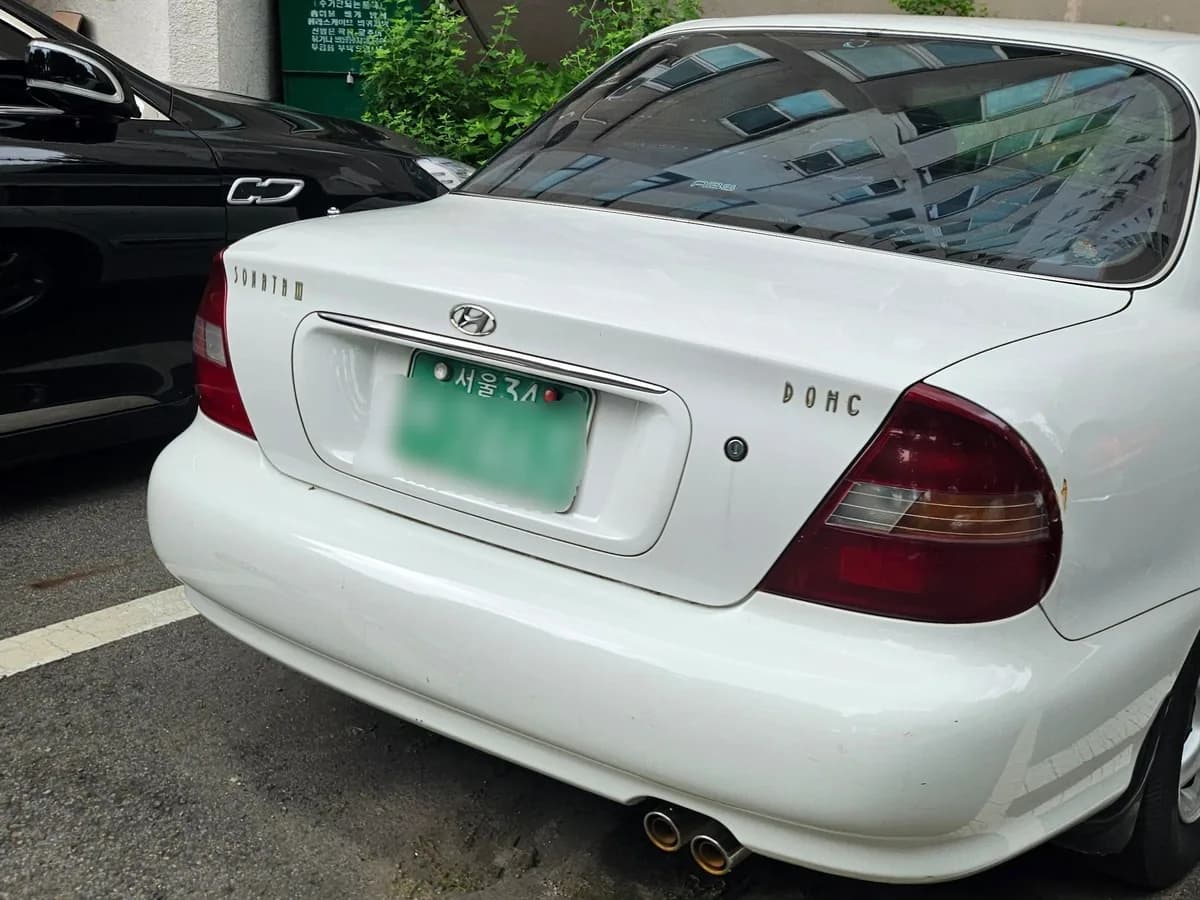
1993
1991
1988
1985
Model summary
Data from the ScanRacer library, organized to compare versions quickly.
Model introduction
The Hyundai Sonata is a midsize family sedan introduced in South Korea in 1985, initially positioned as an upscale derivative of the Stellar. Across eight generations, it followed Hyundai’s international expansion, moved to front-wheel drive, and adopted turbocharged, hybrid, and plug-in hybrid powertrains. The Sonata also became an important showcase for Hyundai’s changing design language, particularly with the sixth generation and its “Fluidic Sculpture” theme. The model years represented in the library span 1985 to 2023, while variant names can differ between markets and production programs. The later range included gasoline, Hybrid, and N Line versions, and the 2023 model year belongs to a facelifted form of the eighth generation. This makes the Sonata useful for tracing Hyundai’s progress from an ambitious Korean manufacturer to a major global midsize-sedan competitor.
History
The Sonata appeared in 1985 as a more luxurious version of the Hyundai Stellar. Hyundai equipped it with features that were still unusual in the Korean market, including power seats, power mirrors, and cruise control. The second generation arrived in 1988 with front-wheel drive and became the first Sonata sold in the United States. This step reflected Hyundai’s export ambitions and its attempt to establish North American production, although the company’s Canadian Bromont plant operated for only a limited period. The third-generation car of the early 1990s gradually improved its presentation, comfort, and safety equipment. The fourth generation, introduced at the end of that decade, represented a commercial turning point: Hyundai raised perceived quality, added a V6 option, and promoted a very long U.S. powertrain warranty. The fifth generation, built for the American market at Hyundai’s new Alabama facility, moved the Sonata closer to established Japanese midsize sedans in refinement and capability. The sixth generation, introduced for 2011, brought a much more expressive shape and helped drive a major sales increase. Later generations added Hybrid and Plug-in Hybrid versions. The eighth generation launched for 2020 and received a facelift for 2023, retaining the model’s emphasis on technology, efficiency, and distinctive styling.
Generations
The first generation, produced from 1985 through the late 1980s, was closely related to the Stellar and used a front-engine, rear-wheel-drive layout. The second generation, commonly identified by the Y2 code and launched in 1988, switched to front-wheel drive. It also introduced a more aerodynamic body and became the first Sonata generation sold in the United States. The third-generation Y3 arrived in the early 1990s. Hyundai placed greater emphasis on electronics, safety, and a multi-link rear suspension. The fourth generation, often known as the EF, covered the late 1990s and early 2000s; its 2002 refresh brought styling revisions and updated engines. The fifth-generation NF, introduced in the mid-2000s, delivered noticeable gains in body rigidity, interior quality, and road manners. The sixth-generation YF, launched around 2010-2011, adopted Hyundai’s Fluidic Sculpture design language and introduced the Sonata Hybrid in several markets. The seventh-generation LF, sold from approximately 2014-2015, added a plug-in hybrid derivative. The eighth-generation DN8 began with the 2020 model year, bringing a highly sculpted exterior, more driver-assistance technology, and versions such as Hybrid and N Line. The 2023 model year is the facelifted form of this eighth generation.
Key differences
The main differences between Sonata generations begin with their architecture. The 1985 model used rear-wheel drive, while the Y2 generation adopted front-wheel drive, a layout retained by later versions. Size, wheelbase, and safety equipment then advanced in stages, with features such as ABS, airbags, and more comprehensive electronic assistance appearing according to market and model year. Powertrain strategy is another useful dividing line. Early Sonatas relied heavily on components and engines associated with Mitsubishi, while Hyundai gradually developed more of its own engines and systems. The V6 became significant during the 1990s and 2000s, before turbocharged four-cylinder engines gained importance with the sixth generation. Hybrid and Plug-in Hybrid versions created a separate technical branch, using dedicated electric systems and automatic transmissions. On recent cars, differences between trims are often found in the engine, transmission, wheels, suspension tuning, infotainment equipment, and driver-assistance systems. These specifications can change by country, so any identification should be checked against the relevant market and model year rather than relying only on the trim name.
Photo recognition
When identifying an older Sonata, begin with the overall shape and the likely drivetrain layout. The first generation has an angular body related to the Stellar and is uncommon outside selected markets. The second generation is smoother and more aerodynamic; U.S.-market cars from the late 1980s and early 1990s generally belong to this family. The third generation appears longer and more structured, with front-end details and equipment changing through its facelift cycle. The EF and NF Sonatas from 1999 to 2010 have a conventional midsize-sedan appearance, although the NF looks wider and more contemporary. The 2011 YF is easy to recognize by its strongly sloping profile, pronounced side sculpting, and Fluidic Sculpture styling. The LF generation returns to a more restrained appearance. The DN8, introduced for 2020, has a distinctive front end with lighting elements that extend upward toward the hood; the 2023 facelift adds a clearer horizontal light signature. Hybrid, Plug-in Hybrid, and N Line badges can help, but exterior details, wheels, lamps, and equipment may vary between countries. The VIN, production date, and local specification sheet remain the most reliable checks.
Important versions
The most significant Sonata versions show how the range expanded over time. The standard Sonata remained the core model, while Hybrid versions introduced in the early 2010s combined a gasoline engine with an electric motor to reduce fuel consumption. The Sonata Plug-in Hybrid, sold from 2016 in selected markets, added an externally rechargeable battery and limited electric-only driving before operating as a conventional hybrid. The N Line represents the sportier direction of the later range. In the North American 2023 model year, it used a turbocharged 2.5-liter four-cylinder engine, a dual-clutch transmission, and dedicated chassis and trim details. Naming conventions are not consistent worldwide. In the supplied variant data, a Lingxiang entry is dated to 2008; its exact market position should be treated cautiously because equipment, badges, and even variant names may be specific to one country.
References
- Vehicle History: SONATAHyundai Worldwide
- SONATA Turns 40: A Legacy Beginning with STELLARHyundai Worldwide Newsroom
- Hyundai Celebrates 30th Anniversary of SonataHyundai Motor America Newsroom
- Visual History of the Hyundai Sonata from 1986 to TodayCar and Driver
- 2023 Sonata Product GuideHyundai Motor America
- 2016 Hyundai Sonata Plug-in Hybrid Delivers Class-Leading 27-Mile All-Electric RangeHyundai Motor America Newsroom
- https://www.hyundai.com/worldwide/en/brand-journal/heritage/stellar-sonata-exhibitionhyundai.com
- https://www.iseecars.com/car/hyundai-sonata/generationsiseecars.com
Technical specifications
Structured data available for versions linked to this model.
| Version | Power | Torque | Top speed | Drivetrain | Fuel |
|---|---|---|---|---|---|
| Base | 110.3 KW @ 3800 RPM150 HP @ 3800 RPM148 BHP @ 3800 RPM | 225 lb-ft @ 1800 RPM305 Nm @ 1800 RPM | 126 mph (203 km/h) | Front Wheel Drive / 6-speed manual | Diesel |
Frequently asked questions
- What years was the Hyundai Sonata produced?
- ScanRacer's referenced versions cover 1985 - 2023.
- How many Hyundai Sonata examples are documented on ScanRacer?
- 2 published scans from 2 members, with the latest photo added in July 2026.
- What is the power output of the Hyundai Sonata?
- The sourced technical data lists 110.3 KW @ 3800 RPM150 HP @ 3800 RPM148 BHP @ 3800 RPM.