
Ioniq 6
Launched in 2022, the Hyundai Ioniq 6 is an electric sedan developed around aerodynamic efficiency. It was the second model in Hyundai’s dedicated Ioniq battery-electric lineup and adopted a streamlined profile influenced by the Hyundai Prophecy concept. Its rounded body, pixel-pattern lighting and twin-spoiler rear treatment give it a distinct appearance compared with the more upright Ioniq 5. The car uses Hyundai Motor Group’s E-GMP electric platform and combines an 800-volt charging architecture with a battery that can reach 77.4 kWh, depending on market and specification. The model range covered here spans the 2022 through 2025 model years, with a Base variant listed across that period. Equipment, battery choices and drivetrains are not identical in every country, so specifications should be checked against the relevant market documentation.
Variants by year
2025
2022
Model summary
Data from the ScanRacer library, organized to compare versions quickly.
Model introduction
Launched in 2022, the Hyundai Ioniq 6 is an electric sedan developed around aerodynamic efficiency. It was the second model in Hyundai’s dedicated Ioniq battery-electric lineup and adopted a streamlined profile influenced by the Hyundai Prophecy concept. Its rounded body, pixel-pattern lighting and twin-spoiler rear treatment give it a distinct appearance compared with the more upright Ioniq 5. The car uses Hyundai Motor Group’s E-GMP electric platform and combines an 800-volt charging architecture with a battery that can reach 77.4 kWh, depending on market and specification. The model range covered here spans the 2022 through 2025 model years, with a Base variant listed across that period. Equipment, battery choices and drivetrains are not identical in every country, so specifications should be checked against the relevant market documentation.
History
Hyundai revealed the Ioniq 6’s design on June 29, 2022, followed by the complete model presentation on July 14 of the same year. The company positioned it as the second vehicle in its Ioniq lineup, after the Ioniq 5, but gave it a different role. Instead of the Ioniq 5’s upright hatchback shape, the Ioniq 6 uses a low, streamlined sedan body. Hyundai identified the Prophecy concept as a major source of inspiration, particularly for the smooth surfaces and aerodynamic profile. At its launch, Hyundai highlighted a 77.4-kWh battery, a WLTP range of more than 610 km in selected configurations and the ability to charge from 10 to 80 percent in about 18 minutes when connected to a suitably powerful charger. Actual figures depend on battery size, wheel choice, drivetrain and test cycle. In the United States, the 2023 lineup included a 53-kWh battery, a 77.4-kWh battery, rear-wheel-drive models and dual-motor all-wheel-drive versions. The 2023 model year was especially significant. The Ioniq 6 won the World Car of the Year, World Electric Vehicle and World Car Design of the Year titles. Those awards reinforced its identity as an electric sedan focused on styling, efficiency and high-speed charging rather than conventional performance-car theatrics.
Generations
The Hyundai Ioniq 6 belongs to one clearly identifiable production generation in the available sources. Introduced in 2022, it was developed on the E-GMP platform, a dedicated electric architecture also used by other Hyundai Motor Group vehicles. The 2022 through 2025 model years therefore represent the same basic body and vehicle family rather than several separate generations. Changes between model years may still affect trim levels, software, standard equipment, battery choices and market-specific certification. Hyundai’s U.S. documentation, for example, distinguishes Standard Range and Long Range versions, while European material emphasizes WLTP configurations, dimensions and locally available equipment. Such differences do not by themselves establish a new generation. For vehicles from this period, the most accurate terminology is model year, trim, battery capacity and drivetrain. A later styling or engineering revision should be treated separately only when Hyundai documents it as a distinct product update. This cautious approach is useful because equipment changes can vary considerably between countries and do not necessarily indicate a new generation. The Ioniq 6 should consequently be catalogued as a single-generation electric sedan covering the documented 2022–2025 period, with regional specifications checked independently.
Key differences
The main differences between Ioniq 6 versions concern the powertrain rather than the body shell. Rear-wheel-drive models use a rear motor, while all-wheel-drive versions add a front motor. In the United States, Hyundai offered a 53-kWh battery for the Standard Range model and a 77.4-kWh battery for Long Range versions. Published output therefore ranged from 149 horsepower for the smaller-battery rear-drive car to 225 horsepower for the Long Range rear-drive model, while dual-motor versions reached 320 horsepower. Wheel size also affects official range figures, with larger wheels generally producing a lower certified result. Trim names, comfort equipment and available packages vary between markets. U.S. EPA figures should not be compared directly with European WLTP figures because they use different testing systems. To identify differences between two cars, check the model year, trim, battery capacity, number of electric motors and wheel specification rather than relying on appearance alone.
Photo recognition
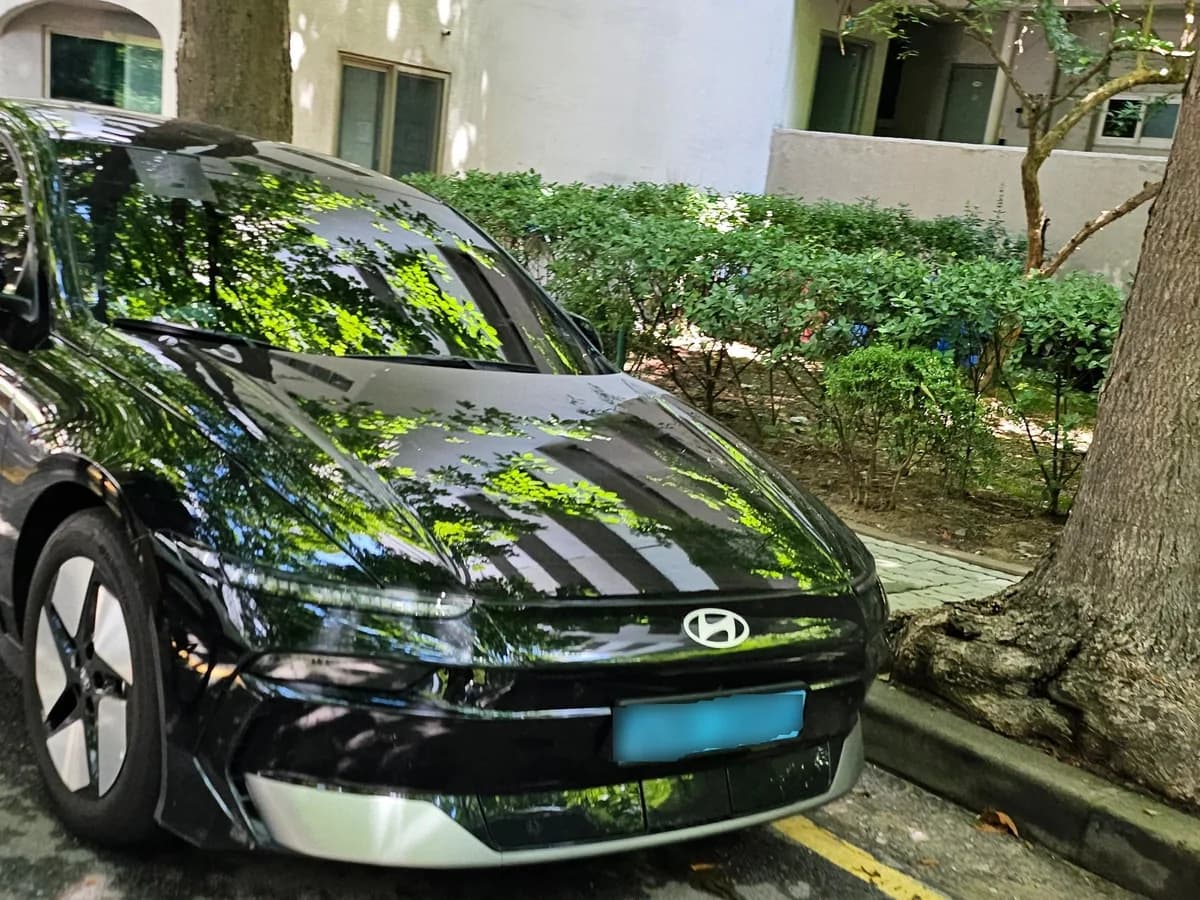
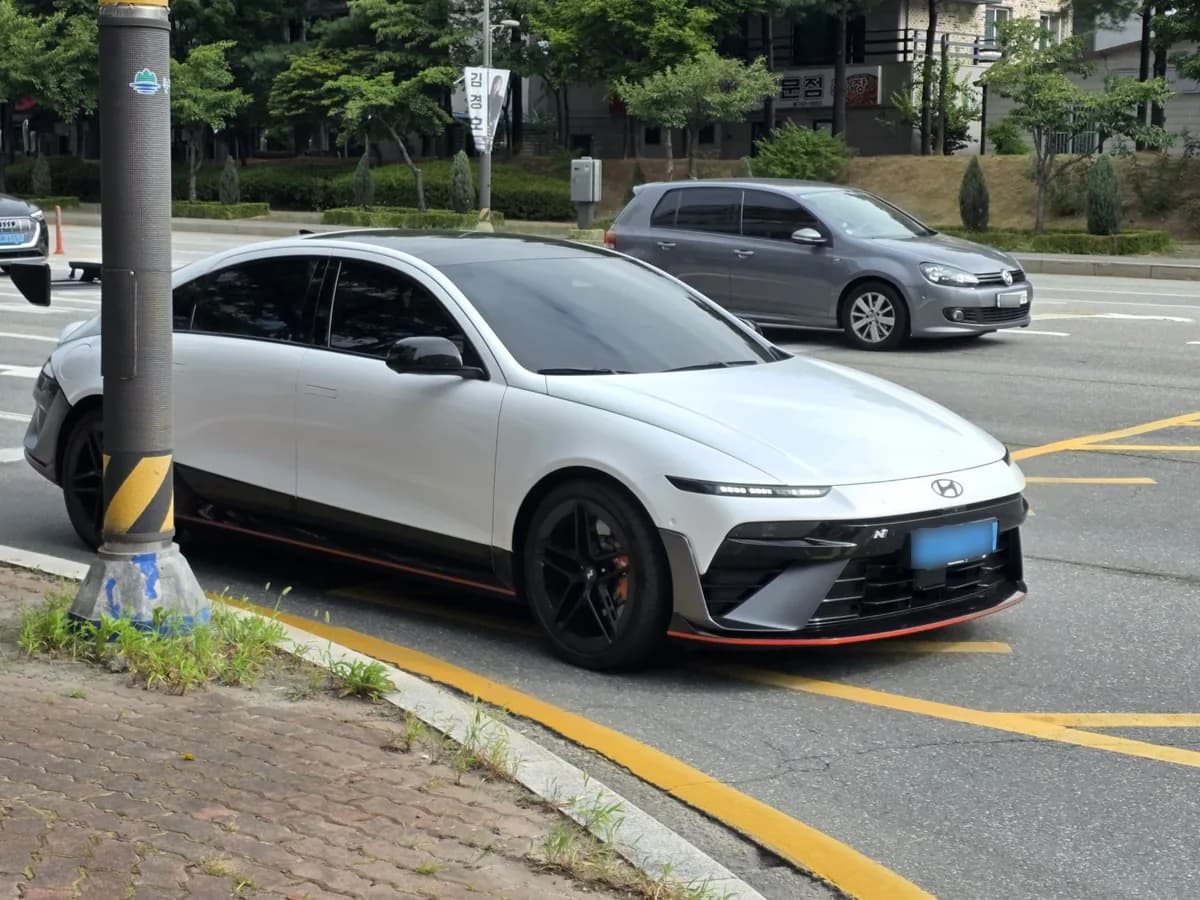
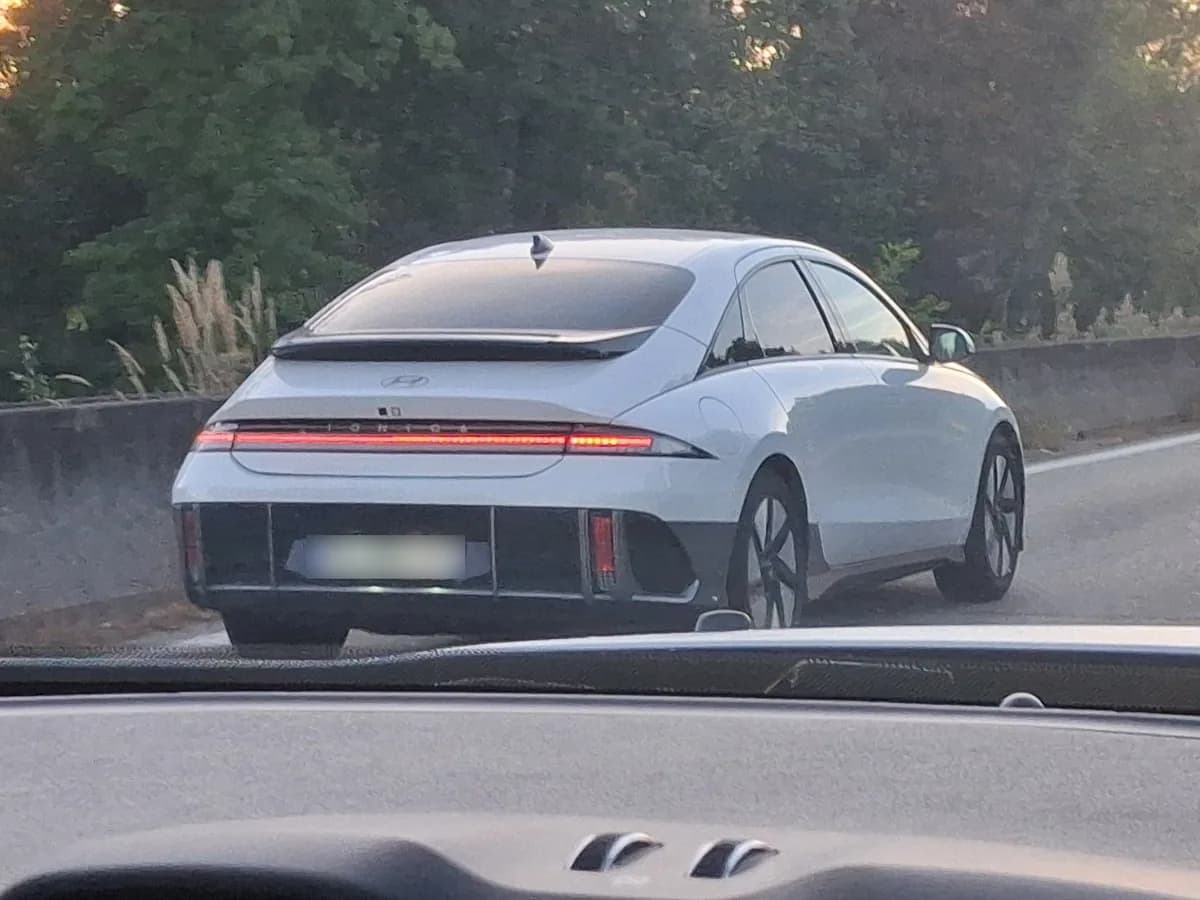
The Ioniq 6 is easiest to recognize by its low, continuous fastback-sedan profile and roofline that flows smoothly into the rear deck. Its front end is clean and largely grille-free, reflecting its fully electric powertrain. The most distinctive details are Hyundai’s Parametric Pixel lighting elements, used in the headlamps, taillamps and other exterior accents. At the back, two horizontal spoiler elements create a recognizable layered appearance, while the rear lighting stretches across much of the width. Its profile also separates it from the Ioniq 5. The Ioniq 5 is taller, more upright and more hatchback-like, whereas the Ioniq 6 has a rounded roof, a lower stance and a conventional sedan trunk area. Camera-based exterior mirrors and other equipment may appear on selected versions or in specific markets, but they are not universal identification points. For a dependable match, combine the overall streamlined body, Pixel lighting signature, twin rear-spoiler treatment and the vehicle’s identification plate or market documentation.
Important versions
The key configurations are the 53-kWh Standard Range model, the 77.4-kWh Long Range model and dual-motor all-wheel-drive versions. In the 2023 U.S. lineup, the Long Range rear-wheel-drive car was rated at 225 horsepower, while the all-wheel-drive version produced 320 horsepower. The 18-inch Long Range rear-drive model was listed with an EPA range of up to 361 miles, but that figure should not be treated as equivalent to a WLTP result. In Europe, Hyundai publicized a 614-km WLTP range for a Long Range rear-drive configuration with 18-inch wheels. Trim names and the availability of each battery-and-drivetrain combination vary by country.
References
- Hyundai Motor Unveils Design of All-Electric IONIQ 6Hyundai Motor Company
- Hyundai IONIQ 6 Electrified Streamliner Debuts with Extended RangeHyundai Motor Company
- 2023 Hyundai IONIQ 6 U.S. Pricing and PackagingHyundai Motor America
- IONIQ 6 Technical Data and DownloadsHyundai Motor Europe
- Hyundai IONIQ 6 Sweeps World Car of the Year AwardsHyundai Motor Company
- 2025 Hyundai IONIQ 6 Features and SpecsHyundai Motor America
- https://www.caranddriver.com/reviews/a41461558/2023-hyundai-ioniq-6-drive/caranddriver.com
- https://www.wired.com/review/review-hyundai-ioniq-6/wired.com
Frequently asked questions
- What years was the Hyundai Ioniq 6 produced?
- ScanRacer's referenced versions cover 2022 - 2025.
- How many Hyundai Ioniq 6 examples are documented on ScanRacer?
- 6 published scans from 4 members, with the latest photo added in September 2026.