
Ioniq 5
Introduced in February 2021, the Hyundai Ioniq 5 was the first production model from Hyundai’s dedicated Ioniq battery-electric vehicle brand. It uses Hyundai Motor Group’s E-GMP architecture, an EV-specific platform that helps create a flat floor, a long wheelbase, and a flexible cabin. Its angular design draws inspiration from the 45 concept and is distinguished by Parametric Pixel lighting, flush-fitting door handles, and a full-width clamshell hood. The Ioniq 5 also brought 800-volt fast-charging capability and Vehicle-to-Load functionality, allowing the car to supply power to compatible equipment. In the ScanRacer context provided, the referenced model range is limited to the 2021 model year and a single Base variant.
Variants by year
2023
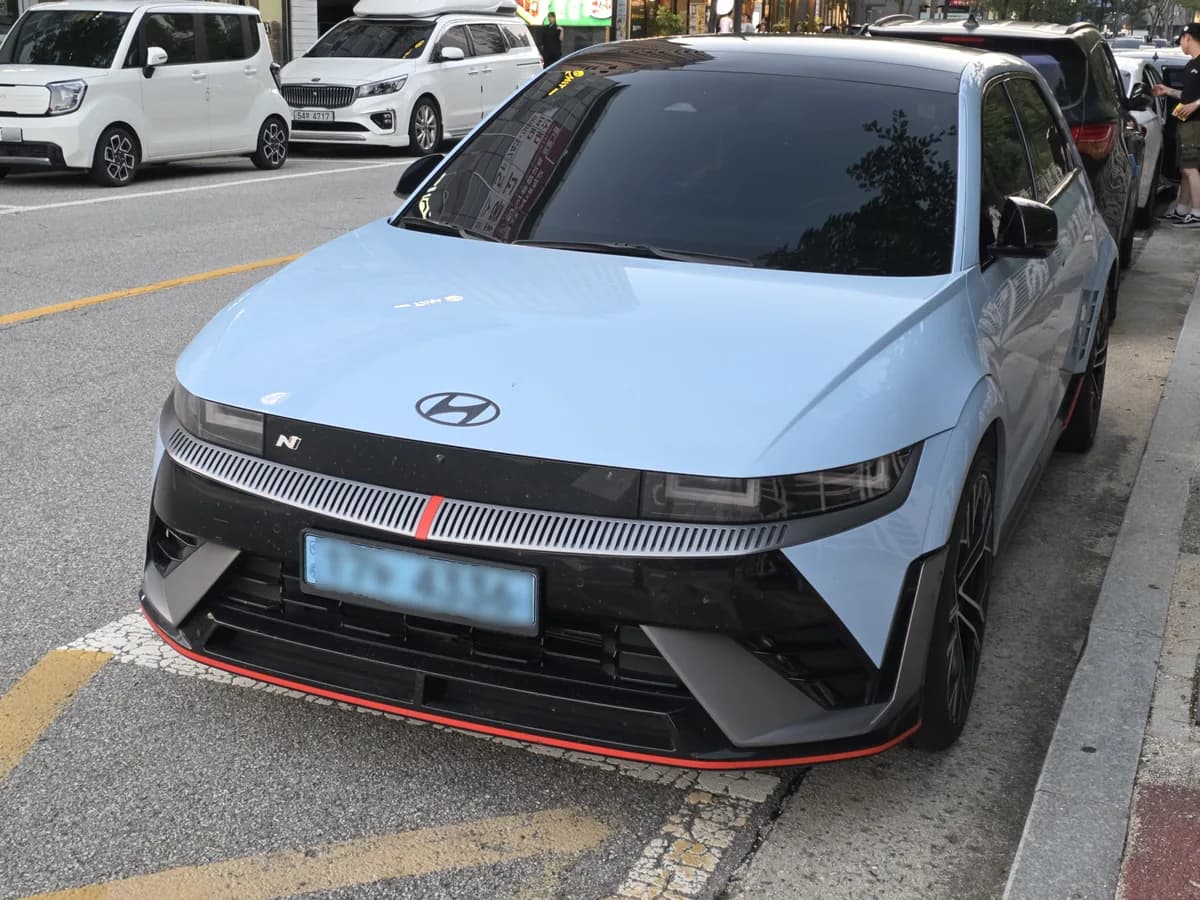
2021
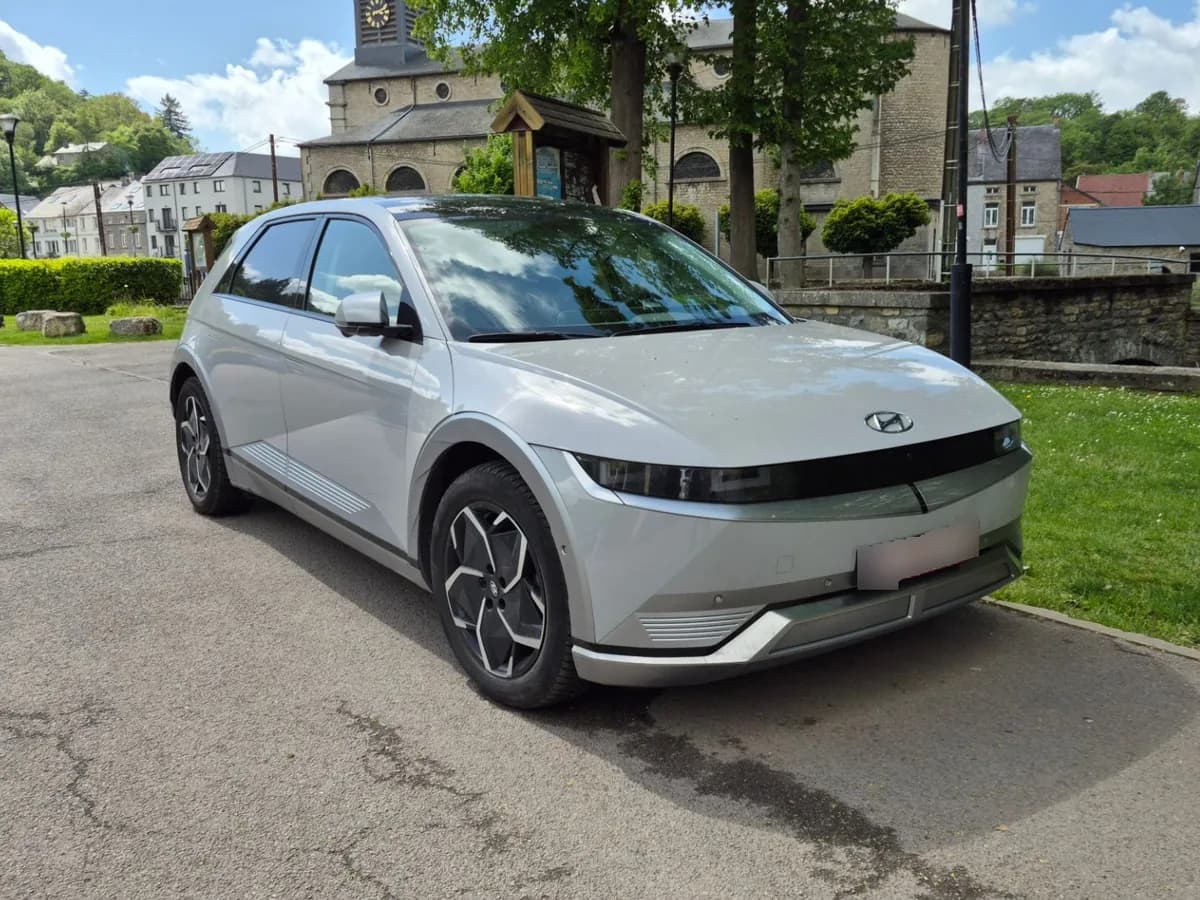
Model summary
Data from the ScanRacer library, organized to compare versions quickly.
Model introduction
Introduced in February 2021, the Hyundai Ioniq 5 was the first production model from Hyundai’s dedicated Ioniq battery-electric vehicle brand. It uses Hyundai Motor Group’s E-GMP architecture, an EV-specific platform that helps create a flat floor, a long wheelbase, and a flexible cabin. Its angular design draws inspiration from the 45 concept and is distinguished by Parametric Pixel lighting, flush-fitting door handles, and a full-width clamshell hood. The Ioniq 5 also brought 800-volt fast-charging capability and Vehicle-to-Load functionality, allowing the car to supply power to compatible equipment. In the ScanRacer context provided, the referenced model range is limited to the 2021 model year and a single Base variant.
History
The Ioniq 5 emerged from Hyundai’s decision, announced in August 2020, to establish Ioniq as a dedicated battery-electric vehicle brand. Its visual direction was previewed by the 45 concept shown in 2019, which introduced a more geometric and space-oriented interpretation of an electric car. In December 2020, Hyundai confirmed that the Ioniq 5 would be the first production vehicle based on the E-GMP platform. The production model was unveiled globally on February 23, 2021, followed by a phased market launch during 2021. The car represented a significant technical step for Hyundai by combining a dedicated EV architecture with multi-voltage fast charging, Vehicle-to-Load capability, and a highly adaptable interior. The platform’s long wheelbase and wheels positioned close to the corners helped create more passenger and cargo space than its exterior shape might suggest. In 2022, the Ioniq 5 won the World Car of the Year, World Electric Vehicle of the Year, and World Car Design of the Year awards. Hyundai later expanded the nameplate in different markets with revised batteries, additional powertrain choices, and the high-performance Ioniq 5 N. Those later derivatives should not automatically be treated as equivalent to the 2021 Base model.
Generations
The Ioniq 5 is not a continuation of an earlier Hyundai model line with the same name; it introduced a separate electric vehicle family. In the supplied context, only one period is represented, from 2021 to 2021, with a Base variant. It is therefore more accurate to describe this entry as the launch phase or first production phase rather than assigning it an unsupported numbered generation. The original Ioniq 5 is built on E-GMP, a platform developed specifically for battery-electric vehicles. Compared with architectures adapted from combustion-engine cars, it places the battery in the floor, uses a long wheelbase, supports 400- and 800-volt charging systems, and can accommodate rear-wheel-drive or all-wheel-drive layouts depending on specification and market. Later model-year changes generally concern battery capacity, power output, equipment, software, styling, and special derivatives. Such updates do not automatically establish a wholly new generation. Accurate identification therefore requires more than the badge alone. The model year, trim level, battery size, drive layout, and market specification should be checked together. Equipment names and technical availability varied by country, so a local Hyundai brochure, vehicle identification document, or factory data sheet is the safest way to confirm an individual car’s exact configuration.
Key differences
The most important Ioniq 5 differences concern the powertrain rather than the body shell. Depending on market, Hyundai offered rear-wheel-drive and all-wheel-drive layouts, along with different battery capacities and power outputs. All-wheel-drive versions add an electric motor at the front axle, while rear-wheel-drive cars use a single rear motor. Equipment also varied considerably: wheel size, driver-assistance systems, glass-roof availability, head-up display, powered seats, and Vehicle-to-Load capability were not identical across all trims. Later model years may include changes to battery technology, charging behavior, infotainment, sound insulation, or standard equipment. The Ioniq 5 N is a substantially different derivative developed by Hyundai N, with a strong focus on performance and track use. Its technical features should not be attributed to a 2021 Base car without supporting documentation. For a dependable identification, compare the market, model year, number of electric motors, battery capacity, and trim level rather than relying on the Ioniq 5 badge alone.
Photo recognition
The Ioniq 5 is easiest to recognize by its compact yet stretched silhouette, short hood, and sharp geometric surfacing inspired by the 45 concept. Its front and rear lamps use Hyundai’s square Parametric Pixel motif, one of the car’s clearest visual signatures. The clamshell hood spans the full width of the front end, while the flush door handles sit neatly within the bodywork. Strong side creases and geometric, often aerodynamic wheel designs complete the exterior identity. Inside, the dedicated EV layout creates a relatively open cabin with a flat floor, a horizontal dashboard, and a flexible sense of space. However, features such as a panoramic roof, powered seats, or a head-up display depended on trim and market. Distinguishing a standard Ioniq 5 from the Ioniq 5 N requires attention to N-specific details, sportier bumpers, wheels, and performance hardware. A photograph alone may not establish the battery capacity, drivetrain, trim, or model year, so those details should be verified against factory documentation.
Important versions
The 2021 Base version is the configuration represented by the supplied context. More broadly, the Ioniq 5 was offered in different markets with rear-wheel-drive or all-wheel-drive layouts and more than one battery option. Trim names and equipment were not globally consistent, so a package name in one country may not describe the same car elsewhere. The Ioniq 5 N, introduced for sale in 2024, is a separate high-performance derivative. It retains the E-GMP foundation but receives Hyundai N-specific changes focused on power delivery, braking, cooling, chassis response, and performance driving. It should be catalogued separately from a regular Ioniq 5 and should not be treated as an equivalent of the 2021 Base configuration.
References
- Hyundai IONIQ 5 Redefines Electric Mobility LifestyleHyundai Motor Company
- Vehicle History 2021 IONIQ 5Hyundai Worldwide
- Hyundai Motor Previews New EV Era with IONIQ 5 TeaserHyundai Motor Company
- Hyundai Motor Company Teases First Image of IONIQ 5Hyundai Motor Company
- Hyundai IONIQ 5 N Debuts at AutoMobility LAHyundai News
- https://www.hyundai.com/content/dam/hyundai/kw/en/data/marketing/brochure/product/ioniq5/IONIQ-5-ENG.pdfhyundai.com
- https://www.hyundai.com/content/dam/hyundai/in/en/data/brochure/ioniq-5.pdfhyundai.com
Technical specifications
Structured data available for versions linked to this model.
| Version | Power | Torque | Top speed | Drivetrain | Fuel |
|---|---|---|---|---|---|
| — | Jusqu'à 320 ch | — | — | Électrique / Transmission intégrale ou propulsion arrière | — |
Frequently asked questions
- What years was the Hyundai Ioniq 5 produced?
- ScanRacer's referenced versions cover 2021 - 2023.
- How many Hyundai Ioniq 5 examples are documented on ScanRacer?
- 6 published scans from 3 members, with the latest photo added in September 2026.
- What is the power output of the Hyundai Ioniq 5?
- The sourced technical data lists Jusqu'à 320 ch.