
i30
Launched in 2007, the Hyundai i30 is a compact car developed specifically around European customer expectations. It introduced Hyundai’s “i” naming convention and entered the C-segment alongside established rivals such as the Volkswagen Golf, Ford Focus and Renault Mégane. Across three generations, the i30 was offered as a five-door hatchback, a practical Wagon estate and, later, a lower Fastback with a more flowing roofline. The range also provided the basis for the sport-focused i30 N and the styling-oriented N Line, although these versions occupied a distinct position within the family. Cars built through 2020 show a clear design progression: restrained lines on the first generation, Hyundai’s “Fluidic Sculpture” theme on the second, and the cascading grille with expanded safety and connectivity technology on the third.
Variants by year
2020
2017
2016
 CC
CC2013
2012

2011
2007
Model summary
Data from the ScanRacer library, organized to compare versions quickly.
Model introduction
Launched in 2007, the Hyundai i30 is a compact car developed specifically around European customer expectations. It introduced Hyundai’s “i” naming convention and entered the C-segment alongside established rivals such as the Volkswagen Golf, Ford Focus and Renault Mégane. Across three generations, the i30 was offered as a five-door hatchback, a practical Wagon estate and, later, a lower Fastback with a more flowing roofline. The range also provided the basis for the sport-focused i30 N and the styling-oriented N Line, although these versions occupied a distinct position within the family. Cars built through 2020 show a clear design progression: restrained lines on the first generation, Hyundai’s “Fluidic Sculpture” theme on the second, and the cascading grille with expanded safety and connectivity technology on the third.
History
The first Hyundai i30 appeared in 2007 as the first Hyundai model to use the “i” prefix. Hyundai positioned it as a car developed for Europe, with substantial design and engineering work carried out through the company’s European operations. European production later began at Hyundai Motor Manufacturing Czech in Nošovice, supporting Hyundai’s stronger presence in the region’s highly competitive compact-car market. The second generation arrived in 2011 and went on sale in Europe from 2012. It introduced a more sculpted appearance and a broader body-style range, including a five-door hatchback, a three-door version in selected markets and a Wagon estate. The third generation was unveiled in 2016 before reaching European dealers in 2017. It brought Hyundai’s cascading grille, a more unified design identity and a wider range of body styles. The Fastback joined the family from 2017 or 2018 depending on the market, while the new Wagon was presented at the 2017 Geneva Motor Show. For 2020, Hyundai gave the i30 a substantial design and technology update, adding revised styling, upgraded driver-assistance features and powertrains that could include 48-volt mild-hybrid technology.
Generations
The first generation, commonly identified by the FD code, has relatively conventional proportions, swept-back headlamps and a restrained front end. It was offered primarily as a five-door hatchback, with an estate known as the i30 CW or Wagon depending on the market. Its overall approach focused on practicality and family-friendly packaging within the compact-car class. The second generation, associated with the GD code, was introduced in 2011. Its styling adopted Hyundai’s “Fluidic Sculpture” design language, bringing more pronounced side surfacing, a hexagonal grille and a more dynamic profile. It also expanded the body-style offering with a five-door hatchback, a three-door model in selected regions and a Wagon estate. The dimensions remained those of a conventional compact car, but the visual character became more distinctive than before. The third generation, known by the PD code, was revealed in 2016. It introduced Hyundai’s cascading grille, a more horizontal design treatment and an interior with greater emphasis on connectivity and driver-assistance systems. The five-door hatchback remained the central model, while the Wagon focused on additional cargo versatility and the Fastback used a lower, more tapered roofline. The N and N Line derivatives added a sportier direction through their own styling and engineering details.
Key differences
The main differences between generations concern styling, body configuration and equipment. The first i30 has a simpler, more angular appearance and a relatively conventional dashboard. The second generation is identifiable by its more sculpted side surfaces and hexagonal front grille, both associated with Hyundai’s “Fluidic Sculpture” design language. The third generation introduced the cascading grille, sharper lines and a more modern cabin with expanded connectivity and assistance technology. Body style is another useful distinction. The FD and GD generations were offered notably as five-door hatchbacks and Wagons, while the third generation added a lower Fastback profile. The Wagon prioritises practicality and cargo flexibility, whereas the Fastback places greater emphasis on exterior design. Equipment changed considerably by country, model year and trim level, so a specific engine, transmission or safety feature should not be assigned to an i30 year without checking its original market and specification.
Photo recognition
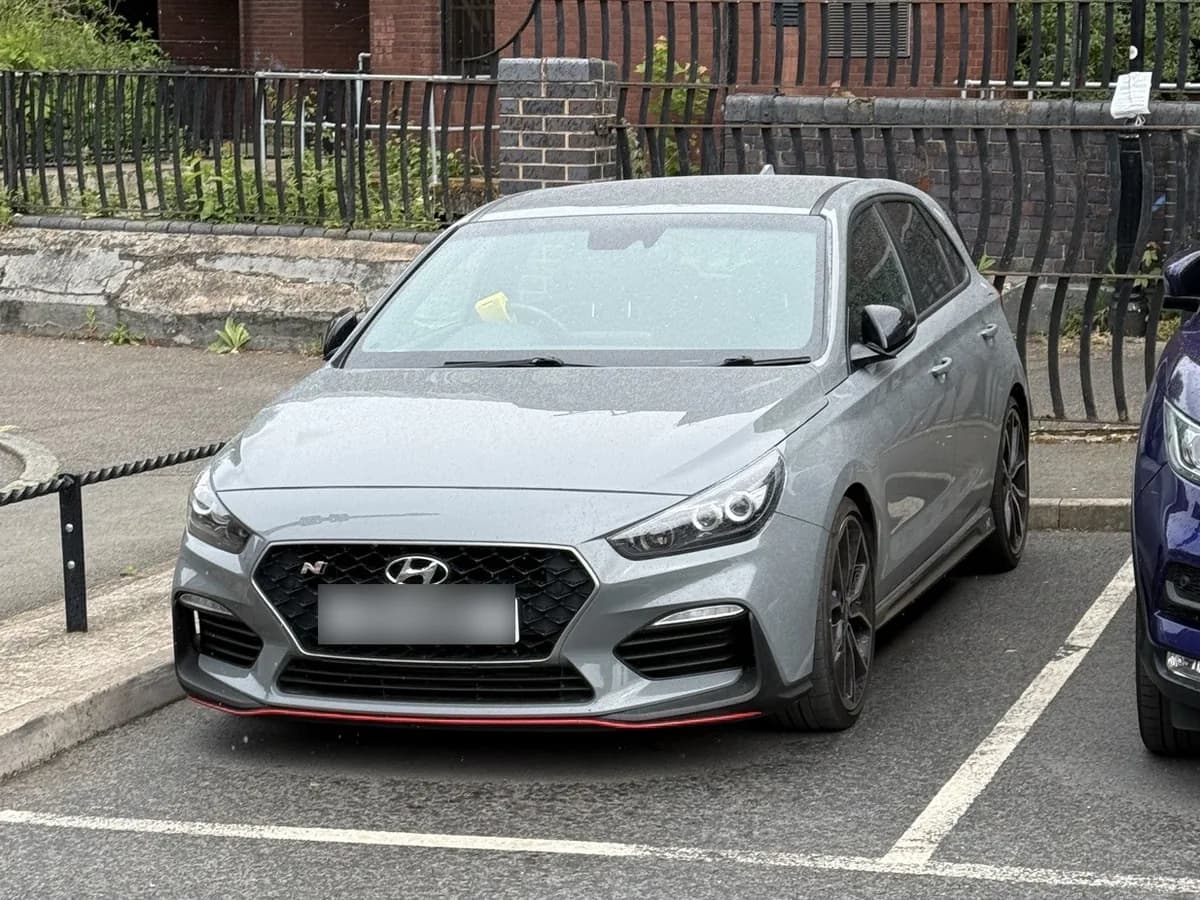
To identify a first-generation i30, look for a compact front end with elongated headlamps, a narrow grille and relatively lightly sculpted body sides. The estate version has a longer rear section and may be labelled CW. The second generation usually has a wider hexagonal grille, stronger side creases and a more expressive overall shape. Its Wagon retains the front doors and cabin structure of the compact hatchback but extends the rear bodywork for additional luggage space. The third generation is identifiable by its cascading grille, slimmer headlamps and more horizontal design treatment. The five-door hatchback has a relatively upright tailgate, while the Fastback uses a lower roof, more heavily inclined rear glass and a more sculpted tail section. The Wagon keeps the third-generation front-end identity but adds a longer rear compartment. N and N Line badges indicate performance-oriented or sporty-looking derivatives, but the badge alone does not establish the engine, gearbox or exact equipment level.
Important versions
The key versions are the five-door hatchback, which has remained the core i30 body style since launch, and the Wagon, aimed at buyers seeking greater practicality. The third generation added the Fastback, distinguished by its lower roofline and coupé-influenced rear design. The i30 N and N Line derivatives occupy a separate position within the family: the former is a genuine high-performance model, while the latter mainly adds sportier styling and chassis-related features depending on specification. A Sedan body style also appears in some market nomenclatures around 2020; it should not automatically be treated as the same vehicle as the European five-door hatchback.
References
- Vehicle History: i30Hyundai Worldwide
- The new generation Hyundai i30: first photos and videosHyundai Newsroom
- The new Hyundai i30 celebrates its nationwide dealer premiereHyundai Newsroom
- New Generation Hyundai i30 Wagon: elegance meets versatilityHyundai Newsroom
- The Hyundai i30 Double World PremiereHyundai Newsroom
- The new Hyundai i30 FastbackHyundai Newsroom
- Safer and more efficient: updated Hyundai i30Hyundai Newsroom
Technical specifications
Structured data available for versions linked to this model.
| Version | Power | Torque | Top speed | Drivetrain | Fuel |
|---|---|---|---|---|---|
| Base | — | — | — | — | — |
| Base | 94 KW @ 4000 RPM128 HP @ 4000 RPM126 BHP @ 4000 RPM | 192 lb-ft @ 1900-2750 RPM260 Nm @ 1900-2750 RPM | 117 mph (188 km/h) | Front Wheel Drive / 6-speed manual | Diesel |
Frequently asked questions
- What years was the Hyundai i30 produced?
- ScanRacer's referenced versions cover 2007 - 2020.
- How many Hyundai i30 examples are documented on ScanRacer?
- 2 published scans from 2 members, with the latest photo added in September 2026.
- What is the power output of the Hyundai i30?
- The sourced technical data lists 94 KW @ 4000 RPM128 HP @ 4000 RPM126 BHP @ 4000 RPM.