
Galloper
The Hyundai Galloper is a mid-size SUV produced by Hyundai from 1991 to 2004. Based on the first-generation Mitsubishi Pajero, it was assembled in South Korea and exported to various international markets. This model is known for its durability and off-road capabilities, providing an affordable alternative to SUVs of its time.
Variants by year
1997
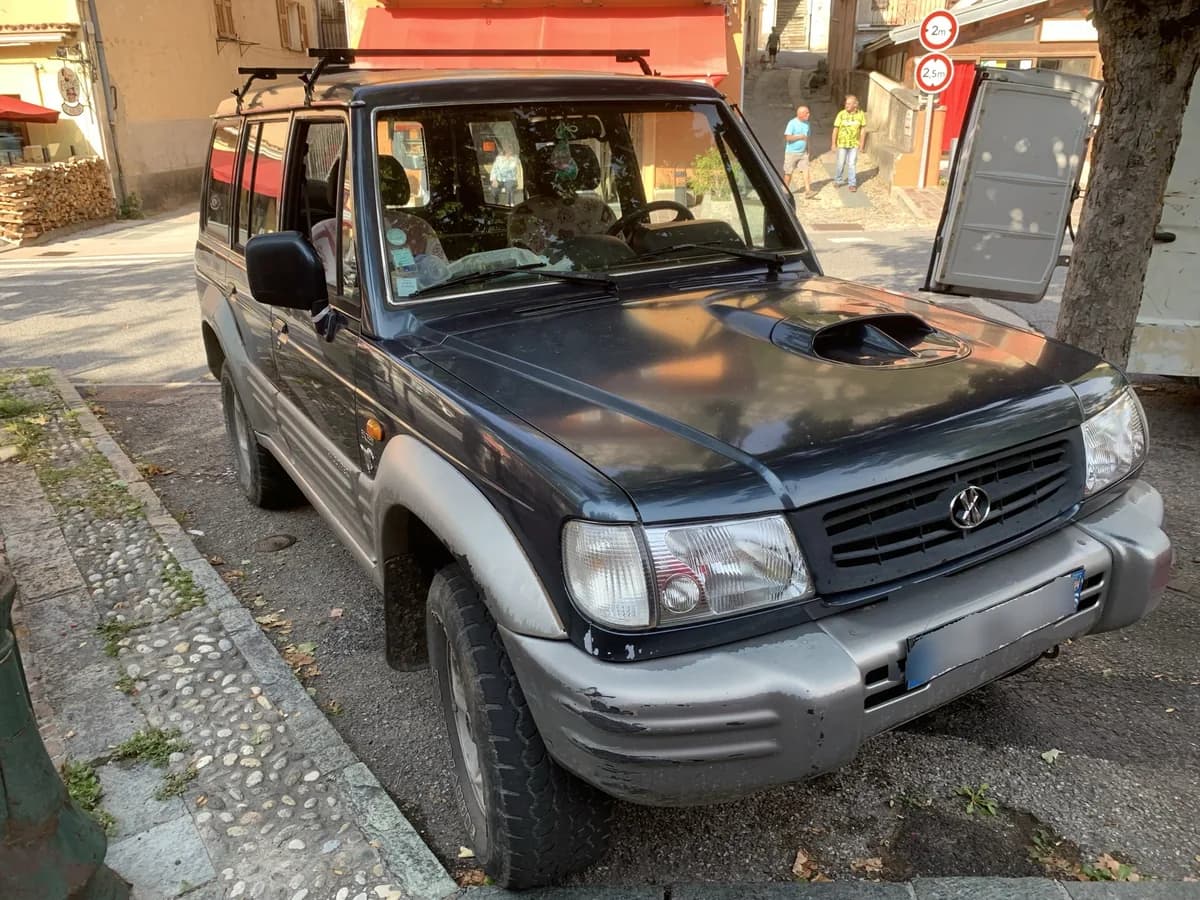
1991
Model summary
Data from the ScanRacer library, organized to compare versions quickly.
Model introduction
The Hyundai Galloper is a mid-size SUV produced by Hyundai from 1991 to 2004. Based on the first-generation Mitsubishi Pajero, it was assembled in South Korea and exported to various international markets. This model is known for its durability and off-road capabilities, providing an affordable alternative to SUVs of its time.
History
The Hyundai Galloper was introduced in 1991, assembled by Hyundai Precision Industry Co., Ltd. in South Korea. It was launched in the Korean market with a special event at the Seoul Hyatt Hotel on September 25, 1991. In February 1992, Hyundai Precision celebrated the assembly of its 5,000th Galloper. In the first year, the Galloper became the best-selling SUV in Korea, capturing 52% of the domestic market. In 1994, Hyundai began exporting the Galloper to other Asian countries, starting with China. By December 1994, Hyundai had produced its 100,000th Galloper. From 1997, the Galloper was introduced to most European markets in left-hand drive only. By 1999, Hyundai had produced over 300,000 Gallopers. Production was transferred from Hyundai Precision to Hyundai Motor Company on July 31, 1999. The Galloper was discontinued in January 2004 after a thirteen-year production run, succeeded by the Terracan.
Generations
The Hyundai Galloper had two main generations. The first generation (1991-1997) was virtually identical to the first-generation Mitsubishi Pajero, featuring 2.5 L D4BA and D4BF diesel engines, as well as a 3.0 L G6AT V6 gasoline engine. In 1994, a facelift introduced square headlights and horizontal side mirrors. The second generation (1997-2004) featured composite replaceable-bulb headlights and side cladding to emphasize its rugged nature, while retaining the engines and mechanics of the first generation.
Key differences
The Hyundai Galloper differed from the Mitsubishi Pajero by specific elements for the Korean market, such as steel bumpers, running boards, and 'Western'-style side mirrors. It was available in 3-door short wheelbase or 5-door long wheelbase versions, offering a seven-passenger capacity with a third-row seat.
Photo recognition
To identify a Hyundai Galloper, look for features such as steel bumpers, running boards, and 'Western'-style side mirrors. First-generation models (1991-1997) have round headlights, while second-generation models (1997-2004) feature composite replaceable-bulb headlights. Short wheelbase versions are approximately 3,945 mm in length, while long wheelbase versions are about 4,545 mm.
Important versions
Important versions of the Hyundai Galloper include the first-generation Standard short wheelbase model, the first-generation Exceed long wheelbase model, and the second-generation Innovation model, which offered high-end features such as leather seats and sport body extensions.
References
- Hyundai Galloper - Hyundai WorldwideHyundai Motor Company
- https://org3.hyundai.com/worldwide/en/footer/corporate/vehicle-history/1990/galloperorg3.hyundai.com
- https://www.hyundai.com/worldwide/ko/footer/corporate/vehicle-history/1990/galloperhyundai.com
- https://www.yoda.wiki/wiki/Hyundai_Galloperyoda.wiki
- https://www.autobild.de/marken-modelle/hyundai/galloper/autobild.de
- https://www.auto-data.net/en/hyundai-galloper-ii-3.0-141hp-automatic-29339auto-data.net
Frequently asked questions
- What years was the Hyundai Galloper produced?
- ScanRacer's referenced versions cover 1991 - 1997.
- How many Hyundai Galloper examples are documented on ScanRacer?
- 1 published scan from 1 member, with the latest photo added in August 2026.