
S2000
Introduced in 1999 to mark Honda’s 50th anniversary, the S2000 is a two-seat roadster with a front-mid-mounted engine, rear-wheel drive, and a six-speed manual transmission. Its naturally aspirated 2.0-liter VTEC four-cylinder was designed to work at high engine speeds, with a redline close to 9,000 rpm depending on the market. Honda paired that engine with near-50:50 weight distribution, a torque-sensing limited-slip differential, and a reinforced open-body structure. Global production ended in June 2009, after worldwide sales had exceeded 110,000 units by the end of 2008. Within the years represented by ScanRacer, the first series provides the essential starting point: a compact chassis, an unusually high-revving engine, and a driving character built around precision and mechanical involvement rather than low-end torque.
What about the car you photographed?
Upload a photo to get a suggested make, model and likely year.
No account needed for the result · Publish only if you choose
Variants by year
Make: Honda · Model: S2000
2 / 2 versions shown
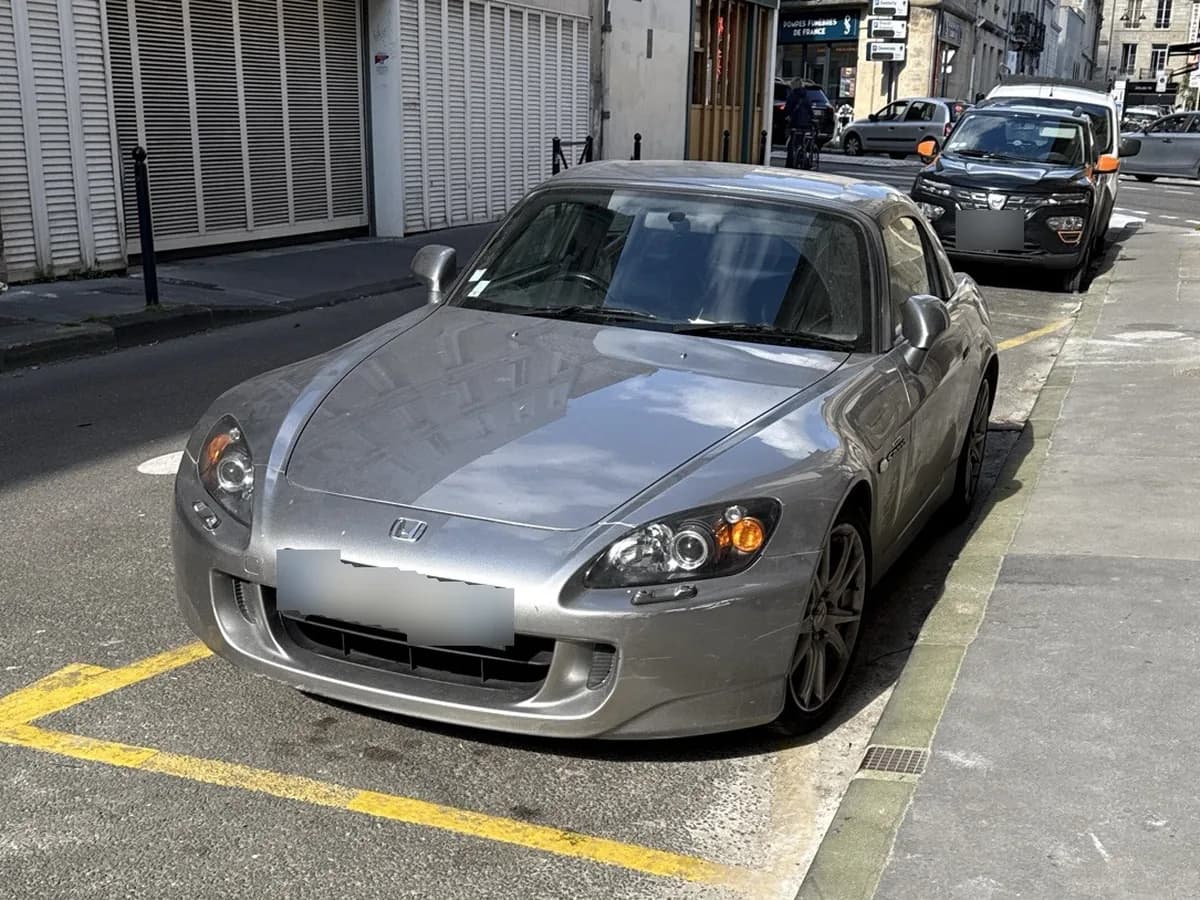
2003
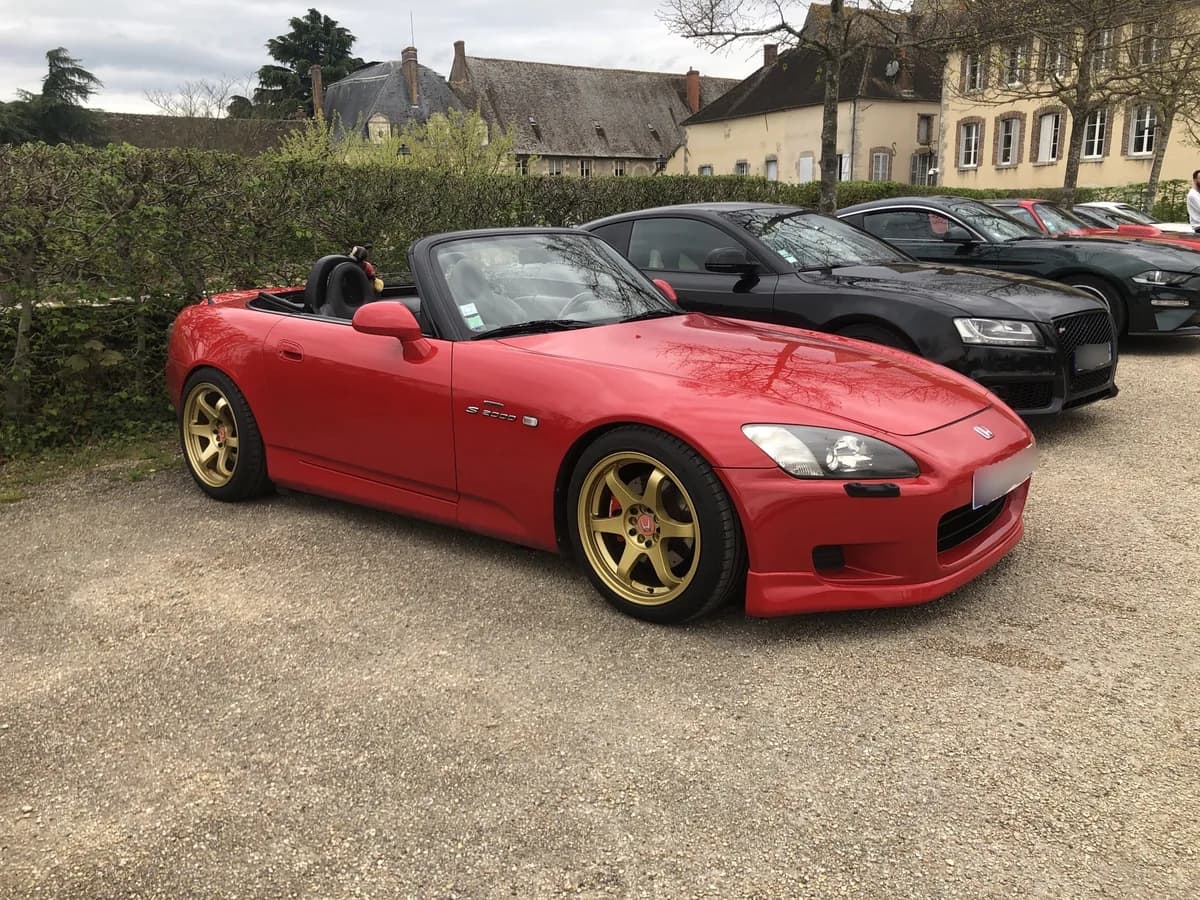
1999
Honda S2000 photos
Model summary
Data from the ScanRacer library, organized to compare versions quickly.
Model introduction
Introduced in 1999 to mark Honda’s 50th anniversary, the S2000 is a two-seat roadster with a front-mid-mounted engine, rear-wheel drive, and a six-speed manual transmission. Its naturally aspirated 2.0-liter VTEC four-cylinder was designed to work at high engine speeds, with a redline close to 9,000 rpm depending on the market. Honda paired that engine with near-50:50 weight distribution, a torque-sensing limited-slip differential, and a reinforced open-body structure. Global production ended in June 2009, after worldwide sales had exceeded 110,000 units by the end of 2008. Within the years represented by ScanRacer, the first series provides the essential starting point: a compact chassis, an unusually high-revving engine, and a driving character built around precision and mechanical involvement rather than low-end torque.
History
The S2000 continues Honda’s tradition of compact sports roadsters, although almost three decades separated its arrival from the end of S800 production. A prototype appeared in September 1998 during Honda’s 50th-anniversary celebrations, followed by the production car’s Japanese debut in April 1999. Its name refers to the engine’s approximate 2.0-liter displacement, continuing the naming logic established by the S500, S600, and S800. At launch, the S2000 used the F20C, a naturally aspirated 2.0-liter DOHC VTEC four-cylinder, paired with a six-speed manual gearbox. Honda emphasized rear-wheel drive, balanced weight distribution, and the rigidity of the open body structure. The range later expanded with the Type V, which introduced variable-gear-ratio steering, followed by updates to the wheels, exterior, interior, equipment, and chassis tuning. A significant mid-cycle update arrived during the 2000s. In selected markets, displacement increased to 2.2 liters, torque improved, and the suspension calibration became more progressive. Japan’s Type S and the U.S.-market S2000 CR later gave the roadster a more focused sporting character. Honda announced the model’s discontinuation in January 2009, with production for all regions scheduled to end by the close of June.
Generations
The S2000 kept the same name throughout its production run, but enthusiasts generally divide the model into two broad chassis series: AP1 and AP2. That shorthand should be used carefully because the timing and extent of the changes varied by market. AP1 refers to the first phase of the car. In its best-known specification, it uses the 2.0-liter F20C, a naturally aspirated engine designed to deliver its strongest performance high in the rev range. Early examples are commonly identified by a plastic rear soft-top window, while later cars received a glass rear window. Honda also introduced progressive changes to trim, equipment, and appearance during this period. AP2 most clearly describes the updated Japanese and North American cars introduced during the mid-2000s. Depending on the market, these cars use the 2.2-liter F22C, providing more mid-range torque with a lower engine-speed limit. Suspension calibration, tires, transmission gearing, and exterior details also changed. Later European S2000s retained a 2.0-liter engine while receiving several chassis and styling revisions. For accurate identification, the market, model year, engine, and equipment level are more reliable than the AP1 or AP2 label alone.
Key differences
The most important distinction is between the 2.0-liter F20C and the 2.2-liter engines fitted to certain later S2000s. The F20C emphasizes high-rpm performance and delivers its strongest output near the top of the tachometer. The larger engine mainly adds low- and mid-range torque, while accepting a lower engine-speed limit. The changes were not limited to the engine. Updated cars received revised transmission gearing, different tires, and suspension tuning intended to make the chassis more progressive. Exterior and interior revisions included changes to the rear lighting, bumpers, wheels, and cabin details. These features were not perfectly consistent across every market or production year. When comparing two cars, the country of origin, engine code, model year, and actual equipment should therefore be checked together. A late European S2000 should not automatically be treated as a North American AP2 with the 2.2-liter engine. The AP1 and AP2 labels are useful shorthand, but they are not a complete substitute for market-specific identification.
Photo recognition
The S2000 is first identified by its compact two-seat roadster shape, long hood, set-back cabin, and powered soft top. Early cars generally use a plastic rear window, while later versions received a glass window with a defroster. That feature is useful, although a replacement soft top can make it less conclusive. To separate the major phases, inspect the front end, rear lights, bumpers, and wheels together rather than relying on one visual cue. Updated cars received revised bodywork and, on certain model years, 17-inch wheels. The cabin can provide additional clues through the instrument cluster, center console, trim, and audio equipment. The engine bay offers the strongest mechanical indication: a 2.0-liter engine is broadly associated with the F20C and the AP1-era configuration, while a 2.2-liter unit usually indicates a later S2000 in selected markets. Badges alone are unreliable because collector cars are often modified. The VIN, original market, engine code, and service documentation should be used to confirm identity.
Important versions
The Japanese-market Type V, introduced in 2000, is distinguished by Honda’s variable-gear-ratio VGS steering. The Japan-market Type S arrived late in the model’s life with dedicated presentation and sporting hardware, including specific seats, a shift knob, and aerodynamic components. In the United States, the 2008 and 2009 S2000 CR was the most focused derivative, adding firmer suspension, dedicated stabilizer bars, more aggressive tires, quicker steering, and a removable hardtop. Availability varied significantly by market, so these names should not be applied universally. For a standard car, originality and consistency between model year, engine, trim, and equipment may matter more than a rare badge alone.
References
- Honda to Discontinue Production of the S2000 Sports CarHonda Global
- What To Buy: 2000–2009 Honda S2000Car and Driver
- Comparing The S2000 To Honda's Classic S Roadsters From The '60sMotorTrend
- Honda S2000 Buyer's GuideMotorTrend
- https://www.s2000.wiki/view/Honda_S2000s2000.wiki
- https://www.carcollectorinternational.com/research/buyers-guides/honda/s2000carcollectorinternational.com
Frequently asked questions
- What years was the Honda S2000 produced?
- ScanRacer's referenced versions cover 1999 - 2003.
- How many Honda S2000 examples are documented on ScanRacer?
- 8 published scans from 7 members, with the latest photo added in September 2026.
What about the car you photographed?
Upload a photo to get a suggested make, model and likely year.
No account needed for the result · Publish only if you choose