
Mustang Mach-E
Introduced for the 2021 model year, the Ford Mustang Mach-E is an all-electric five-door SUV that created a new branch of the Mustang family. Ford revealed it in November 2019, combining a raised body, seating for five, and a rear hatch with styling cues associated with the Mustang coupe, including pronounced rear haunches and three-bar taillamps. Depending on market and trim, the Mach-E was offered with rear-wheel drive or all-wheel drive, a standard-range or extended-range battery, and grades ranging from Select to GT. It does not share the traditional Mustang’s gasoline engine or coupe proportions; its character comes from electric propulsion, practical cabin space, and a technology-focused interior centered on a large portrait touchscreen. The 2021 model year represents the Mach-E’s commercial launch and its first production series.
What about the car you photographed?
Upload a photo to get a suggested make, model and likely year.
No account needed for the result · Publish only if you choose
Variants by year
Make: Ford · Model: Mustang Mach-E
1 / 1 versions shown
2021
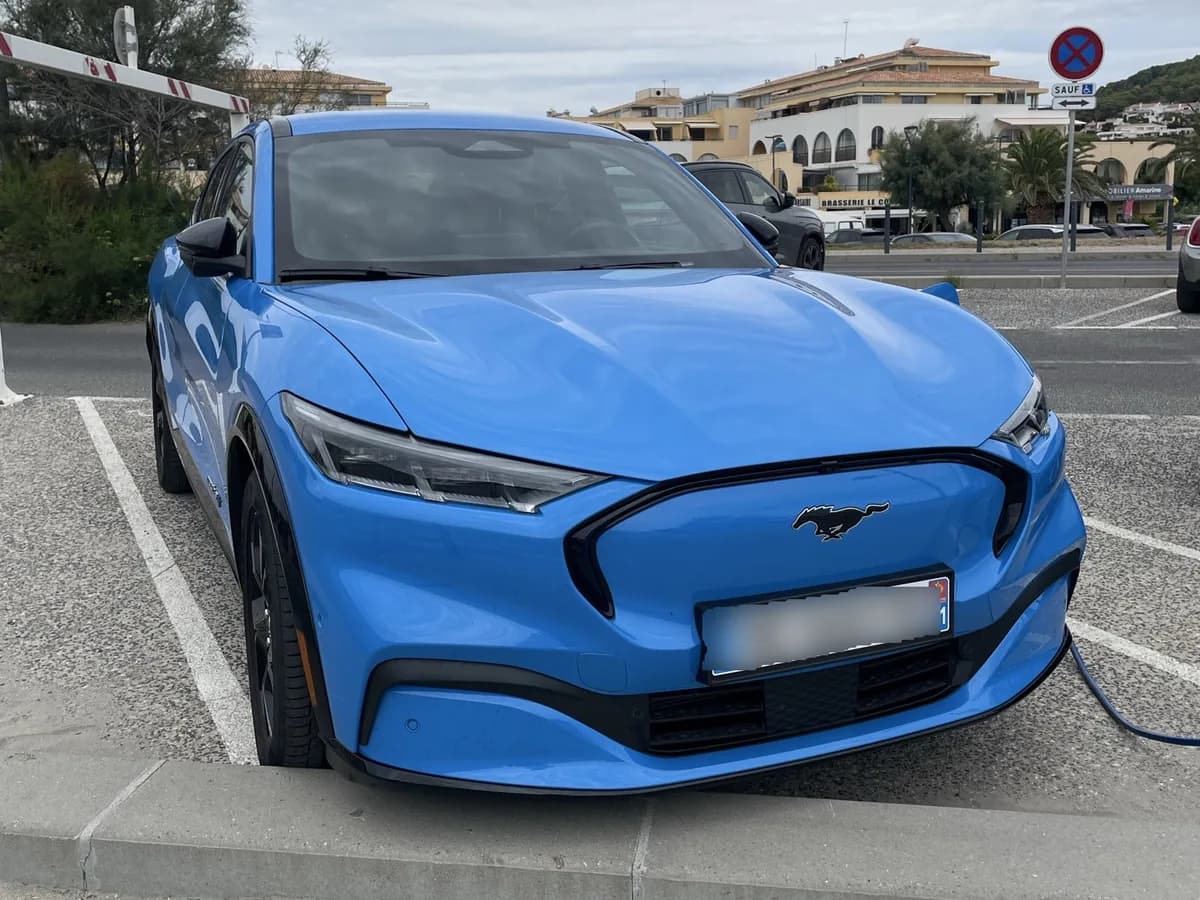
Ford Mustang Mach-E photos
Model summary
Data from the ScanRacer library, organized to compare versions quickly.
Model introduction
Introduced for the 2021 model year, the Ford Mustang Mach-E is an all-electric five-door SUV that created a new branch of the Mustang family. Ford revealed it in November 2019, combining a raised body, seating for five, and a rear hatch with styling cues associated with the Mustang coupe, including pronounced rear haunches and three-bar taillamps. Depending on market and trim, the Mach-E was offered with rear-wheel drive or all-wheel drive, a standard-range or extended-range battery, and grades ranging from Select to GT. It does not share the traditional Mustang’s gasoline engine or coupe proportions; its character comes from electric propulsion, practical cabin space, and a technology-focused interior centered on a large portrait touchscreen. The 2021 model year represents the Mach-E’s commercial launch and its first production series.
History
Ford announced the Mustang Mach-E name on November 14, 2019, before unveiling the vehicle in Los Angeles on November 17. The company presented it as an electric SUV intended to expand the Mustang family, which had historically centered on a sporty coupe and convertible. Using the Mustang name for a practical electric vehicle immediately made the Mach-E part of a broader discussion about how established automotive identities could evolve. Sales began as a 2021 model, with initial deliveries scheduled from late 2020 for selected versions. Ford structured the range around distinct roles: Select and Premium for mainstream configurations, California Route 1 for extended driving range, First Edition for the launch period, and GT for higher performance. The company also highlighted over-the-air software updates and a connected infotainment system. In that context, the Mach-E represented a shift from Ford’s earlier, limited electric offerings toward a vehicle developed as a major electric product with international ambitions. Its Mustang association gave the project a stronger emotional identity than a conventional utility-based EV.
Generations
The Mustang Mach-E does not divide into separate generations within the model year covered here. Ford revealed it in November 2019 and sold it as a 2021 vehicle, making that launch series the beginning of the Mach-E lineage. It is more accurate to describe this as the model’s first production phase than to assign a separate generation to a single year. From the outset, the range used one five-door electric SUV design but offered several technical combinations. The 75.7-kWh standard-range battery could be paired with rear-wheel drive or all-wheel drive. The 98.8-kWh extended-range battery was available with rear-wheel drive and all-wheel drive, producing different range targets depending on configuration. GT models added a clear performance focus and distinctive exterior treatment. These differences separate the early Mach-E variants by equipment, battery size, drivetrain, and output rather than by body redesign. For identification purposes, the model year, trim level, battery configuration, and drive system are therefore more informative than a generation number.
Key differences
The main distinction is between the Mach-E and the conventional Mustang: the Mach-E is a five-door electric SUV, while the traditional Mustang is a gasoline-powered coupe or convertible. It nevertheless carries recognizable pony-car cues, including a long hood, a fast roofline, pronounced rear haunches, and three-bar taillamps. Inside, the Mach-E is more digital and family-oriented, with a large central display and substantially more cargo utility than a coupe. Within the Mach-E range, battery size and drivetrain are the key separating factors. Extended-range versions are aimed more directly at longer journeys, while all-wheel-drive models emphasize traction and stronger performance. The GT adds a more aggressive setup, distinctive exterior details, and higher output. Exact equipment could differ by country, production timing, and options, so badges alone do not always identify every technical specification. A full identification should combine trim, drivetrain, battery, wheels, and build date.
Photo recognition
The Mach-E is first identified by its fastback SUV shape and taller proportions compared with a Mustang coupe. At the front, the lack of a conventional open grille reflects its electric powertrain, while the stretched headlamps and sculpted hood retain a Mustang-inspired expression. In profile, flush door handles, a descending roofline, and muscular rear fenders are characteristic features. The rear is marked by vertical three-bar taillamps, a liftgate, and no exhaust outlets. Inside, the defining feature is a large portrait-oriented central screen mounted in the middle of the dashboard. Trim identification requires closer inspection of the wheels, brake calipers, badges, and bumper details. GT versions can carry more aggressive visual treatment, while First Edition cars use launch-specific presentation elements. Because equipment varied by market and option package, exterior clues should be treated as indicators rather than proof. The vehicle identification number is the most reliable way to confirm the exact battery, drivetrain, trim, and production specification.
Important versions
The 2021 range included several significant versions. Select served as the entry point, while Premium added equipment and could be configured with different battery and drivetrain combinations. California Route 1 placed greater emphasis on driving range and was aimed at longer-distance use. First Edition marked the model’s arrival with special launch equipment and presentation, generally linked to the extended-range battery and all-wheel drive depending on market. GT sat at the top of the initial range with a clearly performance-oriented character and standard all-wheel drive. Ford also announced a more focused GT Performance Edition for selected markets. Names, availability, and equipment could differ between North America and Europe, so trim labels should always be read alongside the vehicle’s market, build date, battery, and drivetrain. A badge can identify the family of versions, but it cannot by itself confirm every factory specification.
References
- Ford Mustang Expands Family: All-Electric Mustang Mach-E Delivers Power, Style and Freedom for New GenerationFord Media Center
- It’s Official: Ford Mustang Mach-E Is the Newest Member of the Mustang FamilyFord Media Center
- 2021 Ford Mustang Mach-E Technical SpecificationsFord
- 2021 Ford Mustang Mach-E Review, Pricing, and SpecsCar and Driver
- First Drive: 2021 Ford Mustang Mach-E Is a Thrilling New BreedConsumer Reports
- Ford Mustang Mach-E Review: The People’s Pony Goes ElectricArs Technica
- https://www.caranddriver.com/reviews/a34968692/2021-ford-mustang-mach-e-drive/caranddriver.com
- https://www.autoblog.com/reviews/2021-ford-mustang-mach-e-reviewautoblog.com
Technical specifications
Structured data available for versions linked to this model.
| Version | Power | Torque | Top speed | Drivetrain | Fuel |
|---|---|---|---|---|---|
| — | 264 chevaux pour la version RWD avec batterie standard | — | — | Propulsion arrière ou traction intégrale / Transmission directe | — |
Frequently asked questions
- What years was the Ford Mustang Mach-E produced?
- ScanRacer's referenced versions cover 2021.
- How many Ford Mustang Mach-E examples are documented on ScanRacer?
- 10 published scans from 10 members, with the latest photo added in September 2026.
- What is the power output of the Ford Mustang Mach-E?
- The sourced technical data lists 264 chevaux pour la version RWD avec batterie standard.
What about the car you photographed?
Upload a photo to get a suggested make, model and likely year.
No account needed for the result · Publish only if you choose