
F-250
The Ford F-250 is a heavy-duty American pickup whose modern naming history began with Ford’s 1953 reorganization of the F-Series. The former F-2 and F-3 trucks were consolidated under the new F-250 designation, positioned between lighter pickups and heavier commercial models. For decades, the F-250 remained part of Ford’s conventional pickup range, evolving through changes to its frame, suspension, cab design, and powertrains. In 1998-1999, the Super Duty identity created a clearer separation from the F-150 and placed greater emphasis on towing, payload, and professional use. The model years represented here therefore span several distinct phases, from the rounded, utilitarian trucks of the 1950s to the heavily equipped Super Duty redesigned for 2023. That long continuity explains why the F-250 name can refer to substantially different trucks depending on the year.
What about the car you photographed?
Upload a photo to get a suggested make, model and likely year.
No account needed for the result · Publish only if you choose
Variants by year
Make: Ford · Model: F-250
14 / 14 versions shown
2023
2016
2010
2006

1998
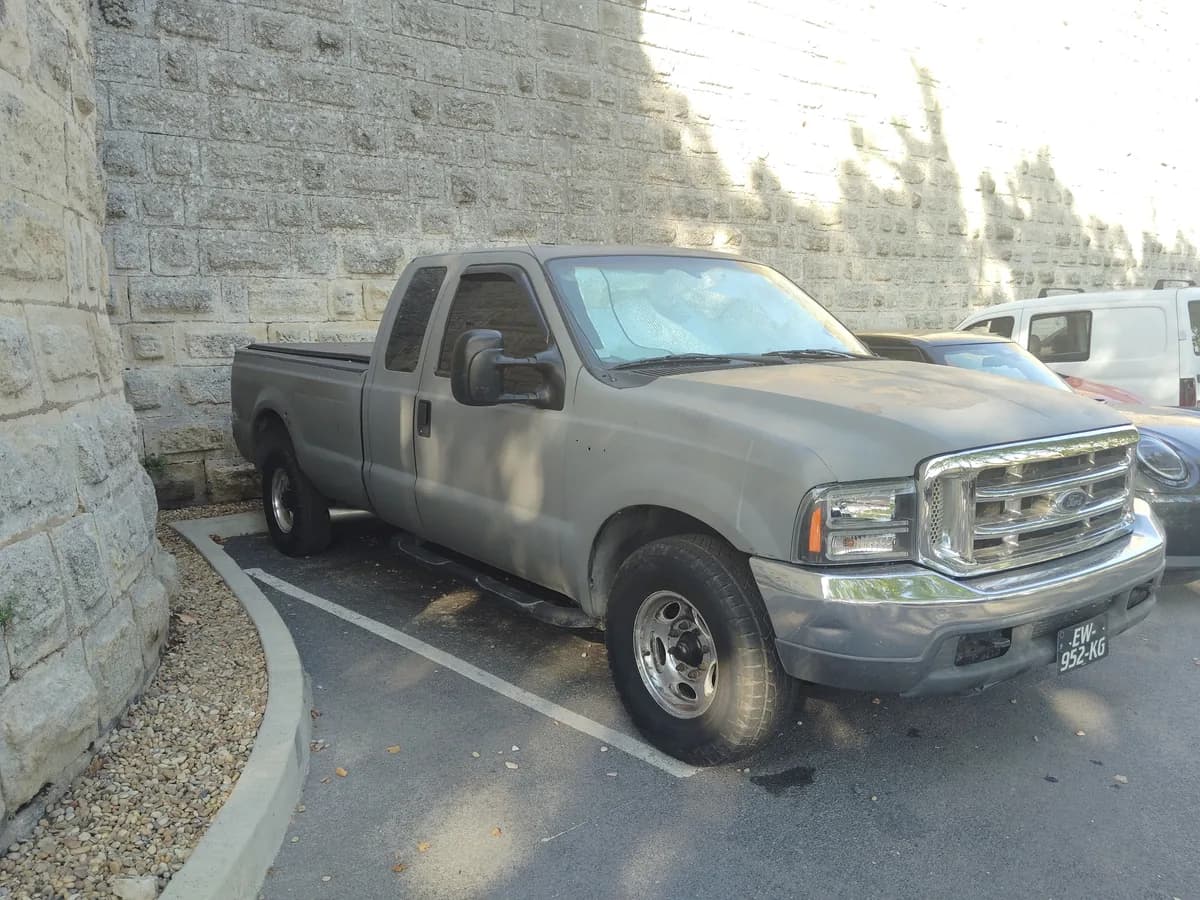
1996
1991
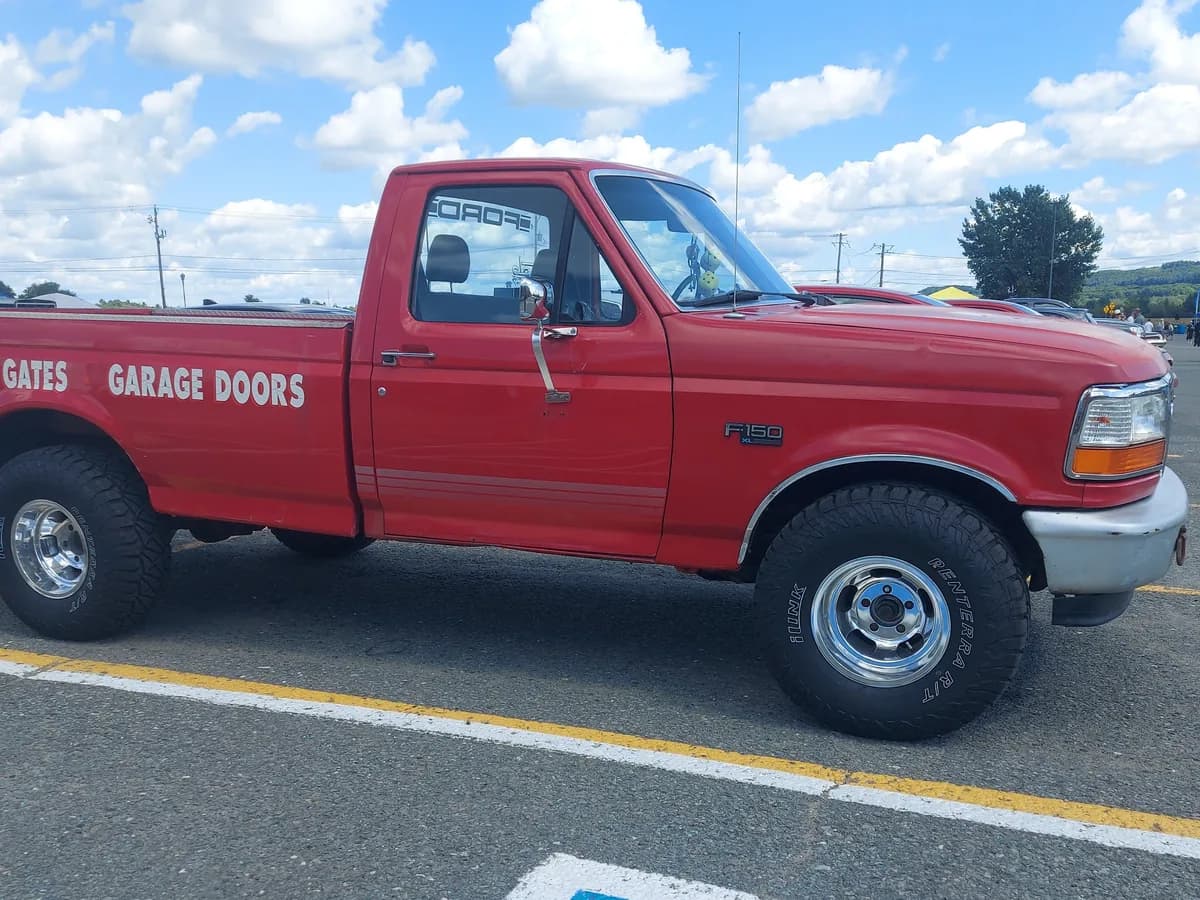
1986
1979
1972
1966
1960

1956
1952
Ford F-250 photos
Model summary
Data from the ScanRacer library, organized to compare versions quickly.
Model introduction
The Ford F-250 is a heavy-duty American pickup whose modern naming history began with Ford’s 1953 reorganization of the F-Series. The former F-2 and F-3 trucks were consolidated under the new F-250 designation, positioned between lighter pickups and heavier commercial models. For decades, the F-250 remained part of Ford’s conventional pickup range, evolving through changes to its frame, suspension, cab design, and powertrains. In 1998-1999, the Super Duty identity created a clearer separation from the F-150 and placed greater emphasis on towing, payload, and professional use. The model years represented here therefore span several distinct phases, from the rounded, utilitarian trucks of the 1950s to the heavily equipped Super Duty redesigned for 2023. That long continuity explains why the F-250 name can refer to substantially different trucks depending on the year.
History
The first F-Series generation, introduced in 1948, used designations ranging from F-1 to F-8. For 1953, Ford reorganized the line and turned the former F-2 and F-3 trucks into the F-250. The same period brought a wider cab, integrated front fenders, and a less basic appearance. In 1954, an overhead-valve V8 replaced the earlier flathead V8. During the early 1960s, the F-Series adopted Twin I-Beam front suspension, an important engineering change for two-wheel-drive models and for the truck’s working character. Through the 1970s and 1980s, the F-250 gradually combined greater work capacity with more comfort, offering additional cab configurations, equipment packages, and diesel options. In the 1990s, the body became more aerodynamic while the distinction between light-duty and heavy-duty pickups grew clearer. Ford introduced the new Super Duty family in 1998 for the 1999 model year. The F-250 Super Duty used a different visual and engineering approach aimed at heavier towing and payload demands. Later milestones included the 6.7-liter Power Stroke diesel in 2011, an aluminum-alloy body for the 2017 redesign, and a substantially updated technology package for 2023.
Generations
Historical breakdowns vary depending on whether the subject is the entire F-Series or the F-250 Super Duty specifically. In the early period, the F-250 belonged to Ford’s conventional F-Series: the second generation covered roughly 1953-1956, followed by major styling and engineering changes for 1957-1960 and 1961-1966. The 1970s and 1980s brought larger bodies, more cab choices, and broader equipment offerings. During the 1990s, the conventional F-250 still shared much of its overall appearance with the F-150, although its capacity and running gear were heavier. The clearest break came with the Super Duty family introduced for the 1999 model year. F-250 and F-350 Super Duty trucks were separated from the more lifestyle-oriented F-150 by their structure, proportions, and intended workload. Super Duty was updated for 2008, extensively redesigned for 2017 with an aluminum-alloy body over a high-strength steel frame, and redesigned again for 2023. Ford describes the 2023 truck as a new generation, adding four powertrain choices and expanded towing and connectivity features. For identification, the model year, cab style, drivetrain, and Super Duty badging are more dependable than relying on one universal generation numbering system.
Key differences
The key distinction is between conventional F-250 pickups and F-250 Super Duty trucks. Before the late 1990s, the F-250 generally shared more of its visual identity and basic layout with the F-150 of the same period, even though its frame, axles, springs, and ratings were intended for heavier work. Super Duty introduced a taller and more imposing appearance, a more upright grille, and an architecture clearly separated from the F-150. Differences between model years also include cab styles, bed lengths, rear- or four-wheel drive, gasoline and diesel engines, and towing equipment. An older F-250 may be a simple work pickup with limited trim choices, while a newer truck can combine a crew cab with electronic driver aids, trailer-focused cameras, and onboard electrical power. Commercial names and engine availability changed by year and market, so the F-250 badge alone is not enough to determine a truck’s specifications. Exact identification should use the model year, body configuration, engine designation, axle layout, and factory equipment where available.
Photo recognition
F-250 models from 1953-1956 are recognizable by their rounded cab, integrated front fenders, and more car-like appearance compared with earlier Ford trucks. The 1957-1960 trucks introduced a wider, squarer body and a distinctly revised front end. From 1961 onward, the design became lower and more linear; Twin I-Beam suspension is associated mainly with two-wheel-drive versions, but it is not sufficient by itself to identify every variant. F-250 trucks from the 1970s and 1980s commonly show sharper body lines, larger proportions, and, depending on specification, SuperCab or crew-cab layouts. The 1990s brought a smoother, more aerodynamic front end. The Super Duty introduced for 1999 is visually taller and heavier, with broader fenders and a large upright grille. The 2017 redesign can be identified by its aluminum body panels and updated lighting, while the 2023 model has a revised front fascia and a more technology-focused cabin. Badges, wheelbase, bed length, and factory documentation should still be checked before assigning an exact year or variant.
Important versions
The Super Duty designation is the most important version in the F-250’s modern history. It appeared in the late 1990s to separate heavy-duty trucks from the F-150. Earlier conventional F-250s remain important because they show how the name developed after Ford’s 1953 reorganization and how cab, engine, and equipment choices expanded over time. XL, XLT, Lariat, King Ranch, Platinum, and Limited trims gradually widened the gap between a basic work truck and a highly equipped personal pickup. For 2023, Ford offered the F-250 Super Duty with 6.8-liter and 7.3-liter gasoline V8 engines, plus a 6.7-liter Power Stroke diesel, depending on configuration and market.
Frequently asked questions
- What years was the Ford F-250 produced?
- ScanRacer's referenced versions cover 1952 - 2023.
- How many Ford F-250 examples are documented on ScanRacer?
- 4 published scans from 3 members, with the latest photo added in August 2026.
What about the car you photographed?
Upload a photo to get a suggested make, model and likely year.
No account needed for the result · Publish only if you choose