
Escort
The Ford Escort name first appeared in 1955 on an estate derivative of the Anglia 100E, but it became best known through the compact car launched in Europe in 1968. That model developed into a long-running family, sporting, and commercial range, with two- and four-door bodies, sedans, Turnier estates, convertibles, vans, and hatchbacks depending on the market. Early European Escorts used rear-wheel drive, while the third generation introduced in 1980 moved to a transverse-engine, front-wheel-drive layout. The range also produced important RS derivatives, including the RS1600, RS2000, and Escort RS Cosworth. After the Ford Focus replaced the European Escort, the name returned in China on a compact sedan unveiled in 2014 and sold from 2015. ScanRacer’s catalogue includes Escort variants spanning 1955 to 2021, with particularly broad coverage of the European body styles.
What about the car you photographed?
Upload a photo to get a suggested make, model and likely year.
No account needed for the result · Publish only if you choose
Variants by year
Make: Ford · Model: Escort
39 / 39 versions shown
2021
2018
2015
1997
1996
1995
1993
1992
1990

1986
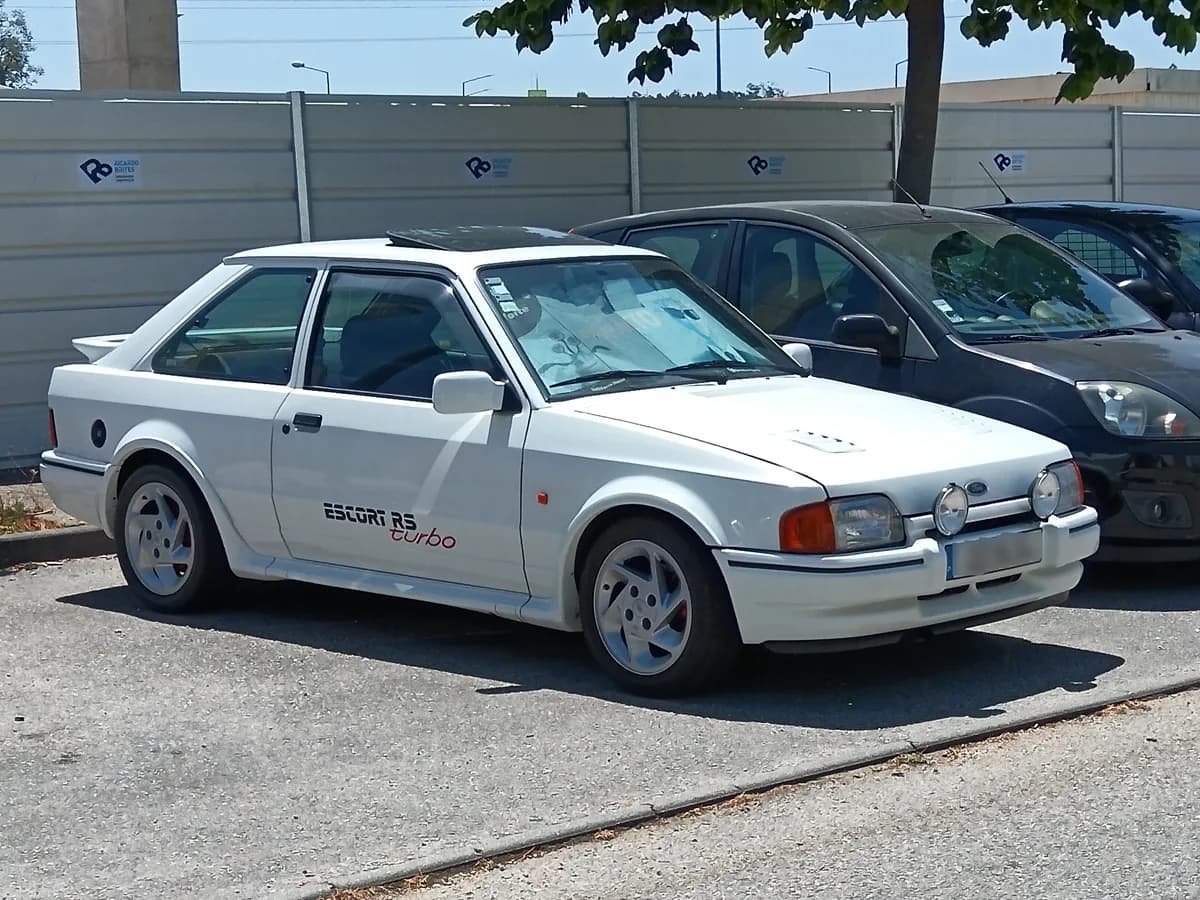
1985
1983
1981
1980
1975
1974
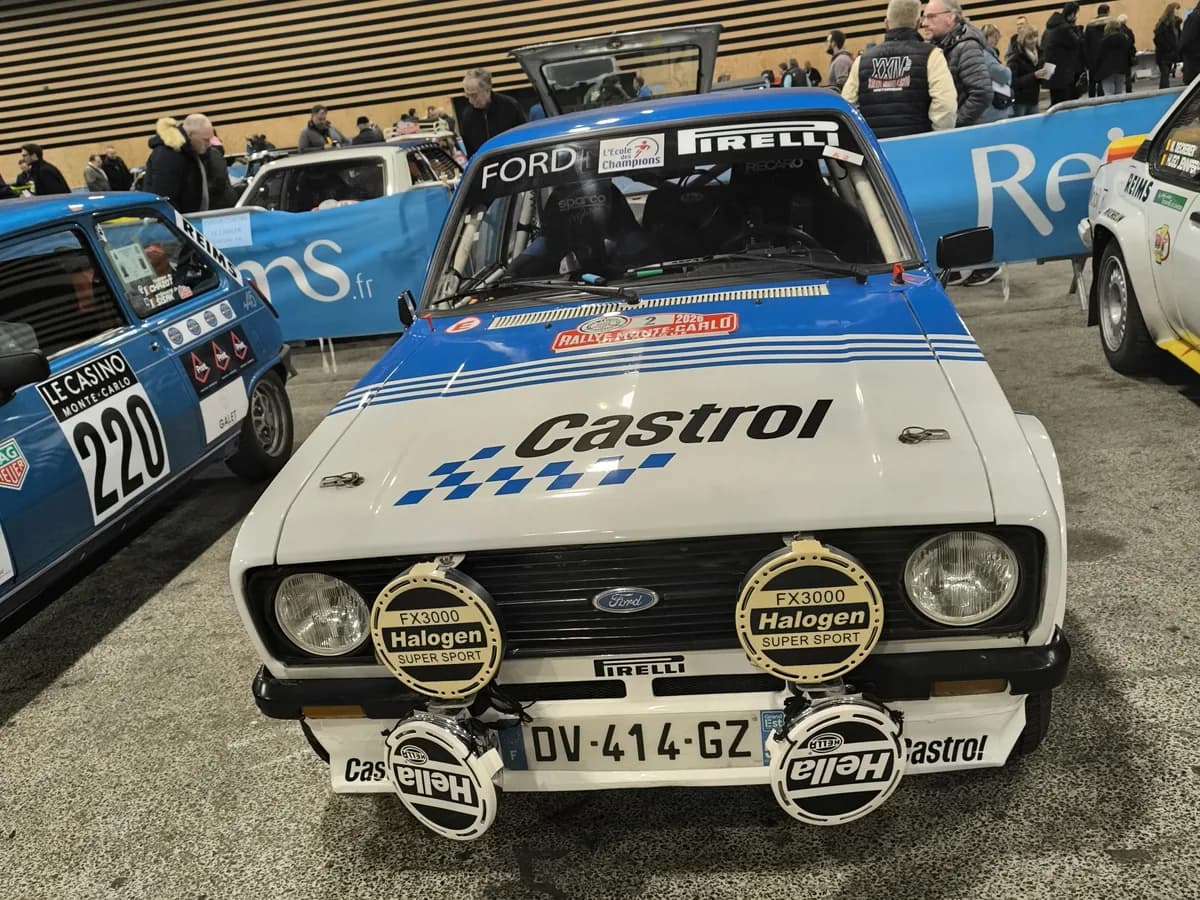
1968

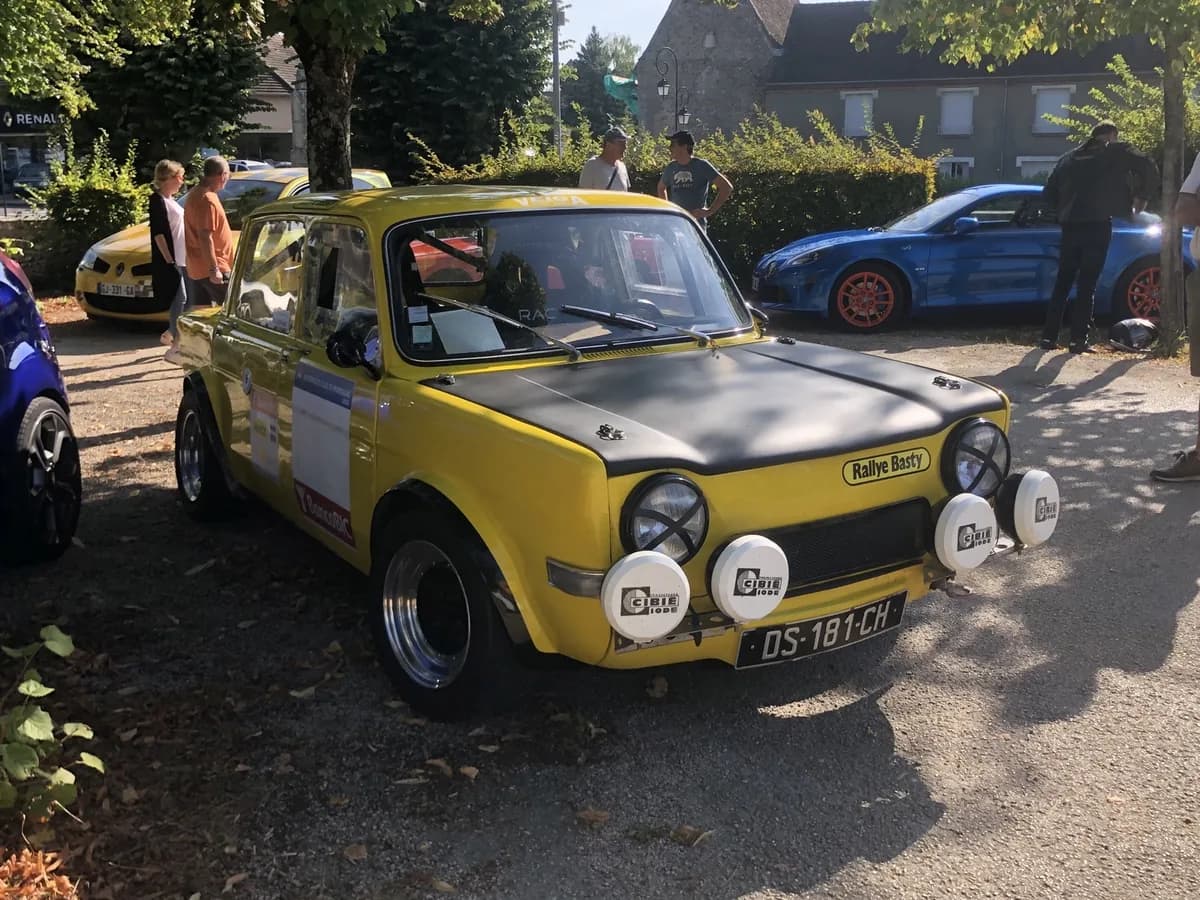
1955
Ford Escort photos
Model summary
Data from the ScanRacer library, organized to compare versions quickly.
Model introduction
The Ford Escort name first appeared in 1955 on an estate derivative of the Anglia 100E, but it became best known through the compact car launched in Europe in 1968. That model developed into a long-running family, sporting, and commercial range, with two- and four-door bodies, sedans, Turnier estates, convertibles, vans, and hatchbacks depending on the market. Early European Escorts used rear-wheel drive, while the third generation introduced in 1980 moved to a transverse-engine, front-wheel-drive layout. The range also produced important RS derivatives, including the RS1600, RS2000, and Escort RS Cosworth. After the Ford Focus replaced the European Escort, the name returned in China on a compact sedan unveiled in 2014 and sold from 2015. ScanRacer’s catalogue includes Escort variants spanning 1955 to 2021, with particularly broad coverage of the European body styles.
History
The Escort name was first used in the United Kingdom in 1955 for a lower-trim estate related to the Anglia 100E. The car that established the name’s wider reputation was the European Escort, shown in 1967 and introduced across several markets during 1968. Initially built at Halewood, it was later produced at Saarlouis and became a major Ford of Europe product. Its compact body, two- and four-door versions, and estate derivatives suited everyday family use, while sporting models gave the name a stronger performance identity. Ford describes the first European generation as rear-wheel drive and presents the third generation, introduced in 1980, as a fundamental change with a transverse engine, front-wheel drive, and hatchback bodywork. The European line continued through successive design and platform revisions until the Focus arrived in 1998. The name was also used for a separate North American range beginning in 1980. In China, Ford unveiled a new Escort at Beijing in 2014; the sedan was developed for Chinese customers, built by Changan Ford, and launched from late 2014 into the 2015 model period.
Generations
The Escort’s history is best understood as several related families rather than one uninterrupted technical design. The 1955 Escort 100E was an Anglia-based estate and represents the earliest use of the name in the ScanRacer catalogue. The European line launched in 1968 is the best-known branch: it used rear-wheel drive and compact styling, then evolved into a second generation with a more formal, straight-edged appearance. The major break came in 1980 with the Erika project. It introduced a transverse engine, front-wheel drive, and hatchback and estate body styles in place of the earlier layout. Later European Escorts retained that basic direction while receiving successive body, equipment, and powertrain revisions. Ford’s heritage material identifies phases commonly known as Mk III, Mk IV, Mk V, and Mk VI, and records the European career through the arrival of the Focus in 1998. The Chinese sedan unveiled in 2014 should not be treated as merely a late European body style: it was developed for China on a global compact-car platform and represents a separate chapter in the Escort nameplate’s history.
Key differences
The most significant differences concern drivetrain and body style. European Escorts from 1968 and the following generation used rear-wheel drive, while the generation introduced in 1980 switched to front-wheel drive with a transverse engine. That change also brought a clear visual shift: earlier cars used compact saloon and fastback-like forms, whereas the 1980s models emphasized hatchbacks and more practical estates. The body types listed by ScanRacer—Coupé, Sedan, Station Wagon, Cabriolet, Hatch, Turnier Wagon, Van, and Wagon—should not be treated as interchangeable labels, because availability varied by generation and market. The North American Escort was a separate family despite sharing the badge. The 2015-2021 Chinese Escort is different again: it is a four-door family sedan developed specifically for Chinese customers, rather than a continuation of the European sporting and commercial variants.
Photo recognition
A first-generation European Escort is often identified by its small black nose-shaped grille, widely nicknamed the “dogbone,” together with a compact rear-wheel-drive profile. The next generation uses a more restrained, straight-edged design. For cars introduced in 1980, look for a three- or five-door hatchback body, more aerodynamic proportions, and the transverse-engine layout; the Turnier estate extends the same basic design with a longer roof and load area. Convertibles and vans may share front-end components with hatchbacks, but their rooflines and rear sections make them visually distinct. RS models typically add special wheels, body extensions, sporting equipment, or dedicated badging. The Escort RS Cosworth is especially recognizable through its large rear wing and visibly widened bodywork. The 2015-2021 Chinese sedan is a different visual proposition, with four doors, a separate trunk, and a broad trapezoidal grille. Market-specific trim details should be checked before using them as definitive identification markers.
Important versions
The most notable versions begin with the 1955 Escort 100E, which matters as the origin of the name but is separate from the European compact introduced in 1968. Within the European line, the RS1600 combined a sporting mission with a Cosworth cylinder head, while the RS2000 became one of the best-known performance versions of the early rear-wheel-drive period. The Escort RS Cosworth was the nameplate’s most spectacular performance model; Ford links it closely with its rally heritage, all-wheel drive, and its prominent rear wing. The mainstream body styles are equally important for understanding the range: hatchback, saloon, convertible, Turnier estate, and van. In the ScanRacer context, the 2015-2021 Base sedan belongs to the final Chinese Escort family and should be kept separate from the historic European cars.
References
- 50 Jahre Ford Escort: über Hundeknochen, Brenda, Erika, Flair und FunFord Media Center
- The Escort Legend Turns 50Ford Media Center
- All-New Ford Escort Makes Global Debut at Auto China 2014Ford Media Center
- New Ford Escort Delivers Greater Value to Family CustomersFord Media Center
- https://media.ford.com/content/dam/fordmedia/Europe/de/2018/03/Ford%20Escort/Ford_Heritage%20Escort_TT3%20%28003%29.pdfmedia.ford.com
Frequently asked questions
- What years was the Ford Escort produced?
- ScanRacer's referenced versions cover 1955 - 2021.
- How many Ford Escort examples are documented on ScanRacer?
- 5 published scans from 5 members, with the latest photo added in September 2026.
What about the car you photographed?
Upload a photo to get a suggested make, model and likely year.
No account needed for the result · Publish only if you choose