
Seicento
Introduced in March 1998, the FIAT Seicento was a compact three-door city car developed to strengthen Fiat’s presence in the small urban-car segment. It is approximately 3.32 metres long and 1.51 metres wide, yet its cabin was approved for five occupants. The launch range paired an 899 cc petrol engine with a 1,108 cc FIRE unit, while trim levels extended from the S through the SX, Sporting and Suite. Fiat also offered the Citymatic with an electronically controlled clutch and the battery-powered Elettra. Built at Tychy in Poland, the Seicento combined a rounded modern body with equipment that was notable for its class, including front belt pretensioners and an energy-absorbing steering wheel. Its compact footprint, clear visibility and easy manoeuvrability were central to Fiat’s original positioning of the model. (media.stellantis.com)
Variants by year
1998
Model summary
Data from the ScanRacer library, organized to compare versions quickly.
Model introduction
Introduced in March 1998, the FIAT Seicento was a compact three-door city car developed to strengthen Fiat’s presence in the small urban-car segment. It is approximately 3.32 metres long and 1.51 metres wide, yet its cabin was approved for five occupants. The launch range paired an 899 cc petrol engine with a 1,108 cc FIRE unit, while trim levels extended from the S through the SX, Sporting and Suite. Fiat also offered the Citymatic with an electronically controlled clutch and the battery-powered Elettra. Built at Tychy in Poland, the Seicento combined a rounded modern body with equipment that was notable for its class, including front belt pretensioners and an energy-absorbing steering wheel. Its compact footprint, clear visibility and easy manoeuvrability were central to Fiat’s original positioning of the model. (media.stellantis.com)
History
The Seicento arrived as part of Fiat’s renewal of its small-car range in the late 1990s. Italian sales began on March 28, 1998, while Fiat announced European availability from the end of that month. The car took over the role previously held by the Cinquecento, using a redesigned body, a revised cabin and a more contemporary presentation. Period material positioned it primarily as an urban car, but also stressed its ability to handle longer journeys with reasonable comfort. (media.stellantis.com) Production was assigned to the Tychy plant in southern Poland, which already had experience building Fiat’s smallest models. The initial programme included the S, SX, Sporting and Suite, joined by the Citymatic and Elettra. This gave the Seicento a notably broad identity for a very small car, ranging from an economical city version to a sportier derivative and an electric model. (media.stellantis.com) The Sporting quickly gained additional visibility through Fiat-backed promotional challenges and Fiat Auto Corse rally programmes during 1998 and 1999. That competition activity should not be confused with the specification of every road car, but it helped establish the Sporting as the most characterful member of the range. Fiat later stated that more than one million Seicentos had been sold by 2004, underlining the model’s commercial importance in the European city-car market. (media.stellantis.com)
Generations
The Seicento should not automatically be described as a multi-generation family based only on its commercial trim names. Fiat’s 1998 documentation presents it as a new model built around one small-city-car concept, with several body-related identities, equipment levels and powertrain choices introduced from the start. Its relationship with the Cinquecento is clear in its market role and in aspects of its mechanical continuity, but the body, cabin and presentation were substantially reworked. This is a safer interpretation than assigning unverified generation breaks to the model. (media.stellantis.com) For the 1998 model year, the correct reference point is therefore the launch Seicento, sometimes identified as project 187 in automotive catalogues. The clearest distinctions concern versions and equipment rather than a complete generational change. The S and SX represent practical urban configurations, the Sporting gives the car a more dynamic character, the Suite focuses on finish and equipment, the Citymatic uses an electronically controlled clutch, and the Elettra employs an electric drivetrain. (media.stellantis.com) Later developments should always be checked against the relevant market and production year. Trim names, engines, equipment and commercial badges could differ between countries, so a badge change or a new special edition should not by itself be treated as evidence of a new generation.
Key differences
The main differences between 1998 Seicento versions concern trim and powertrain rather than a fundamentally different body shell. Fiat’s launch material identifies an 899 cc engine rated at 39 bhp and a 1,108 cc FIRE four-cylinder producing 54 bhp. The smaller unit was aimed at economy and urban use, while the larger engine gave the car more pace, particularly in the Sporting. (media.stellantis.com) The S represented the simpler approach, while the SX offered a more comprehensive presentation and equipment package. The Sporting carried the strongest dynamic emphasis and was also used in Fiat’s promotional and rally programmes. The Suite adopted a more comfort-oriented and refined identity. The Citymatic is mechanically distinctive because its clutch was electronically controlled, while the Elettra was a dedicated electric derivative with batteries arranged to preserve useful cabin space. (media.stellantis.com) Available equipment could include electric power steering, ABS and airbags depending on the configuration and market. Those features should not be assumed on every car simply because it carries the Seicento name.
Photo recognition
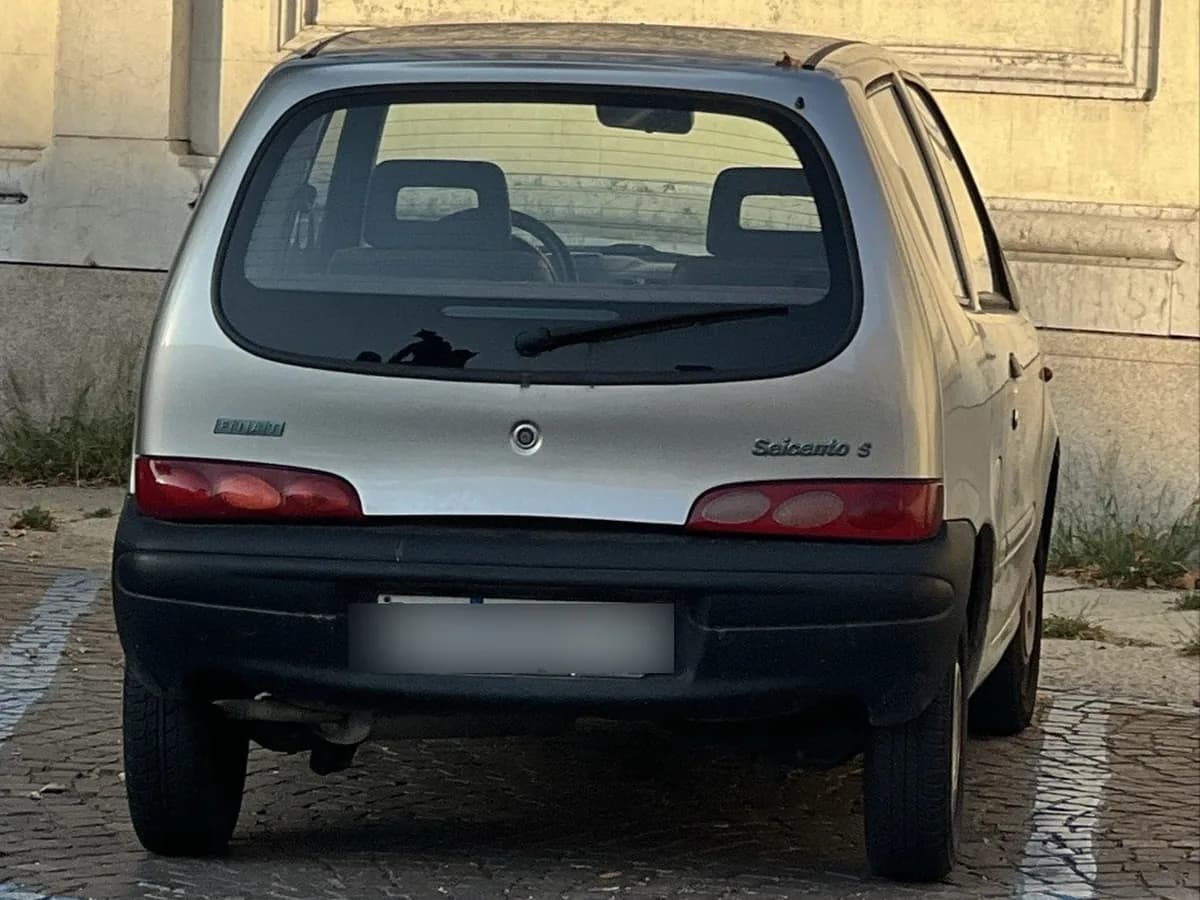
A first-year Seicento can initially be recognised by its rounded three-door city-car shape, approximate length of 3.32 metres and width of about 1.51 metres. Fiat highlighted the convex surfaces, clear visibility and sense of room created within a very compact footprint. A five-seat cabin is another useful clue consistent with the manufacturer’s launch description. (media.stellantis.com) Version identification should combine several clues rather than rely on one badge. S, SX, Sporting and Suite markings can help, but equipment details may have differed between markets. The Sporting deserves particular care: its sportier presentation, wheels and trim may separate it from other versions, but a road car should not be expected to carry every feature used on a competition car. Fiat’s period material confirms the Sporting’s involvement in promotional challenges and rally events during 1998. (media.stellantis.com) The Citymatic is best checked through its electronically controlled clutch system, while the Elettra is identifiable by its electric drivetrain and distinctive battery packaging. For a dependable identification, compare the badge, engine type, controls, equipment and vehicle documentation rather than relying on appearance alone.
Important versions
For 1998, Base is the reference designation associated with the available model-year entry. It should not be interpreted as the only version offered by Fiat at the time. Period launch documents also list the S, SX, Sporting and Suite, together with the Citymatic and Elettra. (media.stellantis.com) The S and SX represent the conventional range configurations. The Sporting is the performance-oriented derivative and was also used in Fiat’s promotional challenges. The Suite provides a more upmarket treatment for the class. The Citymatic introduces an electronically controlled clutch intended to reduce effort in urban traffic. The Elettra is a separate electric version, with four seats and cabin packaging adapted around its batteries. Equipment and badges may vary by country, so every identification should be tied to the relevant production year and market.
References
- FIAT SEICENTO -01 THE NEW MODEL IN BRIEFFIAT / Stellantis Media
- Motor Show di Bologna 1998: Fiat SeicentoFIAT / Stellantis Media
- I prezzi della nuova SeicentoFIAT / Stellantis Media
- Challenge Fiat Seicento delle Regioni 1998FIAT / Stellantis Media
- Fiat SeicentoAutoZine
- https://www.automobile-catalog.com/make/fiat/seicento/seicento/1998.htmlautomobile-catalog.com
- https://www.fiatforum.com/guides/seicento-buyers-guide.944/fiatforum.com
Frequently asked questions
- What years was the FIAT Seicento produced?
- ScanRacer's referenced versions cover 1998.
- How many FIAT Seicento examples are documented on ScanRacer?
- 2 published scans from 2 members, with the latest photo added in August 2026.