
Testarossa
Unveiled at the Paris Motor Show in October 1984, the Ferrari Testarossa replaced the 512 BBi as Ferrari’s mid-engined twelve-cylinder road car. Its Pininfarina body is defined by a broad stance, slatted side air intakes, and a rear deck covering a 5.0-liter twelve-cylinder engine. The Testarossa retained a five-speed manual gearbox while combining supercar performance with a more practical grand-touring character than a competition-derived machine. Its name recalled Ferrari’s 500 TR and 250 Testa Rossa racers, although the 1984 road car was a closed coupé developed for road use rather than a direct racing derivative. The original model is particularly associated with its flat-twelve layout, red cam covers, dramatic wedge profile, and distinctive side strakes. In the ScanRacer library, the model is currently represented by a Base variant for the 1984 model year.
What about the car you photographed?
Upload a photo to get a suggested make, model and likely year.
No account needed for the result · Publish only if you choose
Variants by year
Make: Ferrari · Model: Testarossa
1 / 1 versions shown
1984
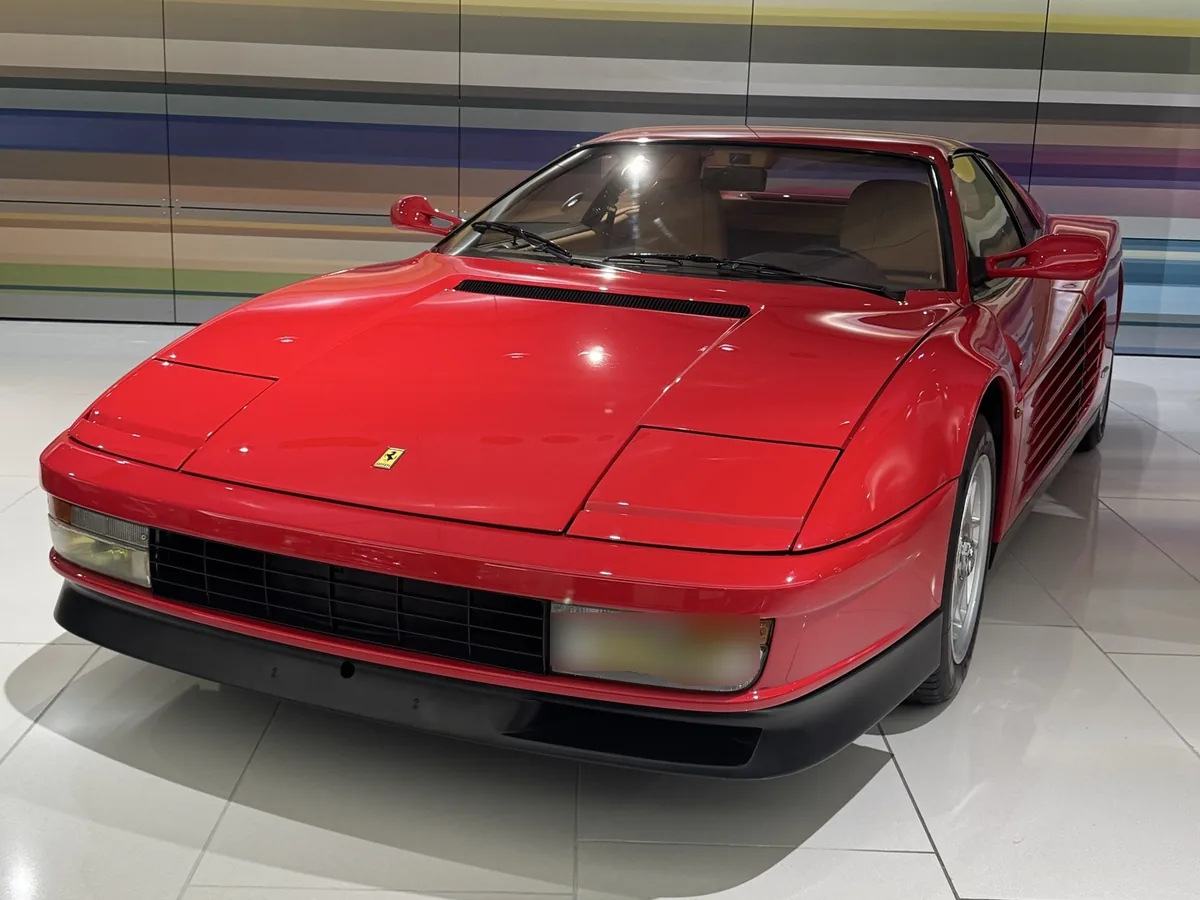
Ferrari Testarossa photos
Model summary
Data from the ScanRacer library, organized to compare versions quickly.
Model introduction
Unveiled at the Paris Motor Show in October 1984, the Ferrari Testarossa replaced the 512 BBi as Ferrari’s mid-engined twelve-cylinder road car. Its Pininfarina body is defined by a broad stance, slatted side air intakes, and a rear deck covering a 5.0-liter twelve-cylinder engine. The Testarossa retained a five-speed manual gearbox while combining supercar performance with a more practical grand-touring character than a competition-derived machine. Its name recalled Ferrari’s 500 TR and 250 Testa Rossa racers, although the 1984 road car was a closed coupé developed for road use rather than a direct racing derivative. The original model is particularly associated with its flat-twelve layout, red cam covers, dramatic wedge profile, and distinctive side strakes. In the ScanRacer library, the model is currently represented by a Base variant for the 1984 model year.
History
The Testarossa arrived as Ferrari developed its mid-engined twelve-cylinder road-car range. The 365 GT4 BB, followed by the 512 BB and 512 BBi, had established this layout at the top of Ferrari’s road-car line. Their replacement needed to provide more room, improved comfort, and greater usability while keeping the twelve-cylinder engine behind the cabin. Ferrari unveiled the new car in Paris in 1984 and revived the Testarossa name, which had already been associated with Ferrari racing cars from the 1950s and 1960s. Pininfarina designed the body under Leonardo Fioravanti’s direction. The broad rear quarters housed the side-mounted radiators and their air channels, creating the long slatted grilles that became the car’s defining visual feature. The 5.0-liter engine used four-valve cylinder heads and red cam covers, providing the literal “red head” reference behind the name. A five-speed manual transmission and independent suspension at all four wheels were retained. Production of the original Testarossa ran from 1984 to 1991 according to established automotive references. The line then continued through the 512 TR and F512 M, two separate developments that progressively revised the engine, chassis, brakes, and exterior design. That continuity is why Testarossa can describe both a specific 1984–1991 model and the wider Ferrari twelve-cylinder family that followed it through the 1990s.
Generations
The Testarossa is not best understood as a series of traditionally named generations. A more accurate description is an original model followed by two major developments that retained the same overall architecture. The first phase is the Testarossa launched in 1984. It is identified by its sharply creased bodywork, pop-up headlights, black rear grille, and wide slatted side intakes. Its 5.0-liter twelve-cylinder engine sits behind the cabin in a mid-rear position and drives the rear wheels through a five-speed manual transmission. This version remains the design most closely associated with the Testarossa name. The second phase is the 512 TR, introduced for the 1992 model year. Although it carried a different badge, it was a direct continuation of the Testarossa concept, with a revised engine, repositioned powertrain, and improvements to the brakes, suspension, steering, and interior. Its exterior styling was smoother and more rounded. The third phase is the F512 M, introduced in 1994 and produced through 1996. The “M” stood for modificata. This version replaced the pop-up headlights with fixed units beneath clear covers and received redesigned front and rear styling. ScanRacer’s supplied coverage is limited to the original 1984 Testarossa, listed as a Base variant.
Key differences
The original Testarossa first differs from the 512 BBi through its wider and more accommodating body. Ferrari retained the mid-rear twelve-cylinder layout but revised the radiator installation and airflow management. The side intakes became a major structural element of the design, while the rear deck extended across the full width of the tail. Compared with its successors, the 1984 Testarossa has the sharpest styling and retains pop-up headlights. The 512 TR introduced smoother bodywork together with substantial mechanical revisions. The F512 M went further visually, using fixed headlights and redesigned rear lighting. These cars should therefore not be merged into a single variant label: they represent separate phases within the broader Testarossa family. Accurate identification also requires attention to market specification, production year, and later modifications. Published power figures and equipment details can vary between national versions, and period road-test results should not automatically be applied to every car. A car wearing Testarossa badges may also have been altered with later wheels, trim, lights, or non-original bodywork, so visual inspection should be combined with chassis and documentation checks.
Photo recognition
From the side, the Testarossa is recognized by its wedge-shaped profile, forward-set cabin, and very broad rear quarters. The most obvious feature is the series of horizontal slats covering the side air intakes behind the doors. These are not merely decorative: they conceal the ducting that feeds the side-mounted radiators. At the rear, a black grille spans the area between the lamps and gives the car a wide, flat tail. The engine cover contains multiple vents and lifts as one large panel. Red cam covers are visible when the engine compartment is open. At the front, pop-up headlights help distinguish the original Testarossa from the F512 M, which uses fixed lamps beneath clear covers. Wheels, mirrors, bumpers, and side markers can vary with market specification or later changes. Reliable identification should therefore not depend only on the paint color or side slats. Check the badges, lamp shapes, dashboard layout, and, where available, the production documentation. A modified car may combine original Testarossa bodywork with later equipment, making chassis records especially useful for confirming the exact model phase.
Important versions
The original Testarossa, unveiled in 1984, is the reference version for the slatted side intakes, pop-up headlights, and 5.0-liter twelve-cylinder engine. It was followed in the range by the 512 TR for the 1992 model year. That car retained the basic architecture but received major mechanical improvements and smoother exterior styling. The F512 M, introduced in 1994, was the final development of the family. It used fixed headlights, a revised front end, and further technical changes. These road cars should also be distinguished from the 250 Testa Rossa racing car, a front-engined sports racer from the 1950s and 1960s that inspired the name. Based on the ScanRacer context supplied here, only the original 1984 Testarossa is currently listed, under the Base variant.
References
- Ferrari Testarossa (1984)Ferrari
- The Testarossa TriumvirateFerrari
- The Ferrari Testarossa: History, Generations, Models, and MoreMotorTrend
- Road test - Ferrari TestarossaMotor Sport Magazine
- https://www.ferrari.com/en-EN/corporate/articles/849-testarossa-spiderferrari.com
Frequently asked questions
- What years was the Ferrari Testarossa produced?
- ScanRacer's referenced versions cover 1984.
- How many Ferrari Testarossa examples are documented on ScanRacer?
- 21 published scans from 18 members, with the latest photo added in October 2026.
What about the car you photographed?
Upload a photo to get a suggested make, model and likely year.
No account needed for the result · Publish only if you choose