
Monza SP
Introduced in Paris on October 2, 2018, the Ferrari Monza SP1 and SP2 launched the Icona collection, a family of limited-series cars inspired by important Ferraris from the past. These modern barchettas draw particularly on the spirit of the 166 MM, 750 Monza, and 860 Monza while combining that influence with a carbon-fibre structure and a naturally aspirated 6.5-litre V12. The SP1 is configured as a single-seater, whereas the SP2 adds a second seat and a second fairing behind the cockpit. Ferrari quoted 810 hp, 719 Nm of torque, and a 0-to-100-km/h time of 2.9 seconds. Total production for the Monza SP1 and SP2 was limited to 499 cars, making them exceptionally scarce on the road and in collections. ScanRacer lists both variants under the 2018 model year.
What about the car you photographed?
Upload a photo to get a suggested make, model and likely year.
No account needed for the result · Publish only if you choose
Variants by year
Make: Ferrari · Model: Monza SP
2 / 2 versions shown
2018

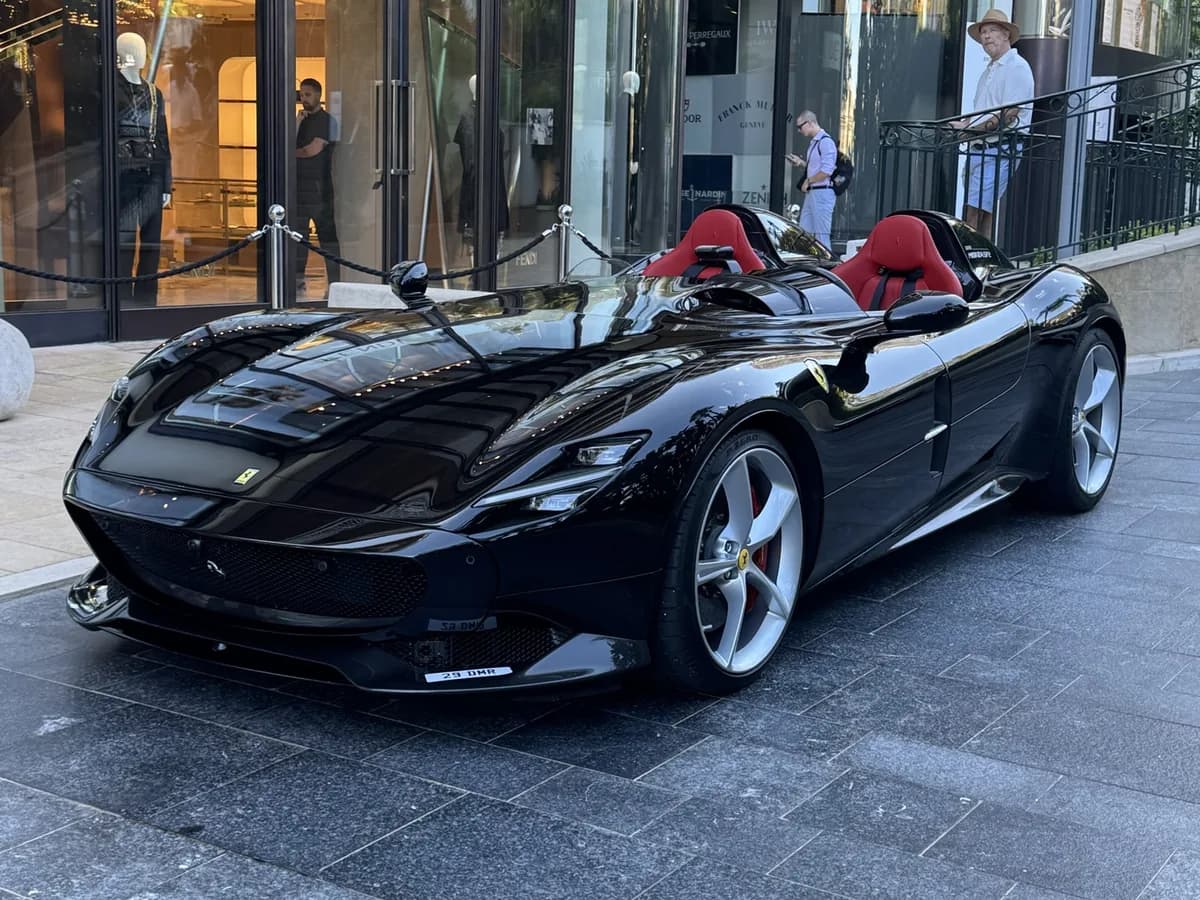
Ferrari Monza SP photos
Model summary
Data from the ScanRacer library, organized to compare versions quickly.
Model introduction
Introduced in Paris on October 2, 2018, the Ferrari Monza SP1 and SP2 launched the Icona collection, a family of limited-series cars inspired by important Ferraris from the past. These modern barchettas draw particularly on the spirit of the 166 MM, 750 Monza, and 860 Monza while combining that influence with a carbon-fibre structure and a naturally aspirated 6.5-litre V12. The SP1 is configured as a single-seater, whereas the SP2 adds a second seat and a second fairing behind the cockpit. Ferrari quoted 810 hp, 719 Nm of torque, and a 0-to-100-km/h time of 2.9 seconds. Total production for the Monza SP1 and SP2 was limited to 499 cars, making them exceptionally scarce on the road and in collections. ScanRacer lists both variants under the 2018 model year.
History
The Monza SP1 and Monza SP2 were not a new generation replacing an established Ferrari range. Instead, they introduced a parallel direction for the company: Icona, a program of highly limited cars that reinterpret important themes from Ferrari history. Ferrari directly links the two cars to the competition barchettas of the 1950s, open and minimalist machines driven both by factory racers and by wealthy private entrants. The Monza name is particularly associated with the 750 Monza and 860 Monza, two four-cylinder racing cars connected with Ferrari’s early international successes. Ferrari also identifies the 1948 166 MM as the first model to be described as a barchetta; its Touring-bodied version won the Mille Miglia and the 24 Hours of Le Mans in 1949. The modern Monza does not attempt to copy those historic cars literally. Designed by Ferrari’s Centro Stile, it translates their open proportions and visual simplicity into a contemporary carbon-fibre body. Beneath that bodywork is a technical foundation closely related to the 812 Superfast. Ferrari unveiled the SP1 and SP2 in 2018, while deliveries continued until production was reported to have ended in 2022.
Generations
The Monza SP does not divide into successive generations in the conventional sense. It was introduced in 2018 as an Icona model and offered from the outset in two complementary configurations: the SP1 and the SP2. Both share the same philosophy, open bodywork, and powertrain, but their cockpit layouts give them distinct identities. The SP1 is a single-seat barchetta. Its passenger seat is replaced by a dedicated tonneau treatment, giving the car a presentation closer to a historic racing prototype. The SP2 is a two-seater, with a visually balanced cockpit built around two separate seats and a central divider. Neither version has a roof or a conventional windscreen. Instead, Ferrari uses an aerodynamic device known as the Virtual Wind Shield, positioned at the front of the cockpit to redirect part of the airflow. Common technical data includes a naturally aspirated 6,496-cc V12, 810 hp at 8,500 rpm, 719 Nm at 7,000 rpm, and a seven-speed dual-clutch transmission. Ferrari’s technical sheet gives approximate dry weights of 1,500 kg for the SP1 and 1,520 kg for the SP2. The ScanRacer catalogue therefore represents the model as two 2018 variants rather than as a vehicle with multiple generations.
Key differences
The defining difference between the two Monzas is seating capacity. The SP1 is a strict single-seater: its passenger side is covered by a tonneau panel, and the cockpit has one fairing behind the driver. The SP2 carries two occupants and adds a second fairing behind the passenger seat. This changes the car’s appearance and use, but not its fundamental mechanical identity. Both versions use the same naturally aspirated 6.5-litre V12, seven-speed dual-clutch transmission, and Ferrari-quoted performance figures. Ferrari’s technical sheet lists only a modest dry-weight difference, at approximately 1,500 kg for the SP1 and 1,520 kg for the SP2. The SP2 should therefore not be described as a more powerful or faster model; its principal distinction is the ability to share the driving experience with a passenger. Tailor Made colours, stripes, trim, and other commissioned details may differ from one car to another, but they do not automatically identify a separate variant.
Photo recognition
The Monza SP1 and SP2 are first identified by their exceptionally low barchetta body, with no roof and no conventional windscreen. The front end uses broad, flowing surfaces and headlights integrated into the fenders, while the open cockpit is shaped by streamlined fairings. Small scissor-style doors are visible when the car is displayed open. A front-mounted V12, very long body sections, and large-diameter wheels complete a silhouette unlike that of a conventional Ferrari spider. To distinguish the variants, examine the area behind the seats. One seat and one rear fairing identify an SP1. Two separate seats, two fairings, and a more symmetrical cockpit indicate an SP2. Paint stripes, interior materials, and badges may be commissioned through Ferrari’s personalization programs, so they are not reliable variant identifiers on their own. A side photograph can sometimes be misleading; the number of seats remains the clearest and most dependable visual test.
Important versions
The two key versions in the family are the Monza SP1 and Monza SP2, both introduced in 2018 as part of Ferrari’s Icona collection. The SP1 focuses on a single-seat driving experience and a more radical, driver-centred presentation. The SP2 uses the same mechanical package and barchetta philosophy but adds room for a passenger. Ferrari limited combined production of the two models to 499 cars. In the sources consulted, the company does not publish an official split between SP1 and SP2. It is therefore more accurate to quote a combined total than to assign a precise production figure to either variant. Exterior colours, stripes, upholstery, and other Tailor Made choices can make individual cars look substantially different, but those options do not create a separate mechanical version.
References
- Ferrari Monza SP1 and SP2: the first in a new concept of limited series ‘Icona’ carsFerrari
- The Ferrari Monza SP1 and SP2 unveiled – the first models in a new conceptFerrari
- Capturing the magic: the story of the Monza SP1 and SP2Ferrari Magazine
- An Eye For PerfectionFerrari Magazine
- https://www.carcollectorinternational.com/research/buyers-guides/ferrari/monza-sp1-sp2carcollectorinternational.com
- https://www.ferrari.com/content/dam/ferrari-fcom/old/pdf/cs_ferrari_monza_sp1_sp2_gbr_0.pdfferrari.com
Frequently asked questions
- What years was the Ferrari Monza SP produced?
- ScanRacer's referenced versions cover 2018.
- How many Ferrari Monza SP examples are documented on ScanRacer?
- 11 published scans from 7 members, with the latest photo added in September 2026.
What about the car you photographed?
Upload a photo to get a suggested make, model and likely year.
No account needed for the result · Publish only if you choose