
F430
Introduced in 2004, the Ferrari F430 is a two-seat sports car with a longitudinally mounted, rear-mid-engine V8 displacing 4,307.68 cc. Ferrari quoted 360 kW, or 490 hp, at 8,500 rpm and a top speed above 315 km/h. The F430 succeeded the 360 Modena while developing Ferrari’s mid-engine V8 formula with a more aggressive aerodynamic design, a nose influenced by the 156 Formula 1 car, larger side air intakes, and four round rear lamps. It also introduced two important Ferrari features: the electronically controlled E-Diff and the steering-wheel-mounted manettino, which coordinates several chassis and stability settings. ScanRacer currently lists the Berlinetta and Spider versions for 2004. Ferrari’s own historical timeline places the closed F430 in 2004 and the F430 Spider in 2005, so year labels should be read according to the library’s own coverage rules. (ferrari.com)
Variants by year
2004
Model summary
Data from the ScanRacer library, organized to compare versions quickly.
Model introduction
Introduced in 2004, the Ferrari F430 is a two-seat sports car with a longitudinally mounted, rear-mid-engine V8 displacing 4,307.68 cc. Ferrari quoted 360 kW, or 490 hp, at 8,500 rpm and a top speed above 315 km/h. The F430 succeeded the 360 Modena while developing Ferrari’s mid-engine V8 formula with a more aggressive aerodynamic design, a nose influenced by the 156 Formula 1 car, larger side air intakes, and four round rear lamps. It also introduced two important Ferrari features: the electronically controlled E-Diff and the steering-wheel-mounted manettino, which coordinates several chassis and stability settings. ScanRacer currently lists the Berlinetta and Spider versions for 2004. Ferrari’s own historical timeline places the closed F430 in 2004 and the F430 Spider in 2005, so year labels should be read according to the library’s own coverage rules. (ferrari.com)
History
The F430 appears in Ferrari’s 2004 historical timeline, following the 360 Modena during a period when the company was rapidly renewing its mid-engine range. It was not a clean-sheet departure from the 360: the general layout, mid-engine position, and use of an aluminium chassis remained related, but the technical package was substantially revised. Ferrari developed a new naturally aspirated 4.3-liter V8 intended to deliver stronger output and a sharper high-revving response. The “430” designation reflects the engine’s approximate displacement, while the “F” maintains the model’s Ferrari identity. The exterior was created through a Ferrari and Pininfarina collaboration, with Frank Stephenson credited with the design direction. Its shape combined racing references with more advanced aerodynamic work than the 360. The twin front openings drew inspiration from the 1961 Ferrari 156, while the exposed round rear lamps recalled the Enzo Ferrari. Ferrari’s own technical description highlights the contribution of the underbody, diffuser, and air-management systems to reducing lift compared with the previous car. The F430 Spider subsequently expanded the range with an open body and its own powered-roof structure. More focused derivatives, including the 430 Scuderia, later extended the model’s performance identity beyond the standard F430. (ferrari.com)
Generations
The Ferrari F430 represents a single main generation of rear-mid-engine V8 sports cars built around one core technical platform. Ferrari does not present the model as having a formal “second generation”; instead, its development is best understood through body styles, performance levels, and limited derivatives. The first form was the Berlinetta, introduced in 2004. It used a closed cabin, a rear engine window that displayed the V8, and bodywork developed for greater structural and aerodynamic efficiency. The Spider added an open cabin and retractable roof, requiring different rear-deck and rollover-protection details. Ferrari’s historical timeline places the Spider under 2005, although the supplied ScanRacer context assigns both the Berlinetta and Spider to 2004. The wider F430 family later included more specialized cars. The 430 Scuderia was a lighter, more track-focused development of the Berlinetta, while the limited-production Scuderia Spider 16M applied the same idea to an open-top car. These derivatives are important to the F430’s broader history, but they should not be treated as additional ScanRacer variants here: the provided library context lists only Berlinetta and Spider. (ferrari.com)
Key differences
The clearest distinction is between the Berlinetta and the Spider. The Berlinetta has a fixed roof and a more conventional structure around the rear cabin. It retains a large engine window and presents the cleaner outline of a closed coupé. The Spider replaces the roof with a retractable system and uses more prominent rear buttresses associated with rollover protection and roof packaging. Its rear deck is therefore visibly different, even though the engine, basic layout, and overall design language remain shared. Both body styles use the naturally aspirated 4.3-liter V8 and the model’s principal electronic systems, including the E-Diff and steering-wheel manettino. Depending on specification and market, buyers could choose a six-speed manual gearbox or Ferrari’s six-speed F1 electrohydraulic transmission with steering-wheel paddles. The later Scuderia derivatives introduced more extensive performance changes, so they should be treated as a separate sporting branch rather than as another body-style difference between the standard Berlinetta and Spider. (ferrari.com)
Photo recognition
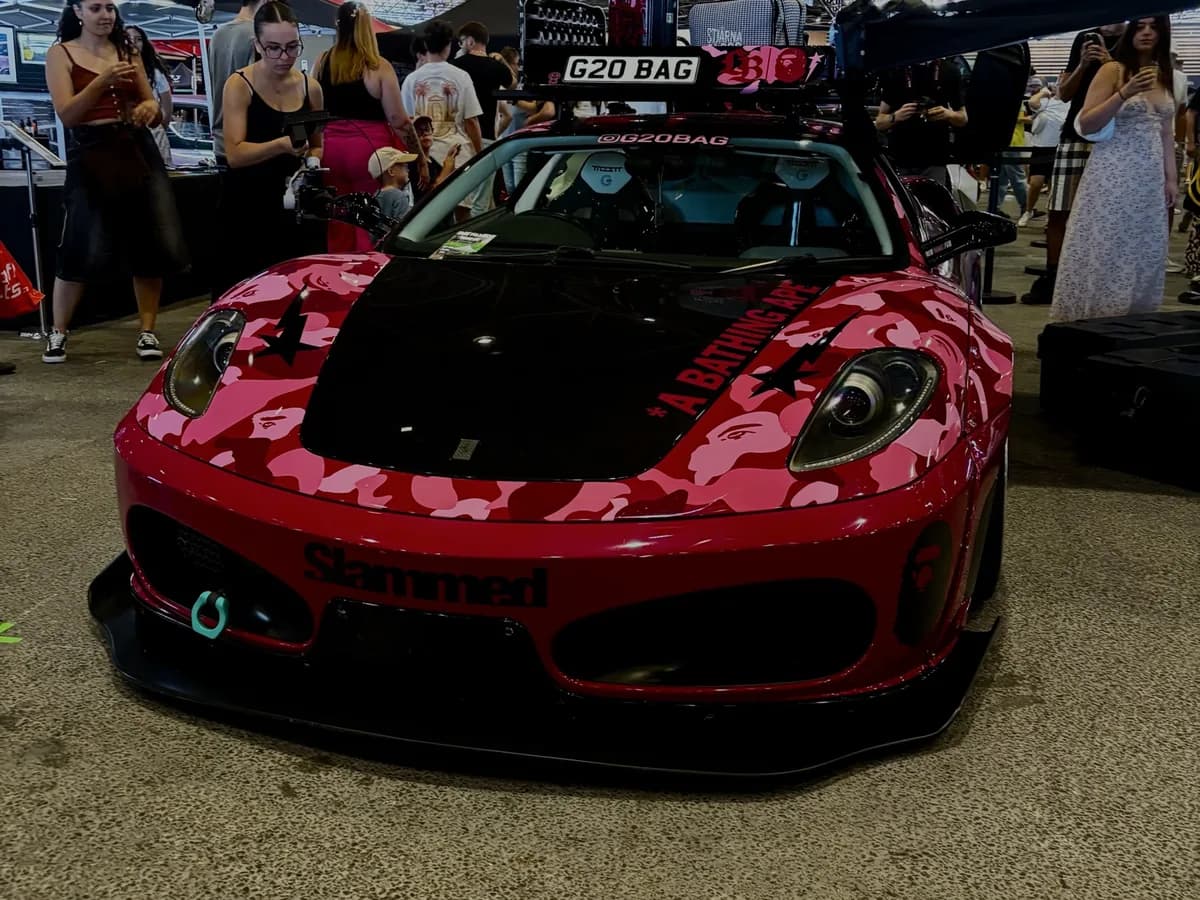
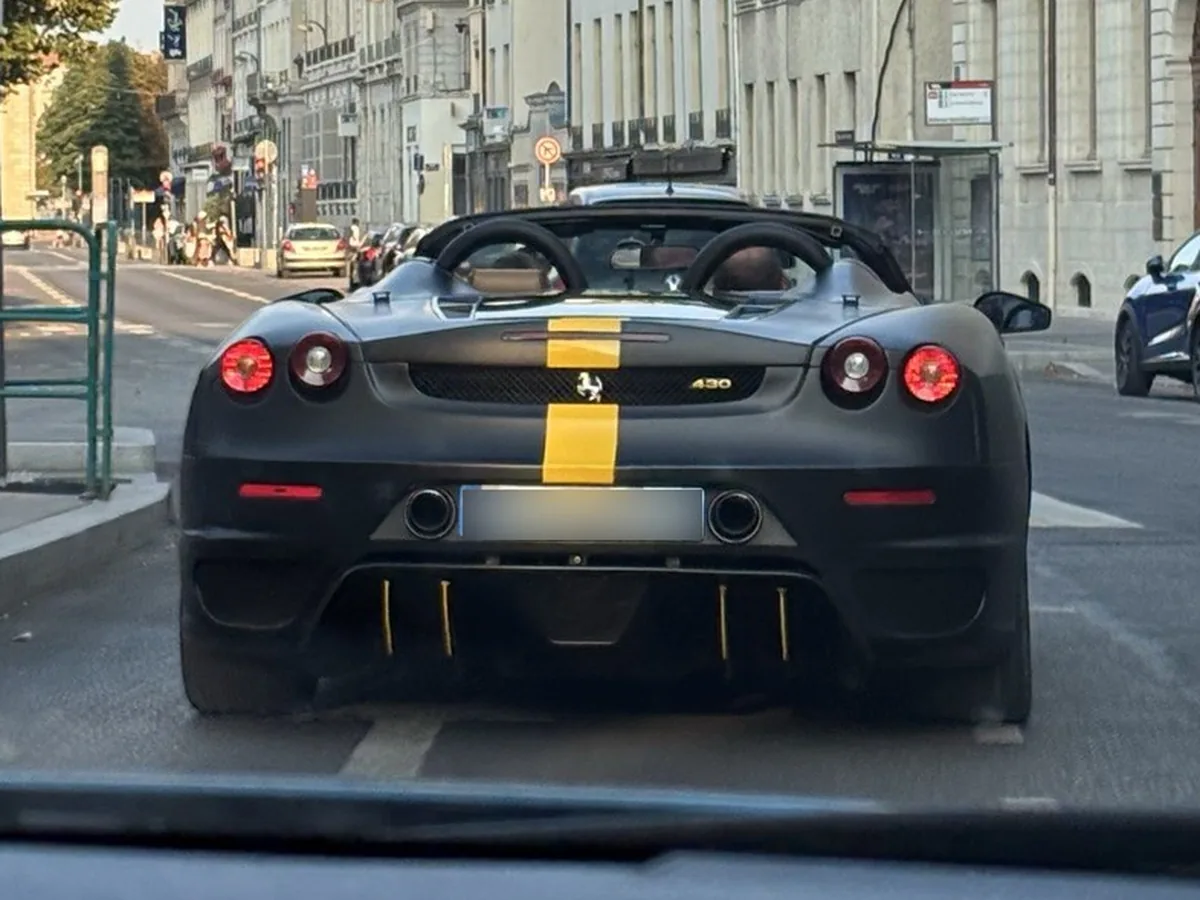
Start at the front when identifying an F430. Its two large lower openings create a distinctive nose influenced by Ferrari’s 156 Formula 1 car. The headlamps are narrow and housed in vertical units, while the body sides feature broad air intakes behind the doors and ahead of the rear wheels. These openings support cooling and engine airflow and are more prominent than those on the 360 Modena. At the rear, four round lamps mounted high on the body are a key clue. They visually sit above the rear surface and flank a black grille, while four exhaust outlets appear near the lower outer edges. The engine window is another useful detail: it is especially clear on the Berlinetta and remains part of a different rear-deck arrangement on the Spider. To identify the Spider, look for the retractable roof, the two rollover structures or rear buttresses behind the seats, and the more sculpted rear deck. Badges, wheels, and colors can change with specification, so several identifying features should be checked together rather than relying on one detail. (caranddriver.com)
Important versions
The Berlinetta is the core closed-body version, introduced in 2004 with the naturally aspirated 4.3-liter V8, an engine visible beneath the rear window, and the chassis electronics associated with the F430. The Spider uses the same basic platform in an open-top configuration; Ferrari’s historical timeline places it in 2005, while the supplied ScanRacer context references it under 2004. In the model’s broader history, the 430 Scuderia is particularly significant. It developed the F430 into a lighter, more track-oriented car with a sharper performance focus. The limited-production Scuderia Spider 16M later applied that approach to an open body. Both derivatives matter when tracing the F430 family, but the variants specified for this library are only the Berlinetta and Spider. (ferrari.com)
References
- Ferrari F430: Ferrari HistoryFerrari
- Ferrari F430 Road TestCar and Driver
- 2006 Ferrari F430: What's NewCars.com
- Ferrari F430 in detailCar Enthusiast
- The Ferrari F430 Got Its Distinctive LooksRoad & Track
- https://www.ferrari.com/en-CA/history/garage/2004/f430ferrari.com
- https://www.ferrari.com/it-IT/history/garage/2004/f430ferrari.com
Technical specifications
Structured data available for versions linked to this model.
| Version | Power | Torque | Top speed | Drivetrain | Fuel |
|---|---|---|---|---|---|
| — | 490 CV à 8 500 tr/min | — | — | Propulsion arrière / Manuelle à 6 vitesses ou F1 semi-automatique | — |
Frequently asked questions
- What years was the Ferrari F430 produced?
- ScanRacer's referenced versions cover 2004.
- How many Ferrari F430 examples are documented on ScanRacer?
- 18 published scans from 14 members, with the latest photo added in September 2026.
- What is the power output of the Ferrari F430?
- The sourced technical data lists 490 CV à 8 500 tr/min.