
550
Introduced in 1996, the Ferrari 550 Maranello is a two-seat grand tourer with a longitudinally mounted front V12 and rear-wheel drive. Its 5,473.91 cc engine produces 485 hp at 7,000 rpm, while Ferrari quoted a top speed of 320 km/h. Styled by Pininfarina, the 550 represented Ferrari’s return to a traditional front-engine layout for its flagship two-seat twelve-cylinder GT after several generations of mid-engine cars. The 550 family chiefly consists of the Maranello coupé and the limited-production 550 Barchetta Pininfarina, unveiled at the Paris Motor Show in 2000. Within the model context, the Berlinetta and Roadster labels correspond to these two body styles, with catalogue years represented by 1996 and 2000.
What about the car you photographed?
Upload a photo to get a suggested make, model and likely year.
No account needed for the result · Publish only if you choose
Variants by year
Make: Ferrari · Model: 550
3 / 3 versions shown
2026

2000

1996
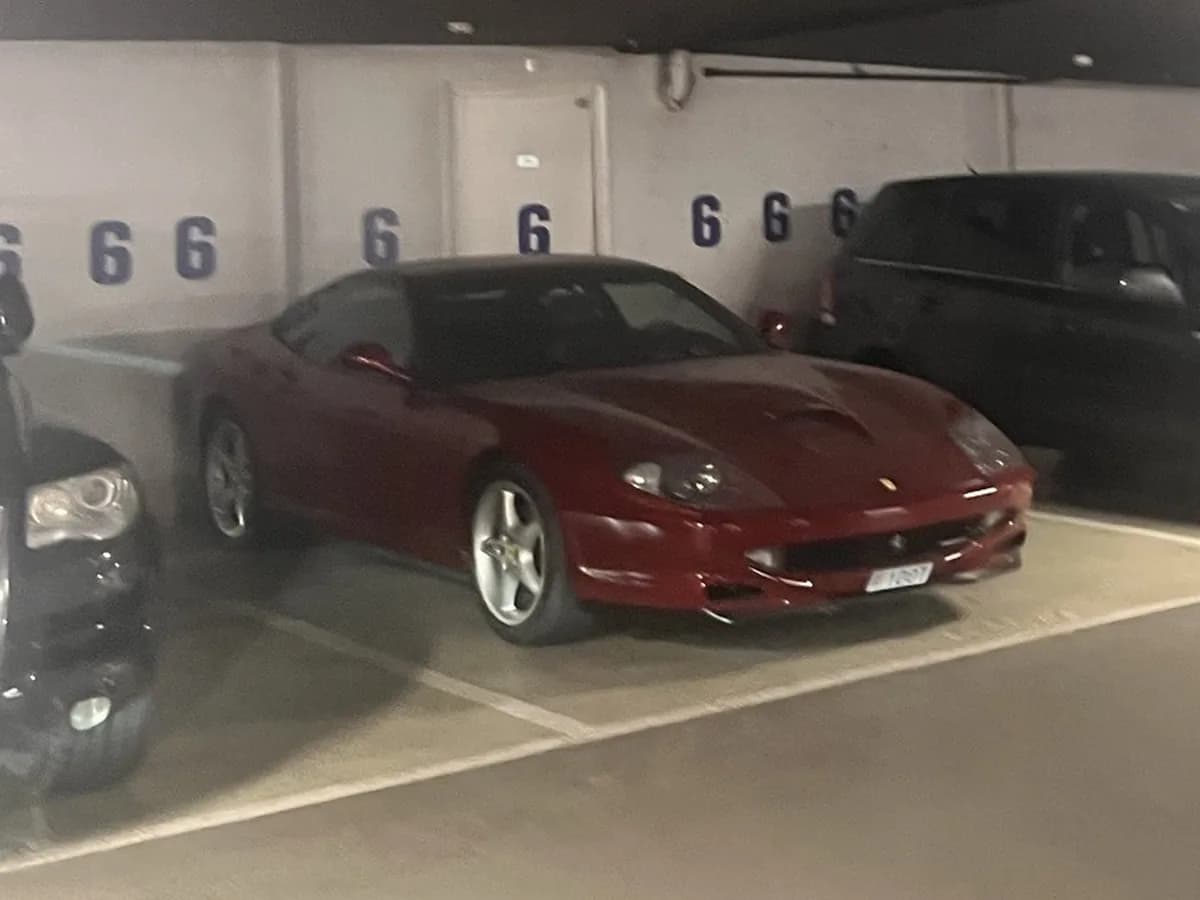
Ferrari 550 photos
Model summary
Data from the ScanRacer library, organized to compare versions quickly.
Model introduction
Introduced in 1996, the Ferrari 550 Maranello is a two-seat grand tourer with a longitudinally mounted front V12 and rear-wheel drive. Its 5,473.91 cc engine produces 485 hp at 7,000 rpm, while Ferrari quoted a top speed of 320 km/h. Styled by Pininfarina, the 550 represented Ferrari’s return to a traditional front-engine layout for its flagship two-seat twelve-cylinder GT after several generations of mid-engine cars. The 550 family chiefly consists of the Maranello coupé and the limited-production 550 Barchetta Pininfarina, unveiled at the Paris Motor Show in 2000. Within the model context, the Berlinetta and Roadster labels correspond to these two body styles, with catalogue years represented by 1996 and 2000.
History
The Ferrari 550 Maranello was unveiled at the Nürburgring in July 1996 during Ferrari Racing Days in Germany. Its arrival followed the end of the Testarossa, 512 TR and F512 M lineage, returning Ferrari’s flagship two-seat GT to a front-engine layout that had been absent from this category since the 365 GTB/4 Daytona. Pininfarina was responsible for the exterior and interior design under the supervision of Lorenzo Ramaciotti. The 550 name referred to the engine’s approximately 5.5-litre displacement, while Maranello identified Ferrari’s historic home town. The 5,473.91 cc F133 V12 was paired with a six-speed manual gearbox and a grand-touring chassis designed to combine high performance with long-distance usability. Ferrari quoted 485 hp, 569 Nm and a 320 km/h top speed for the coupé. In 1998, a modified 550 set several speed records at the Columbus test track in Ohio. A much rarer competition-oriented derivative, the 550 WSR, followed in very limited numbers. The 550 Barchetta Pininfarina was presented in 2000 to commemorate the coachbuilder’s 70th anniversary. Production was limited to 448 numbered cars, with the final examples leaving the factory in December 2001. The 550 family was then superseded by the 575M Maranello.
Generations
The 550 is not divided into several officially distinct generations. It is one grand-touring family that preceded the 575M Maranello. The first body style was the 550 Maranello, a two-seat closed berlinetta launched in 1996. It featured a long bonnet, a central bonnet air intake, pronounced rear haunches and a restrained tail treatment. Its V12 was mounted longitudinally at the front, with a six-speed manual gearbox and rear-wheel drive. The second body style was the 550 Barchetta Pininfarina. Unveiled in 2000 and produced in limited numbers, it retained the Maranello’s essential mechanical package while changing the body structure and open-air character. The fixed roof was removed, the windscreen was more steeply raked and rollover hoops were fitted behind the seats. Ferrari classified it as a two-seat spider, but its lightweight fabric top was intended mainly for temporary weather protection rather than the regular high-speed use expected of a modern convertible. Ferrari also listed body dimensions and tyre specifications specific to the Barchetta. The key distinction is therefore not a conventional generational change. It is a change in body style and intended experience between the Berlinetta and Roadster forms, while the core front-engine V12, rear-wheel-drive concept remained closely related.
Key differences
The 550 Maranello Berlinetta is the more versatile of the two body styles. Its fixed roof improves body stiffness, insulation and long-distance comfort. Ferrari quoted a 320 km/h top speed for the coupé, whose enclosed luggage area is also better protected and more practical for touring. The Roadster, corresponding to the 550 Barchetta Pininfarina, places greater emphasis on open-air driving and visual drama. Removing the fixed roof required a different body treatment, including a more steeply angled windscreen and rollover hoops behind the seats. Ferrari listed a 300 km/h top speed and a 1,690 kg kerb weight for the Barchetta. Its powertrain remained closely related to the coupé: a front-mounted 5,473.91 cc V12 producing 485 hp and driving through a six-speed manual gearbox. The main differences therefore concern body structure, aerodynamics, weather protection and production rarity rather than a fundamentally different engine or transmission.
Photo recognition
The 550 Maranello is first identified by its long bonnet and front-engine berlinetta proportions. The central bonnet air intake is a useful clue, as are the vents positioned behind the front wheels. Pininfarina’s styling is smooth and restrained, without the large wings or aggressive aerodynamic addenda seen on some contemporary Ferraris. At the rear, the circular lights and clean boot treatment help separate it from more angular models of the same period. Inside, many manual examples feature Ferrari’s exposed metal shift gate, a particularly recognisable detail. The Barchetta is immediately distinguished by its lack of a fixed roof, steeper windscreen and two rollover hoops behind the seats. Its rear bodywork differs slightly from the coupé, and Ferrari specified broad tyres on 18-inch wheels. A numbered plaque on the dashboard normally identifies its place in the limited series, although the plaque should be checked alongside the documentation and chassis number. A converted coupé should not be assumed to be a factory Barchetta: original body details, factory records and identification numbers are essential when authenticity matters.
Important versions
The core version of the family is the 550 Maranello Berlinetta, launched in 1996 with the 5.5-litre F133 V12, 485 hp and a six-speed manual gearbox. It represents the standard 550 configuration and corresponds to the Berlinetta year represented in the supplied model context. The 550 Barchetta Pininfarina is the most significant open-bodied derivative. Unveiled in 2000 to celebrate Pininfarina’s 70th anniversary, it was built as a limited run of 448 numbered cars. In the supplied context, it corresponds to the Roadster label and the 2000 year. The 550 WSR, produced in very small numbers from cars associated with high-speed record attempts, is also worth noting as a rare derivative, but it should not be treated as a standard factory body style within the main range.
References
- Ferrari 550 Maranello: Ferrari HistoryFerrari
- Ferrari 550 Barchetta PininfarinaFerrari
- Ferrari 550 Maranello: history, specs and used reviewEvo
- Ferrari 550 Maranello buyer’s guide: what to pay and what to look forClassic & Sports Car
- Ferrari 550 Maranello (1996–2002) - Guide occasionL’Automobile Sportive
- https://www.classicdriver.com/en/car/ferrari/550/1996/1051555classicdriver.com
Frequently asked questions
- What years was the Ferrari 550 produced?
- ScanRacer's referenced versions cover 1996 - 2026.
- How many Ferrari 550 examples are documented on ScanRacer?
- 9 published scans from 5 members, with the latest photo added in October 2026.
What about the car you photographed?
Upload a photo to get a suggested make, model and likely year.
No account needed for the result · Publish only if you choose