
365
Ferrari 365 is the name shared by a family of V12 grand touring cars introduced in 1966 with the 365 California. Their defining common feature was Ferrari's 4.4-liter Colombo-derived V12, whose approximately 365 cc per cylinder inspired the model designation. From 1966 to 1973, Ferrari used this engine family in a luxury convertible, a four-seat coupé, compact two-seat GTs, the Daytona berlinetta and spider, the later GT4 2+2, and finally the mid-rear-engined 365 GT4 BB. The variants represented here therefore cover more than one body style or mechanical layout. A 365 California and a 365 GTB4 may share the 365 name, but they were aimed at different buyers, while the GT4 BB marked a major change in Ferrari's approach to a twelve-cylinder road car.
What about the car you photographed?
Upload a photo to get a suggested make, model and likely year.
No account needed for the result · Publish only if you choose
Variants by year
Make: Ferrari · Model: 365
10 / 10 versions shown
1973
1972
1971
1968
1967
1966
Ferrari 365 photos
Model summary
Data from the ScanRacer library, organized to compare versions quickly.
Model introduction
Ferrari 365 is the name shared by a family of V12 grand touring cars introduced in 1966 with the 365 California. Their defining common feature was Ferrari's 4.4-liter Colombo-derived V12, whose approximately 365 cc per cylinder inspired the model designation. From 1966 to 1973, Ferrari used this engine family in a luxury convertible, a four-seat coupé, compact two-seat GTs, the Daytona berlinetta and spider, the later GT4 2+2, and finally the mid-rear-engined 365 GT4 BB. The variants represented here therefore cover more than one body style or mechanical layout. A 365 California and a 365 GTB4 may share the 365 name, but they were aimed at different buyers, while the GT4 BB marked a major change in Ferrari's approach to a twelve-cylinder road car.
History
The 365 California debuted at the 1966 Geneva Motor Show. Styled by Pininfarina, it combined a 4,390 cc V12 with an especially luxurious two-seat convertible body. Ferrari states that only 14 examples were built, making it one of the rarest members of the family. The 365 GT 2+2 followed in 1967 as a more practical grand tourer with four seats. In 1968, Ferrari added the 365 GTC coupé and 365 GTS spider, while the 365 GTB4 introduced a more focused front-engined berlinetta that became widely known by the unofficial Daytona nickname. The open 365 GTS4 arrived in 1969. Ferrari then presented the 365 GT4 BB in 1971 as the Daytona's successor and its first road-going twelve-cylinder model with the engine behind the cockpit. The 365 GT4 2+2 appeared in 1972, using a newer Pininfarina design and prioritizing rear-seat space over the earlier GT 2+2. Taken together, these cars document Ferrari's move from traditional front-engined V12 grand tourers toward the mid-rear-engined supercar formula.
Generations
The 365 range is not divided into modern-style generations. It is better understood as a sequence of related body and engineering families sharing a 4.4-liter V12 theme. The first period, from 1966 to 1968, includes the 365 California and 365 GT 2+2. The California was a highly exclusive two-seat convertible, while the GT 2+2 was designed for long-distance travel with four occupants. The second period covers the two-seat sporting cars: the 1968 365 GTC and GTS, followed by the 365 GTB4 and GTS4, the coupé and spider associated with the Daytona name. These cars retained a front-mounted engine, although the GTB4 used a rear transaxle to improve weight distribution. The third period began with the 365 GT4 BB, unveiled in 1971. Its longitudinal flat-twelve sat behind the cabin, and its low wedge-shaped body represented a major change in Ferrari road-car design. The 1972 365 GT4 2+2 followed a different path, retaining a front engine and four-seat layout while introducing a completely new Pininfarina body. The family is therefore best viewed as several parallel branches rather than one linear generation sequence.
Key differences
The main differences concern body style, seating, and engine placement. The 365 California is a very rare two-seat convertible, while the GT 2+2 and GT4 2+2 are coupés designed to carry four people. The GTC and GTS represent closed and open versions of a more compact grand tourer. The GTB4 and GTS4, commonly associated with the Daytona and Daytona Spider names, stand apart through their lower, more sporting proportions and their front-mounted V12 combined with a rear transaxle. The GT4 BB changes the formula completely: its flat-twelve engine is mounted behind the cockpit, producing different proportions and a very different dynamic concept. ScanRacer labels may also abbreviate official names, such as “GTS-4” for 365 GTS4 or “GT 4 BB” for 365 GT4 BB. Those catalog labels should be treated as indexing conventions rather than evidence of additional mechanical distinctions. Exact identification still depends on the original model designation, body configuration, chassis records, and production details.
Photo recognition
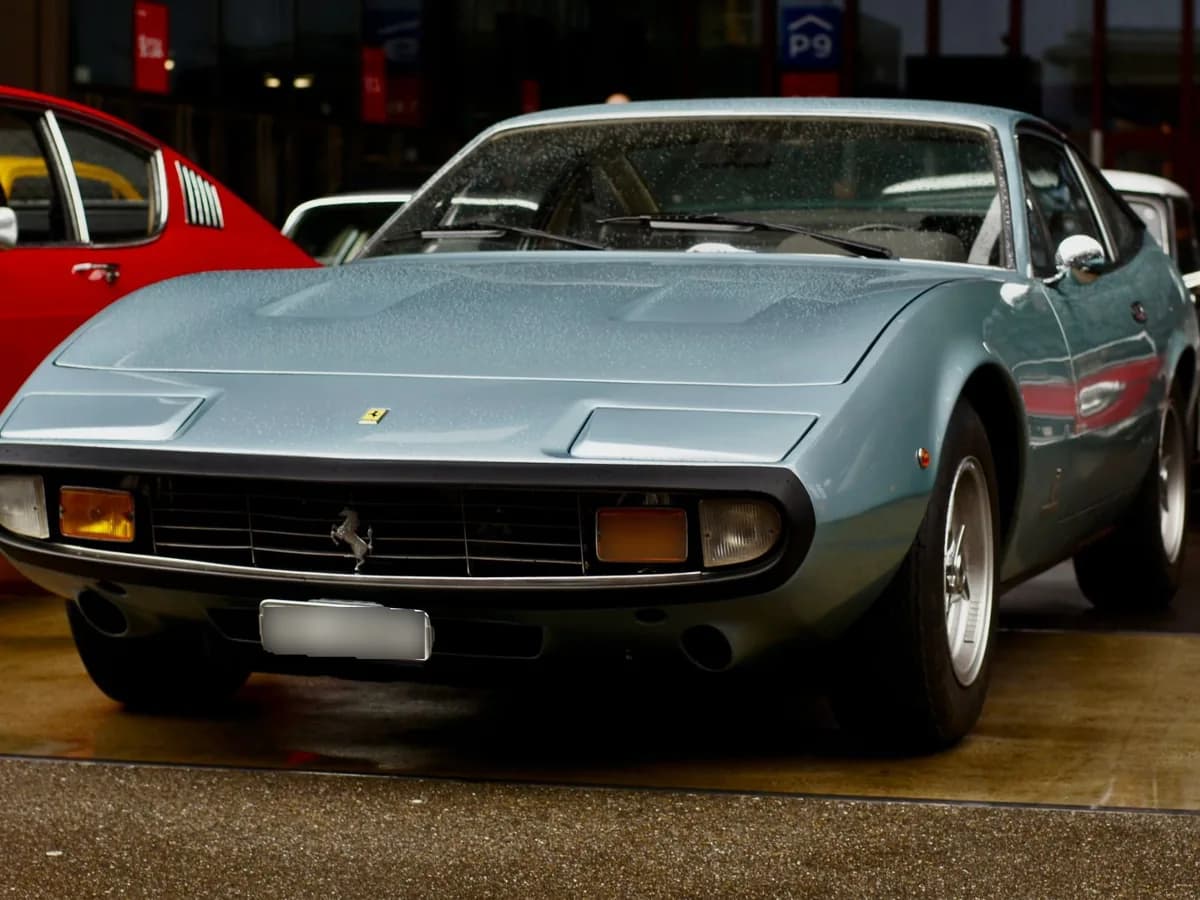
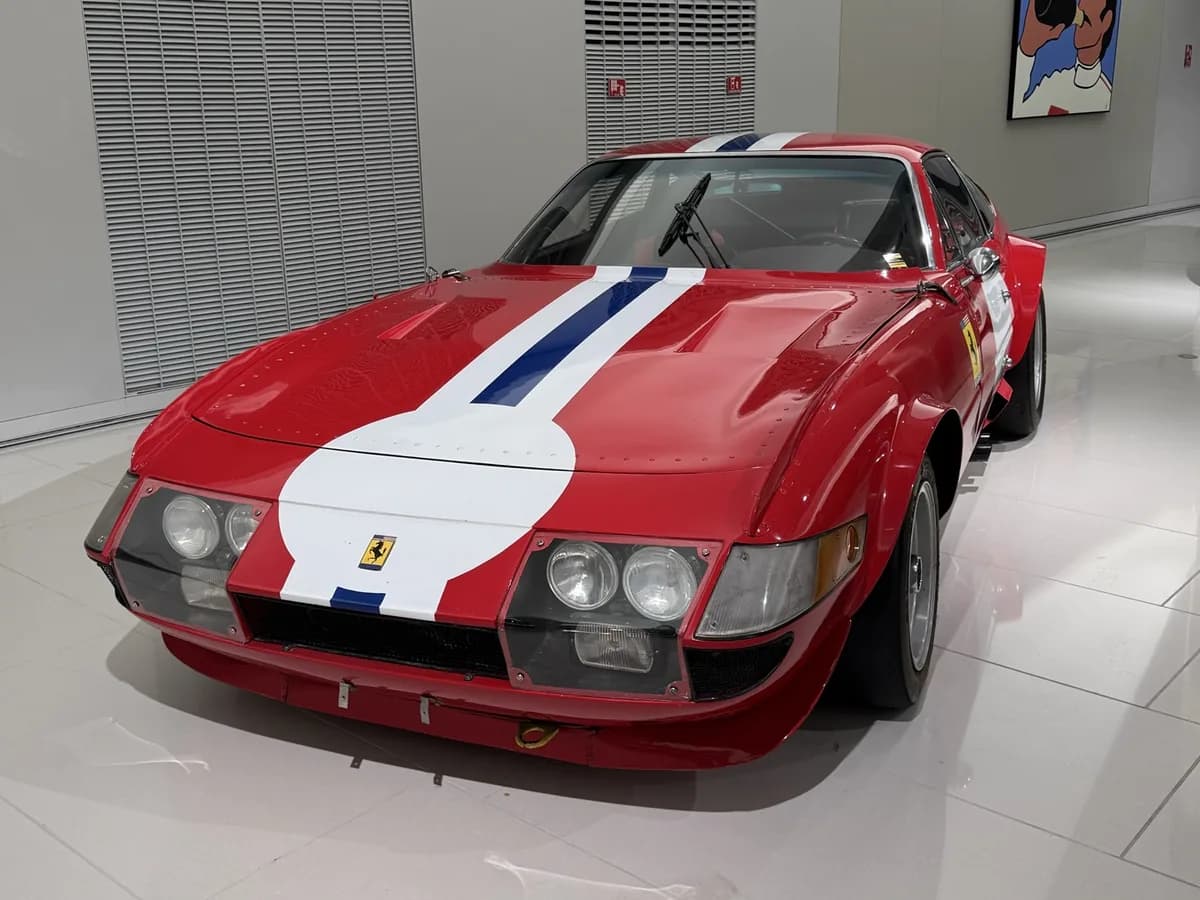
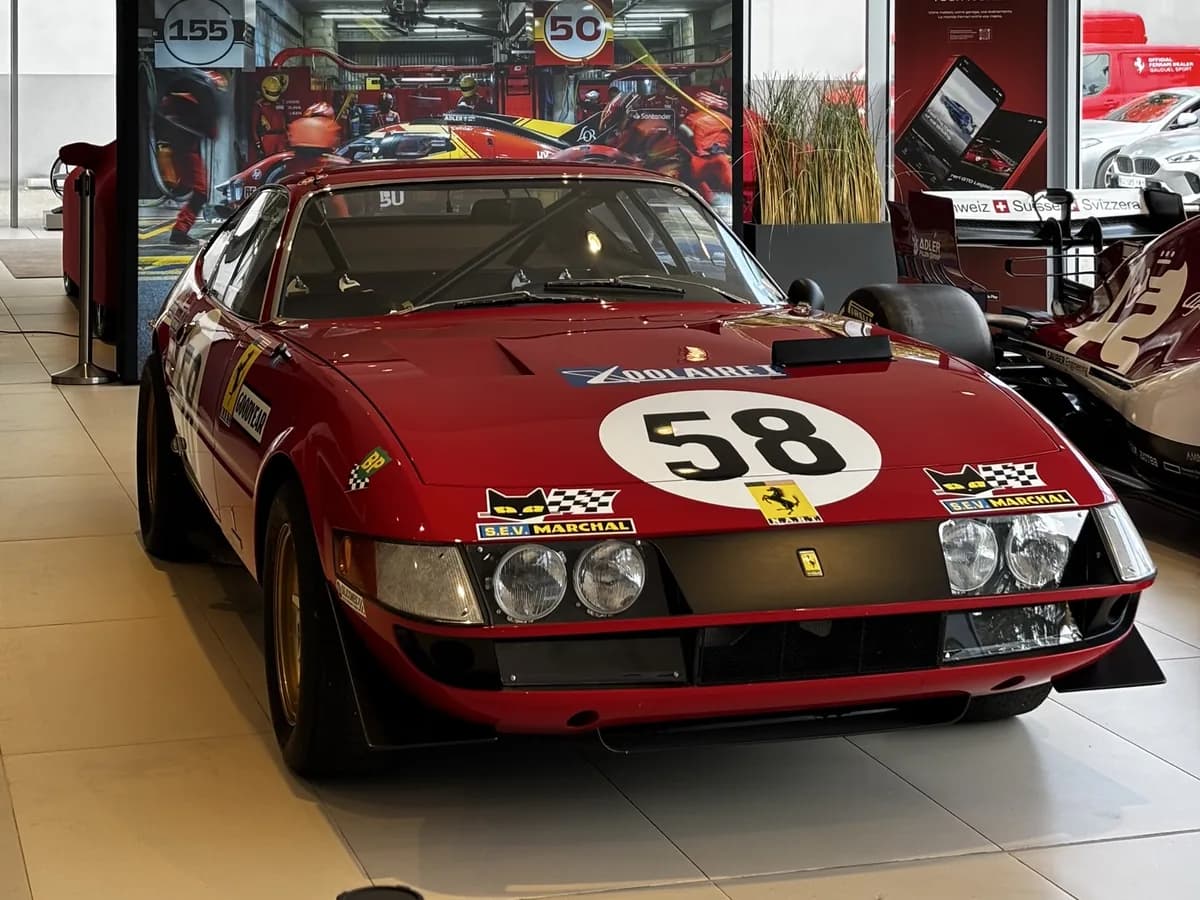
Start with the body shape when identifying a 365. The 365 California has a long, luxurious two-seat convertible profile; Ferrari's stated production figure of 14 cars is a powerful clue, but not by itself proof of authenticity. The GT 2+2 and GT4 2+2 are both two-door four-seaters, yet the GT4 2+2 has a newer, more angular and visibly longer design. The GTC and GTS are front-engined two-seaters, with the GTS distinguished by its folding soft top. The Daytona GTB4 has a long bonnet, a set-back cabin, a sharply cut Kamm-style tail, and either a Plexiglas-covered nose on early cars or pop-up headlights on later examples. The GTS4 uses the same basic theme with an open roof and a flatter rear deck. The GT4 BB is immediately different: it has a low wedge profile, broad wheel arches, six round rear lamps, and six exhaust outlets in the configuration described by Ferrari. Equipment and trim can vary between cars, so visual inspection is only a first step. Chassis numbers, factory documentation, and Ferrari Classiche records are needed for a dependable identification.
Important versions
The key versions are the 365 California, GT 2+2, GTC and GTS, GTB4 Daytona, GTS4 Daytona Spider, GT4 2+2, and GT4 BB. The California is the most exclusive because of its very small production run. The GT 2+2 and GT4 2+2 represent the practical, family-oriented branch of the range. The GTC and GTS sit between grand touring and sports-car use, while the GTB4 and GTS4 are the variants most strongly associated with the Daytona identity. The GT4 BB has particular historical importance because it introduced Ferrari's road-going mid-rear-engined twelve-cylinder formula. Within the ScanRacer context, the entries “Base,” “GTC,” “GTS,” “GTS-4,” “GT 2+2,” “GT4 2+2,” “California,” and “GT 4 BB” cover these principal branches, with represented years extending from 1966 through 1973. Catalog naming may not always reproduce Ferrari's full factory designation.
References
- Ferrari 365 CaliforniaFerrari
- Ferrari 365 GTB4Ferrari
- Remembering the 365 GTB4 DaytonaFerrari Magazine
- Ferrari 365 GT4 2+2Ferrari
- The 365 GT4 BB: The First Rear-Engined V12Ferrari
- https://www.ferrari.com/en-EN/history/garage/1971/365-gt4-bbferrari.com
- https://365ferrari.com/ferrari-365-gt-22-history/365ferrari.com
Technical specifications
Structured data available for versions linked to this model.
| Version | Power | Torque | Top speed | Drivetrain | Fuel |
|---|---|---|---|---|---|
| Base | 259 KW @ 7500 RPM 352 HP @ 7500 RPM 347 BHP @ 7500 RPM | 319 lb-ft @ 5500 RPM 432 Nm @ 5500 RPM | 174 mph (280 km/h) | Rear Wheel Drive / 5-speed manual | Gasoline |
Frequently asked questions
- What years was the Ferrari 365 produced?
- ScanRacer's referenced versions cover 1966 - 1973.
- How many Ferrari 365 examples are documented on ScanRacer?
- 6 published scans from 5 members, with the latest photo added in September 2026.
- What is the power output of the Ferrari 365?
- The sourced technical data lists 259 KW @ 7500 RPM 352 HP @ 7500 RPM 347 BHP @ 7500 RPM.
What about the car you photographed?
Upload a photo to get a suggested make, model and likely year.
No account needed for the result · Publish only if you choose