
275
Unveiled at the Paris Motor Show in October 1964, the Ferrari 275 marked a major step in Maranello’s front-engined grand-touring cars. Its 3,285.72 cc Colombo V12 was paired with a five-speed rear transaxle and independent suspension, two solutions Ferrari described as new for one of its road cars. The initial range consisted of the 275 GTB, a coupé designed by Pininfarina and built by Scaglietti, and the 275 GTS, an open two-seater with completely different Pininfarina bodywork. Both used the same basic mechanical concept and were intended for high-speed touring rather than simple competition use. The name “275” refers approximately to the engine’s displacement per cylinder. The family later expanded with four-cam models, but the 1964 cars belong to the first two-cam stage of the 275 story.
What about the car you photographed?
Upload a photo to get a suggested make, model and likely year.
No account needed for the result · Publish only if you choose
Variants by year
Make: Ferrari · Model: 275
3 / 3 versions shown
1964

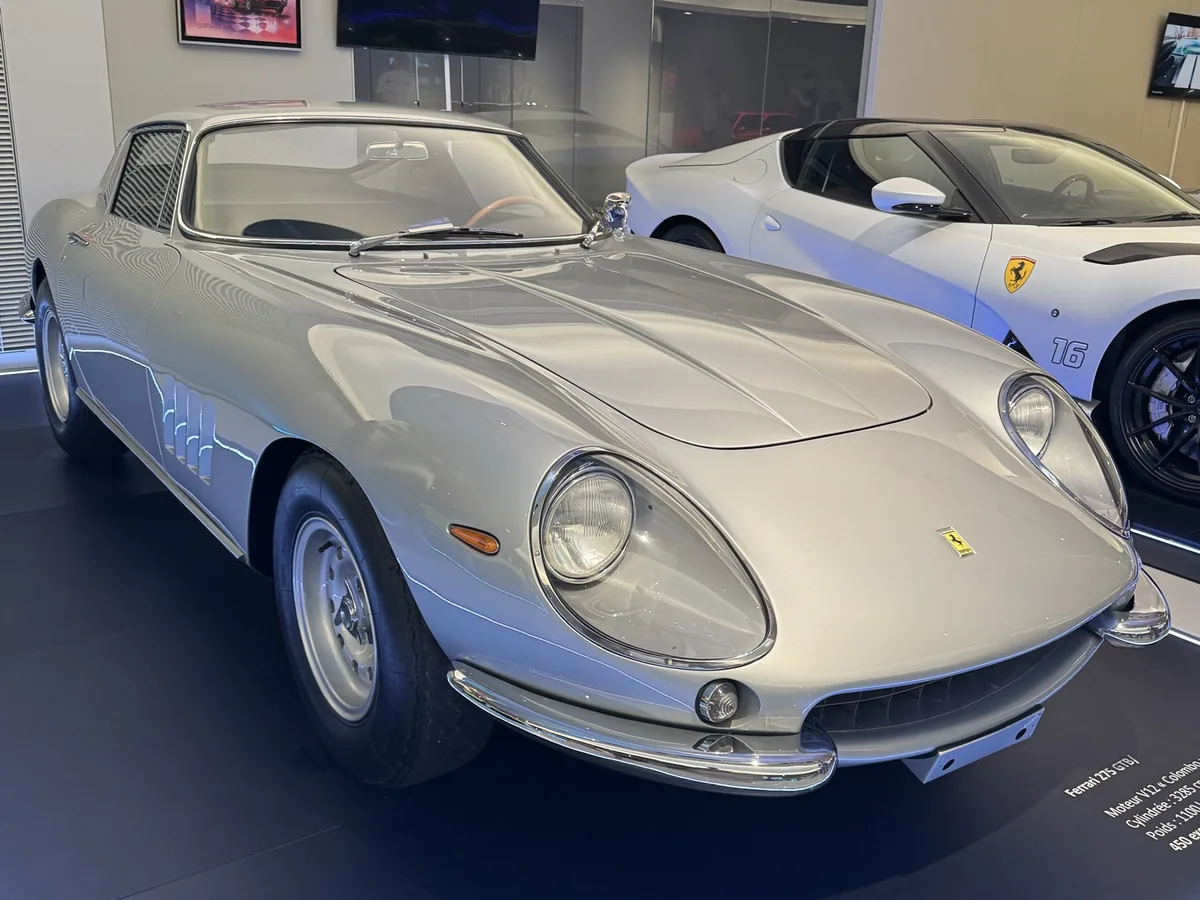
Ferrari 275 photos
Model summary
Data from the ScanRacer library, organized to compare versions quickly.
Model introduction
Unveiled at the Paris Motor Show in October 1964, the Ferrari 275 marked a major step in Maranello’s front-engined grand-touring cars. Its 3,285.72 cc Colombo V12 was paired with a five-speed rear transaxle and independent suspension, two solutions Ferrari described as new for one of its road cars. The initial range consisted of the 275 GTB, a coupé designed by Pininfarina and built by Scaglietti, and the 275 GTS, an open two-seater with completely different Pininfarina bodywork. Both used the same basic mechanical concept and were intended for high-speed touring rather than simple competition use. The name “275” refers approximately to the engine’s displacement per cylinder. The family later expanded with four-cam models, but the 1964 cars belong to the first two-cam stage of the 275 story.
History
The 275 arrived as Ferrari sought to modernise its front-engined grand-touring formula. The 250 GT Lusso had set a high standard for elegance and performance, but the new car introduced a more advanced chassis and transmission layout. Its 60-degree V12 retained the Colombo architecture, with two overhead camshafts and a displacement of 3,285.72 cc. Ferrari rated the 275 GTS at 260 hp, while the road-going 275 GTB is commonly listed at 280 hp in its three-carburettor specification. Output figures can vary with version, market and equipment. The rear transaxle placed the gearbox and differential together at the back of the car, helping distribute mass more evenly. Independent suspension at all four wheels and four-wheel disc brakes supported the same goal. The GTB used a low, closed body with a long bonnet, rear-set cabin and truncated tail. The GTS took a more traditional open-spider approach, with a shorter bonnet and uncovered headlights. The 275 GTB continued to evolve. Series II cars, commonly known as “long-nose” models, received a lengthened and lowered front end along with revisions intended to improve high-speed behaviour and address vibration. In 1966, the 275 GTB/4 introduced a four-cam V12. That later model, together with the limited competition cars, expanded the 275 family’s significance beyond the two versions launched in 1964.
Generations
The 275 family is best divided into two technical stages rather than modern-style generations. The models introduced in 1964 were the two-cam 275 GTB and 275 GTS. Their 3.3-litre V12 used two overhead camshafts, one for each cylinder bank, while the overall layout combined a front-mounted engine, rear transaxle and independent suspension. The GTB was the closed coupé, whereas the GTS was an open spider with its own body design. The first stage also included an important development within the 275 GTB range. Early cars are generally called Series I or “short-nose” models. Later Series II cars, commonly known as “long-nose” GTBs, received a longer, lower front end. Revised mounting arrangements and other mechanical details accompanied the bodywork changes. The second stage began with the 275 GTB/4, introduced in 1966. Its “/4” suffix referred to four overhead camshafts. It retained the 275’s basic concept but used a Tipo 226 V12 rated by Ferrari at 300 hp and received further bodywork refinements. The 275 GTS/4 NART was a separate, highly limited open model. It should not be grouped together with the 1964 two-cam cars when identifying a standard 275 GTB or GTS.
Key differences
The clearest distinction is body style: the 275 GTB is a closed coupé, while the 275 GTS is an open spider. The GTB has a fastback profile, long bonnet, rear-set cabin and, on early cars, covered headlights. The GTS uses a windscreen and folding soft top, a shorter bonnet and exposed headlights. These are not simply two body conversions of the same shell; Ferrari describes the GTS as having distinct Pininfarina bodywork. Mechanically, the 1964 models share the same basic formula: a 3,285.72 cc V12, rear transaxle and independent suspension. Ferrari lists 260 hp for the GTS and 280 hp for the GTB, although specifications can differ according to market, tuning and period documentation. The closed GTB would normally offer an aerodynamic advantage at higher speeds, while the GTS places greater emphasis on open-air grand touring. Individual cars may also differ in weight, carburettor arrangement, gearing and optional equipment, so a visual identification should not be treated as a complete specification check.
Photo recognition
To identify a 1964 275 GTB, begin with its proportions: long bonnet, fastback roof, sloping rear glass and short tail. Covered headlights are a common GTB clue, although details may vary by series, year and later modification. Series I, or “short-nose”, cars have a shorter and higher front end. Series II, or “long-nose”, cars use a visibly longer, lower nose with a smaller-looking front intake. A 275 GTS is immediately recognisable from its completely different spider body. It has a more upright windscreen, shorter bonnet, uncovered headlights and a more traditionally balanced open-car profile. A folding soft top is consistent with the model, but restored cars may contain replacement or altered components. Badging alone cannot authenticate a car. Later four-cam versions, especially the 275 GTB/4, share the same broad design language but are commonly identified by a raised section on the bonnet. A dependable identification should compare the body details with the chassis number, engine specification, production series and restoration history. Photographs can suggest a variant, but they cannot establish originality by themselves.
Important versions
For 1964, the two essential variants are the 275 GTB and 275 GTS. The GTB is the closed grand-tourer coupé with Pininfarina design and Scaglietti-built bodywork. It represents the enclosed version most closely associated with the 275’s fastback shape. The GTS is the Pininfarina spider, introduced alongside the GTB and given its own distinctive exterior design. In the broader history of the family, the 275 GTB/4 and 275 GTS/4 NART refer to later four-cam models. Competition cars such as the 275 GTB Competizione Speciale should not be treated as standard road-going variants. The label “Base” should therefore be interpreted cautiously as a catalogue term for the regular closed 275, corresponding to the GTB rather than to a complete official Ferrari model name.
References
- Ferrari 275 GTBFerrari
- Ferrari 275 GTSFerrari
- Ferrari 275 GTS: Ferrari HistoryFerrari
- Ferrari 275: Models, Specs, and Buyer’s GuideCar & Classic
- https://www.automobile-catalog.com/model/ferrari/275_gtb_gts.htmlautomobile-catalog.com
- https://www.ferrariwestlake.com/articles/60-years-on-the-275-comes-homeferrariwestlake.com
- https://www.ferrari.com/it-SM/history/garage/1964/275-gtbferrari.com
Frequently asked questions
- What years was the Ferrari 275 produced?
- ScanRacer's referenced versions cover 1964.
- How many Ferrari 275 examples are documented on ScanRacer?
- 6 published scans from 6 members, with the latest photo added in September 2026.
What about the car you photographed?
Upload a photo to get a suggested make, model and likely year.
No account needed for the result · Publish only if you choose