
Challenger
The Dodge Challenger is an American performance coupe introduced for the 1970 model year, when Dodge entered the pony-car market already shaped by the Ford Mustang and Chevrolet Camaro. Its first generation, built through 1974, used Chrysler's E-body platform and stood out with long-hood proportions, coupe and convertible body styles, and an unusually broad selection of V8 engines. The Challenger name returned in the late 1970s on a compact Mitsubishi-based coupe, before coming back in 2008 as a large, retro-inspired rear-wheel-drive muscle car. During the 2010s, R/T, SRT 392, and SRT Hellcat versions carried that performance identity forward with increasingly powerful HEMI V8 engines. The Challenger therefore represents three very different chapters in Dodge history, from classic E-body muscle to modern supercharged performance.
Variants by year
2017
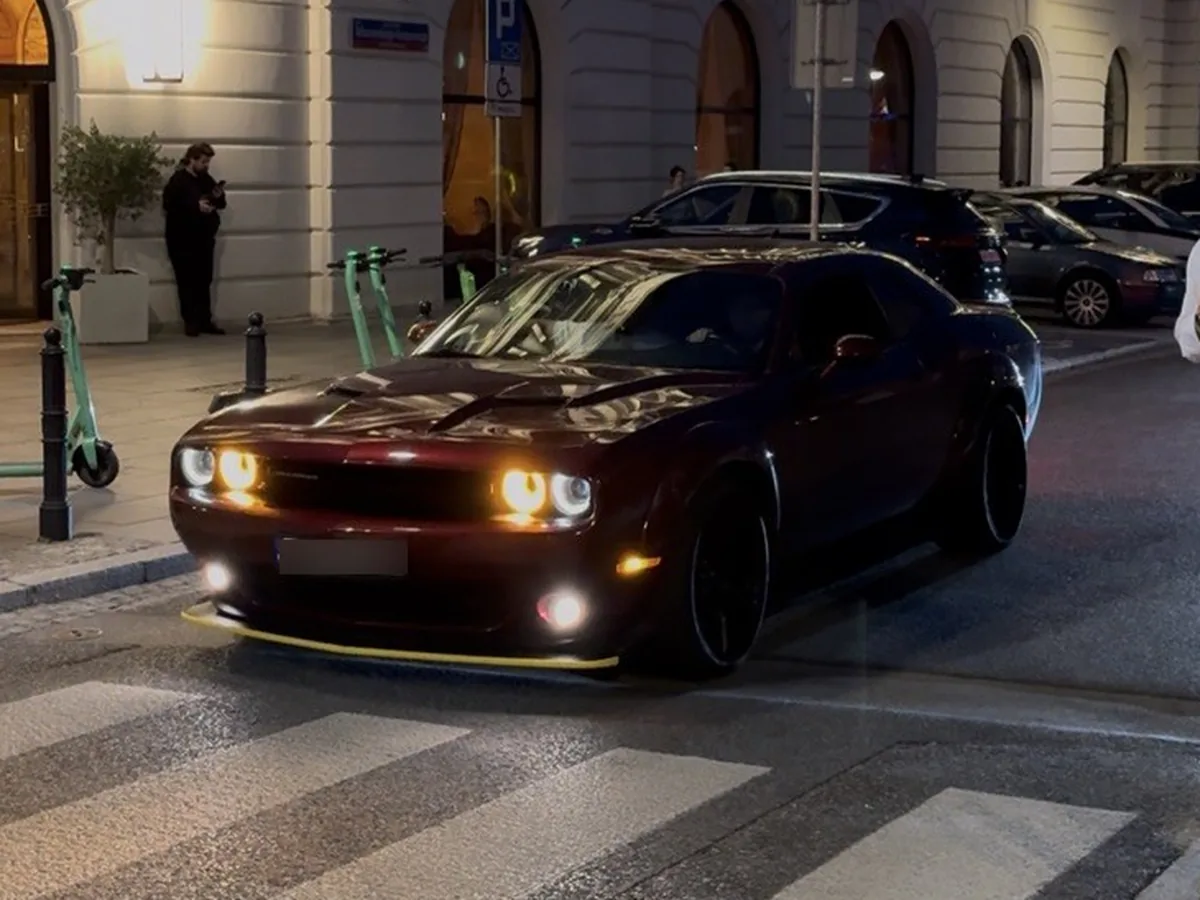
2014
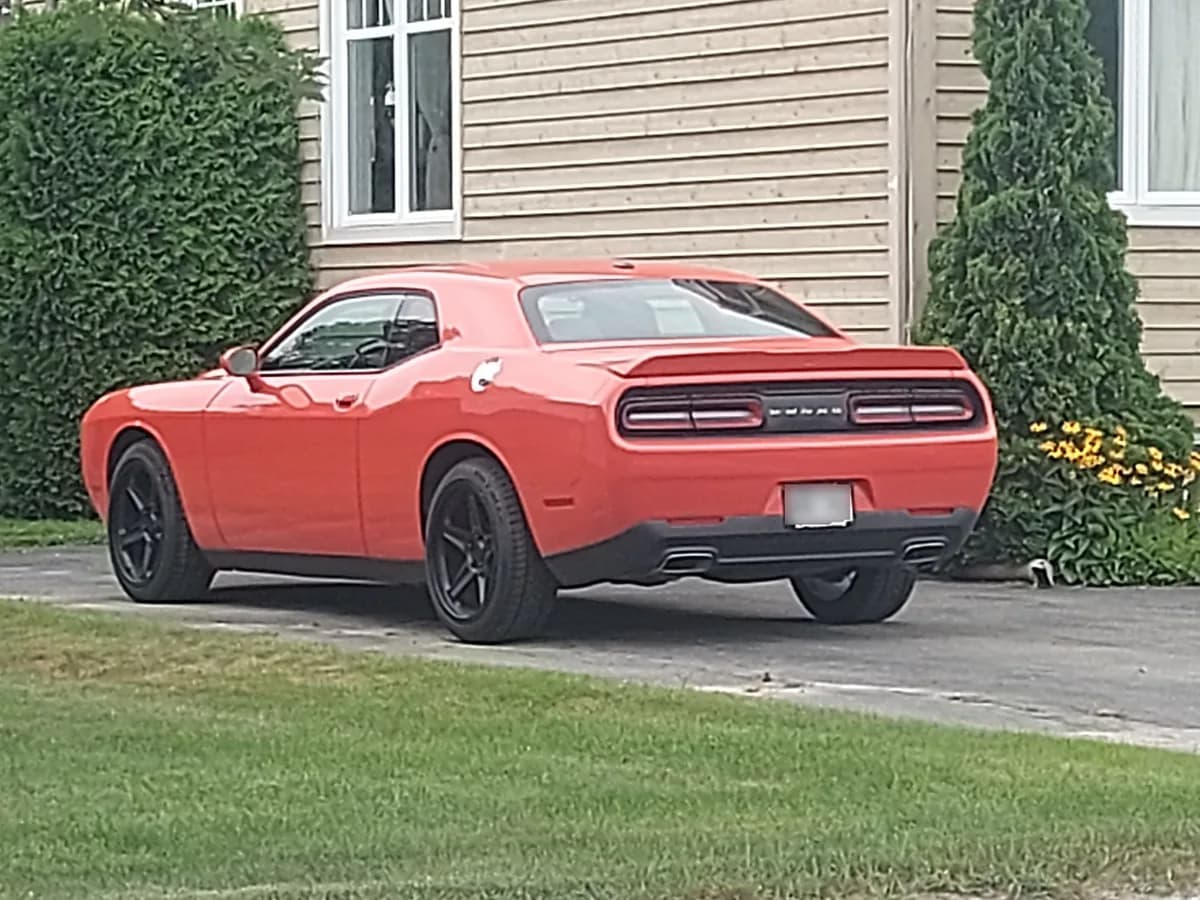
2008
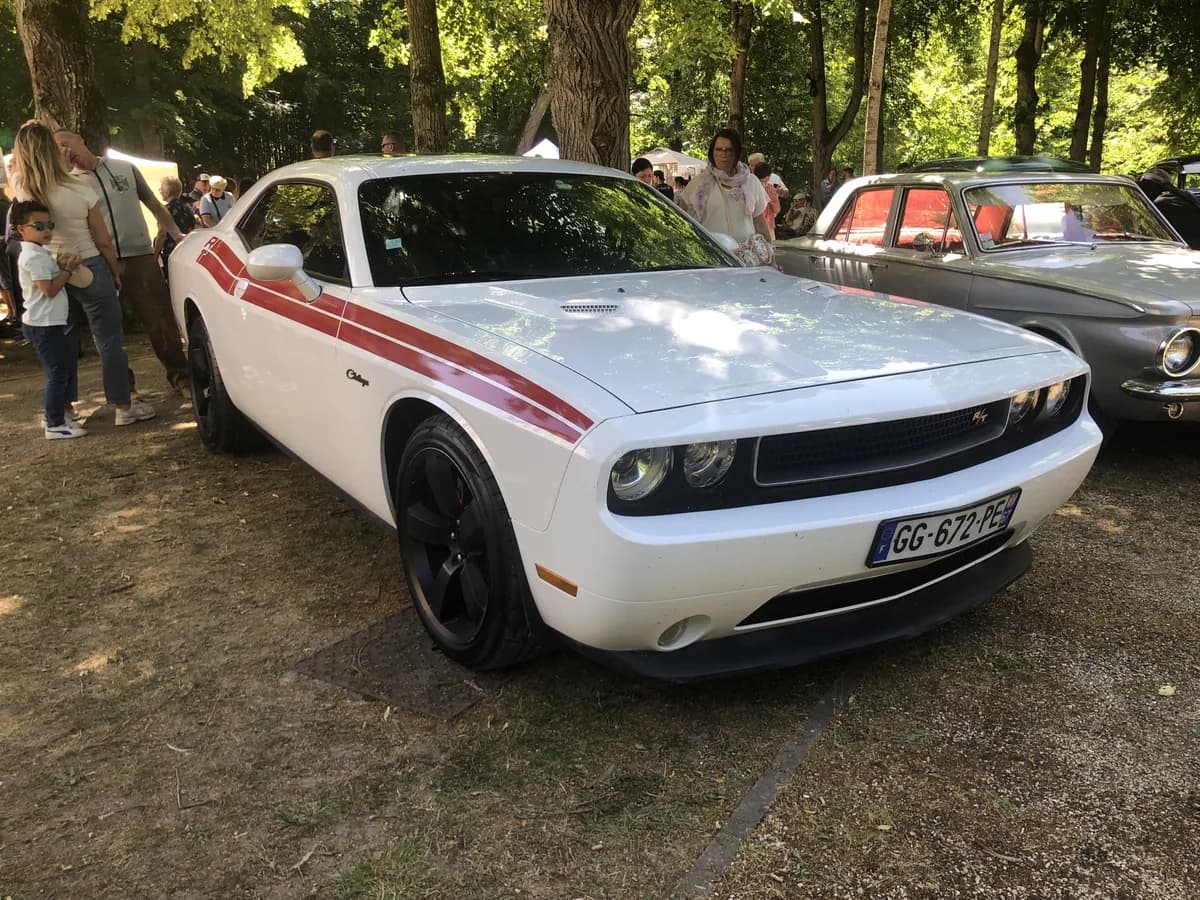
1978
1972
1970
Model summary
Data from the ScanRacer library, organized to compare versions quickly.
Model introduction
The Dodge Challenger is an American performance coupe introduced for the 1970 model year, when Dodge entered the pony-car market already shaped by the Ford Mustang and Chevrolet Camaro. Its first generation, built through 1974, used Chrysler's E-body platform and stood out with long-hood proportions, coupe and convertible body styles, and an unusually broad selection of V8 engines. The Challenger name returned in the late 1970s on a compact Mitsubishi-based coupe, before coming back in 2008 as a large, retro-inspired rear-wheel-drive muscle car. During the 2010s, R/T, SRT 392, and SRT Hellcat versions carried that performance identity forward with increasingly powerful HEMI V8 engines. The Challenger therefore represents three very different chapters in Dodge history, from classic E-body muscle to modern supercharged performance.
History
The Challenger debuted in late 1969 for the 1970 model year. It shared major components with the Plymouth Barracuda, but received its own bodywork and a presentation closely tied to Dodge. The first generation was offered as a hardtop coupe and convertible, with performance-oriented versions such as the R/T and Challenger T/A. The T/A was created to meet homologation requirements connected with Trans-Am racing and is identified by features including its hood scoop, side-exit exhausts, and competition-inspired setup. Production ended in 1974 as rising insurance costs, fuel prices, tighter regulations, and a shrinking pony-car market made the original formula increasingly difficult to sustain. The Challenger name returned for 1978 on a compact coupe derived from the Mitsubishi Galant Lambda. This second period, generally dated from 1978 to 1983, was far removed from the original muscle car: it used a smaller format and four-cylinder engines. After a lengthy absence, Dodge showed a Challenger concept in 2006 and launched the production car in 2008. The third generation revived the styling themes of 1970 while using modern engineering. Later models introduced HEMI V8 power, the SRT 392, and the 707-horsepower SRT Hellcat for 2015-2017, making the Challenger a defining symbol of the American muscle-car revival.
Generations
The first generation covers the 1970-1974 model years. It used Chrysler's E-body platform and featured a three-box coupe shape with a long hood, short rear deck, and year- and trim-dependent split-grille details. A convertible was available early in the run, while R/T, T/A, and big-block configurations represented the performance peak of the range. The 1972-1974 cars evolved under a more restrictive market environment, with changes to engines, equipment, and positioning as the original muscle-car formula lost momentum. The second generation, sold from 1978 through 1983, was not a technical continuation of the E-body car. It was a compact coupe based on Mitsubishi hardware, using four-cylinder engines and a philosophy more focused on efficiency and everyday usability. That break explains the major differences in appearance, proportions, and driving character compared with the classic Challenger. The third generation began in 2008. Its styling deliberately echoed the 1970 Challenger, while its engineering and cabin were thoroughly modern. Models from 2015 to 2017 show how broad the range became: V6 and V8 engines for mainstream versions, naturally aspirated 392 power for the SRT 392, and a supercharged HEMI V8 for the SRT Hellcat. The Widebody appeared late in 2017 and added flared bodywork intended to accommodate wider tires and improve grip and stability.
Key differences
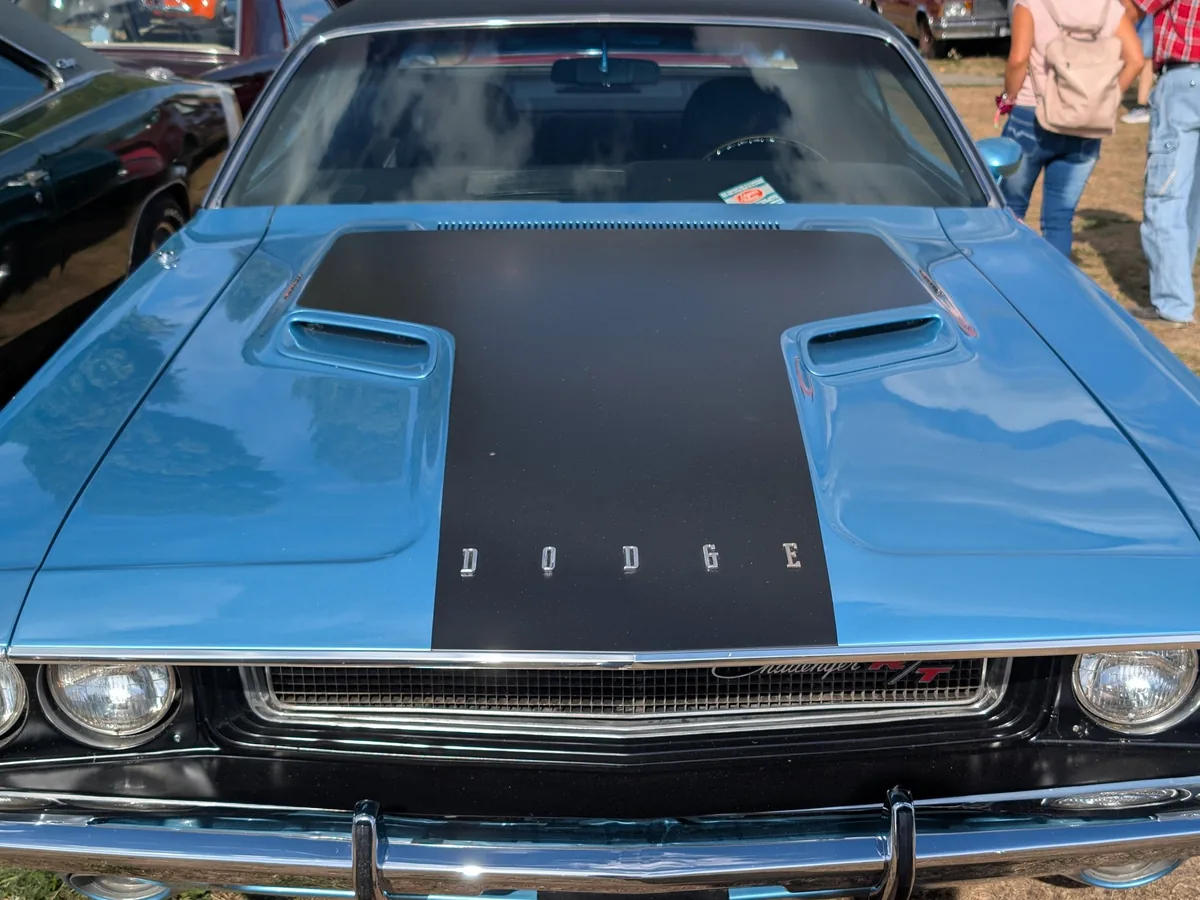
The differences between generations are easy to see. A 1970-1974 Challenger is a genuine E-body muscle car, with a low body, broad glass area, long hood, chrome bumpers, and an analogue-style interior. High-performance versions may feature side stripes, a hood scoop, distinctive wheels, and carbureted V8 power. The 1978-1983 car is visibly smaller and generally uses a Mitsubishi four-cylinder engine; it should not be mistaken for an E-body Challenger simply because it carries the same name. The generation launched in 2008 borrows visual cues from the original while being substantially larger and more contemporary. It has modern safety and comfort equipment, a more substantial body, and a powertrain range extending from V6 engines to HEMI V8s. The SRT Hellcat is identified by its supercharged 6.2-liter HEMI V8, rated at 707 horsepower for the 2015-2017 models. The Widebody adds flared fenders and wider tires. It is therefore a body and performance evolution of the third generation, not a separate generation.
Photo recognition
To identify a first-generation Challenger, start with the E-body proportions: a very long hood, a set-back passenger compartment, a hardtop roof with no visible center pillar, and a period-correct horizontal grille. Convertibles have a distinctive beltline and folding soft top. A 1970 Challenger T/A is easier to recognize through its functional hood scoop, side-exit exhaust, and aerodynamic details, although restoration work may have replaced or reproduced some of these parts. The 1978-1983 model is smaller and has a slimmer coupe profile, with proportions closer to other Japanese-designed cars of its era. It does not have the visual width or mass of the E-body Challenger. From 2008 onward, the third-generation car combines a retro grille, round headlamps, and broad rear quarters with modern equipment. On 2015-2017 models, SRT badges, the performance hood, Brembo brakes, and dedicated air openings provide useful clues. A Hellcat adds specific emblems and a more aggressive hood. The Widebody is most readily identified by its pronounced fender extensions and visibly wider tires.
Important versions
The R/T is one of the key performance versions of the first generation, combining a clearly sporting specification with access to some of the most desirable V8 engines. The 1970 Challenger T/A has a special place in the model's history because its equipment was connected with Trans-Am homologation requirements. The 1970-1971 convertibles are also notable for their relative rarity and open body style. In the modern generation, the SRT 392 represents the naturally aspirated 6.4-liter HEMI V8 branch, while the SRT Hellcat introduced a supercharged 6.2-liter HEMI V8 rated at 707 horsepower for 2015-2017. The SRT Hellcat Widebody appeared late in 2017 and added flared fenders and a wider stance. These names are more than simple trim labels: they identify meaningful differences in bodywork, engines, brakes, tires, and chassis calibration.
References
- 2017 Dodge Challenger eBrochureDodge
- 2015 Dodge Challenger BrochureDodge
- 2008 Dodge Challenger SRT8: Robustly RetroCar and Driver
- Dodge Challenger History: A Visual Guide of the Muscle Coupe's GenerationsMotorTrend
- First Dodge Challenger SRT Hellcat Widebody ConvertibleDodge
- https://www.motortrend.com/reviews/2008-dodge-challenger-srt8-1motortrend.com
Technical specifications
Structured data available for versions linked to this model.
| Version | Power | Torque | Top speed | Drivetrain | Fuel |
|---|---|---|---|---|---|
| Base | 279.6 KW @ 4600 RPM380 HP @ 4600 RPM375 BHP @ 4600 RPM | 482 lb-ft @ 3200 RPM654 Nm @ 3200 RPM | — | Rear Wheel Drive / 4-speed manual | Gasoline |
Frequently asked questions
- What years was the Dodge Challenger produced?
- ScanRacer's referenced versions cover 1970 - 2017.
- How many Dodge Challenger examples are documented on ScanRacer?
- 81 published scans from 46 members, with the latest photo added in September 2026.
- What is the power output of the Dodge Challenger?
- The sourced technical data lists 279.6 KW @ 4600 RPM380 HP @ 4600 RPM375 BHP @ 4600 RPM.