
Stradale
Unveiled on November 16, 2017, in Varano de’ Melegari, the Dallara Stradale was the first road car sold under the Dallara name. This mid-engined, two-seat sports car brings the Italian company’s experience in racing chassis, composite materials, and aerodynamics to a road-legal format. Its lightweight structure combines a carbon-fiber monocoque with aluminum subframes, while a turbocharged 2.3-liter four-cylinder produces approximately 400 hp and 500 Nm. The body is deliberately modular: the standard form is an open barchetta, which can be converted into roadster, targa, or coupe configurations using removable components. ScanRacer’s model library records two 2017 variants: Barchetta Spider and Coupé. Their shared engineering identity is more important than a conventional trim hierarchy, since the body styles reflect different configurations of the same lightweight platform.
Variants by year
2017
Model summary
Data from the ScanRacer library, organized to compare versions quickly.
Model introduction
Unveiled on November 16, 2017, in Varano de’ Melegari, the Dallara Stradale was the first road car sold under the Dallara name. This mid-engined, two-seat sports car brings the Italian company’s experience in racing chassis, composite materials, and aerodynamics to a road-legal format. Its lightweight structure combines a carbon-fiber monocoque with aluminum subframes, while a turbocharged 2.3-liter four-cylinder produces approximately 400 hp and 500 Nm. The body is deliberately modular: the standard form is an open barchetta, which can be converted into roadster, targa, or coupe configurations using removable components. ScanRacer’s model library records two 2017 variants: Barchetta Spider and Coupé. Their shared engineering identity is more important than a conventional trim hierarchy, since the body styles reflect different configurations of the same lightweight platform.
History
The Stradale fulfilled Gian Paolo Dallara’s personal ambition to create a road-legal car without abandoning the philosophy of a competition machine. It was officially presented in 2017, the same year Dallara’s Varano de’ Melegari facility was expanded to accommodate a dedicated production line. Until then, the company had been best known for racing chassis and engineering work carried out for other manufacturers. The Stradale therefore represented Dallara’s first road car marketed under its own name. Development focused on low mass, structural rigidity, and precise handling rather than traditional grand-touring comfort. The car uses a carbon-fiber monocoque, double-wishbone suspension, and composite bodywork. Its turbocharged 2.3-liter four-cylinder, from the Ford EcoBoost family and adapted for Dallara, was quoted at 400 hp at 6,200 rpm and 500 Nm between 3,000 and 5,000 rpm in launch-era technical coverage. Published specifications listed an 855 kg dry weight, a 280 km/h top speed, and an approximately 3.3-second 0–100 km/h time. The model’s most distinctive historical feature is its configurable design. Buyers were not simply selecting equipment levels; they were choosing how the same lightweight platform would be experienced, from a minimalist open barchetta to a weather-protected coupe.
Generations
Available evidence does not indicate multiple distinct generations of the Dallara Stradale. The model was introduced in 2017 around one technical architecture and one clear philosophy: a mid-engined, rear-wheel-drive layout, a carbon-fiber monocoque, and lightweight bodywork. In the ScanRacer context supplied here, the model is assigned entirely to the 2017 year, with no separate generation or facelift classification. The Stradale’s variety comes instead from its body configurations. The standard form is a doorless barchetta intended to provide an unusually direct open-air driving experience. Adding a polycarbonate windshield creates a roadster-style configuration. A T-Frame produces a targa layout, while gull-wing doors and additional roof components convert the car into a coupe. Dallara presents these solutions as interchangeable configurations rather than mechanically separate model generations. The two variants recorded in the ScanRacer library, Barchetta Spider and Coupé, should therefore be read as two expressions of the same 2017 Stradale. They are not successive generations. Their main differences concern the driving environment, weather protection, access, and exterior profile, while the underlying platform and performance-focused engineering remain shared. This distinction is important when comparing listings or identifying cars from photographs.
Key differences
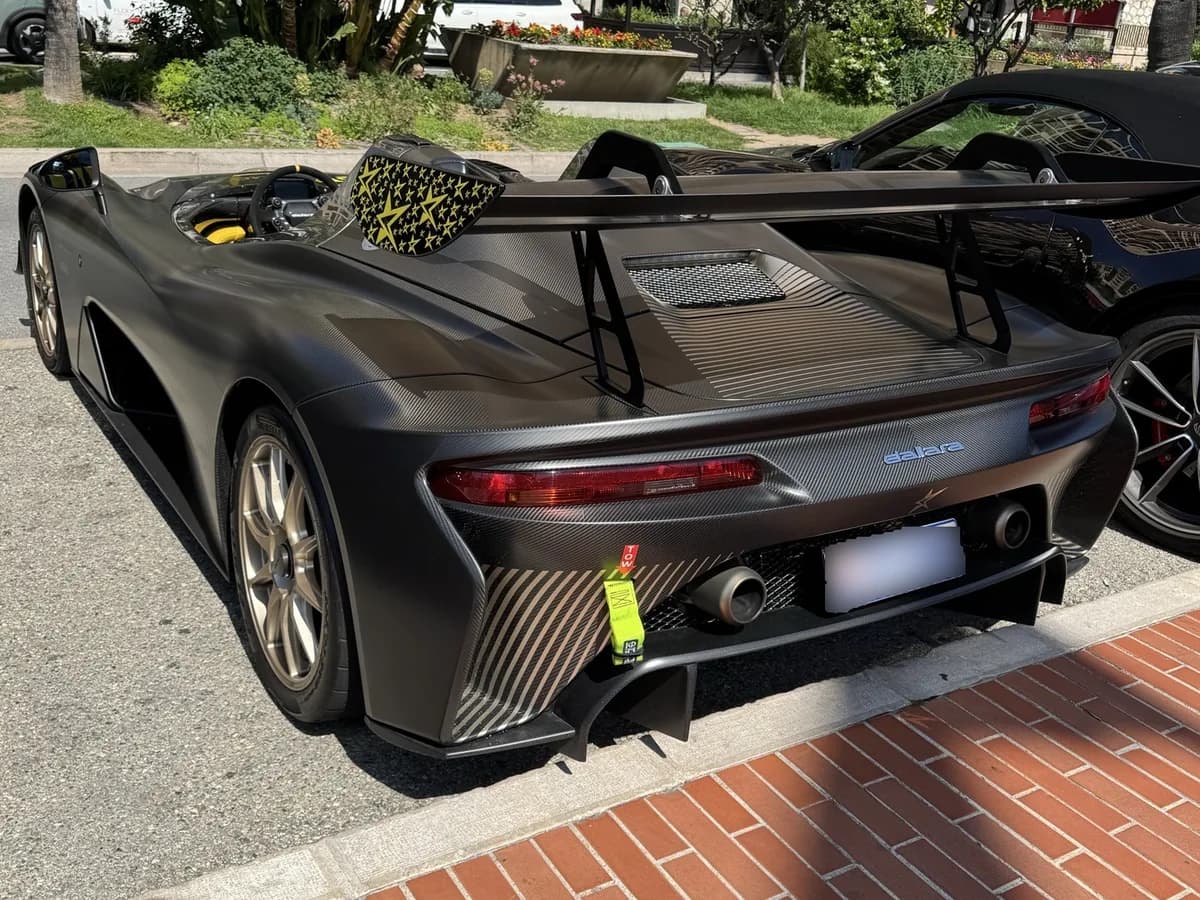
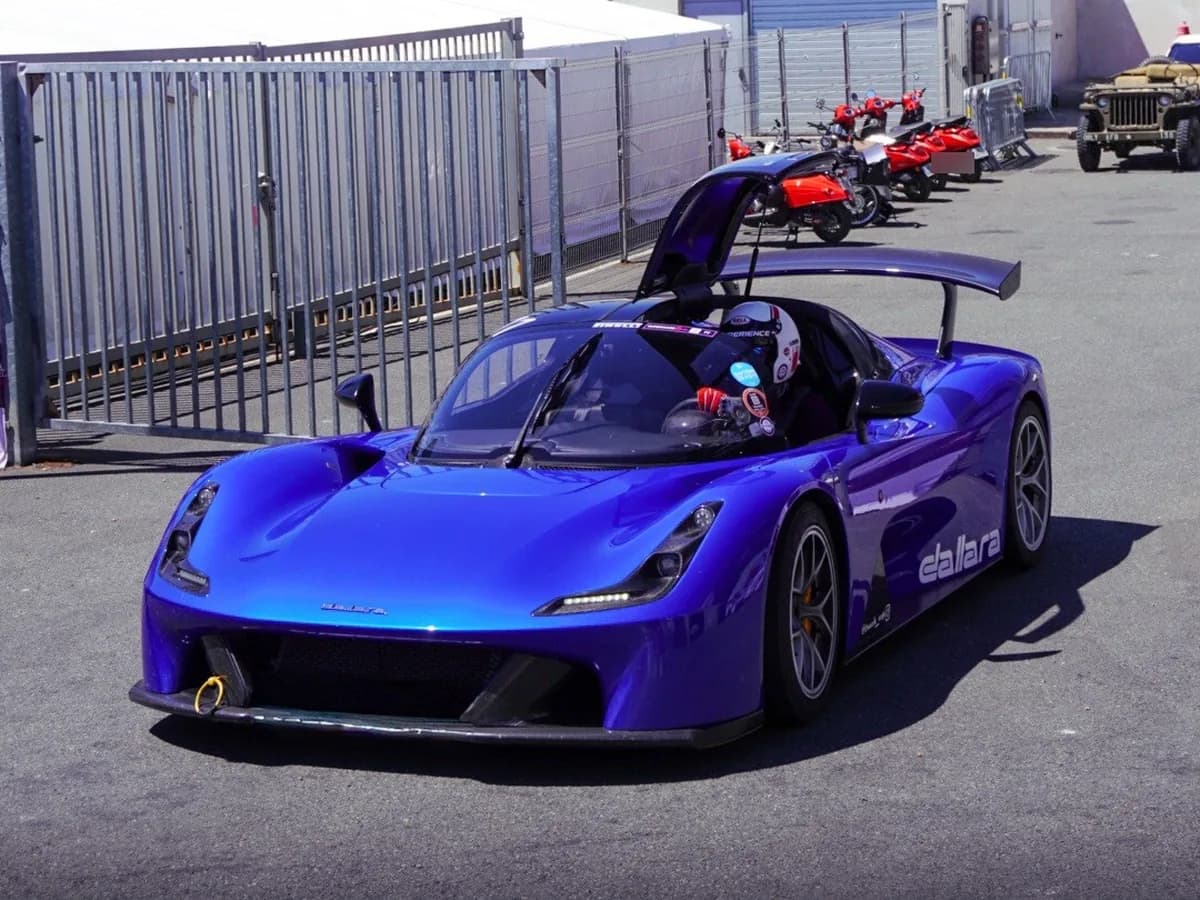
The Barchetta Spider emphasizes direct exposure to the engine and the surrounding environment. Its open body, lack of conventional doors, and compact windshield give it the appearance of a road-legal track car. It is best suited to dry-weather driving and to buyers seeking the least separation possible between themselves and the car’s mechanical sensations. The Coupé adds an upper body structure and gull-wing doors. It provides substantially greater protection from rain, wind, and road spray while retaining the low seating position and mid-engined layout of the Stradale. The enclosed body is likely the more practical choice for longer journeys, but it remains a highly focused sports car rather than a conventional grand tourer. The available sources do not support assigning different engines or chassis systems to these two ScanRacer variants. The safest distinction is therefore body style and intended use. A rear wing, track-oriented equipment, and certain mechanical choices belong to the car’s configuration or options and should not automatically be treated as defining features of either Barchetta Spider or Coupé. Individual cars may consequently differ despite sharing the same variant name.
Photo recognition
The Dallara Stradale is first recognizable by its very low proportions, carbon-fiber construction, and forward-set cockpit ahead of a mid-mounted engine. The body is short and wide, with pronounced wheel arches, sculpted side sections, and a compact rear. Its extremely low driving position gives the car the unmistakable appearance of a competition machine adapted for road use. To identify the Barchetta Spider, look for an open body without conventional doors, a low windshield, and an exposed rear section behind the occupants. Depending on the specification, a rear wing may be fitted. The lack of a fixed roof is the most reliable visual clue. The Coupé is identified by its roof, enclosed upper body, and vertically opening gull-wing doors. Those doors are especially useful when distinguishing it from an open barchetta fitted with a windshield. Caution is needed with track photographs: wings, wheels, graphics, and some aerodynamic components may be optional and cannot by themselves establish the variant. The 2017 model year should also be confirmed independently rather than inferred solely from appearance.
Important versions
Within the ScanRacer scope provided, the two key variants are Barchetta Spider and Coupé, both assigned to 2017. The Barchetta Spider represents the open and most minimalist interpretation of the Stradale. The Coupé adds a roof and gull-wing doors, providing greater protection for road use while preserving the car’s lightweight, competition-influenced character. The doorless barchetta is the conceptual starting point for the range, but commercial names may vary between markets and individual configurations. Dallara’s roadster and targa forms are intermediate conversions created by adding specific components. The rear wing and track-focused equipment should be treated as configuration choices rather than separate variants unless supporting documentation establishes otherwise. This approach avoids confusing body conversions or options with distinct generations.
References
- Dallara Stradale | A light, mechanically pure vehicleDallara
- CustomizationsDallara
- Dallara Stradale: la barchetta targata da 400 CV e 855 kgQuattroruote
- Dallara Stradale First DriveCar and Driver
- Dallara Stradale revealedevo
- https://dallarastradale.nl/dallarastradale.nl
- https://www.quattroruote.it/news/nuovi-modelli/2017/12/06/dallara_stradale_i_clienti_della_barchetta_preferiscono_il_cambio_automatico.amp.htmlquattroruote.it
- https://www.corriere.it/motori/anteprime/17_novembre_16/dallara-realizza-sogno-stradale-73649744-cacf-11e7-bd3e-51a6bf213dd1.shtmlcorriere.it
Technical specifications
Structured data available for versions linked to this model.
| Version | Power | Torque | Top speed | Drivetrain | Fuel |
|---|---|---|---|---|---|
| — | 395 hp at 6,200 rpm (period Car and Driver test specification) | — | — | Mid-engine, rear-wheel drive / 6-speed manual or 6-speed automated manual | — |
Frequently asked questions
- What years was the Dallara Stradale produced?
- ScanRacer's referenced versions cover 2017.
- How many Dallara Stradale examples are documented on ScanRacer?
- 5 published scans from 4 members, with the latest photo added in September 2026.
- What is the power output of the Dallara Stradale?
- The sourced technical data lists 395 hp at 6,200 rpm (period Car and Driver test specification).