
DS
Introduced at the Paris Motor Show in October 1955, the Citroën DS 19 replaced the Traction Avant and gave the large French saloon an entirely new technical and visual direction. Its streamlined body, developed under Flaminio Bertoni’s design leadership, was matched by height-correcting hydropneumatic suspension created by Paul Magès. On DS versions, hydraulic assistance also operated the steering, braking, clutch and gear-selection systems. The range later expanded beyond the saloon to include Break estate, Cabriolet and more highly equipped derivatives, while the DS 19, DS 21 and DS 20 marked successive stages in the model’s development. From 1955 to 1968, the most useful visual changes concern the wings, front-end design, lighting, equipment levels and dashboard presentation.
Variants by year
1968
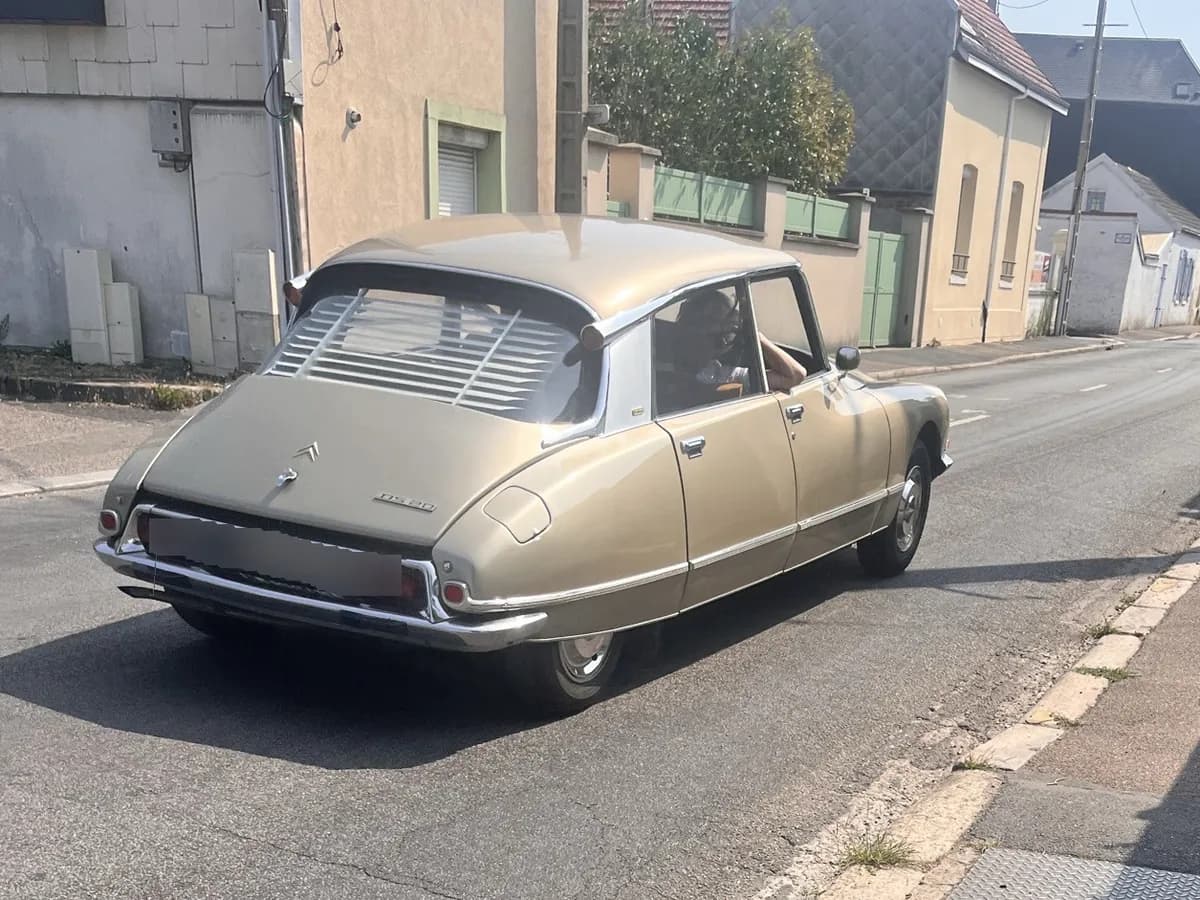
1960
1958
1955
Model summary
Data from the ScanRacer library, organized to compare versions quickly.
Model introduction
Introduced at the Paris Motor Show in October 1955, the Citroën DS 19 replaced the Traction Avant and gave the large French saloon an entirely new technical and visual direction. Its streamlined body, developed under Flaminio Bertoni’s design leadership, was matched by height-correcting hydropneumatic suspension created by Paul Magès. On DS versions, hydraulic assistance also operated the steering, braking, clutch and gear-selection systems. The range later expanded beyond the saloon to include Break estate, Cabriolet and more highly equipped derivatives, while the DS 19, DS 21 and DS 20 marked successive stages in the model’s development. From 1955 to 1968, the most useful visual changes concern the wings, front-end design, lighting, equipment levels and dashboard presentation.
History
The project intended to replace the Traction Avant was known as VGD and began before the Second World War. It finally produced the DS 19, unveiled at the Paris Motor Show on 6 October 1955. André Lefèbvre promoted front-wheel drive, aerodynamic efficiency, low weight and concentrated mass. Paul Magès developed the hydraulic architecture, while Flaminio Bertoni shaped the car’s low, flowing body. The DS immediately stood out through its hydropneumatic suspension, front disc brakes and ability to maintain a stable ride height under changing loads. Production began in Paris on 7 October 1955, the day after its public debut. The simpler ID 19 joined the range in 1956. Estate, Familiale and Commerciale derivatives appeared in 1958, alongside the DS 19 Prestige. Early body revisions and a wider choice of exterior colours followed during the same period. The DS Pallas arrived in 1964 with more luxurious equipment and trim. In 1965, the DS 21 introduced a 2,175 cc engine. The 1967 model year brought a substantially revised nose and swivelling headlamps on selected versions. In September 1968, the DS 20 replaced the DS 19, closing the first major chapter of the model’s development.
Generations
The DS was not divided into officially named generations in the modern sense. Identification is more reliable when based on successive body and equipment phases. The first phase, from 1955 to roughly 1959, used a front end with two separate headlamps and an already unmistakable streamlined body. Late-1950s revisions affected details such as the rear wings, air vents and trim. The second phase covers the DS and ID cars of the 1960s, when the range expanded to include the Break estate, Familiale and cabriolet. Introduced in 1964, the DS Pallas brought richer equipment and distinctive exterior details. The DS 21, launched from 1965, occupied the upper part of the regular range with its larger engine. The third major phase began with the 1967 restyling, introduced for the 1968 model year. The nose became smoother and incorporated four headlamps beneath a clear cover; on applicable versions, the inner lamps followed the steering angle. This is the easiest change to identify in photographs. However, body style, model year, trim level and market equipment should all be checked before assigning a precise derivative, since similar front-end details could appear across more than one version.
Key differences
The saloon, also called the berline or Sedan in some markets, is the main DS body style. It has four doors and a very low three-box profile, with a light-looking roof and a visually narrow rear track. The Break uses an extended rear structure, a strengthened roof and a two-part tailgate. It was offered in layouts intended for passengers, families, commercial use and service work, although not every estate derivative should automatically be identified as a DS rather than an ID. The Cabriolet is a four-seat open body developed from the DS platform with the involvement of coachbuilder Henri Chapron. It can be recognized by its frameless upper door openings, special side panels and folding soft top. Mechanical differences cannot be established from bodywork alone: engine, transmission, hydraulic equipment, trim and production year must be checked independently. “Cabrio” is therefore a useful body-style description, but it does not identify one single mechanical specification.
Photo recognition
A DS is first recognized by its unusually low body, long front overhang, tapered rear and partly enclosed rear wheels. The hydropneumatic suspension can provide another clue: a correctly functioning car maintains its ride height and can be raised, although this should be assessed carefully on an older vehicle. The single-spoke steering wheel and characteristic dashboard are also useful identifiers, but neither feature is sufficient to establish an exact year. The front end is the quickest way to separate the main design phases. Cars built before the 1967 restyling have two separate headlamps and a more open-looking nose. The 1968 model year introduced four lamps beneath a smooth clear cover, with swivelling inner lamps on equipped versions. A Break has a longer roof and a two-piece tailgate, while a Cabriolet uses a soft top and distinctive side panels. Hubcaps, handles, rear lamps, dashboard design and badges should be checked against the claimed year, because restorations and replacement parts can combine details from different production periods.
Important versions
The DS 19 was the launch version, presented in 1955 and named after its 1,911 cc engine. The simpler ID 19 joined the range in 1956 but was not technically identical to a DS. The Break appeared in the late 1950s in several practical configurations. Introduced in 1964, the DS Pallas added more luxurious trim and equipment. The DS 21 arrived in 1965 with a 2,175 cc engine and became one of the most significant versions in the range. The factory Cabriolet, produced with Henri Chapron’s involvement, remains an especially rare open derivative. In 1968, the DS 20 replaced the DS 19 and appeared alongside the redesigned front end.
The name “DS” follows Citroën naming, with its rules and its exceptions. Decode a Citroën name
References
- Citroën DS variations - BreakCitroënët
- Citroën DS Cabriolet historyCitroclásico
- https://www.media.stellantis.com/uploads/psa/attached_files/25/02.CITROEN_UMA%20HIST%C3%93RIA%20DE%20CONFORTO_0.PDFmedia.stellantis.com
- https://assets.ctfassets.net/x8mrk904j4k6/4JUOq7skBuffifkGaek60W/58e23aca4603448b21793f235ee39d19/1969_Citroen_DS21_2025-08-07.pdfassets.ctfassets.net
- https://www.citroenet.org.uk/passenger-cars/michelin/ds/21.htmlcitroenet.org.uk
- https://www.topgear.com/car-reviews/citroen/ds/buyingtopgear.com
- https://www.citroenet.org.uk/passenger-cars/michelin/ds/ds-index.htmlcitroenet.org.uk
Frequently asked questions
- What years was the Citroën DS produced?
- ScanRacer's referenced versions cover 1955 - 1968.
- How many Citroën DS examples are documented on ScanRacer?
- 4 published scans from 4 members, with the latest photo added in September 2026.