
2CV
Produced from July 1949, the Citroën 2CV introduced a design intended to make personal transport simple, economical, and versatile. The first Type A sedan used a 375 cc air-cooled flat-twin engine, a four-speed manual gearbox, and front-wheel drive. Its lightweight body, canvas roof, and independent suspension emphasized practicality rather than outright performance. In spring 1951, Citroën extended the concept with the AU Fourgonnette, which replaced the rear passenger section with a box-shaped load area behind the central pillar. Both body styles belong to the 2CV’s earliest production period, before the mechanical and styling revisions that shaped the model’s later decades. The early cars are especially significant because they show the original interpretation of Citroën’s affordable, utilitarian small-car brief. (media.stellantis.com)
Variants by year
1951
1949
Model summary
Data from the ScanRacer library, organized to compare versions quickly.
Model introduction
Produced from July 1949, the Citroën 2CV introduced a design intended to make personal transport simple, economical, and versatile. The first Type A sedan used a 375 cc air-cooled flat-twin engine, a four-speed manual gearbox, and front-wheel drive. Its lightweight body, canvas roof, and independent suspension emphasized practicality rather than outright performance. In spring 1951, Citroën extended the concept with the AU Fourgonnette, which replaced the rear passenger section with a box-shaped load area behind the central pillar. Both body styles belong to the 2CV’s earliest production period, before the mechanical and styling revisions that shaped the model’s later decades. The early cars are especially significant because they show the original interpretation of Citroën’s affordable, utilitarian small-car brief. (media.stellantis.com)
History
The 2CV originated in Citroën’s TPV project, launched during the 1930s to create a lightweight, affordable car capable of carrying a family and luggage over poor roads. A roadworthy prototype appeared in 1937, but the planned presentation at the 1939 Paris Motor Show was stopped by the Second World War. A substantially revised production design was finally shown to the public on October 7, 1948. Sedan production began in July 1949 with the Type A, powered by a 375 cc flat-twin producing 9 bhp. Front-wheel drive, independent suspension, and straightforward mechanical construction gave the car a distinctive combination of economy and all-round usability. Early press reaction was mixed, yet demand soon exceeded Citroën’s production capacity. The company then displayed a commercial derivative at the 1950 Paris Motor Show. Production of the 2CV AU began in spring 1951. It retained the sedan’s basic mechanical layout while replacing the rear passenger compartment with a dedicated load space for tools, supplies, and small commercial work. (media.stellantis.com)
Generations
For the years covered here, it is more accurate to discuss the 2CV’s earliest body variants than separate generations. The 1949 Sedan corresponds to the 2CV Type A, the first series-production version. It used a 375 cc flat-twin, rated at 9 bhp, a four-speed gearbox, front-wheel drive, and a four-door body with a canvas roof. The earliest cars also carried several launch-period details, including very sparse equipment, minimal instrumentation, and body components that changed during the first years of production. The AU Fourgonnette appeared in 1951 as the first commercial 2CV. Its front section remained closely related to the sedan, but the rear passenger area was replaced by a box-shaped load compartment. Citroën retained the 375 cc engine and front-wheel-drive layout while adapting the body for professional use. The AU is therefore best understood as a utility derivative of the Type A rather than as a separate generation. Later engines, trim levels, and model codes belong to subsequent stages of 2CV development and should not be assumed for these earliest variants. (media.stellantis.com)
Key differences
The fundamental distinction is between a passenger car and a small commercial vehicle. The 1949 Sedan has a four-door enclosed body intended to carry occupants, with a flexible interior and a canvas roof. The 1951 AU Fourgonnette keeps the 2CV’s front structure and basic mechanical layout but replaces the rear passenger area with a large, box-shaped load compartment beginning behind the central pillar. That change transforms the vehicle’s purpose: the AU was aimed at tradespeople, shopkeepers, farmers, and public services needing to carry equipment or goods. The early 375 cc engine remains common to the two variants covered here, so a more powerful engine should not be assumed unless the vehicle’s later specification or modifications are documented. The most reliable visual differences are therefore the rear body shape, loading access, and interior layout rather than the engine bay. (media.stellantis.com)
Photo recognition
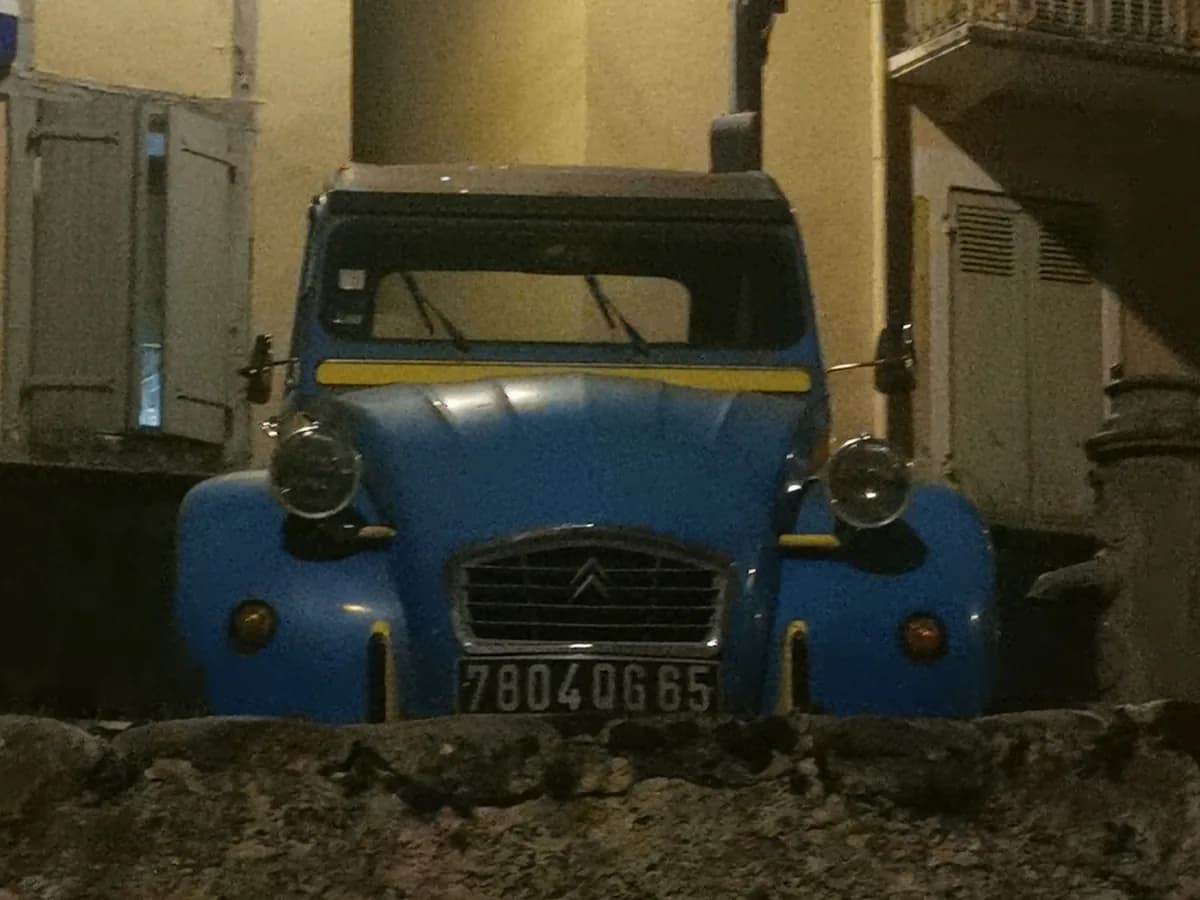
An early 2CV Sedan is first identified by its compact four-door body, extensive canvas roof, and unusually narrow, tall profile. Launch-period cars are especially sparse in appearance, with limited instrumentation, simple exterior equipment, and several details that changed during the first production years. The air-cooled flat-twin engine and front-wheel-drive layout are useful mechanical clues, but neither feature alone can establish a precise year because both remained part of the 2CV formula for a long time. The AU Fourgonnette is much easier to distinguish from the central pillar rearward: the body becomes a near-vertical, box-shaped load compartment rather than a glazed passenger section. Grille, wheel, lamp, and panel details may vary with production date or restoration work. A reliable identification should therefore combine the body style with the manufacturer plate, chassis number, and surviving mechanical components. Period photographs and documentation are particularly valuable when an early car has been repaired or cosmetically upgraded. (citroenet.org.uk)
Important versions
The 1949 Type A Sedan is the founding version of the 2CV, introducing the 375 cc flat-twin, front-wheel drive, and the simplicity-focused design philosophy that defined the model. The AU Fourgonnette, launched in spring 1951, was the first commercial derivative. It retained most of the sedan’s mechanical concept while adopting a dedicated rear body for carrying tools and goods. These two variants are especially important for understanding the 2CV’s beginnings, before later, more powerful versions and model codes such as AZ and AZU appeared. The years stated here refer to the variants represented in the catalogue context, not to the complete international production history of the 2CV. (media.stellantis.com)
The name “2CV” follows Citroën naming, with its rules and its exceptions. Decode a Citroën name
References
- Citroën à 100 ans : la 2CV, symbole de libertéCitroën / Stellantis Media
- Citroën 2 CV FourgonnetteCitroën Origins
- 2CV Production Models 1949 Berline ACitroënët
- The 2CV Fourgonnette at Lane Motor MuseumLane Motor Museum
- https://www.media.stellantis.com/es-es/citroen/press/la-doble-presentacion-del-citroen-2cv-en-el-salon-del-automovil-de-parismedia.stellantis.com
- https://www.media.stellantis.com/nl-nl/citroen/press/iconische-citroen-2cv-blaast-75-kaarsjes-uitmedia.stellantis.com
- https://www.media.stellantis.com/at-de/citroen/press/citroen-2cv-die-ente-schrieb-automobilgeschichtemedia.stellantis.com
- https://www.hagerty.com/valuation-tools/citroen/2cv/1949/1949-citroen-2cvhagerty.com
Frequently asked questions
- What years was the Citroën 2CV produced?
- ScanRacer's referenced versions cover 1949 - 1951.
- How many Citroën 2CV examples are documented on ScanRacer?
- 11 published scans from 11 members, with the latest photo added in September 2026.