
Eldorado
Introduced in 1952 for the 1953 model year, the Cadillac Eldorado became one of the most recognizable nameplates in American automotive history. It began as a limited-production, top-tier convertible before evolving into a prestige personal coupe with a distinctive design identity. Eldorados from the 1950s are closely associated with dramatic fins, extensive chrome and exclusive bodywork, while the 1967 model year brought a major technical shift to front-wheel drive. From 1971 through 1978, the Eldorado returned to imposing full-size proportions and was again offered as a convertible. The 1979–1991 cars adopted a smaller footprint and more technology-focused presentation, reflecting changing market conditions and Cadillac’s broader product strategy. Across these eras, the Eldorado remained positioned near the top of Cadillac’s passenger-car range. (cadillac.com)
What about the car you photographed?
Upload a photo to get a suggested make, model and likely year.
No account needed for the result · Publish only if you choose
Variants by year
Make: Cadillac · Model: Eldorado
39 / 39 versions shown
1991
1986
1983
1978
1974
1973
1972
1971
1967
1966
1965
1964
1963
1962
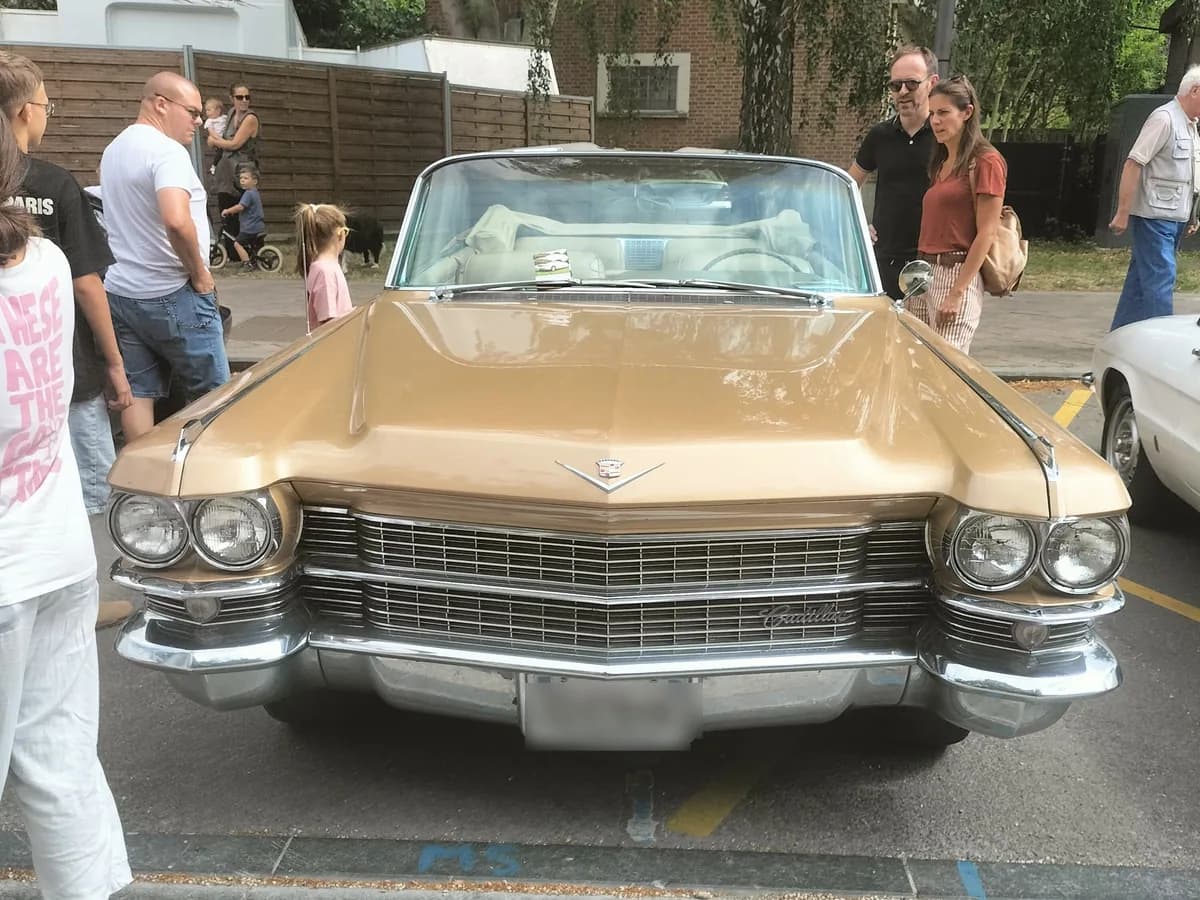
1961
1960
1959
1958
1957
1956
1955
1954
1953
1952
Cadillac Eldorado photos
Model summary
Data from the ScanRacer library, organized to compare versions quickly.
Model introduction
Introduced in 1952 for the 1953 model year, the Cadillac Eldorado became one of the most recognizable nameplates in American automotive history. It began as a limited-production, top-tier convertible before evolving into a prestige personal coupe with a distinctive design identity. Eldorados from the 1950s are closely associated with dramatic fins, extensive chrome and exclusive bodywork, while the 1967 model year brought a major technical shift to front-wheel drive. From 1971 through 1978, the Eldorado returned to imposing full-size proportions and was again offered as a convertible. The 1979–1991 cars adopted a smaller footprint and more technology-focused presentation, reflecting changing market conditions and Cadillac’s broader product strategy. Across these eras, the Eldorado remained positioned near the top of Cadillac’s passenger-car range. (cadillac.com)
History
The Eldorado appeared in the early 1950s as part of Cadillac’s 50th-anniversary celebrations. The 1953 model was an exclusive convertible, built in limited numbers and finished to a higher standard than Cadillac’s regular models. In 1957, Cadillac expanded the family with the Eldorado Brougham, an exceptionally luxurious sedan with ambitious engineering features. The 1957–1960 Eldorado Biarritz convertibles then became defining examples of the American fin era; the 1959 model is particularly easy to identify by its tall rear fins and paired taillamps set into chrome nacelles. (media.cadillac.com) From 1961 through 1966, the Eldorado remained primarily a large convertible derived from Cadillac’s broader range. The 1967 model year brought a fundamental change: the new Fleetwood Eldorado became a two-door hardtop coupe and adopted front-wheel drive. Sharing its basic technical family with the Buick Riviera and Oldsmobile Toronado, it gave Cadillac a more distinct personal-luxury model rather than another variation of a full-size sedan. (media.cadillac.com) The 1971 redesign restored a substantial, imposing presence. A 500-cubic-inch V8 defined the early years of this period, while the convertible returned through 1976. After a major downsizing for 1979, the Eldorado moved toward a more compact format and then received an even shorter, more angular body for 1986. The Eldorado name continued until 2002, although the model range considered here ends in 1991. (hemmings.com)
Generations
Five broad design phases are especially useful when identifying Eldorado versions. The 1952–1960 cars emphasize exclusivity and ornamentation: Biarritz convertibles, hardtop body styles and, in the case of the Brougham, a sedan with unusually distinctive construction. Rear fins, extensive chrome and changing grille patterns are the main visual clues. (media.cadillac.com) From 1961 through 1966, the Eldorado moved closer to Cadillac’s other large cars while retaining its premium position and convertible body style. From 1967 to 1970, it became a front-wheel-drive coupe with crisp, angular styling. This is the most important technical break in the model’s development. (media.cadillac.com) The 1971–1978 period brought a much longer and heavier car, offered as a coupe and, through 1976, as a convertible. Fender skirts, frameless door glass and broad proportions are characteristic of this family. In 1979, the Eldorado was substantially downsized but gained independent rear suspension while retaining a richly equipped luxury interior. The 1986–1991 cars were shorter, visually narrower and more angular, with a digital instrument panel and styling more closely aligned with Cadillac’s late-1980s design language. (hemmings.com)
Key differences
The clearest technical distinction concerns the drivetrain. Eldorados before 1967 used a front-mounted engine with rear-wheel drive, while the coupe introduced for 1967 switched to front-wheel drive; that layout remained part of the model’s identity afterward. (media.cadillac.com) Body style also separates the major periods. The 1950s included convertibles, hardtops and, in the case of the Brougham, a distinct sedan body. The 1967–1970 cars were hardtop coupes only. The 1971–1978 family is defined by its imposing dimensions and by the availability of both coupe and convertible body styles, with the factory convertible officially continuing through 1976. (hemmings.com) The 1979–1985 cars focused on a better balance between exterior size and interior packaging, while the 1986–1991 models adopted a more compact shape and more visible electronic equipment. Names such as Biarritz, Seville and Touring Coupe therefore cannot be interpreted independently of model year and body style. (en.wikipedia.org)
Photo recognition
A 1957–1960 Eldorado is first identified by its dramatic rear treatment. The 1959 model has very tall rear fins and paired taillamps set into chrome forms, while the 1960 car is lower and less exaggerated but remains broad and highly ornamented. Eldorado scripts and model-specific trim should be checked carefully because ordinary Cadillacs have sometimes been modified to resemble them. (media.cadillac.com) The 1967–1970 coupe is recognizable by its crisp angular body, pillarless hardtop roof and more compact proportions compared with the earlier large convertibles. The 1971–1978 cars are substantially larger, with rear fender skirts, long frameless doors and broad side glass. The 1971 and 1972 model years may be encountered in both coupe and convertible form. (media.cadillac.com) Eldorados from 1979 through 1985 have a nearly upright rear window and a shorter body than their predecessors. From 1986 onward, the car looks noticeably smaller and the digital instrument panel is a useful visual clue. Reliable identification should combine body design, model year, body style, badges and the vehicle identification number rather than relying on trim alone. (en.wikipedia.org)
Important versions
The earliest important versions are the 1953 Eldorado convertibles, built in limited numbers and conceived as prestige Cadillacs. The 1957–1960 Biarritz models represent the stylistic peak of the fin era, while the 1957–1960 Eldorado Brougham stands apart because of its distinctive body and exceptionally luxurious specification. (autoweek.com) The 1967 Fleetwood Eldorado coupe is essential to the model’s story because it introduced front-wheel drive and a more clearly defined personal-luxury identity. The large 1971–1978 family is significant for its coupe and convertible body styles, its early 500-cubic-inch V8 and its status as America’s last surviving large-production convertible in 1976. The 1984 and 1985 model years are also notable because the convertible returned after several years away from the lineup. (media.cadillac.com)
References
- Cadillac Legacy Vehicles: EldoradoCadillac
- 1954 Cadillac Eldorado: Dramatic flagshipAutoweek
- Personal Luxury - 1978 Cadillac EldoradoHemmings
- End of an Era: The Last Cadillac Eldorado rolls off assembly lineAutoweek
- 1960 Cadillac Eldorado Biarritz ConvertibleHagerty
- https://www.hagerty.com/valuation-tools/cadillac/eldoradohagerty.com
- https://www.carsforsale.com/car-reviews/retro-review-cadillac-eldorado/carsforsale.com
Frequently asked questions
- What years was the Cadillac Eldorado produced?
- ScanRacer's referenced versions cover 1952 - 1991.
- How many Cadillac Eldorado examples are documented on ScanRacer?
- 2 published scans from 2 members, with the latest photo added in August 2026.
What about the car you photographed?
Upload a photo to get a suggested make, model and likely year.
No account needed for the result · Publish only if you choose