
TTS
The Audi TTS is the performance version of the second-generation TT, introduced in 2008 with a turbocharged 2.0 TFSI engine, quattro all-wheel drive, and a sport-specific chassis setup. Depending on market and model year, output was quoted as 272 PS or 265 hp, with manual and S tronic transmissions offered in different configurations. Compared with the standard TT, the TTS received dedicated exterior details, distinctive exhaust outlets, firmer suspension tuning, and Audi magnetic ride technology either as an option or as part of its performance specification. During the 2008-2014 period, the model was offered as both a Coupé and a Roadster. The 2011 model update brought a significant visual revision, including redesigned bumpers, LED lighting signatures, and revised trim. Equipment and power figures can vary by market, so individual vehicle specifications should be checked carefully.
What about the car you photographed?
Upload a photo to get a suggested make, model and likely year.
No account needed for the result · Publish only if you choose
Variants by year
Make: Audi · Model: TTS
4 / 4 versions shown
2014
2008

Audi TTS photos
Model summary
Data from the ScanRacer library, organized to compare versions quickly.
Model introduction
The Audi TTS is the performance version of the second-generation TT, introduced in 2008 with a turbocharged 2.0 TFSI engine, quattro all-wheel drive, and a sport-specific chassis setup. Depending on market and model year, output was quoted as 272 PS or 265 hp, with manual and S tronic transmissions offered in different configurations. Compared with the standard TT, the TTS received dedicated exterior details, distinctive exhaust outlets, firmer suspension tuning, and Audi magnetic ride technology either as an option or as part of its performance specification. During the 2008-2014 period, the model was offered as both a Coupé and a Roadster. The 2011 model update brought a significant visual revision, including redesigned bumpers, LED lighting signatures, and revised trim. Equipment and power figures can vary by market, so individual vehicle specifications should be checked carefully.
History
The TTS entered the second-generation Audi TT range in 2008, following the introduction of the new TT Coupé and Roadster earlier in the decade. Audi positioned it as the sportiest TT model before the TT RS arrived in 2009. Its specially developed 2.0 TFSI engine was rated at 272 PS in Audi’s European launch material. The package combined quattro all-wheel drive with a more performance-focused suspension calibration and distinctive exterior equipment, including quad exhaust outlets and LED lighting elements. Audi also highlighted the TT’s mixed aluminum-and-steel structure and the availability of Audi magnetic ride adaptive damping. A revised TT range was introduced in 2010 for the 2011 model year. The update included revised bumpers, grille treatments, lighting details, colors, and interior trim. Audi of America listed the TTS at 265 hp for that period, illustrating why power figures should be read in their market context rather than treated as universal. The third-generation TT arrived in 2014, bringing a substantially revised cabin and electrical architecture. As a result, the 2008-2014 TTS is best understood as the high-performance derivative of the second-generation TT, with early and facelift-era cars forming the principal distinctions.
Generations
The 2008-2014 period primarily covers the second-generation TT, commonly identified by the internal code 8J in specialist documentation and catalogues. The TTS was introduced within this generation in 2008. It retained the TT’s compact two-door layout and rounded profile, with Coupé and Roadster body styles available depending on market and model year. Rather than using a completely separate body shell, the TTS developed the existing TT platform with a more performance-oriented engine, chassis, drivetrain, and trim package. Early TTS cars use the first-phase 8J exterior design. The 2011 model year brought the most significant visual revision, including an updated grille, redesigned bumpers, revised lighting signatures, and new trim details. The car continued to use a turbocharged 2.0-liter TFSI four-cylinder, although power ratings and equipment differed between markets. The year 2014 requires particular care because it represents a transition point: Audi introduced the third-generation TT that year, while some vehicles within the 2008-2014 reference period still belong to the outgoing 8J generation. Production date, model year, body style, and market specification should therefore be considered together.
Key differences
The main distinction is between early TTS cars and the facelifted versions introduced for the 2011 model year. Early examples use the original 8J front-end design, while facelift cars receive revised grille and bumper treatments together with updated lighting details. Equipment also varies by country: transmissions, infotainment systems, upholstery, wheels, and the availability of Audi magnetic ride were not identical across all markets. The Coupé emphasizes a closed roofline and a folding rear-seat arrangement, while the Roadster uses a convertible top and a different rear storage layout. Power figures alone are not sufficient for identification. Audi quoted 272 PS in some European material and 265 hp in North American documentation, reflecting market-specific ratings and conventions. A reliable comparison should therefore combine model year, body style, exterior details, vehicle identification number, and the original equipment specification for the car’s market. Two TTS cars from the same calendar year may differ because of production timing or regional equipment.
Photo recognition
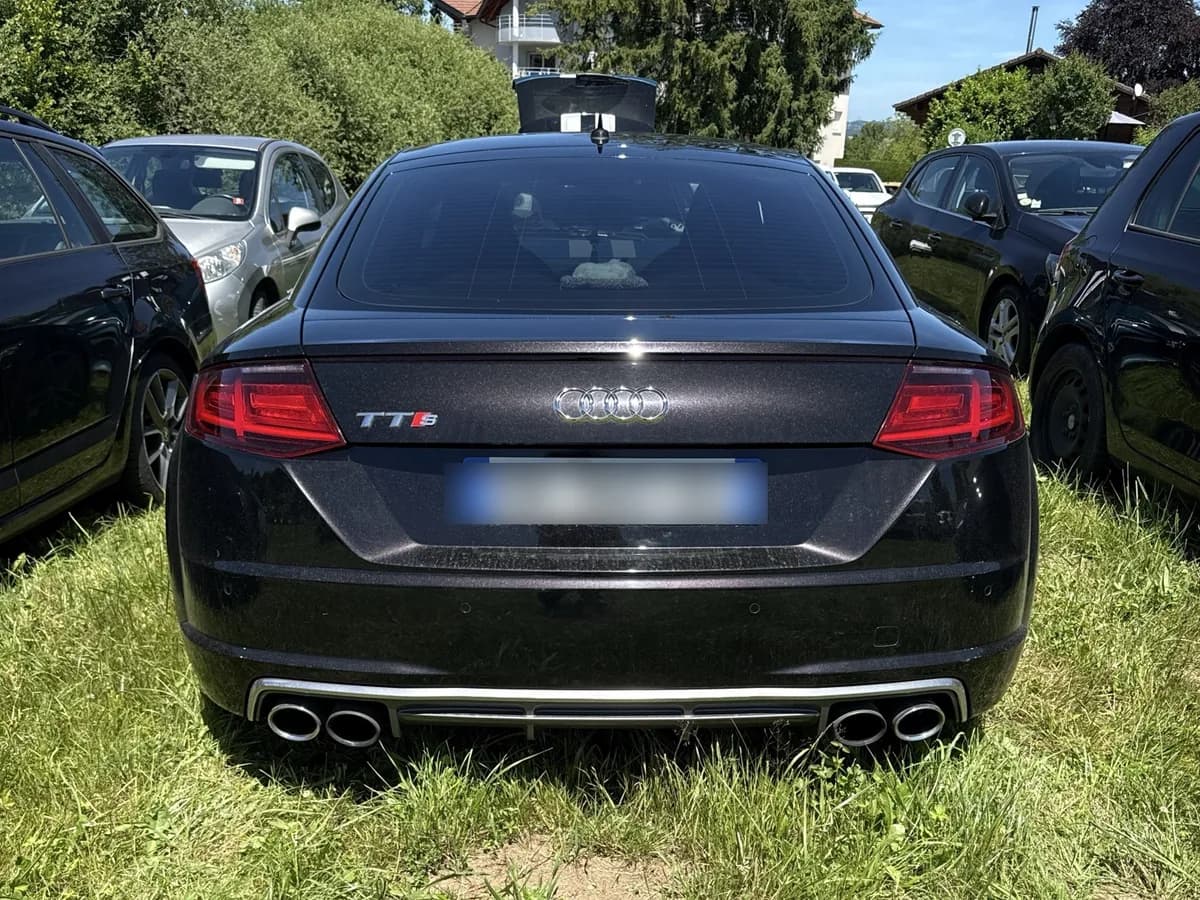
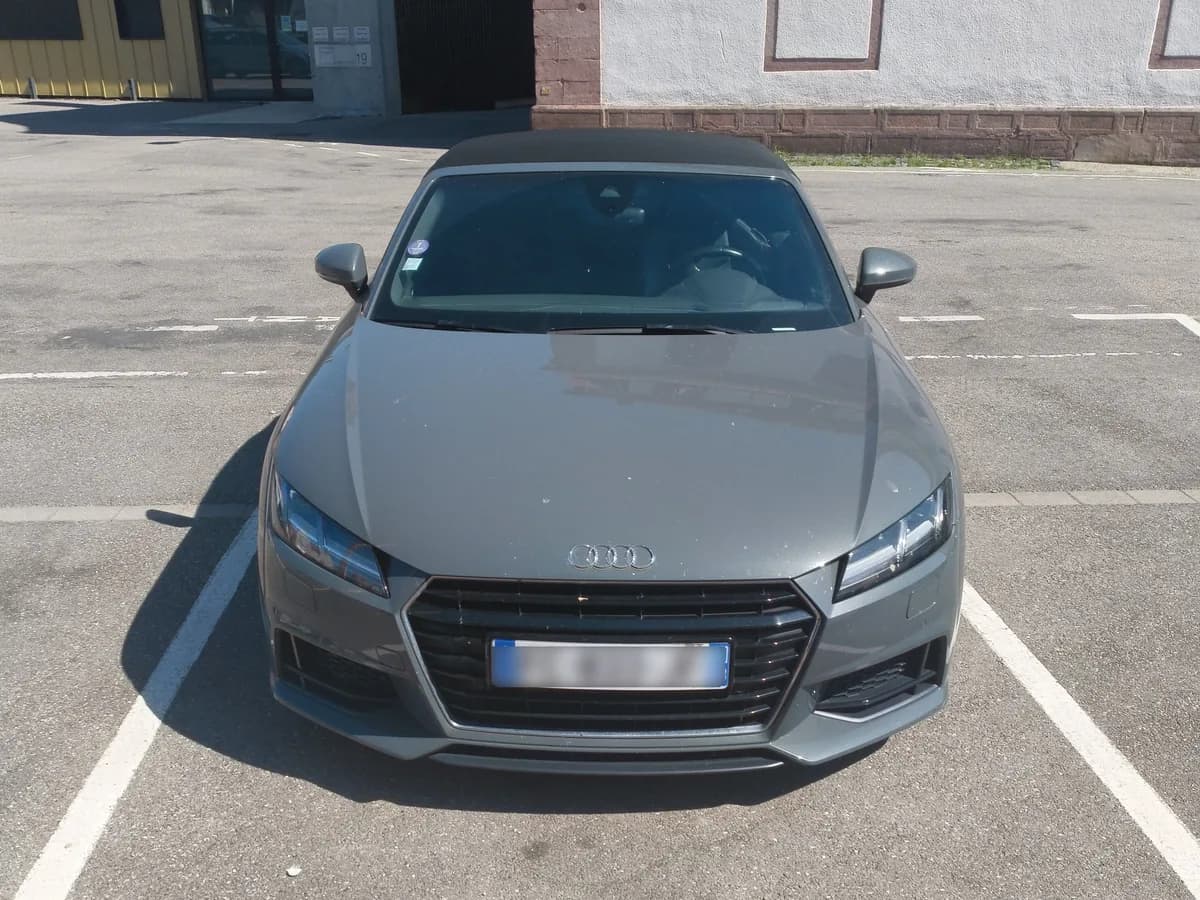
A TTS from this period is best identified by the combination of the 8J TT silhouette and its performance-specific exterior details. Quad exhaust outlets are a useful original-equipment clue, along with sportier bumpers, dedicated wheel designs, and TTS badging. Early cars use the first-phase front-end treatment, while 2011-and-later facelift examples feature revised grille and air-intake designs and updated LED lighting signatures. Inside, a sport steering wheel, heavily bolstered seats, aluminum or Alcantara trim, and, where fitted, a lap timer can help distinguish the model. None of these details should be treated as conclusive on its own because equipment varied by market and some parts are easily changed. Badges, wheels, exhaust components, and interior trim may also have been replaced during the vehicle’s life. For authentication, the VIN, build plate, original equipment record, body style, and model-year specification should be checked together rather than relying on appearance alone.
Important versions
The two core body styles are the TTS Coupé and TTS Roadster. The Coupé is the form most closely associated with the 2008 launch and retains a 2+2 layout with a folding rear seat. The Roadster provides an open-top configuration and a different luggage arrangement; availability and equipment depend on market and model year. Both versions use the turbocharged 2.0 TFSI engine, quattro all-wheel drive, and a sportier chassis specification than the standard TT. For historical identification, it is also important to separate early cars from the facelifted versions introduced around 2011. Special editions and limited-run specifications may add unique colors, upholstery, or equipment, but they should not automatically be treated as separate generations. Exact transmission, power rating, and standard equipment should be confirmed against the vehicle’s original market documentation.
The name “TTS” follows Audi naming, with its rules and its exceptions. Decode a Audi name
References
- Audi TTS Coupé announced in JapanAudi Japan Press Center
- New Audi TT Coupé, TT Roadster and TTS CoupéAudi Japan Press Center
- The 2011 Audi TT and TTS Media InformationAudi of America Communications
- https://www.audiworld.com/forums/tt-mk2-discussion-120/09-tt-tts-brochure-audiusa-com-2705983/audiworld.com
- https://www.audi.com/en/the-new-audi-tt-and-audi-tts-11105/downloadaudi.com
- https://www.audi-mediacenter.com/en/the-audi-tt-and-audi-tts-until-2023-11105/downloadaudi-mediacenter.com
- https://www.cars.com/articles/2010-audi-tts-whats-new-1420685605697/cars.com
- https://nieuws.audi.nl/de-nieuwe-audi-tts/nieuws.audi.nl
Technical specifications
Structured data available for versions linked to this model.
| Version | Power | Torque | Top speed | Drivetrain | Fuel |
|---|---|---|---|---|---|
| — | 265 chevaux | — | — | Transmission intégrale quattro / Boîte S tronic à six rapports | — |
Frequently asked questions
- What years was the Audi TTS produced?
- ScanRacer's referenced versions cover 2008 - 2014.
- How many Audi TTS examples are documented on ScanRacer?
- 9 published scans from 8 members, with the latest photo added in October 2026.
- What is the power output of the Audi TTS?
- The sourced technical data lists 265 chevaux.
What about the car you photographed?
Upload a photo to get a suggested make, model and likely year.
No account needed for the result · Publish only if you choose