
S6
The Audi S6 appeared in 1994, when Audi renamed its Audi 100-based S4 as the S6 while the large executive line itself became the A6. From the beginning, it combined discreet styling, quattro all-wheel drive and a more focused powertrain than the standard models. The first generation retained the S4’s 2.2-liter turbocharged five-cylinder, while later generations moved through a V8, a naturally aspirated V10 and finally a twin-turbocharged V8. The Avant estate became an important part of the S6 identity, pairing high-speed ability with useful load space. Between 1994 and 2019, the model therefore developed from a five-cylinder performance saloon into a more sophisticated executive car, offered as a sedan and estate depending on the market. Its restrained appearance remained a consistent part of the formula.
What about the car you photographed?
Upload a photo to get a suggested make, model and likely year.
No account needed for the result · Publish only if you choose
Variants by year
Make: Audi · Model: S6
10 / 10 versions shown
2019

2012

2006

1999
1994
Audi S6 photos
Model summary
Data from the ScanRacer library, organized to compare versions quickly.
Model introduction
The Audi S6 appeared in 1994, when Audi renamed its Audi 100-based S4 as the S6 while the large executive line itself became the A6. From the beginning, it combined discreet styling, quattro all-wheel drive and a more focused powertrain than the standard models. The first generation retained the S4’s 2.2-liter turbocharged five-cylinder, while later generations moved through a V8, a naturally aspirated V10 and finally a twin-turbocharged V8. The Avant estate became an important part of the S6 identity, pairing high-speed ability with useful load space. Between 1994 and 2019, the model therefore developed from a five-cylinder performance saloon into a more sophisticated executive car, offered as a sedan and estate depending on the market. Its restrained appearance remained a consistent part of the formula.
History
The S6 story begins with the C4 generation. In 1994, Audi renamed the Audi 100-based S4 as the S6 so the performance model matched the newly introduced A6 naming structure. It retained the 169 kW, or 230 PS, 2.2-liter turbocharged five-cylinder. The first S6 was sold as a sedan and Avant in several markets. The S6 plus, presented in 1997 by quattro GmbH, was an especially rare development: it used a 4.2-liter V8 upgraded to 326 PS and was offered in both body styles. The C5 generation arrived at the end of the 1990s and switched to a naturally aspirated 4.2-liter V8. It remained available as a sedan and Avant, with market-specific differences. Introduced from 2006, the C6 made a dramatic change by using a naturally aspirated 5.2-liter V10. The C7 returned to a more compact powertrain approach, using a 4.0-liter twin-turbocharged TFSI V8 designed to combine strong torque with improved everyday usability. In 2019, the next S6 introduced a 3.0-liter TDI V6 with 48-volt electrical assistance in selected markets.
Generations
The C4, produced from 1994 to 1997, is the S6 most closely related to the earlier S4 and Audi 100. It has the proportions of a large 1990s executive car, a turbocharged five-cylinder and distinctive exterior details. The S6 plus developed this platform with a more powerful V8 and a more exclusive specification. The C5 is the second S6 generation and brings a completely redesigned body. Its 4.2-liter V8 and more contemporary cabin separate it clearly from the C4. Launched in 2006, the C6 is particularly easy to distinguish mechanically because it uses a naturally aspirated 5.2-liter V10. Exterior trim and the engine’s distinctive character are useful clues when identifying one. The C7 arrived for the 2013 model year and returned to a 4.0-liter twin-turbocharged TFSI V8, together with a sharper design and more advanced onboard technology. Its mid-cycle update revised lighting elements and selected bumper details. In 2019, the following generation adopted a different approach in certain markets, using an electrified 3.0-liter TDI V6 while retaining the sedan or Avant body concept and quattro all-wheel drive.
Key differences
The main differences between generations are mechanical. The C4 uses a 2.2-liter turbocharged five-cylinder, the C5 a 4.2-liter V8, the C6 a naturally aspirated 5.2-liter V10 and the C7 a 4.0-liter twin-turbocharged TFSI V8. This sequence reflects more than changing performance targets; it also follows developments in emissions control, electronics and expectations for long-distance comfort. Quattro all-wheel drive is a recurring feature, but transmissions, suspension calibration and driver-assistance systems vary by generation and market. The C6 emphasizes the drama of its V10, while the C7 places greater emphasis on accessible torque and efficiency through turbocharging and cylinder deactivation. The 2019 model is different again in the markets where it uses a 3.0-liter TDI V6 with a 48-volt electrical system. Performance figures should therefore not be compared without identifying the model year, body style, transmission and market specification.
Photo recognition
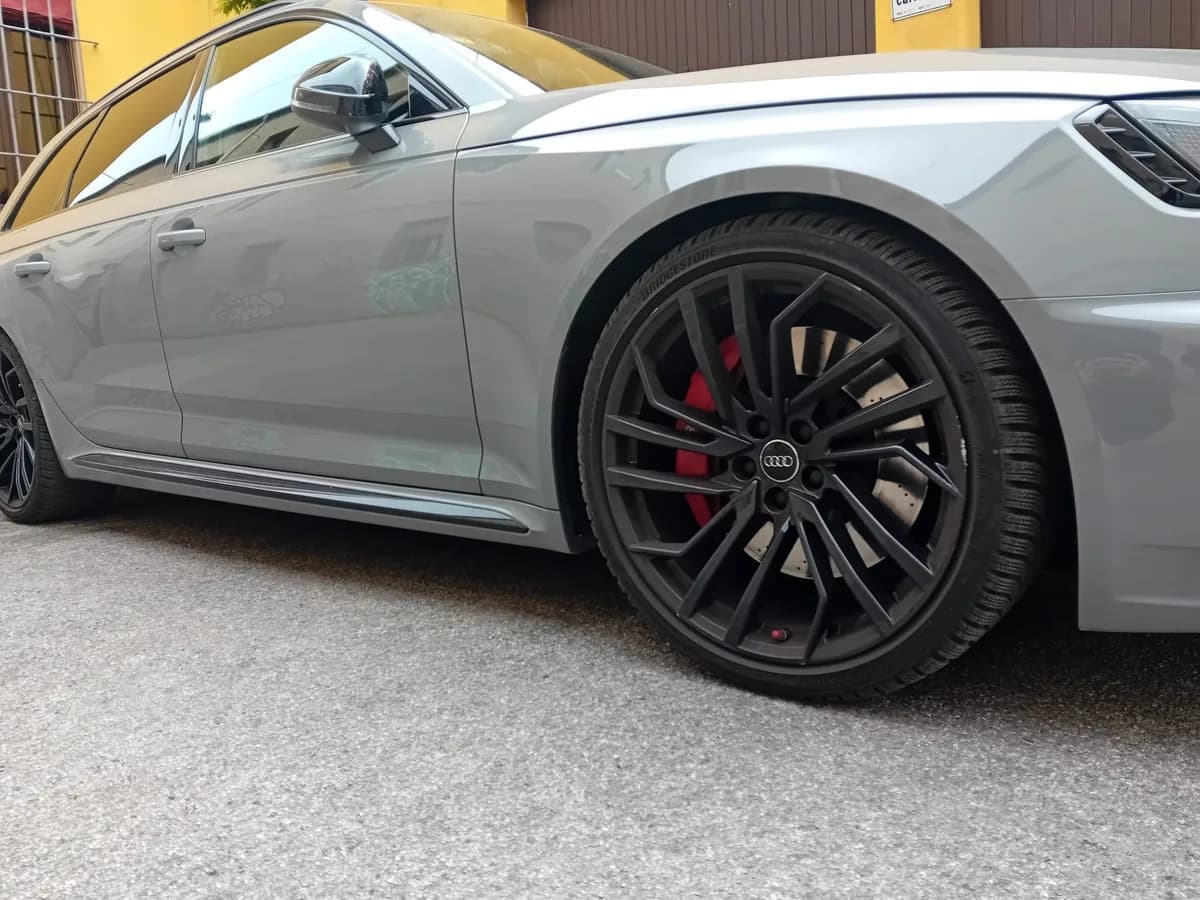
To identify a C4 S6, look for the Audi 100-derived shape that became the A6, model-specific bumpers, S6 badges and the turbocharged five-cylinder. The Avant has a long roofline and upright rear end. The S6 plus is harder to identify from bodywork alone because its defining features include the V8, brakes, wheels and higher specification; details can vary between cars. The C5 has a rounder body and a more modern cabin. Its 4.2-liter V8 is a valuable clue, although exterior equipment alone may not always separate an S6 from a highly specified A6. The C6 generally has larger proportions, distinctive exhaust treatment and, most importantly, the 5.2-liter V10. The C7 has a sharper front end, slimmer lighting and a more tightly drawn appearance. For the 2019 model, badges and the lighting signature help distinguish the newer generation, but a vehicle identification number and factory documentation remain the safest way to confirm the exact specification.
Important versions
The C4 S6 2.2T is the founding version, retaining the turbocharged five-cylinder that directly connects the S6 with Audi’s earlier performance tradition. The 1997 S6 plus is the most distinctive version of this early period, with its 326 PS V8 and limited production. The C5 4.2 represents the move to V8 power, while the C6 5.2 FSI is the most dramatic version because of its naturally aspirated V10. The C7 4.0 TFSI brought back a V8 in twin-turbocharged form and represented a more contemporary performance strategy. Finally, the 2019 TDI version shows how the S6 adapted to long-distance use and tighter efficiency demands, combining a diesel V6 with electrical assistance in selected markets.
The name “S6” follows Audi naming, with its rules and its exceptions. Decode a Audi name
References
- Audi S6 Sedan and Avant TDIAudi MediaCenter
- Audi S6 Avant C4 – Five-cylinder with a family storyAudi MediaCenter
- https://www.autowiki.fi/index.php/Audi_S6autowiki.fi
- https://www.carsart.net/en/cars/audi/s6/carsart.net
- https://media.audi.com/is/content/audi/nemo/me/brochures/en/s6.pdfmedia.audi.com
- https://carwiki.io/en/model/audi/audi-s6carwiki.io
- https://www.audiworld.com/model/s6/07/2007%20S6%20press%20release.pdfaudiworld.com
Frequently asked questions
- What years was the Audi S6 produced?
- ScanRacer's referenced versions cover 1994 - 2019.
- How many Audi S6 examples are documented on ScanRacer?
- 5 published scans from 4 members, with the latest photo added in August 2026.
What about the car you photographed?
Upload a photo to get a suggested make, model and likely year.
No account needed for the result · Publish only if you choose