
S4
Launched in August 1991 as the performance version of the Audi 100, the Audi S4 initially used a 2.2-liter turbocharged five-cylinder producing 230 hp. When the Audi 100 was renamed the A6 in 1994, that first S4 became the S6. The S4 badge returned in 1997 on the B5-generation Audi A4, establishing a line of quattro all-wheel-drive sedans and Avants. Across later generations, the powertrain changed from a twin-turbo V6 to a naturally aspirated V8, then to supercharged and turbocharged 3.0-liter V6 engines. By 2019, specifications varied by market: Europe received the 347-hp S4 TDI, while other regions continued with the 3.0 TFSI gasoline V6. The ScanRacer library covers Audi S4 models from 1991 through 2019, including sedan, Avant, and, for selected years, Cabriolet body styles.
What about the car you photographed?
Upload a photo to get a suggested make, model and likely year.
No account needed for the result · Publish only if you choose
Variants by year
Make: Audi · Model: S4
18 / 18 versions shown
2019
2016
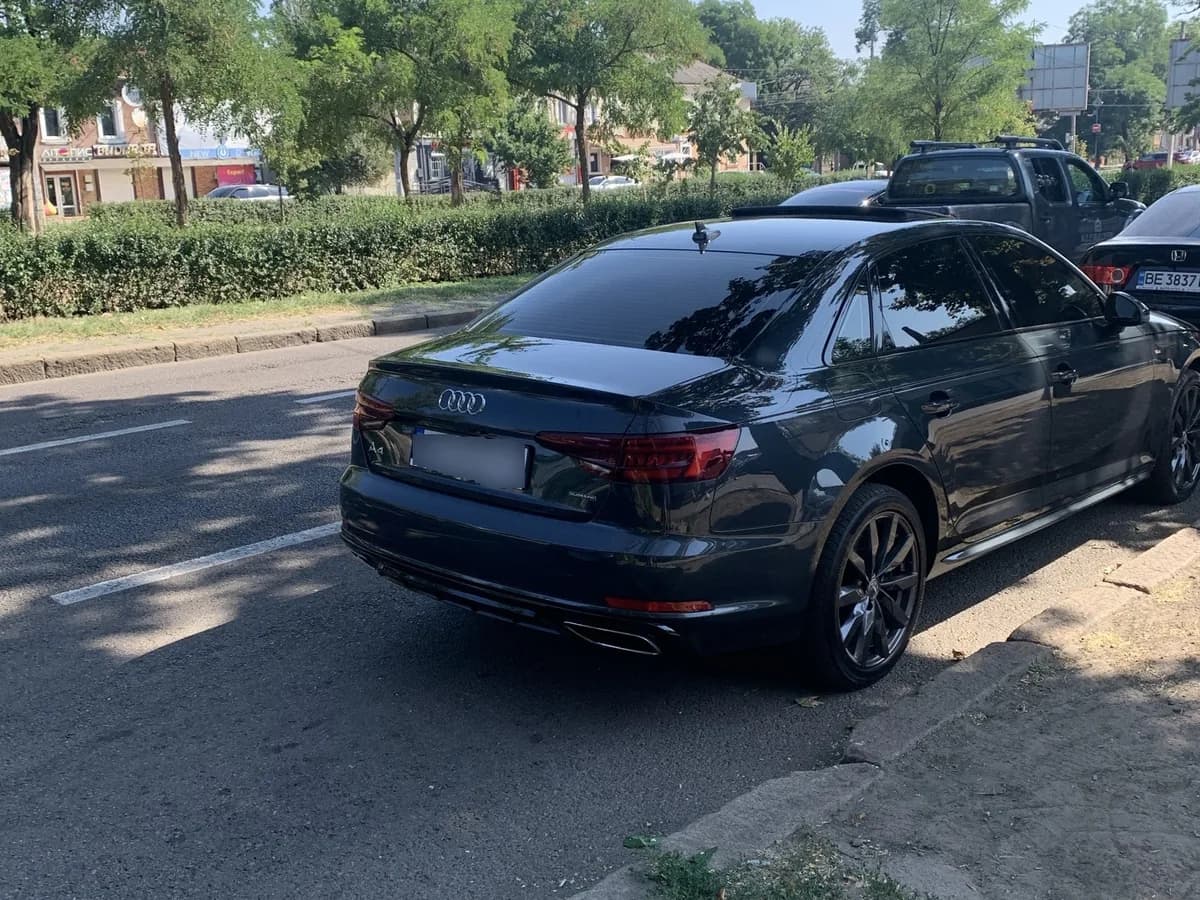
2012
2009
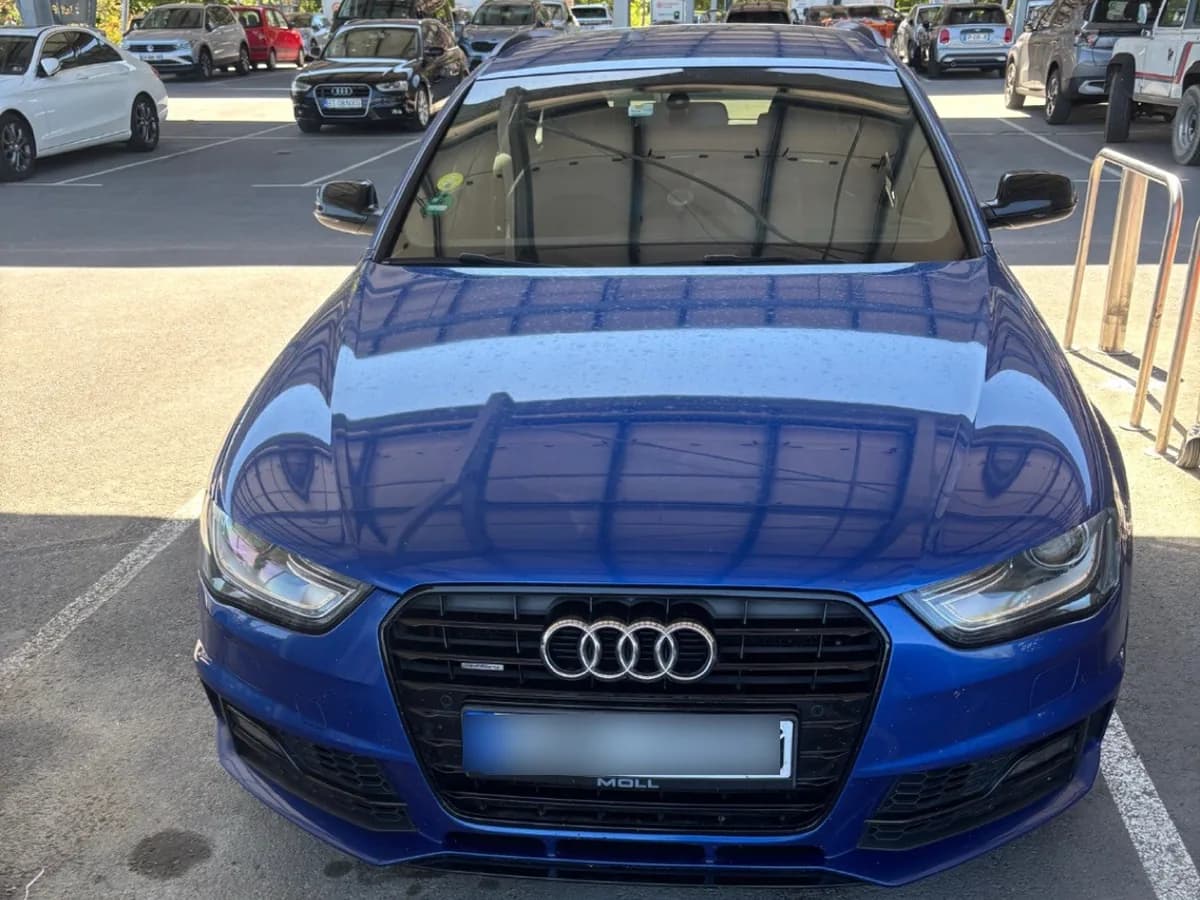
2007
2005
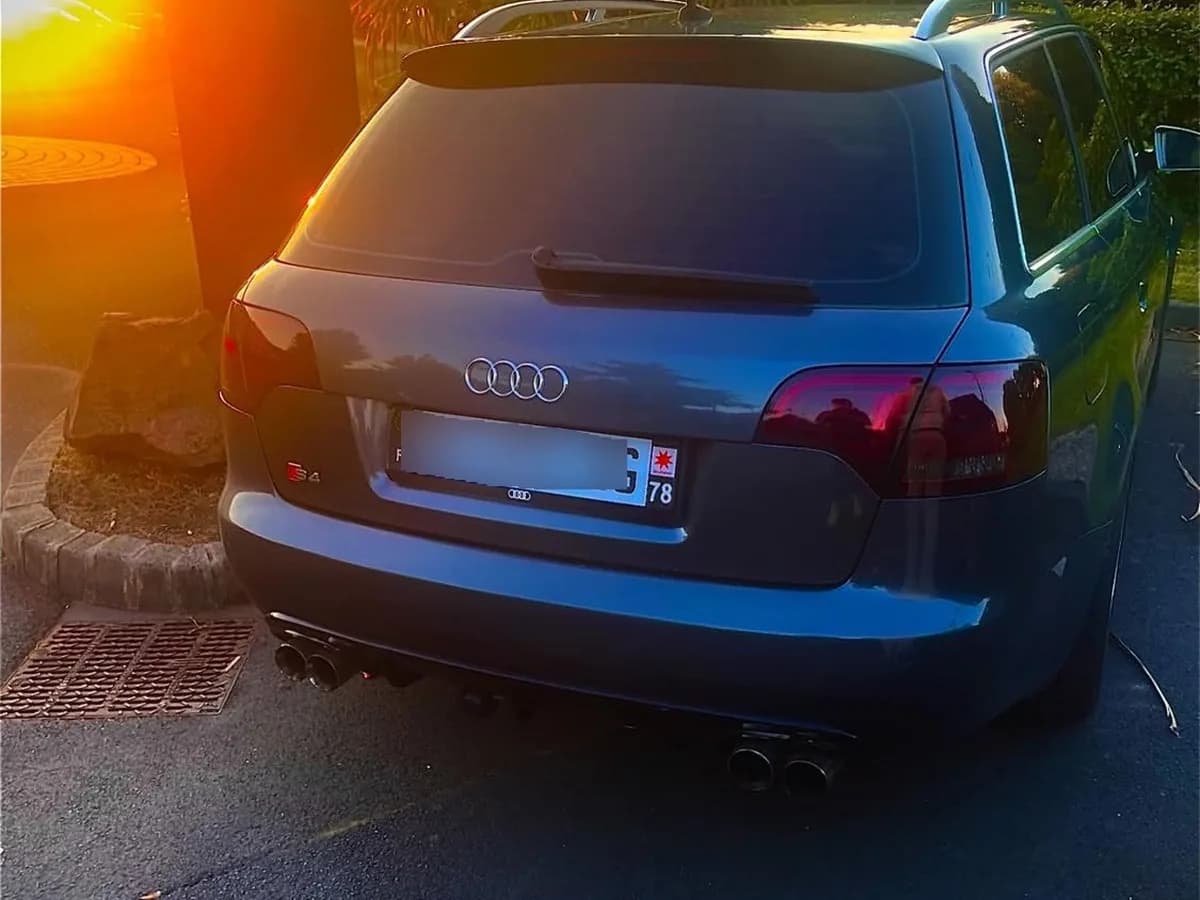
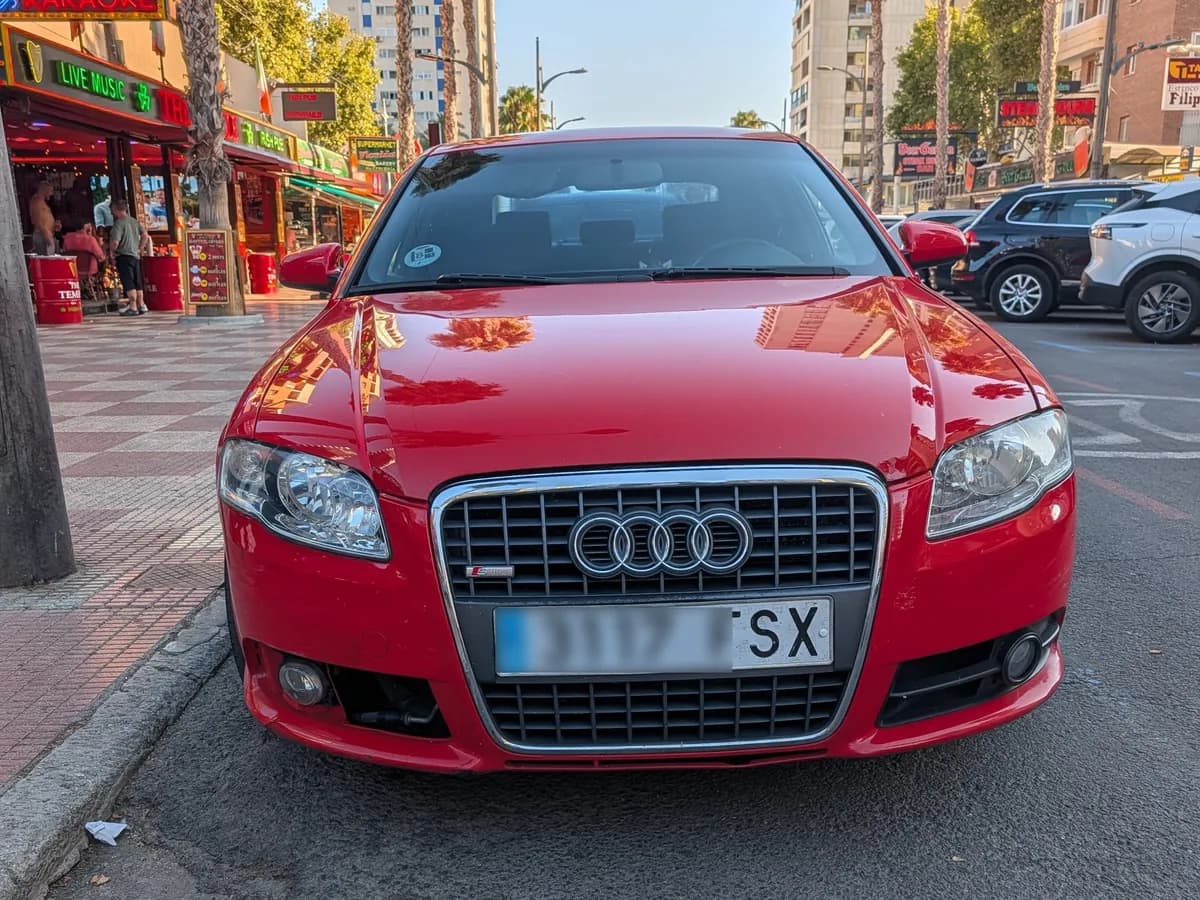
2004
2003
1997
1991
Audi S4 photos
Model summary
Data from the ScanRacer library, organized to compare versions quickly.
Model introduction
Launched in August 1991 as the performance version of the Audi 100, the Audi S4 initially used a 2.2-liter turbocharged five-cylinder producing 230 hp. When the Audi 100 was renamed the A6 in 1994, that first S4 became the S6. The S4 badge returned in 1997 on the B5-generation Audi A4, establishing a line of quattro all-wheel-drive sedans and Avants. Across later generations, the powertrain changed from a twin-turbo V6 to a naturally aspirated V8, then to supercharged and turbocharged 3.0-liter V6 engines. By 2019, specifications varied by market: Europe received the 347-hp S4 TDI, while other regions continued with the 3.0 TFSI gasoline V6. The ScanRacer library covers Audi S4 models from 1991 through 2019, including sedan, Avant, and, for selected years, Cabriolet body styles.
History
The S4 story began with the C4-generation Audi 100. Introduced in 1991, it used a 2.2-liter 20-valve turbocharged inline-five producing 230 hp, with temporary overboost raising peak torque to 350 Nm. Audi positioned it as a successor to the Audi 200 quattro 20V. A sedan was followed by the Avant estate several weeks later. In 1994, the Audi 100 was renamed the A6, so the S4 name was replaced by S6. The S4 badge returned in 1997 on the Audi A4 B5. That car introduced a 2.7-liter twin-turbo V6 and was sold as a sedan and later as an Avant. The B6 generation, launched in the early 2000s, brought a major mechanical change: a naturally aspirated 4.2-liter V8. The B7, introduced from 2005 depending on market, retained the V8 while receiving revised chassis and styling details. The B8, built from 2008-2009 depending on market, replaced the V8 with a supercharged 3.0 TFSI V6. The B9 then moved to a turbocharged 3.0 TFSI V6 and, in Europe for 2019, added a 48-volt mild-hybrid S4 TDI.
Generations
The first S4, commonly identified as the C4, was derived directly from the Audi 100 and distinguished by its turbocharged 2.2-liter five-cylinder. It should not be confused with the later A4-based S4 models: after 1994, the same commercial lineage became the S6. The B5 S4 established the model’s connection with the A4. Its 2.7-liter twin-turbo V6 gave the car a more compact and modern character, while sedan and Avant body styles supported its role as a practical performance car. The B6 adopted a naturally aspirated 4.2-liter V8 and, in selected markets, added a Cabriolet body style. The B7 was closely related to the B6: it kept the V8 but introduced revised bodywork along with changes to the suspension, drivetrain, and equipment. The B8 replaced the V8 with a mechanically supercharged 3.0 TFSI V6. It was offered as a sedan and Avant, without a separate S4 Cabriolet in this generation. The B9, launched from 2016, returned to a turbocharged 3.0 TFSI V6. In 2019, Audi also offered a 347-hp S4 TDI in Europe with a 48-volt electrical system and electric compressor, while gasoline versions remained available in other markets.
Key differences
The main differences between generations are mechanical, with body-style changes also playing an important role. The C4 is the only S4 derived from the Audi 100 and the only one to use the 2.2-liter five-cylinder. The B5 is identified by its 2.7-liter twin-turbo V6. The B6 and B7 share the naturally aspirated 4.2-liter V8, although the B7 is better understood as a substantial evolution in styling and engineering rather than a completely unrelated car. The B8 moved to a supercharged 3.0 TFSI V6 and focused its range on sedan and Avant body styles. The B9 introduced turbocharging and newer electronic systems; in Europe, the 2019 version also added a 3.0 TDI and 48-volt mild-hybrid technology. Transmissions, outputs, equipment, and body styles can vary by country and model year, so accurate identification requires checking the original market, production period, and body configuration.
Photo recognition
To identify an S4, first separate the C4 from the later A4-based cars. The C4 retains the angular proportions of the Audi 100 and typically carries period-specific S and quattro details. The B5 has a rounder profile, separate headlamp units, and the compact proportions associated with the first A4. The B6 is identifiable by its tighter surfacing and pre-Singleframe front end, while the B7 uses a revised nose with the Singleframe grille introduced across Audi’s range during that period. The B8 has wider proportions, a crisp shoulder line, and, on facelifted cars, a more modern light signature. The B9 uses a broader Singleframe grille, slimmer lamps, and a cabin with a stronger digital emphasis. S4 badges, special mirrors, wheels, exhaust outlets, and bumpers can help, but they may also have been replaced or retrofitted. Platform codes, the VIN, and the engine specification remain the most reliable ways to confirm an identification, particularly because equipment and exterior details differed between countries and model years.
Important versions
Notable versions include the 1991 C4 S4, the first car to carry the name and the one powered by Audi’s 230-hp turbocharged five-cylinder; the B5 2.7 twin-turbo, which established the S4 within the A4 range; and the B6 and B7 models with their naturally aspirated 4.2-liter V8. The B8 3.0 TFSI supercharged model marked another major change, combining strong torque with linear response. The B9 gasoline S4 used a 354-hp 3.0 TFSI turbocharged V6 and represented a further move toward downsized forced induction. In Europe, the S4 TDI introduced for 2019 was distinctive for its 347-hp diesel V6, 48-volt electrical system, and electric compressor. Avant, Sedan, and Cabriolet names do not cover the same years or markets, so body-style availability must be checked against the specific model year.
The name “S4” follows Audi naming, with its rules and its exceptions. Decode a Audi name
References
- Audi S4 / S4 Avant launch informationAudi Japan Press Center
- North American Audi S4 technical information archiveAudiWorld
- Audi S4 brochureAudi
- https://www.iseecars.com/car/audi-s4/generationsiseecars.com
- https://everydayaudi.com/article/comparing-the-audi-s4-generations-which-model-year-is-best/everydayaudi.com
Technical specifications
Structured data available for versions linked to this model.
| Version | Power | Torque | Top speed | Drivetrain | Fuel |
|---|---|---|---|---|---|
| Base | 245 KW @ 5500 RPM333 HP @ 5500 RPM329 BHP @ 5500 RPM | 325 lb-ft @ 2900-5300 RPM440 Nm @ 2900-5300 RPM | 155 mph (249 km/h) | All Wheel Drive / 7-speed S tronic with electrohydraulic control | Gasoline |
| Base | 245 KW @ 5500 RPM333 HP @ 5500 RPM329 BHP @ 5500 RPM | 325 lb-ft @ 2900 RPM441 Nm @ 2900 RPM | 155 mph (249 km/h) | All Wheel Drive / 7-speed automatic (S tronic) | Gasoline |
Frequently asked questions
- What years was the Audi S4 produced?
- ScanRacer's referenced versions cover 1991 - 2019.
- How many Audi S4 examples are documented on ScanRacer?
- 5 published scans from 5 members, with the latest photo added in September 2026.
- What is the power output of the Audi S4?
- The sourced technical data lists 245 KW @ 5500 RPM333 HP @ 5500 RPM329 BHP @ 5500 RPM.
What about the car you photographed?
Upload a photo to get a suggested make, model and likely year.
No account needed for the result · Publish only if you choose