
RS7
The Audi RS7 Sportback is a large five-door hatchback that combines the low roofline of the A7 with a high-performance RS powertrain. Revealed in Detroit in January 2013, it uses a twin-turbocharged 4.0-liter TFSI V8, an eight-speed Tiptronic automatic transmission, and quattro all-wheel drive. In its initial specification, the engine produced 560 hp and 700 Nm, with a claimed 0-to-100-km/h time of 3.9 seconds in European figures. The period covered here belongs to the model’s first generation, commonly identified by Audi’s C7 internal designation, followed by the facelifted version often referred to as the C7.5. From 2013 through 2019, the RS7 retained its unusual combination of grand-tourer comfort, hatchback practicality, and supercar-rivaling acceleration while gaining updated styling, revised equipment, and a more powerful RS7 performance variant.
What about the car you photographed?
Upload a photo to get a suggested make, model and likely year.
No account needed for the result · Publish only if you choose
Variants by year
Make: Audi · Model: RS7
3 / 3 versions shown
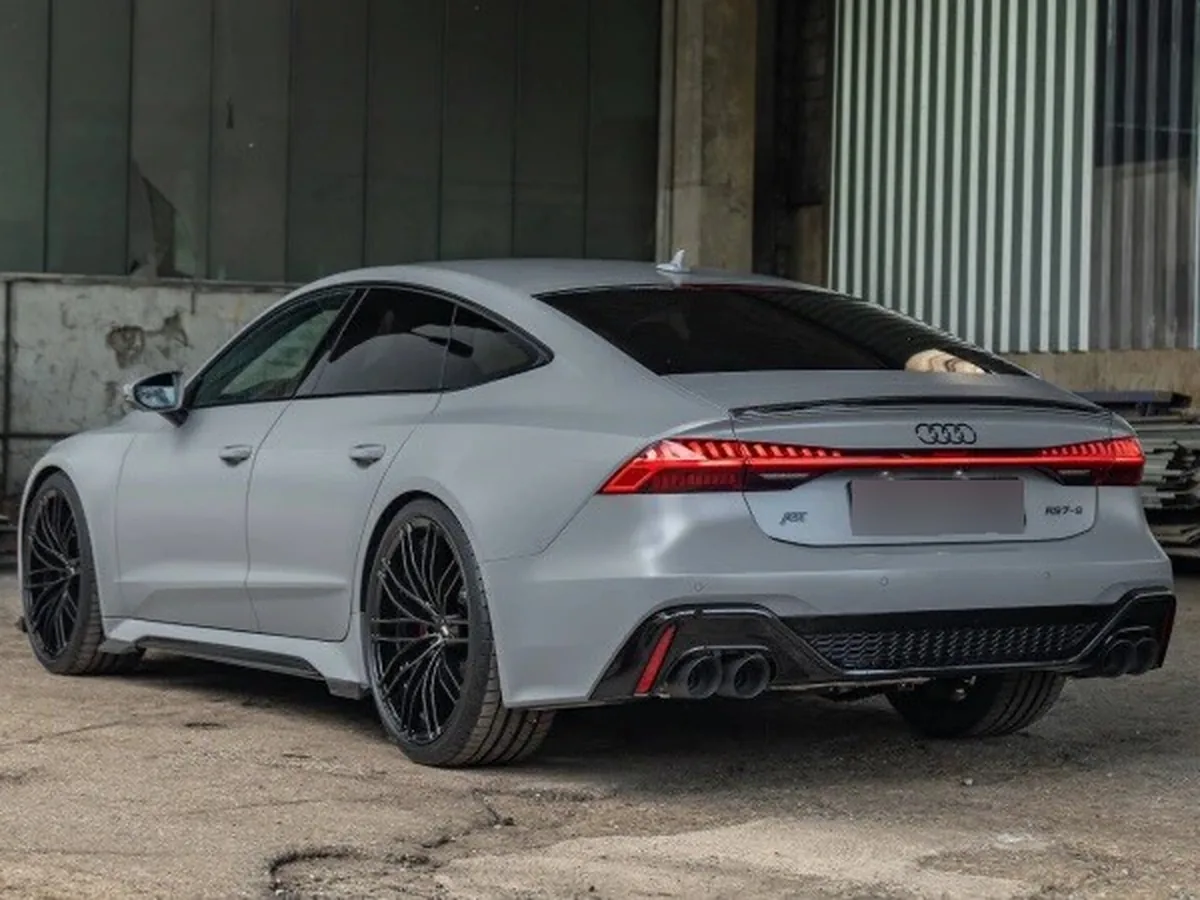
2019
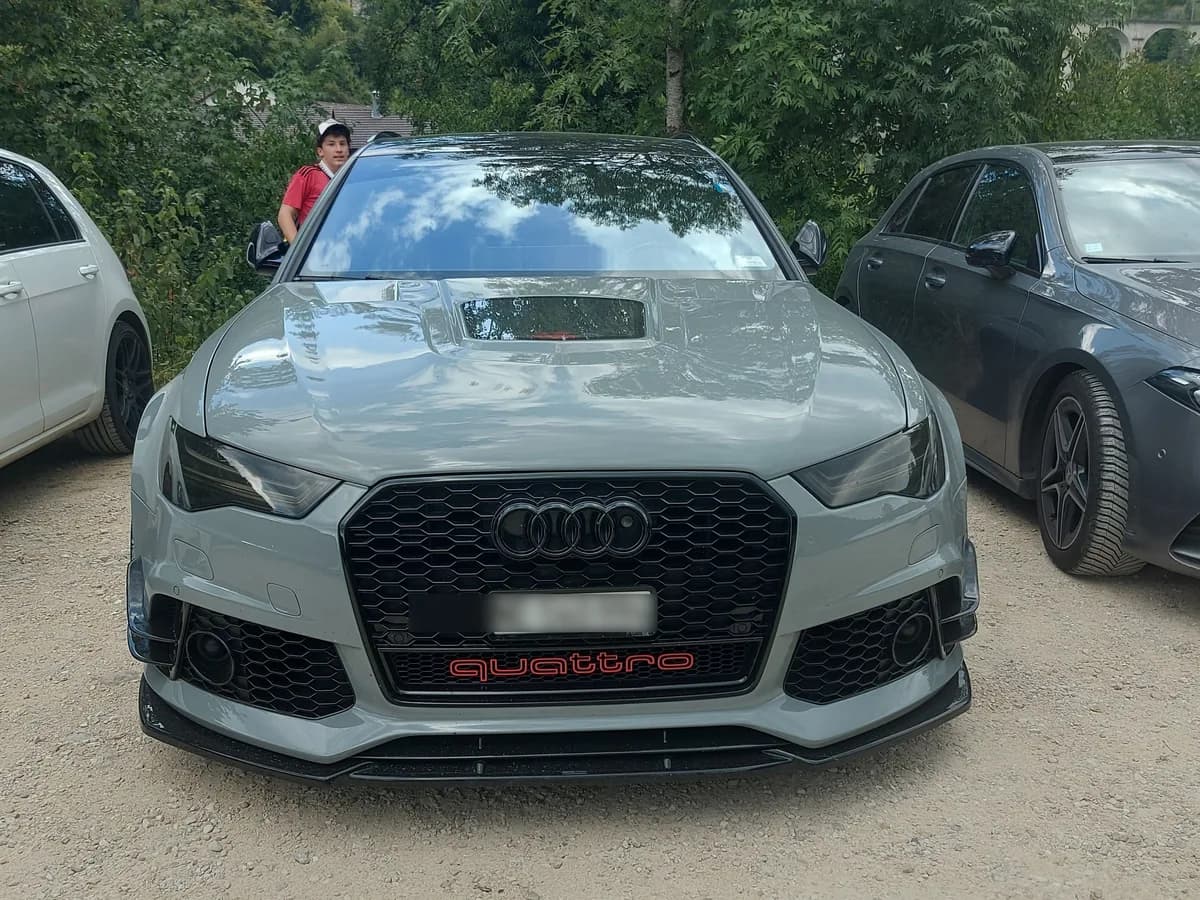
2014
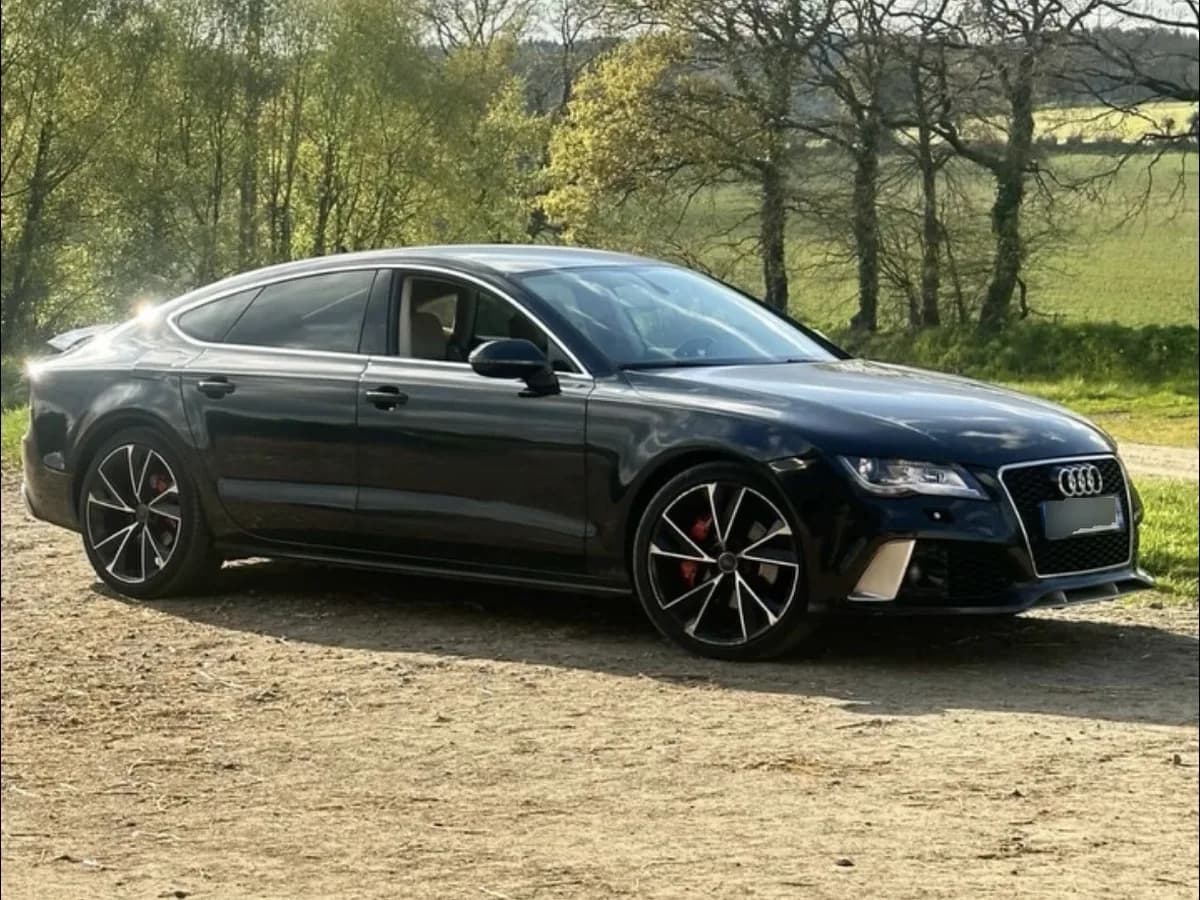
2013
Audi RS7 photos
Model summary
Data from the ScanRacer library, organized to compare versions quickly.
Model introduction
The Audi RS7 Sportback is a large five-door hatchback that combines the low roofline of the A7 with a high-performance RS powertrain. Revealed in Detroit in January 2013, it uses a twin-turbocharged 4.0-liter TFSI V8, an eight-speed Tiptronic automatic transmission, and quattro all-wheel drive. In its initial specification, the engine produced 560 hp and 700 Nm, with a claimed 0-to-100-km/h time of 3.9 seconds in European figures. The period covered here belongs to the model’s first generation, commonly identified by Audi’s C7 internal designation, followed by the facelifted version often referred to as the C7.5. From 2013 through 2019, the RS7 retained its unusual combination of grand-tourer comfort, hatchback practicality, and supercar-rivaling acceleration while gaining updated styling, revised equipment, and a more powerful RS7 performance variant.
History
The Audi RS7 Sportback made its public debut at the North American International Auto Show in Detroit in January 2013. It expanded the A7 family with a model developed through quattro GmbH, the performance division later renamed Audi Sport GmbH. Its format was distinctive: instead of a conventional three-box sedan or an estate, Audi chose a five-door fastback with a liftback tailgate and usable rear seating. The launch specification centered on a twin-turbocharged 4.0-liter TFSI V8 producing 560 hp and 700 Nm. Power was sent through an eight-speed Tiptronic transmission and quattro all-wheel drive. Cylinder on Demand technology could deactivate cylinders under light loads, although the RS7 remained firmly a high-performance car rather than an economy model. Early cars also featured RS-specific suspension tuning, upgraded brakes, wider bodywork, and a more assertive exterior treatment than the standard A7. An update introduced from 2014 brought revised front-end styling and, depending on market and equipment, Matrix LED headlights. During 2015 and 2016, Audi added the RS7 performance, raising output to 605 hp and allowing a temporary 750-Nm torque peak through an overboost function. The 2013-2019 period therefore represents one underlying technical generation, developed through a facelift and several performance and equipment configurations.
Generations
The 2013-2019 period does not represent several entirely separate mechanical generations. It mainly covers the first-generation RS7, based on the C7 Audi A7, together with its facelifted development commonly described in specialist media and enthusiast circles as the C7.5. That distinction is useful for identification, although Audi did not market the facelift as a completely new RS7 generation. Early RS7 cars can be identified by their launch-era design: a honeycomb Singleframe grille, prominent lower air intakes, the original headlamp treatment, RS-specific mirror housings, and large oval exhaust outlets. The twin-turbocharged 4.0-liter TFSI V8, eight-speed Tiptronic transmission, and quattro all-wheel drive form the common technical foundation. The 2014 update changed styling and equipment more than the underlying architecture. The grille became more sculpted, the bumpers were revised, and Matrix LED headlights became available depending on market and specification. The RS7 performance added distinctive trim and increased output to 605 hp. Exact standard equipment, model-year naming, and advertised performance can vary by country, production date, and options. For that reason, a vehicle’s original market and VIN-level documentation are more reliable than a badge or a registration year alone when identifying its precise configuration.
Key differences
The main differences concern the standard RS7 versus the RS7 performance, followed by the visual and equipment changes introduced with the facelift. The original and facelifted standard cars use a 560-hp, 700-Nm twin-turbocharged 4.0-liter V8. The RS7 performance, introduced during the middle of the decade depending on market, produces 605 hp; its overboost function can temporarily raise torque to 750 Nm. Audi also claimed quicker acceleration and offered higher top-speed limits with the relevant dynamic equipment. The facelift brought a revised front end, updated lighting signatures, and new Matrix LED headlight availability. Wheels, brakes, suspension, the rear sport differential, and dynamic packages could also make a substantial difference to both appearance and driving behavior. Equipment was not identical in every country. A careful comparison should therefore consider engine output, installed suspension, brake specification, wheel size, and speed-limit options rather than relying on the model year or the presence of an RS7 badge alone.
Photo recognition
A period RS7 is first identified by its five-door Sportback body. The roofline tapers toward a steep liftback tailgate, while the fenders and bumpers are visibly wider than those of a regular A7. At the front, the Singleframe grille uses a distinctive RS honeycomb pattern and the lower air intakes are substantially larger. Contrast-finish mirror housings may be fitted, while the rear’s two large oval exhaust outlets are a more useful clue than aftermarket badges. To distinguish early cars from facelifted examples, examine the headlights, grille shape, and bumper design. Facelifted cars have a sharper front-end treatment and may use Matrix LED headlights. Identifying an RS7 performance requires more care because its badges, wheels, matte-finish details, and carbon-fiber elements could be optional or retrofitted. The VIN, original build sheet, and engine specification provide the most dependable confirmation. Registration year alone can be misleading because model-year timing and equipment packages differed between markets.
Important versions
The reference model is the Audi RS7 Sportback with a twin-turbocharged 4.0-liter TFSI V8 producing 560 hp and 700 Nm, paired with an eight-speed Tiptronic transmission and quattro all-wheel drive. The RS7 performance is the most significant development of the period: introduced in 2015 or 2016 depending on market, it raises output to 605 hp and can use a temporary 750-Nm overboost function. Further differences come from pre-facelift and facelift styling, as well as chassis, brake, and higher-speed packages. Commercial names and equipment availability should always be checked against the vehicle’s original country and build documentation.
The name “RS7” follows Audi naming, with its rules and its exceptions. Decode a Audi name
References
- https://uploads.audi-mediacenter.com/system/production/car_motorizations/1371/file_en/7aec02a9f1cabe15f8d39f349a157b591647bf7e/eTD-Audi-RS7-Sportback-Performance-TFSI_240426.pdf?1714120403=&disposition=attachmentuploads.audi-mediacenter.com
- https://media.audi.com/is/content/audi/country/me/assets/brochures/en/rs7.pdfmedia.audi.com
- https://www.honestjohn.co.uk/audi/rs7/2013/specs/honestjohn.co.uk
- https://www.caranddriver.com/audi/rs7-2018caranddriver.com
- https://emea-dam.audi.com/adobe/assets/urn%3Aaaid%3Aaem%3A6a97ae4f-b852-486a-905e-89f7155188cd/original/as/audi-a7-s7-rs7-brochure.pdfemea-dam.audi.com
Technical specifications
Structured data available for versions linked to this model.
| Version | Power | Torque | Top speed | Drivetrain | Fuel |
|---|---|---|---|---|---|
| — | 600 PS (592 hp) | — | — | quattro all-wheel drive / 8-speed Tiptronic automatic | — |
Frequently asked questions
- What years was the Audi RS7 produced?
- ScanRacer's referenced versions cover 2013 - 2019.
- How many Audi RS7 examples are documented on ScanRacer?
- 7 published scans from 6 members, with the latest photo added in August 2026.
- What is the power output of the Audi RS7?
- The sourced technical data lists 600 PS (592 hp).
What about the car you photographed?
Upload a photo to get a suggested make, model and likely year.
No account needed for the result · Publish only if you choose