Back to RS Q8
Audi

Audi RS Q8 2024

2024

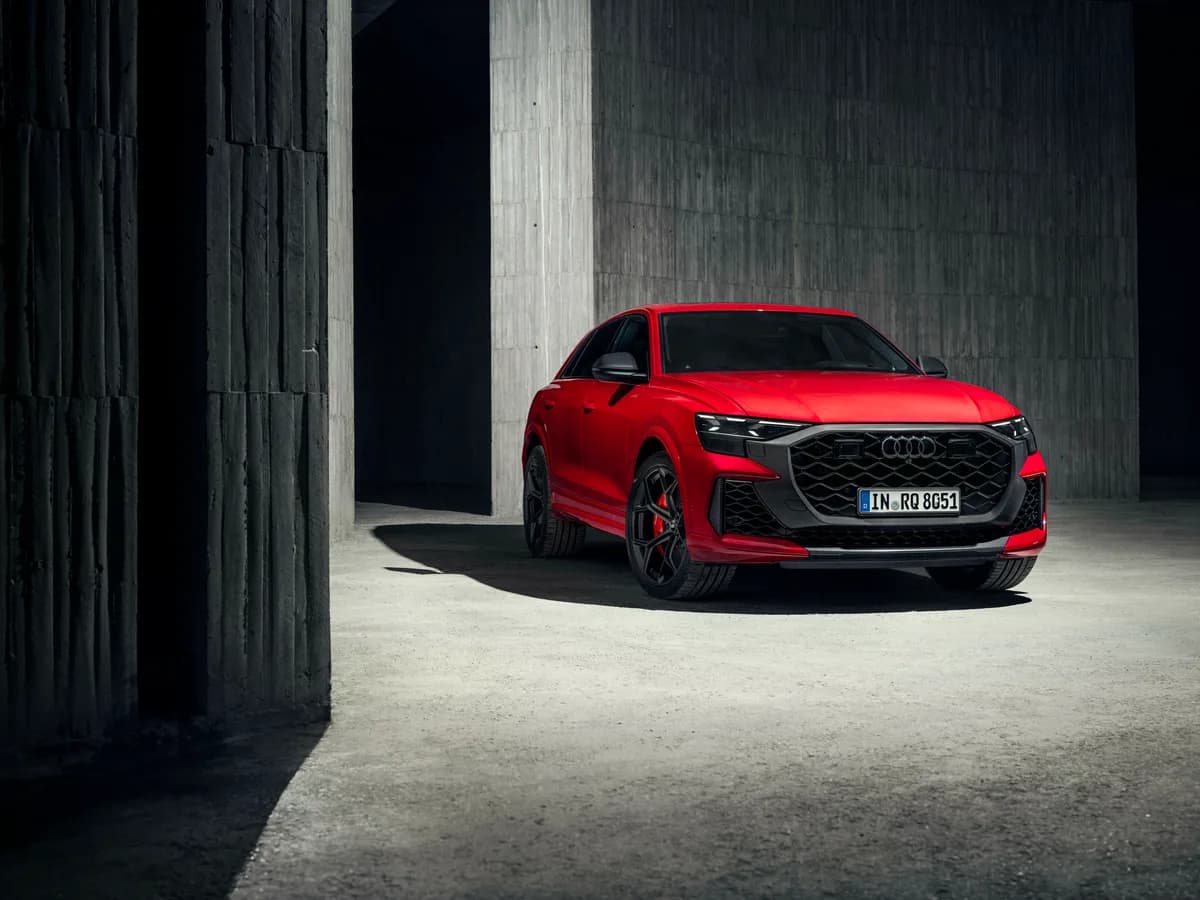
The 2024 Audi RS Q8 Base is a high-performance luxury SUV powered by a 4.0-liter twin-turbocharged V8. U.S. sources rate the engine at 591 horsepower and 590 lb-ft of torque, while Audi’s European 2024 documentation lists 600 PS and 800 Nm for the updated RS Q8. Power reaches all four wheels through quattro all-wheel drive and an eight-speed automatic transmission. Sitting above the regular Q8 and SQ8 in Audi’s conventional SUV range, the RS Q8 combines a raised driving position, five-seat practicality, and sports-car-level acceleration. The exact 2024 specification varies by market. In the United States, the model largely carries over with limited changes, while Audi’s European program introduces an updated RS Q8 alongside the more powerful RS Q8 performance.

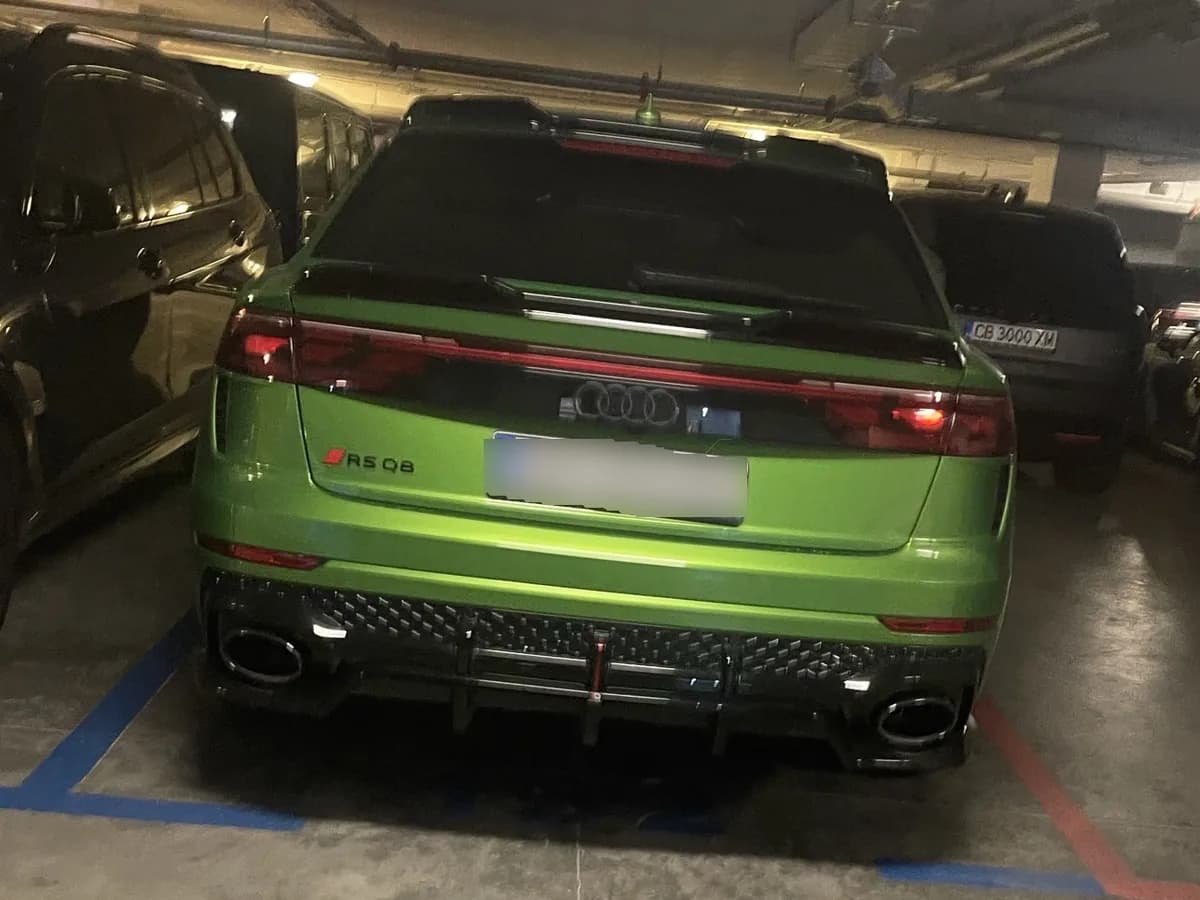
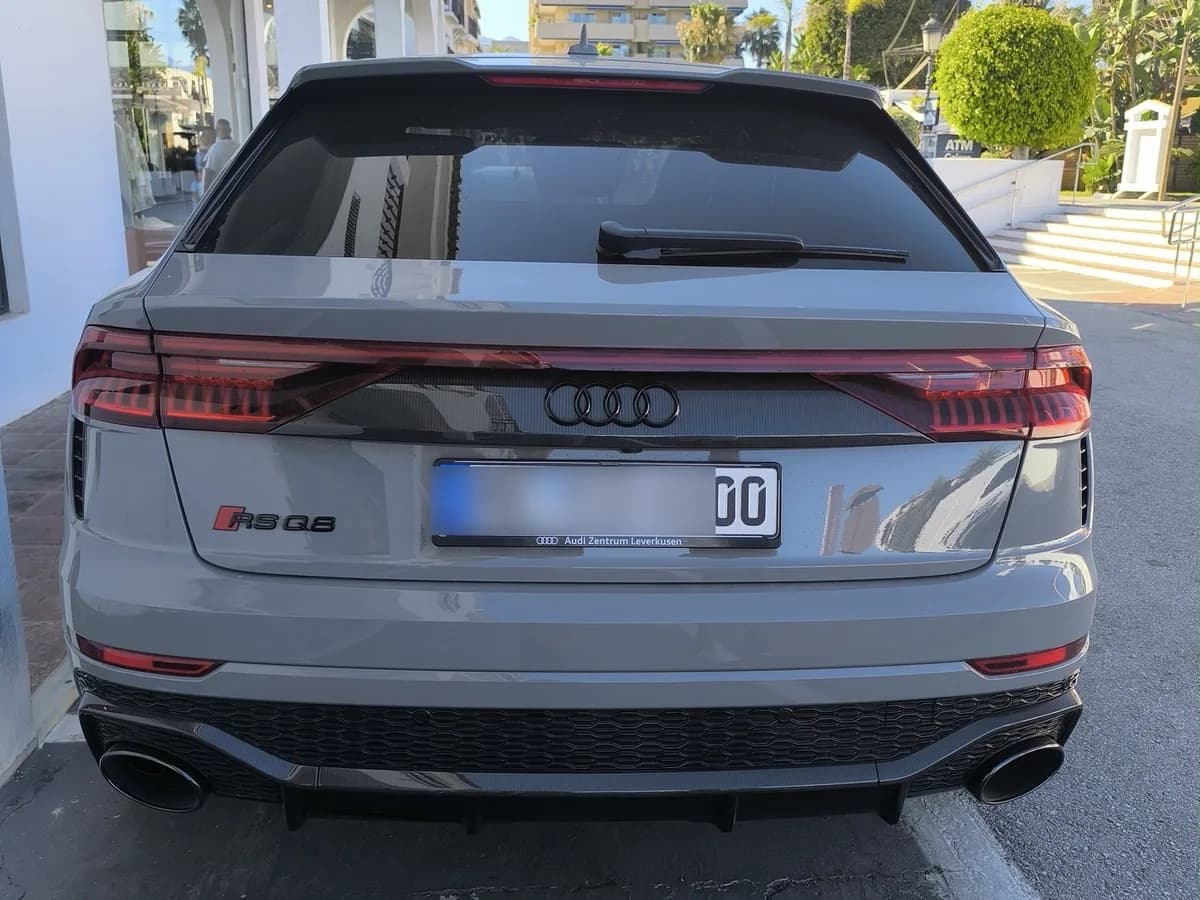
Have you spotted this car?Scan it: your photo enriches this page and helps the community.
Scan this car
RS Q8
Photo by @kln69off

History

The Audi RS Q8 appeared publicly in 2019 as the most extreme member of the Q8 family. Audi Sport followed its established RS formula: install a high-output powertrain, revise the chassis, and retain enough comfort and practicality for everyday road use. The model shares its broad technical architecture with other large Volkswagen Group vehicles, but receives its own performance calibration. Its 4.0-liter twin-turbocharged V8, quattro all-wheel drive, and eight-speed automatic transmission give it the pace to challenge vehicles such as the Lamborghini Urus, while its cabin remains more understated and family-oriented. Before the production reveal, a camouflaged prototype drew attention by setting a reference time for a production SUV at the Nürburgring in November 2019. The RS Q8 then became a regular international production model, with equipment and output varying by market. For 2024, Audi refreshed the broader Q8 range and introduced the more powerful RS Q8 performance alongside the updated standard RS Q8 in Europe.

Latest scans

Photos added by the community for this page.

1 photo

Technical data

RS Q8 is presented here with its key technical data: 592 ch, 800 Nm, 3.8 s, 249 km/h. The recorded setup is Automatique, 8 rapports.

Power
592 ch
Torque
800 Nm
0-100 km/h
3.8 s
Top speed
249 km/h
Displacement
3993 cm3
Dimensions
5011 x 1999 x 1694 mm
Fuel types
Essence
Gearboxes
Automatique, 8 rapports
Matched engine options
VersionPowerTorqueGearboxDrivetrain
4.0L TFSIV8 8AT AWD (600 HP)592 ch800 NmAutomatique, 8 rapports-

4.0L TFSIV8 8AT AWD (600 HP)

Power
592 ch
Torque
800 Nm
Gearbox
Automatique, 8 rapports
Drivetrain
-

Source: CarData.wiki

Anecdotes

Before the production model was revealed, a camouflaged Audi RS Q8 prototype set a Nürburgring reference time for a production SUV in November 2019. The run helped establish the RS Q8 as a vehicle developed with a serious dynamic objective rather than merely an appearance package for the Q8. In 2024, Audi returned to the Nürburgring to promote the separate RS Q8 performance, which set its own production-SUV record.

Production

The 2024 Audi RS Q8 is a regular production model rather than a limited series identified as such in the available sources. Audi publishes specifications, launch pricing, and equipment information for its versions, but the reviewed documents do not provide a worldwide production total for the 2024 RS Q8 Base. Manufacturing and distribution form part of Audi Sport’s high-performance SUV program. Actual volumes can vary by region, sales period, and selected configuration. Without a consolidated official figure, no reliable total can be assigned to this specific version. Used-car listings also cannot be treated as a measure of global production, because they reflect only vehicles currently advertised in particular markets and may include imports or duplicate listings.

Press reception

Established automotive coverage has generally praised the RS Q8 for combining strong performance with comfort and everyday usability. Car and Driver highlights the V8’s output, the effectiveness of the all-wheel-drive system, and the SUV’s ability to approach the performance of the Lamborghini Urus while offering a quieter, luxury-focused cabin. Reviews also recognize its stability and road manners. The main reservations involve its high price, considerable mass, and the fuel demands of a large twin-turbocharged V8. Some testers also argue that the less expensive SQ8 or a lighter Audi performance car may deliver better value for buyers focused purely on driving enjoyment. The overall reception is therefore positive dynamically, but more qualified when cost, weight, and efficiency matter most.

Evolution

The 2024 evolution of the RS Q8 depends substantially on market. In the United States, automotive coverage describes a largely carried-over model with selected updates to connected functions and driver-assistance features. In Europe, Audi presents an updated RS Q8 whose design follows the wider Q8 refresh, including revised bumpers, more pronounced air intakes, and expanded personalization options. Audi also adds a second derivative, the RS Q8 performance, rated at 640 PS compared with 600 PS for the standard European RS Q8. Both versions retain the twin-turbocharged V8 and all-wheel drive, while the performance model gains specific chassis equipment and lighter wheels. These details should not automatically be applied to every country, because the Base designation, equipment packages, and output figures vary between national catalogues.

Variants

The 2024 RS Q8 Base designation refers to the main version of the model, but its exact content depends on the market. It sits above the SQ8 through higher output, more aggressive styling, and a chassis tuned more firmly toward performance. In Europe, Audi’s 2024 program separates the updated RS Q8 from the RS Q8 performance, with the latter positioned at the top of the range at 640 PS. Audi specifies lighter 23-inch wheels for the performance derivative, while wheel and equipment availability differs for the standard RS Q8. National markets may also change driver-assistance systems, brakes, interior trim, and top-speed options. Base is therefore best understood as a range designation rather than proof of identical equipment across every country. Buyers and researchers should use the relevant national specification when comparing individual vehicles.

References