
e-tron GT
The Audi e-tron GT is a fully electric four-door coupé developed as Audi’s high-performance grand tourer. Series production began at the Böllinger Höfe facility near Neckarsulm in late 2020, followed by its market launch in 2021. The original range consisted of the e-tron GT quattro and RS e-tron GT, both using two electric motors and all-wheel drive beneath a low, streamlined body. Measuring roughly 4.99 metres in length with a 2.90-metre wheelbase, the car is recognizable by its sculpted rear haunches, fast roofline, and broad stance. Audi introduced a major technical update in 2024, reorganizing the range around the S e-tron GT, RS e-tron GT, and RS e-tron GT performance. The e-tron GT therefore remains one of Audi’s clearest electric performance flagships.
What about the car you photographed?
Upload a photo to get a suggested make, model and likely year.
No account needed for the result · Publish only if you choose
Variants by year
Make: Audi · Model: e-tron GT
2 / 2 versions shown
2025
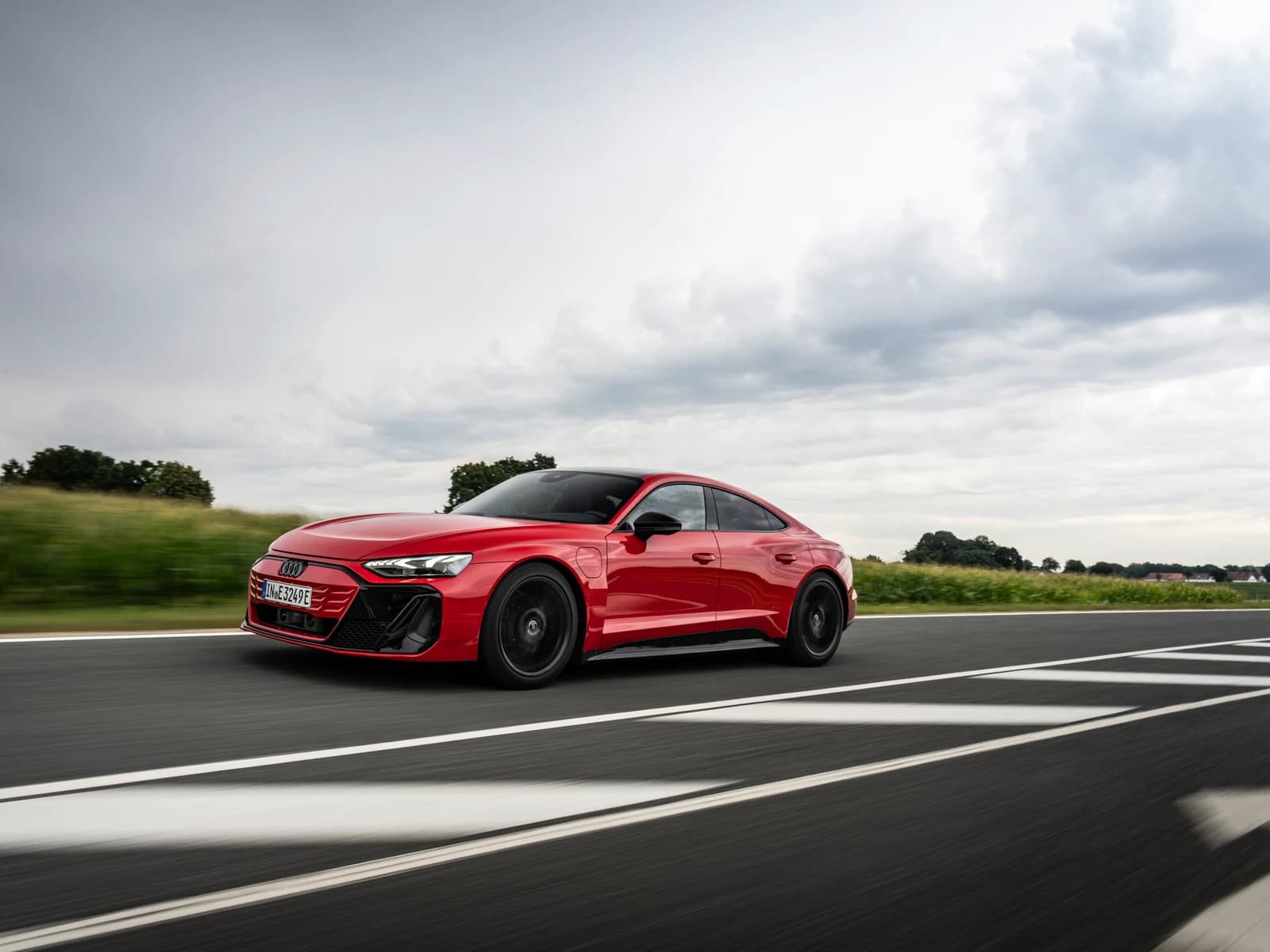
2020
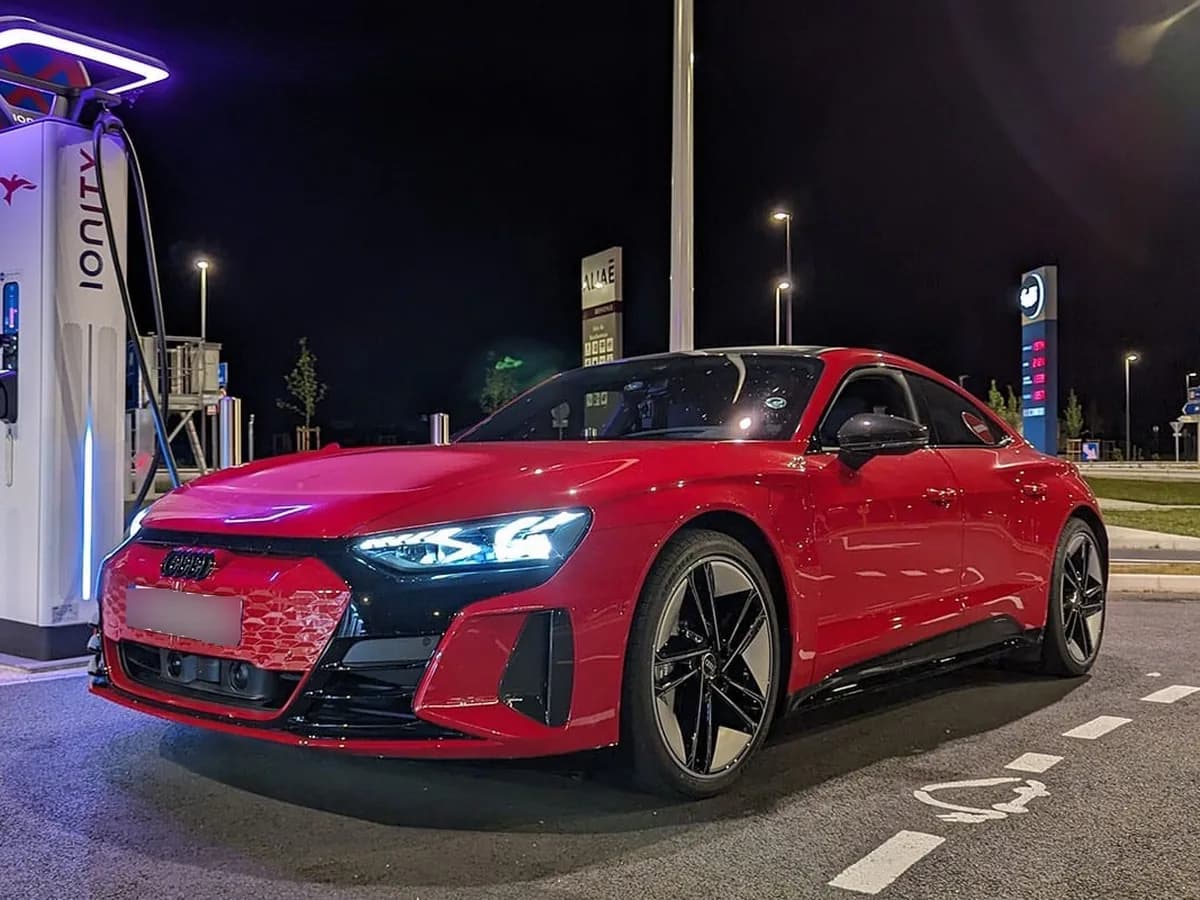
Audi e-tron GT photos
Model summary
Data from the ScanRacer library, organized to compare versions quickly.
Model introduction
The Audi e-tron GT is a fully electric four-door coupé developed as Audi’s high-performance grand tourer. Series production began at the Böllinger Höfe facility near Neckarsulm in late 2020, followed by its market launch in 2021. The original range consisted of the e-tron GT quattro and RS e-tron GT, both using two electric motors and all-wheel drive beneath a low, streamlined body. Measuring roughly 4.99 metres in length with a 2.90-metre wheelbase, the car is recognizable by its sculpted rear haunches, fast roofline, and broad stance. Audi introduced a major technical update in 2024, reorganizing the range around the S e-tron GT, RS e-tron GT, and RS e-tron GT performance. The e-tron GT therefore remains one of Audi’s clearest electric performance flagships.
History
The e-tron GT was conceived as Audi’s electric interpretation of a grand tourer, rather than as a conventional practical electric car. Audi announced the start of series production in December 2020 at the Böllinger Höfe facility in Neckarsulm, a site already associated with the company’s performance vehicles. The car reached the market in 2021 in two forms: the e-tron GT quattro and the RS e-tron GT. Both used a floor-mounted battery, two permanent-magnet synchronous motors, and electric all-wheel drive. The engineering brief combined rapid acceleration and high-speed stability with the comfort and packaging expected from a four-door grand tourer. Audi also emphasized a production process that combined automated systems, digital measurement, and skilled manual work on a line shared with the Audi R8. A major technical revision followed in 2024. It brought a 105-kWh gross battery, more powerful electric motors, revised thermal management, and an updated model structure consisting of the S e-tron GT, RS e-tron GT, and RS e-tron GT performance. In Launch Control, the performance version can deliver up to 680 kW.
Generations
Audi does not officially describe the e-tron GT as a sequence of numbered generations. The available evidence supports a more cautious distinction between an initial production phase, launched for the 2021 model year after manufacturing began in late 2020, and a substantial technical update introduced in 2024. The first phase included the e-tron GT quattro and RS e-tron GT. These cars share the original body design, first-generation battery specification, and the output levels associated with the launch range. The 2024 revision keeps the same basic four-door coupé concept and overall design language, but significantly changes the electric drivetrain. Audi introduced a 105-kWh gross battery, redesigned and more powerful motors, stronger regenerative braking, and revised thermal management. The naming structure also changed, with the S e-tron GT, RS e-tron GT, and RS e-tron GT performance forming the updated family. It is therefore more accurate to describe the car as one production generation with a major mid-cycle engineering revision than to assign it an unsupported second-generation label.
Key differences
The main differences involve output, chassis tuning, and exterior specification. The original e-tron GT quattro served as the grand-touring version, while the RS e-tron GT added a sharper Audi Sport setup, greater output, and distinctive performance equipment. In the revised 2024 range, the S e-tron GT became the broadly sporty model, the RS e-tron GT moved further toward outright performance, and the RS e-tron GT performance became the family flagship. Audi quotes up to 500 kW for the S, 630 kW for the RS, and 680 kW in Launch Control for the performance model. Battery and efficiency figures also changed with the update. Range and consumption depend on market, wheel choice, equipment, and test procedure, so figures should not be compared without identifying the model year and certification standard.
Photo recognition
The e-tron GT is easiest to identify by its very low four-door coupé body, long visual bonnet, and roofline that tapers smoothly toward the rear. Its rear fenders carry the raised contours known as quattro blisters, which are especially clear above the wheel arches. At the front, the inverted Singleframe grille is closed or largely blanked off because the car is electric, while slim headlamps and side air openings emphasize the car’s width. In profile, the long wheelbase, short overhangs, and large wheels create a distinctly grand-touring stance. Version identification requires checking the quattro, S, or RS badging, bumper designs, wheel patterns, and brake hardware, although many of these details can change with optional equipment. The 2024 update is not a completely new body style; it is more readily identified through trim details and the revised model and powertrain range.
Important versions
The original range consisted of the e-tron GT quattro and RS e-tron GT. The quattro emphasized the balance between comfort, range, and performance, while the RS added a sharper dynamic character and greater output. From the 2024 revision onward, Audi reorganized the family around the S e-tron GT, RS e-tron GT, and RS e-tron GT performance. Audi quotes up to 500 kW in Launch Control for the S, 630 kW for the RS, and 680 kW for the performance model, subject to market specification. The supplied model data covers a 2020 entry labeled “Base” and a 2025 entry labeled “quattro”; those catalog labels should not be treated as a complete description of the international trim hierarchy or as proof that every market used identical naming.
The name “e-tron GT” follows Audi naming, with its rules and its exceptions. Decode a Audi name
References
- Audi e-tron GT enters series production: Carbon-neutral production begins at the Böllinger HöfeAudi MediaCenter
- Positioning: Audi e-tron GT quattro and Audi RS e-tron GTAudi MediaCenter
- Facts and figures: Audi e-tron GT quattro and Audi RS e-tron GTAudi
- The new Audi e-tron GT: An electrifying masterpieceAudi
- Audi e-tron GT quattro: Technical specifications and dataAudi
- https://www.audi-mediacenter.com/en/press-releases/audis-most-powerful-production-vehicle-the-new-rs-e-tron-gt-performance-16222/downloadaudi-mediacenter.com
- https://www.audi.com/en/publications/dimensions/dimensions-e-tron-gt-quattro-1409audi.com
- https://www.audi-mediacenter.com/en/photos/detail/audi-rs-e-tron-gt-performance-126331audi-mediacenter.com
Technical specifications
Structured data available for versions linked to this model.
| Version | Power | Torque | Top speed | Drivetrain | Fuel |
|---|---|---|---|---|---|
| — | Puissance maximale de 350 kW, avec un boost temporaire à 390 kW | — | — | Transmission intégrale / Boîte de vitesses à une vitesse pour l'essieu avant, boîte de vitesses à deux rapports pour l'essieu arrière | — |
Frequently asked questions
- What years was the Audi e-tron GT produced?
- ScanRacer's referenced versions cover 2020 - 2025.
- How many Audi e-tron GT examples are documented on ScanRacer?
- 19 published scans from 12 members, with the latest photo added in September 2026.
- What is the power output of the Audi e-tron GT?
- The sourced technical data lists Puissance maximale de 350 kW, avec un boost temporaire à 390 kW.
What about the car you photographed?
Upload a photo to get a suggested make, model and likely year.
No account needed for the result · Publish only if you choose