
Valhalla
Described by Aston Martin as its first series-production mid-engined car and first plug-in hybrid, the Valhalla combines a 4.0-litre twin-turbocharged V8 with three electric motors. The announced combined output is 1,079 PS, delivered through all-wheel drive and an eight-speed dual-clutch transmission, while top speed is electronically limited to 350 km/h, or 217 mph. Its structure uses a carbon-fibre monocoque, pushrod front suspension influenced by Formula 1 practice, and active aerodynamics capable of producing more than 600 kg of downforce at 150 mph in Race mode. Production is limited to 999 cars worldwide. Within the ScanRacer library, the model is represented by a single Coupé variant for the 2025 model year.
What about the car you photographed?
Upload a photo to get a suggested make, model and likely year.
No account needed for the result · Publish only if you choose
Variants by year
Make: Aston Martin · Model: Valhalla
1 / 1 versions shown
2025
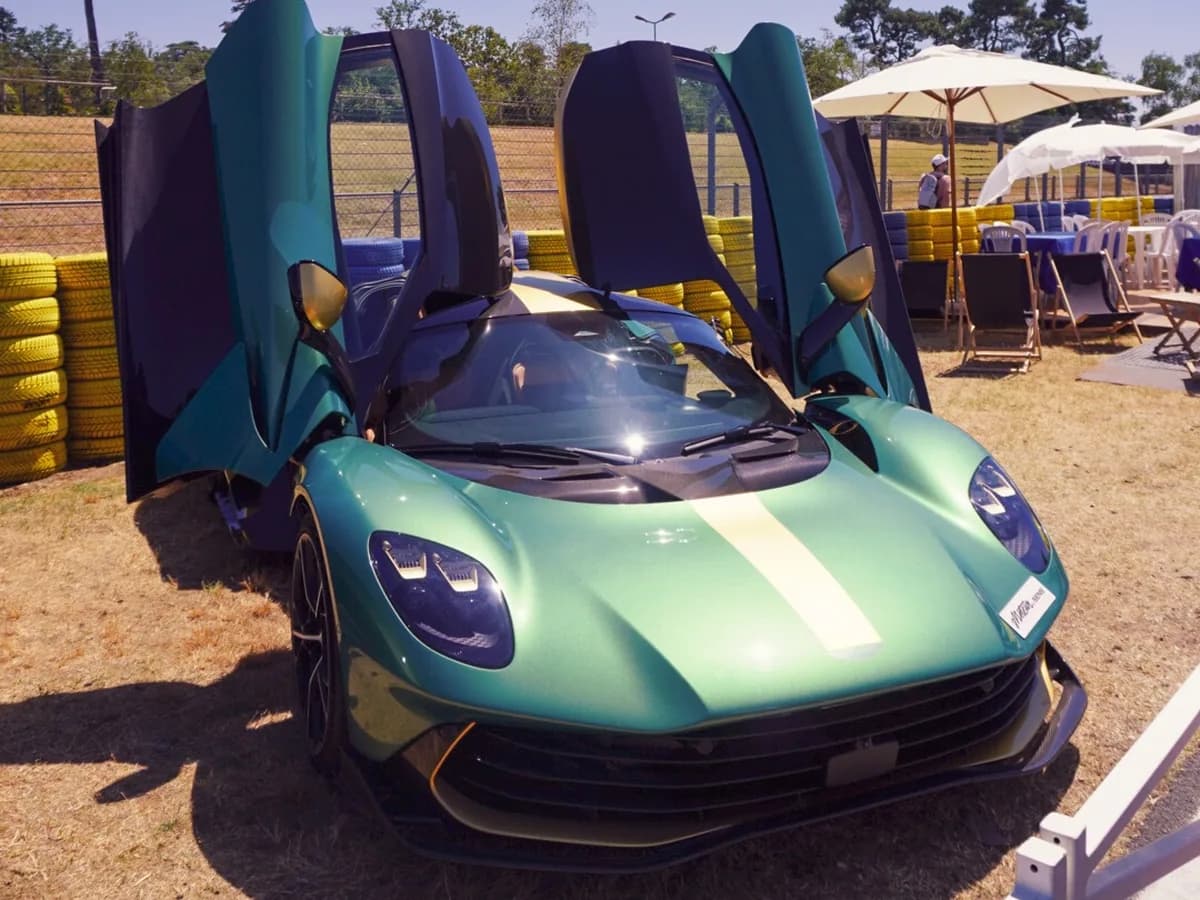
Aston Martin Valhalla photos
Model summary
Data from the ScanRacer library, organized to compare versions quickly.
Model introduction
Described by Aston Martin as its first series-production mid-engined car and first plug-in hybrid, the Valhalla combines a 4.0-litre twin-turbocharged V8 with three electric motors. The announced combined output is 1,079 PS, delivered through all-wheel drive and an eight-speed dual-clutch transmission, while top speed is electronically limited to 350 km/h, or 217 mph. Its structure uses a carbon-fibre monocoque, pushrod front suspension influenced by Formula 1 practice, and active aerodynamics capable of producing more than 600 kg of downforce at 150 mph in Race mode. Production is limited to 999 cars worldwide. Within the ScanRacer library, the model is represented by a single Coupé variant for the 2025 model year.
History
The Valhalla story began at the 2019 Geneva Motor Show, where Aston Martin revealed the AM-RB 003 project in cooperation with Red Bull Advanced Technologies. The planned car was positioned within Aston Martin’s emerging mid-engined family, following the Valkyrie. In June 2019, Aston Martin officially adopted the Valhalla name, continuing the marque’s long-running use of V names and drawing on Norse mythology. The project changed substantially before reaching production. The original concept was planned around a hybrid twin-turbocharged V6 and a 500-car production run. The production specification instead uses a 4.0-litre flat-plane-crank V8, three electric motors, and a new eight-speed dual-clutch transmission. Aston Martin presents the plug-in hybrid system as an important step in its move toward electrified performance cars. The production car was fully detailed in December 2024 and entered final validation during spring 2025. Aston Martin then announced that production was due to begin in the second quarter of 2025, with total output increased to 999 cars. The first cars were produced and delivered late in 2025, providing the historical basis for the 2025 model-year entry in the reference data.
Generations
The Valhalla does not yet have multiple identifiable generations. The current car represents a first generation and a single known production period, associated with the launch of the series-production coupé in 2025. It is therefore more accurate to describe the model as an evolving project rather than as a line with several generations. The development path was nevertheless substantial. The AM-RB 003 concept shown in 2019 suggested a lower-volume hypercar using a hybrid V6, with planned production of 500 cars. Aston Martin displayed a heavily revised interpretation in 2021, and the final production specification replaced the planned V6 with a 4.0-litre twin-turbocharged flat-plane-crank V8. The powertrain, aerodynamic package, and performance targets were all revised before production began. The production car retains the project’s central principles: a two-seat cabin positioned between the axles, a carbon-fibre structure, direct Formula 1 influence, and a position between the extreme Valkyrie and Aston Martin’s more conventional sports cars. However, no separate generation, body style, or engine derivative is confirmed in the available 2025 data. The Coupé therefore represents the first recorded Valhalla generation.
Key differences
The most important difference in the Valhalla’s history is the change from concept to production car. The 2019 AM-RB 003 project was announced with a hybrid twin-turbocharged V6 and a planned run of 500 cars, while the final specification uses a 4.0-litre flat-plane-crank V8, three electric motors, and a 999-car production limit. Published figures also changed during development: Aston Martin’s current specification lists 1,079 PS, a 2.5-second 0–62 mph time, and a 217-mph top speed. Compared with the Valkyrie, the Valhalla takes a less extreme and more road-oriented approach, while retaining a carbon-fibre monocoque, dihedral doors, a Formula 1-inspired driving position, and active aerodynamics. That distinction is an interpretation of the two cars’ positioning rather than a formal classification published in detail by Aston Martin. For 2025, no separate body or powertrain differences are documented in the ScanRacer data: only the Coupé variant is listed.
Photo recognition
The Valhalla is first identified by its mid-engined supercar proportions: a forward-set cabin, low nose, broad rear haunches, and dihedral doors that swing upward. A central roof scoop feeds the engine and supports cooling for the powertrain. Deeply sculpted side surfaces channel air toward the radiators and rear aerodynamic systems. At the front, the familiar Aston Martin grille theme incorporates a hidden active-aerodynamic device behind its opening. The side profile is defined by airflow management around the front wheels and staggered 20-inch front and 21-inch rear wheels. At the rear, the high-mounted exhaust outlets, carbon-fibre diffuser, and active rear wing provide strong visual identifiers. In Race mode, the rear wing rises substantially; Aston Martin states that it can extend by 255 mm. The Valhalla should not be confused with the Valkyrie, whose bodywork and aerodynamic treatment are considerably more radical.
Important versions
For the 2025 model year, the only recorded version is the Coupé. It is the two-seat production body style fitted with the plug-in hybrid powertrain combining the 4.0-litre V8 with three electric motors. Aston Martin limits worldwide production to 999 cars, but that figure applies to the model as a whole and does not identify a separate special edition. The available information does not confirm a production Roadster, AMR, or other derivative for this model year.
References
- Valhalla | Hybrid SupercarAston Martin
- Valhalla: The ultimate driver’s supercar in final validation testing phaseAston Martin Media
- Valhalla: The ultimate driver’s supercarAston Martin USA
- The Aston Martin Valhalla: AM-RB 003 continues 'V' car traditionAston Martin
- Valhalla BrochureAston Martin
- https://www.caranddriver.com/aston-martin/valhallacaranddriver.com
- https://www.motortrend.com/reviews/first-drive-2026-aston-martin-valhallamotortrend.com
- https://www.autocar.co.uk/car-review/aston-martin/valhallaautocar.co.uk
Technical specifications
Structured data available for versions linked to this model.
| Version | Power | Torque | Top speed | Drivetrain | Fuel |
|---|---|---|---|---|---|
| — | 1 079 PS de puissance cumulée annoncée | — | — | Transmission intégrale hybride rechargeable avec deux moteurs électriques sur l’essieu avant et un moteur électrique intégré à la transmission arrière / Boîte à double embrayage à 8 rapports | — |
Frequently asked questions
- What years was the Aston Martin Valhalla produced?
- ScanRacer's referenced versions cover 2025.
- How many Aston Martin Valhalla examples are documented on ScanRacer?
- 14 published scans from 11 members, with the latest photo added in September 2026.
- What is the power output of the Aston Martin Valhalla?
- The sourced technical data lists 1 079 PS de puissance cumulée annoncée.
What about the car you photographed?
Upload a photo to get a suggested make, model and likely year.
No account needed for the result · Publish only if you choose