
DBX
The Aston Martin DBX marked the British marque’s entry into the luxury SUV sector. Revealed in 2020, it uses a platform developed specifically for the raised body style and combines an aluminium structure, five-seat practicality, and all-wheel drive with a 4.0-litre twin-turbocharged V8. The original DBX produces 550 PS and 700 Nm, with a claimed top speed of 181 mph. Its three-chamber air suspension, adaptive dampers, and 48-volt active anti-roll system were designed to provide the comfort expected from a large SUV while retaining the responsive character associated with Aston Martin. The DBX707 arrived in 2022 as a much more performance-focused derivative, adding 707 PS, 900 Nm, a wet-clutch automatic transmission, launch control, and revised chassis and aerodynamic hardware.
What about the car you photographed?
Upload a photo to get a suggested make, model and likely year.
No account needed for the result · Publish only if you choose
Variants by year
Make: Aston Martin · Model: DBX
2 / 2 versions shown
2022

2020
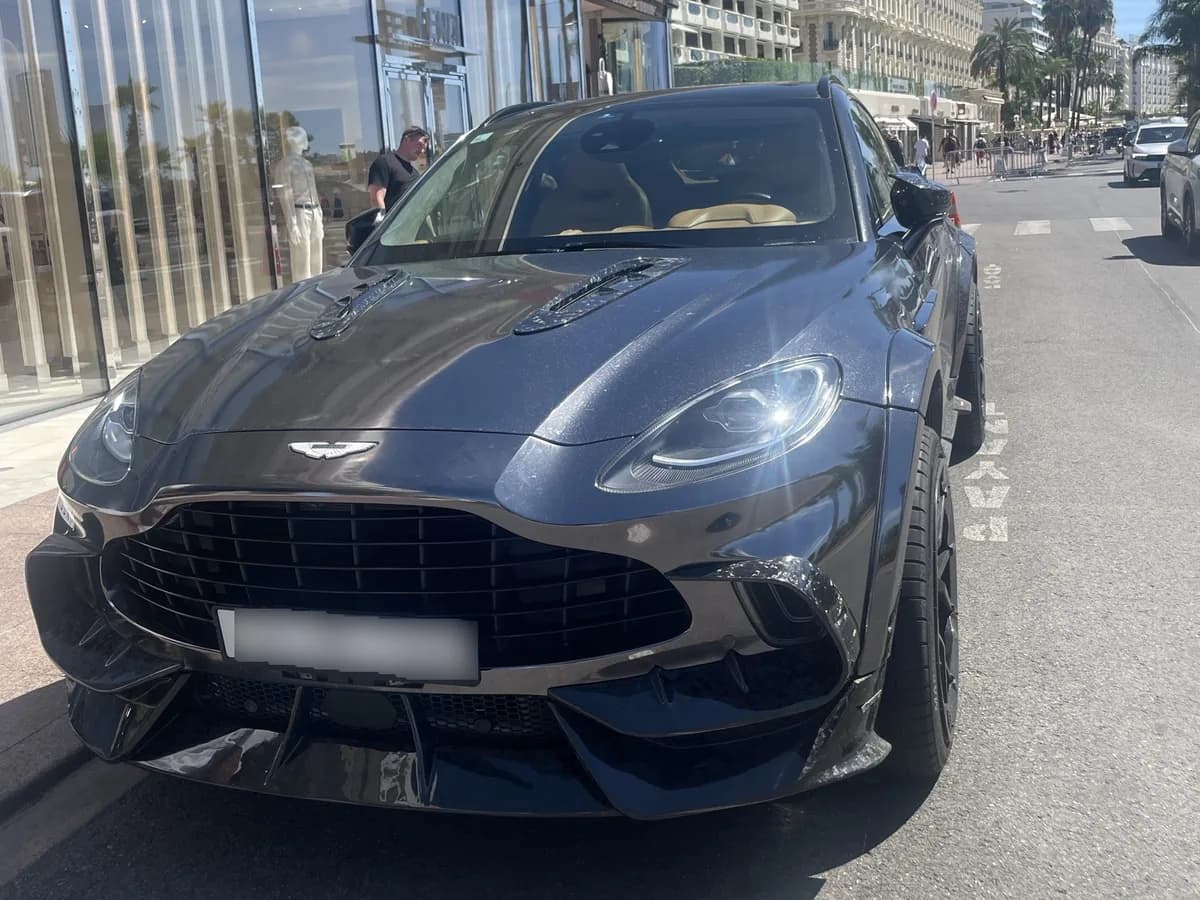
Aston Martin DBX photos
Model summary
Data from the ScanRacer library, organized to compare versions quickly.
Model introduction
The Aston Martin DBX marked the British marque’s entry into the luxury SUV sector. Revealed in 2020, it uses a platform developed specifically for the raised body style and combines an aluminium structure, five-seat practicality, and all-wheel drive with a 4.0-litre twin-turbocharged V8. The original DBX produces 550 PS and 700 Nm, with a claimed top speed of 181 mph. Its three-chamber air suspension, adaptive dampers, and 48-volt active anti-roll system were designed to provide the comfort expected from a large SUV while retaining the responsive character associated with Aston Martin. The DBX707 arrived in 2022 as a much more performance-focused derivative, adding 707 PS, 900 Nm, a wet-clutch automatic transmission, launch control, and revised chassis and aerodynamic hardware.
History
The DBX represented a major industrial and commercial turning point for Aston Martin. The company unveiled it on July 23, 2020, as its first SUV, following a development programme that combined physical testing in Wales with virtual engineering work begun several years earlier. Production was planned for Aston Martin’s purpose-built facility at St Athan in Wales, a site closely associated with the new model. Rather than adapting an existing sports-car architecture, Aston Martin developed a dedicated SUV platform. This approach allowed engineers to prioritise cabin space, a claimed 632-litre luggage area, and a 40:20:40 split-folding rear seat. The original powertrain used a 4.0-litre twin-turbocharged V8 related to the engine found in the DB11 and Vantage, but specifically tuned for the SUV’s size, weight, and wider range of uses. The DBX707, announced in 2022, became the first clearly performance-led evolution of the model. Its engine gained new turbochargers, revised induction and exhaust systems, and updated engine management, while the standard DBX’s torque-converter automatic was replaced by a wet-clutch gearbox. Carbon-ceramic brakes, a recalibrated rear differential, and dedicated aerodynamic components completed the more aggressive specification.
Generations
For the period covered here, the DBX is best understood as one model family rather than as several clearly separate generations. It was introduced on a dedicated SUV platform, with a significant mechanical and dynamic development arriving in 2022. That variant-based distinction is more accurate than treating the two versions as unrelated generations. The original DBX, represented here by the 2020 base variant, uses a 4.0-litre twin-turbocharged V8 producing 550 PS and 700 Nm. It features a nine-speed torque-converter automatic transmission, active all-wheel drive, three-chamber air suspension, and a 48-volt active anti-roll system. Aston Martin quoted a 0-to-62-mph time of 4.5 seconds and a top speed of 181 mph. The DBX707, represented in 2022, retains the model’s overall architecture but receives extensive engineering changes. Output rises to 707 PS and 900 Nm, while claimed top speed increases to 193 mph. The wet-clutch transmission enables an integrated launch-control function, and the chassis gains firmer calibration, a revised rear differential, and carbon-ceramic brakes. It is therefore most accurately described as a heavily reworked high-performance derivative rather than as a separate generation.
Key differences
The difference between the standard DBX and the DBX707 goes well beyond an engine tune. The original DBX produces 550 PS and 700 Nm with a torque-converter automatic, while the DBX707 reaches 707 PS and 900 Nm through a more extensively reworked version of the twin-turbocharged V8. Its wet-clutch transmission is intended to deliver faster shifts and supports an integrated launch-control system. The 707 also receives standard carbon-ceramic brakes, a recalibrated rear differential, more performance-focused transmission software, and dedicated suspension and anti-roll settings. Exterior changes include a larger grille opening, horizontal daytime running lights, a front splitter, more pronounced side sills, an extended diffuser, and quad exhaust outlets. The standard DBX has a more restrained appearance and maintains a stronger grand-touring emphasis.
Photo recognition
To identify a DBX, look first for its large five-door SUV profile, long bonnet, Aston Martin grille, and frameless-looking door glass. Flush-fitting handles, a panoramic roof, and slim horizontal rear lights complete a shape that is closer to a grand tourer than to a conventional off-road vehicle. The standard DBX generally has a more restrained front end and may be fitted with 22-inch wheels. The DBX707 is most readily identified by its larger grille opening, horizontal daytime running lights integrated into the front intakes, black splitter, dedicated side sills, larger rear diffuser, and four exhaust outlets. Badges, wheels, and carbon-fibre trim can vary with the original specification, so they should not be used alone to authenticate the derivative. A combination of the front bumper design, rear aero treatment, and quad-exhaust layout provides a more dependable visual identification.
Important versions
The 2020 base variant established the DBX family. Its 4.0-litre twin-turbocharged V8 produces 550 PS and 700 Nm, while all-wheel drive and air suspension combine road comfort with the ability to handle more challenging surfaces. The DBX707, introduced in 2022, is the most extreme version represented in the period studied. Its name refers to its 707 PS output, while torque rises to 900 Nm. It adds a wet-clutch transmission, integrated launch control, carbon-ceramic brakes, and more assertive aerodynamic treatment. Production details, equipment, and naming can vary between markets, so identification should be checked against the vehicle’s build plate, VIN, and original documentation.
References
- Aston Martin unveils DBX: an SUV with the soul of a sports carAston Martin Media
- Aston Martin DBX707Aston Martin
- DBX707 BrochureAston Martin
- Tested: 2023 Aston Martin DBX 707 Is More Than Just a Pretty FaceCar and Driver
- Aston Martin DBXAston Martin
- https://www.caranddriver.com/aston-martin/dbx-2022caranddriver.com
- https://www.motortrend.com/features/2022-aston-martin-dbx707-prototype-drive-reviewmotortrend.com
- https://www.caranddriver.com/reviews/a33555369/2021-aston-martin-dbx-production-drive/caranddriver.com
Technical specifications
Structured data available for versions linked to this model.
| Version | Power | Torque | Top speed | Drivetrain | Fuel |
|---|---|---|---|---|---|
| Base | 519.8 KW @ 4500 RPM 707 HP @ 4500 RPM 697 BHP @ 4500 RPM | 664 lb-ft @ 6000 RPM 900 Nm @ 6000 RPM | 193 mph (311 km/h) | All Wheel Drive / 9-speed automatic | Gasoline |
Frequently asked questions
- What years was the Aston Martin DBX produced?
- ScanRacer's referenced versions cover 2020 - 2022.
- How many Aston Martin DBX examples are documented on ScanRacer?
- 18 published scans from 12 members, with the latest photo added in September 2026.
- What is the power output of the Aston Martin DBX?
- The sourced technical data lists 519.8 KW @ 4500 RPM 707 HP @ 4500 RPM 697 BHP @ 4500 RPM.
What about the car you photographed?
Upload a photo to get a suggested make, model and likely year.
No account needed for the result · Publish only if you choose