Power
372.9 KW @ 6500-7500 RPM 506.9 HP @ 6500-7500 RPM 500 BHP @ 6500-7500 RPM
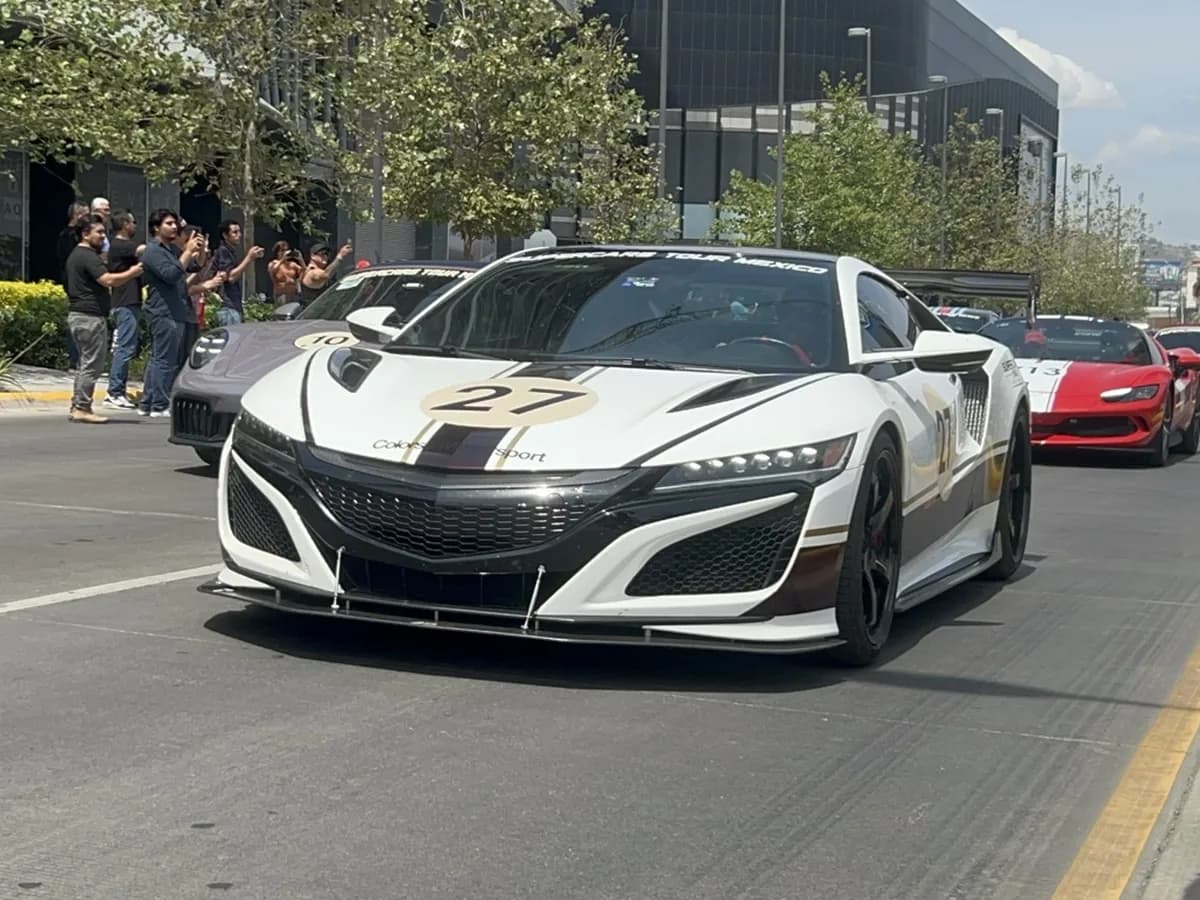
Produced from 2016, the second-generation Acura NSX is a two-seat mid-engine coupe with hybrid all-wheel drive. In the United States, it was sold as a 2017 model, although the first customer cars were built and delivered during 2016. Its powertrain combines a 3.5-liter twin-turbocharged V6 with three electric motors, producing a stated total of 573 horsepower. A nine-speed dual-clutch transmission and Acura’s Sport Hybrid Super Handling All-Wheel Drive system complete the drivetrain. The NSX was developed to blend supercar performance with greater everyday usability than many exotic cars. Its selectable drive modes, clear outward visibility, and relatively accommodating cabin were central to that objective, while the hybrid system added immediate electric torque and active control of the front wheels.
Curious about this car?
Explore NSX, then try your own photo.
No account needed for the result · Publish only if you choose
The modern Acura NSX traces its origins to the concept unveiled at the Detroit auto show in January 2012. Honda announced a new supercar project led by its North American operations, with production planned for a dedicated Ohio facility. The production car was revealed at the North American International Auto Show in January 2015, following roughly three years of intensive development. Its engineering program was global: the hybrid power unit was centered in Japan, while styling, body structure, chassis work, and vehicle integration were largely handled in the United States. Serial production began at the Performance Manufacturing Center in Marysville, Ohio, in April 2016. The facility was created for low-volume manufacturing and for the complex assembly of the NSX’s multi-material structure. Although the car revived a name associated with the first-generation NSX, which ended production in 2005, the new model used a fundamentally different layout and a much more technology-focused approach. Customer deliveries began during 2016, while the American-market designation was 2017.
Photos added by the community for this page.
Source: autoevolution
Acura commonly explains the NSX name as an abbreviation for “New Sports eXperience.” One revealing development detail is that the project began with a transverse naturally aspirated V6 before switching to a longitudinal twin-turbocharged engine. The change was not limited to the engine itself; it required revisions to the car’s packaging, cooling systems, and aerodynamic strategy. The final production car was therefore substantially different from the earliest concept direction.
Production of the second-generation NSX began in April 2016 at the Performance Manufacturing Center in Marysville, Ohio. Acura designed the facility for low-volume specialty-car manufacturing and for a high degree of hands-on assembly. The NSX’s multi-material body structure was built there, using aluminum-intensive construction together with ultra-high-strength steel in selected areas. Acura stated that the center employed approximately 100 people, including technicians responsible for body construction, painting, assembly, and quality confirmation. The car used both domestic and globally sourced components. A specific production total for the 2016 Base configuration is not provided here because the sources consulted do not establish that figure with sufficient reliability. The available documentation supports the manufacturing location, start of serial production, and low-volume character of the facility.
Automotive publications generally recognized the NSX’s dynamic ability and technical sophistication while noting its unusual market position. Car and Driver praised the hybrid system’s effectiveness, the car’s everyday usability, and the precision of its chassis. The magazine also pointed out that the NSX was heavier than several rivals and did not consistently lead the class in measured acceleration. Reviews discussed the relatively subdued engine character and light steering feel as well. Other outlets highlighted its grip, stability, and the way its electronic systems made high performance approachable. The overall response was therefore positive regarding engineering and execution, but more qualified when considering mechanical drama, curb weight, and value against lighter competitors. The NSX was widely viewed as a technically distinctive interpretation of the modern supercar.
Supports the 2015 production-car debut, development leadership, global engineering structure, and planned Ohio manufacturing.
Supports the April 2016 start of serial production, the Performance Manufacturing Center, and its low-volume manufacturing purpose.
Supports the development evolution from a transverse naturally aspirated V6 to a longitudinal twin-turbocharged V6, the hybrid SH-AWD system, manufacturing details, and 573-hp output.
Supports the production model’s exterior concept and dimensions.
Supports the road-test discussion of base brakes and tires, hybrid performance, daily usability, weight, acceleration, and critical reception.
Supports the positive contemporary reception of the NSX’s handling, acceleration, precision, and driver appeal.
Source found by OpenAI web search for this vehicle page.
Source found by OpenAI web search for this vehicle page.