
Ace
The AC Ace appeared in 1953 as a lightweight British two-seat roadster built around a chassis designed by John Tojeiro and a hand-finished aluminium body. Its independent suspension and modest weight gave it genuine sporting potential without making it unsuitable for everyday road use. Early cars used AC’s own 2-litre straight-six, while later development introduced Bristol and Ford power units. The Ace also provided the basic platform for the AC Cobra after a Ford V8 was installed in the early 1960s. The name returned in the early 1990s on a thoroughly modern, wider and more powerful roadster unveiled in 1993. In the ScanRacer catalogue, the Ace I and Ace II entries represent the 1953 and 1993 model years respectively. These two entries should therefore be read as historically distinct interpretations of the same famous AC name.
What about the car you photographed?
Upload a photo to get a suggested make, model and likely year.
No account needed for the result · Publish only if you choose
Variants by year
Make: AC · Model: Ace
2 / 2 versions shown
1993
1953
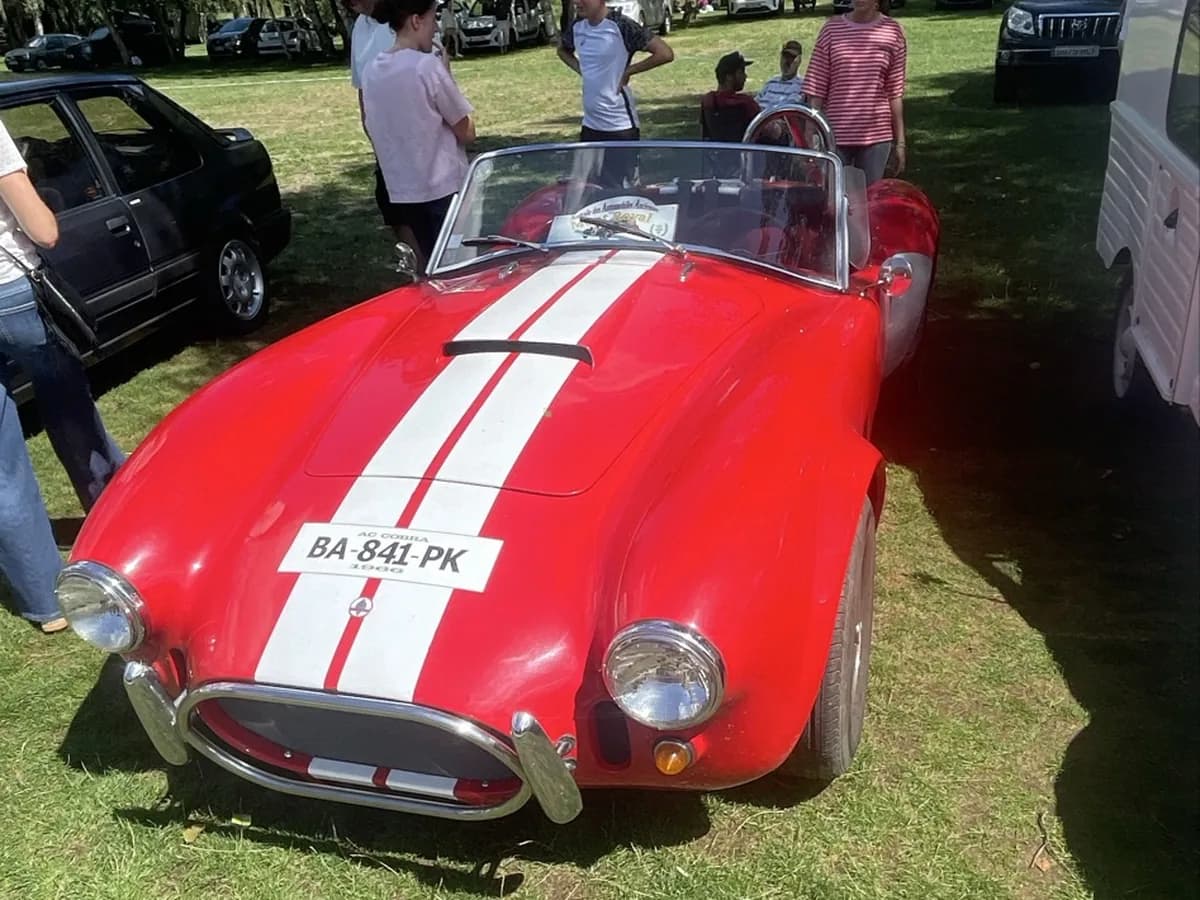
AC Ace photos
Model summary
Data from the ScanRacer library, organized to compare versions quickly.
Model introduction
The AC Ace appeared in 1953 as a lightweight British two-seat roadster built around a chassis designed by John Tojeiro and a hand-finished aluminium body. Its independent suspension and modest weight gave it genuine sporting potential without making it unsuitable for everyday road use. Early cars used AC’s own 2-litre straight-six, while later development introduced Bristol and Ford power units. The Ace also provided the basic platform for the AC Cobra after a Ford V8 was installed in the early 1960s. The name returned in the early 1990s on a thoroughly modern, wider and more powerful roadster unveiled in 1993. In the ScanRacer catalogue, the Ace I and Ace II entries represent the 1953 and 1993 model years respectively. These two entries should therefore be read as historically distinct interpretations of the same famous AC name.
History
The AC Ace emerged as AC Cars resumed civilian production after the Second World War. John Tojeiro had created a lightweight sports-car chassis, and AC adapted the concept for limited, hand-built production. Introduced in 1953, the Ace combined a tubular chassis, an open aluminium body and AC’s 2-litre straight-six engine. It represented a significant change from the company’s more conventional saloons and quickly appealed to drivers who wanted a road car with credible competition potential. The range expanded with the Aceca fixed-head coupe and later with Bristol and Ford engine options. Competition results, particularly during the late 1950s, helped establish the Ace as a serious sports car rather than simply a stylish roadster. In 1961, Carroll Shelby selected the Ace’s basic architecture for a Ford V8 conversion. That project created the Cobra, although the original Ace remained a separate model with its own character and engineering identity. AC revived the Ace name at the 1993 London Motor Show. The later car used a modern stainless-steel structure and aluminium bodywork while retaining a hand-built roadster format. It was developed during a financially challenging period for the company and remained a rare production model. The 1953 and 1993 cars should therefore be understood as separate chapters in AC history, not as successive versions of one uninterrupted design.
Generations
The first period, represented here by the 1953 Ace I entry, is the original AC roadster based on John Tojeiro’s lightweight design. It is defined by compact proportions, an open aluminium body and a deliberately simple sporting layout. Early cars used AC’s 2-litre straight-six. During the model’s career, Bristol and Ford engines were also offered, creating several mechanical configurations without changing the basic identity of the two-seat roadster. The Aceca belongs to the same family, but its fixed-head coupe body makes it a separate model derivative. The second period, represented by the 1993 Ace II entry in the ScanRacer data, is a modern revival rather than a minor facelift. Its stainless-steel structure, aluminium bodywork and Ford V8 place it in a completely different technical category from the 1950s car. Historical and specialist sources also refer to it as the AC Brooklands Ace, a useful name when distinguishing it from the original Ace. ScanRacer lists this entry for 1993, while automotive sources place the later car’s production programme in the early-to-mid 1990s. The safest editorial interpretation is therefore two separate historical generations sharing a name, not one continuous design lineage.
Key differences
The 1953 Ace I is a compact open sports car built around a lightweight straight-six layout. Its visual language includes a narrow grille, separate cycle-style wings and a low aluminium body. The design emphasises low mass, mechanical simplicity and suitability for enthusiastic road driving or amateur competition. The 1993 Ace II has a broader, more contemporary appearance, a stainless-steel structure and a Ford V8. Period road-test material also describes a more sophisticated braking and equipment package. The key distinction is therefore not merely the engine: the two cars belong to different construction philosophies and industrial eras. Identification should begin with the body shape and chassis design, then move to the engine and badging. A modern AC roadster with a large V8 should not be classified as an original Ace simply because the name and open two-seat format are shared.
Photo recognition
An Ace I is best identified by the proportions of a very compact British roadster, with two seats, an open aluminium body and separate wings surrounding the wheels. Its grille and front wings generally look narrower and more upright than those of a Cobra. The engine bay may contain different six-cylinder units depending on the period: AC, Bristol and Ford engines were all associated with the Ace range, so the engine alone cannot establish the exact model year. Chassis plates, identification numbers and period documentation are essential for a reliable assessment. The 1993 Ace II is distinguished by its greater width, more modern body volumes and large V8 installation. Its stainless-steel structure and aluminium panels are valuable clues, although they should be confirmed because cars may have been restored or modified. A V8 does not automatically make a car a Cobra. The body design, interior arrangement and chassis number must be considered together. When photographs are incomplete, it is safer to identify the car as a later AC Ace or Brooklands Ace until documentary evidence confirms the precise specification.
Important versions
The main configurations of the classic Ace are defined by their engines: the original AC 2-litre six-cylinder car, the later Ace-Bristol, and the Ace 2.6 using a Ford Zephyr six-cylinder during the final part of the model’s career. These names describe mechanical variants within the same roadster family. The Aceca is the related fixed-head coupe and should not be confused with an open Ace. For the 1990s revival, the name AC Brooklands Ace is commonly used to distinguish the modern car from the historic sports roadster. Sources describe a Ford V8 and limited-volume hand-built construction. The ScanRacer dataset records this entry as Ace II for the 1993 model year, without specifying additional trim levels.
References
- When they were new: AC AceMotor Sport Magazine
- To Detroit, with an Ace up his sleeve: Road TestThe Independent
- Cars That Time Forgot: AC Ace AutokraftHagerty UK
- 1993 AC Ace brochureAutomotive Literature
- https://ace.edu/about/history-and-mission-statement/ace.edu
- https://acaceca.com/historyacaceca.com
Frequently asked questions
- What years was the AC Ace produced?
- ScanRacer's referenced versions cover 1953 - 1993.
- How many AC Ace examples are documented on ScanRacer?
- 6 published scans from 6 members, with the latest photo added in September 2026.
What about the car you photographed?
Upload a photo to get a suggested make, model and likely year.
No account needed for the result · Publish only if you choose