Zenvo TSR-S 2018
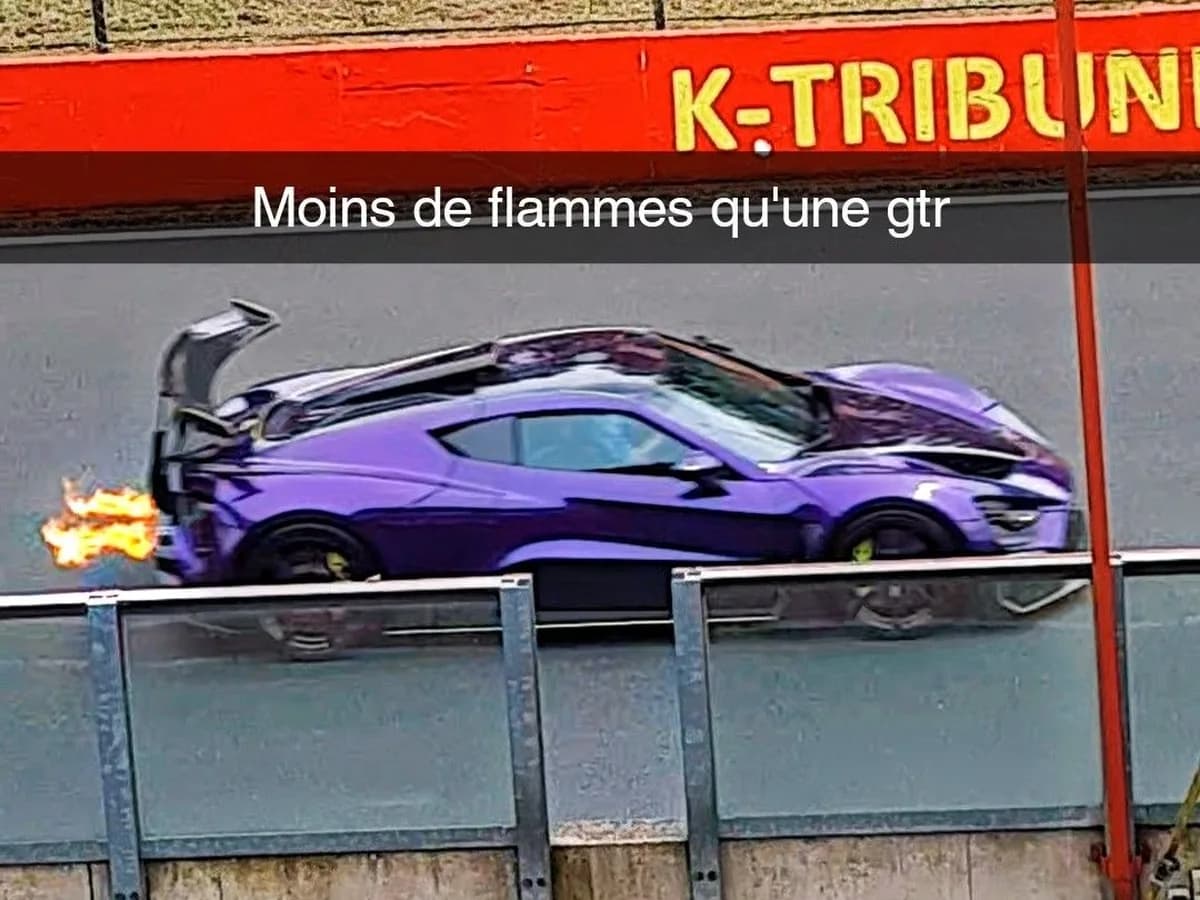
Unveiled at the Geneva Motor Show in March 2018, the Zenvo TSR-S is a Danish road-legal hypercar developed from the experience gained with the track-focused TSR. Its defining feature is the “Centripetal” rear wing, which can tilt across the car in corners to alter the distribution of aerodynamic load. The car combines an all-carbon-fiber body, a 5.8-liter V8 fitted with twin centrifugal superchargers, and a seven-speed sequential gearbox. Zenvo quoted 1,177 bhp, a 0–100 km/h time of 2.8 seconds, and an electronically limited top speed of 325 km/h. The TSR-S stands out not only for its extreme performance, but also for its unusual aerodynamic concept and hand-built production in Denmark.
History
The TSR-S belongs to the short history of Zenvo Automotive, a Danish manufacturer founded in 2007 by Troels Vollertsen. After the ST1 prototype, the company developed the TS1 GT as a road-oriented hypercar and then introduced the more circuit-focused TSR. The TSR-S used that technical background to combine the road capability of the TS1 GT with the performance and aerodynamic thinking of the TSR. It made its public debut at the 2018 Geneva Motor Show. Zenvo presented it as the road-legal counterpart to the TSR track car. Its specification included a lightweight structure, an in-house carbon-fiber body, and a 5.8-liter twin-supercharged V8. The central innovation was its active rear wing, designed to move part of the aerodynamic load toward the inside rear wheel while cornering. Rather than being developed for mass production, the TSR-S was intended as an exclusive, customer-tailored hypercar built in very small numbers.
Latest scans
Photos added by the community for this page.
Anecdotes
According to Top Gear’s early road and track testing, the TSR-S rear wing could tilt by roughly 15 degrees in response to the car’s behavior. Zenvo also included a stationary display function that allowed the wing to move while the car was parked. During testing at Goodwood, the car was so loud that one lap reportedly used the circuit’s entire thirty-minute noise allocation. These details capture the TSR-S’s theatrical character as well as its unconventional engineering, although they are secondary to the wing’s intended aerodynamic function.
Production
Zenvo stated that production across its model range was limited to five cars per year, with vehicles hand-built at the company’s facility in Præstø, Denmark. Each car was intended to follow the customer’s specifications, including personalization of materials, carbon-fiber patterns, and interior finishes. The figure of five cars per year describes Zenvo’s announced production capacity rather than a confirmed total for the TSR-S alone. The sources consulted do not provide a definitive number of TSR-S cars built in 2018. It is therefore more accurate to describe the model as an extremely limited-production hypercar than to quote an unverified production total. This approach also reflects Zenvo’s stated made-to-order business model.
Press reception
Automotive media focused primarily on the TSR-S’s active rear wing, widely regarded as its most original feature. Top Gear highlighted its potential to shift aerodynamic load toward the inside wheel, while describing a car that was extremely loud, exceptionally fast, and still in need of further chassis refinement. Car and Driver likewise judged the aerodynamic concept to be meaningful rather than a gimmick, but noted a demanding learning curve, unusual handling responses, and transmission problems during its test. The overall reception was therefore interested but qualified: the TSR-S earned recognition for its engineering, power, and exclusivity, while its raw character, high price, and limited usability made it a specialist proposition rather than an easy rival to more polished hypercars.
Evolution
Variants
References
- Zenvo Press Release: TSR-S Technical HighlightsZenvo Automotive
Supports the 2018 road-legal positioning, engine, power, transmission, rear-wheel drive, body construction, performance figures, dimensions, dry weight, and five-cars-per-year production statement.
- Zenvo Automotive
Supports the company history, Danish production, TSR-S positioning, carbon body, 1,177 bhp V8, Centripetal rear wing, and five-car annual production limit.
- Zenvo TSR-S review: the 1,177bhp car with the mad wingTop Gear
Supports the 2018 test context, development background, active-wing behavior, claimed acceleration and top speed, gearbox description, driving impressions, and Goodwood noise anecdote.
- Zenvo TSR-S Is a Wild Hypercar with an Even Wilder Rear WingCar and Driver
Supports the relationship between the TSR-S and TSR, active-wing operation, engine and transmission description, road-car positioning, production ambition, and independent press evaluation.
- https://topgear.nl/autotest/zenvo-tsr-s/topgear.nl
Source found by OpenAI web search for this vehicle page.
- https://www.carwow.co.uk/zenvo/tsr-s/news/5655/zenvo-tsr-s-review-wacky-danish-supercar-drivencarwow.co.uk
Source found by OpenAI web search for this vehicle page.
- https://www.autoevolution.com/zenvo/tsr-s/autoevolution.com
Source found by OpenAI web search for this vehicle page.
- https://www.ultimatecarpage.com/spec/7192/Zenvo-TSR-S.htmlultimatecarpage.com
Source found by OpenAI web search for this vehicle page.