Volkswagen Typ 181 1969
In 1969, the Volkswagen Typ 181 Base belonged to the early production phase of a utility vehicle created in the late 1960s to meet a German military requirement. Developed to replace the DKW Munga in the armed forces, it was built from familiar Volkswagen components to keep costs down and make production easier. This base version is identified by its four-door open body, removable doors, and folding windshield. With a rear-mounted, air-cooled flat-four engine, the Typ 181 followed a straightforward, practical formula aimed at versatility rather than refinement.
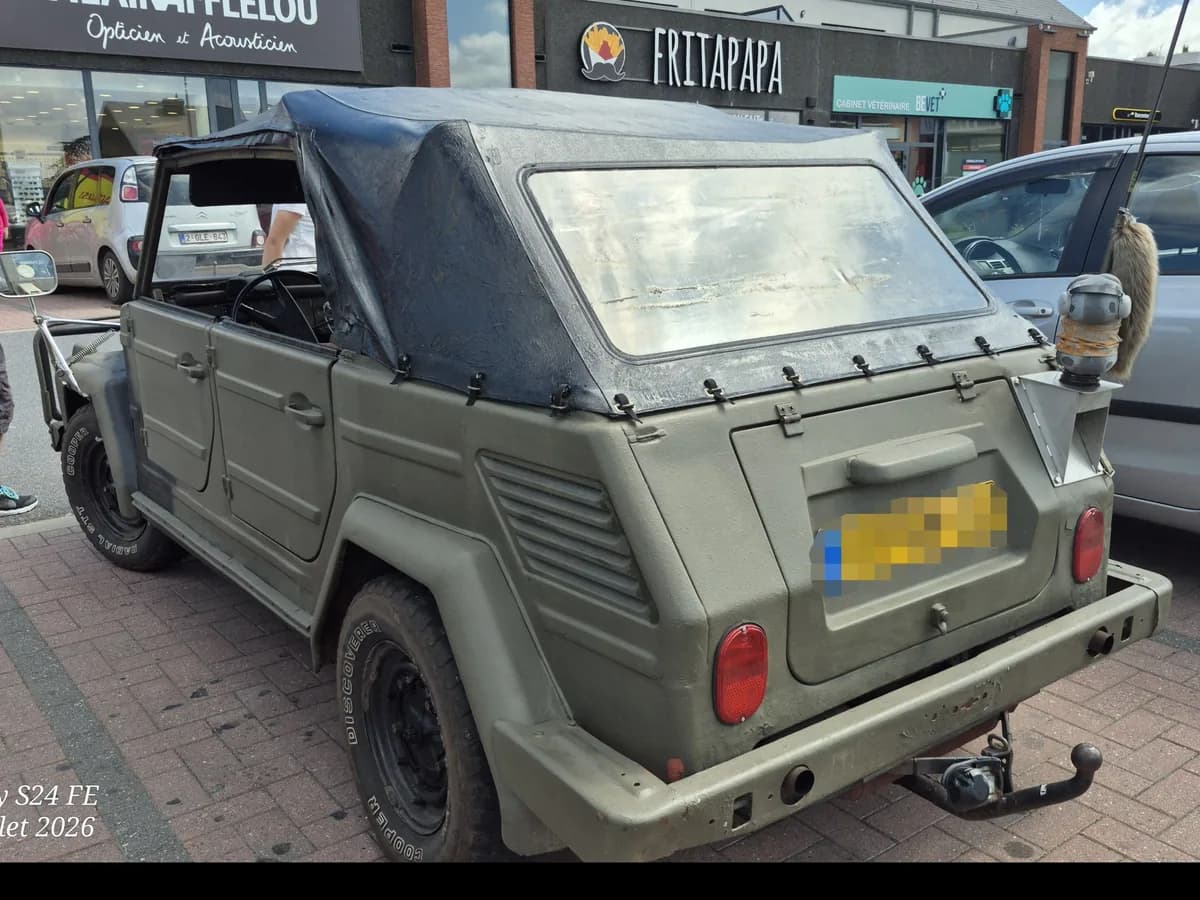
Curious about this car?
Explore Typ 181, then try your own photo.
No account needed for the result · Publish only if you choose
History
The Typ 181 was created from a military requirement in the late 1960s. The Bundeswehr wanted a utility vehicle that could handle a variety of tasks, and Volkswagen responded with a design meant to be simple, durable, and economical to build. To achieve that, engineers combined existing Volkswagen parts and systems: the Karmann Ghia Type 14 platform, a modified front suspension, the Beetle 1500 engine and clutch, plus steering, instruments, transmission, and rear axle components sourced from other VW models. This approach made it possible to start production in 1968 in Wolfsburg, before manufacturing expanded to other locations such as Hanover, Puebla, and Jakarta. The 1969 Base version therefore belongs to the earliest production period, when the vehicle was still closely tied to its original purpose. Its identity comes from utility, stripped-down construction, and versatility. Civilian adaptation came later, from 1971 onward, but 1969 remains emblematic of the model’s initial military-oriented phase.
Latest scans
Photos added by the community for this page.
Production
Production of the Typ 181 began in 1968 in Wolfsburg and later expanded to Hanover, Puebla, and Jakarta. The 1969 model year therefore belongs to the earliest examples built. The model remained in production until 1983, with civilian production ending in 1980 and military production continuing until 1983. Across its entire run, the Typ 181 reached a total output of 140,768 units. No separate production figure is given for the 1969 Base version, but it belongs to this initial manufacturing period.
Evolution
Variants
References
- https://www.volkswagen-newsroom.com/de/typ-181-kurierwagen-19691980-19669volkswagen-newsroom.com
Source found by OpenAI web search for this model page.
- https://www.volkswagen-newsroom.com/de/fahrzeugdaten-typ-181-kurierwagen-steckbrief-19670volkswagen-newsroom.com
Source found by OpenAI web search for this model page.