
Transporter
Introduced on March 8, 1950, as the Type 2, the Volkswagen Transporter became one of the longest-running nameplates in automotive history. It began as a rear-engined commercial vehicle and gradually expanded into panel vans, passenger buses, pickups, double-cab trucks, ambulances, and camper conversions. Early generations are now valued for their straightforward mechanical layout, unmistakable styling, and strong connection with post-war European mobility and 1960s counterculture. The T4 marked a major technical break by moving to a front-mounted engine and front-wheel drive, creating more usable interior space and a broader range of body configurations. The model range represented here spans 1950 to 2024, from historic Panel Van and Truck forms to the long-running Van and the modern Double Cab.
What about the car you photographed?
Upload a photo to get a suggested make, model and likely year.
No account needed for the result · Publish only if you choose
Variants by year
Make: Volkswagen · Model: Transporter
11 / 11 versions shown
2024
2019
2015
2009
2003

1982
1979
1967
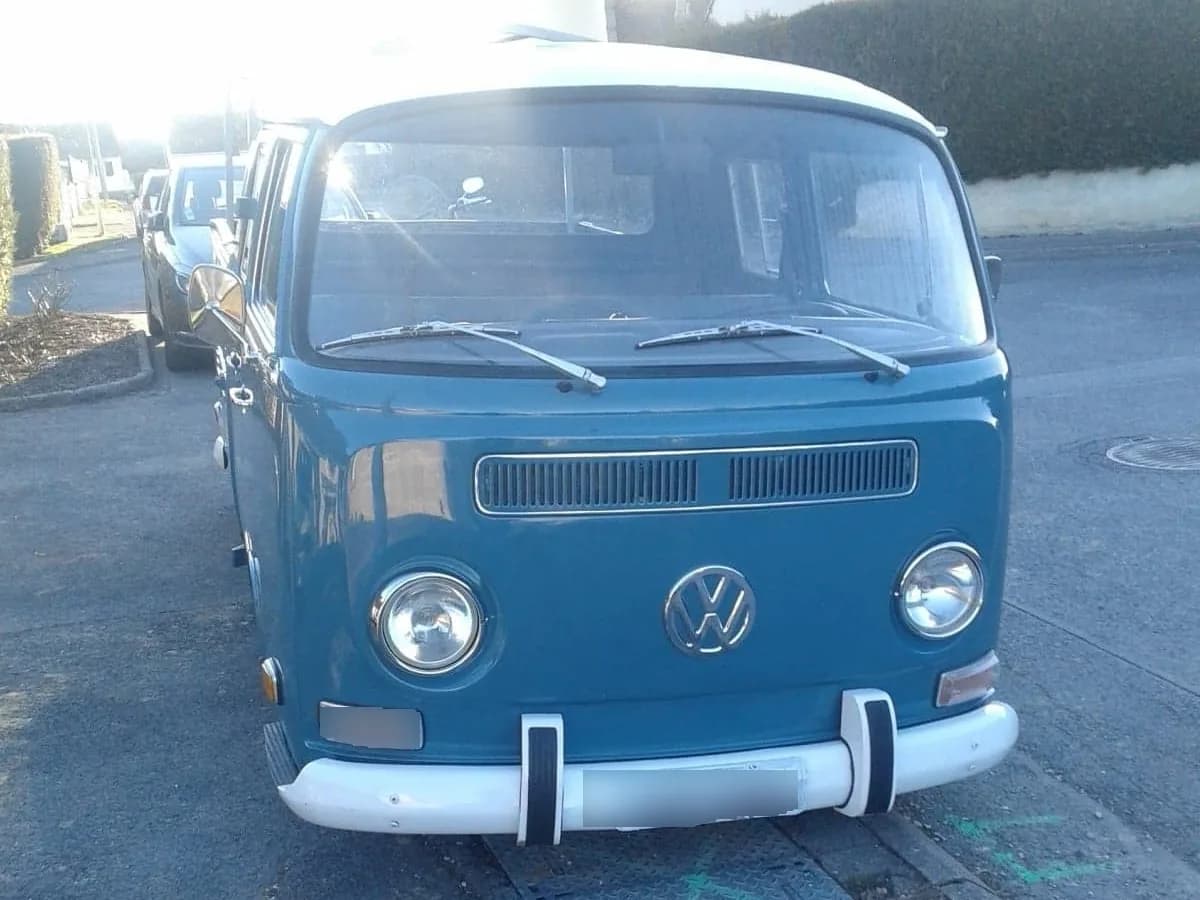
1950
Volkswagen Transporter photos
Model summary
Data from the ScanRacer library, organized to compare versions quickly.
Model introduction
Introduced on March 8, 1950, as the Type 2, the Volkswagen Transporter became one of the longest-running nameplates in automotive history. It began as a rear-engined commercial vehicle and gradually expanded into panel vans, passenger buses, pickups, double-cab trucks, ambulances, and camper conversions. Early generations are now valued for their straightforward mechanical layout, unmistakable styling, and strong connection with post-war European mobility and 1960s counterculture. The T4 marked a major technical break by moving to a front-mounted engine and front-wheel drive, creating more usable interior space and a broader range of body configurations. The model range represented here spans 1950 to 2024, from historic Panel Van and Truck forms to the long-running Van and the modern Double Cab.
History
The Transporter originated with a 1947 sketch by Dutch Volkswagen importer Ben Pon. Volkswagen then developed a forward-control commercial vehicle using familiar Type 1 mechanical components but a purpose-built unitary body for carrying goods and passengers. Series production began in Wolfsburg on March 8, 1950, before production gradually moved to Hanover, where the first vehicles were assembled in 1956. Demand grew quickly among tradespeople, small businesses, and families, while exports helped establish the model across Europe and other international markets. The T1 was replaced by the T2 in 1967, bringing revised bodywork while preserving the broad choice of commercial and passenger configurations. The T3 arrived in 1979 and retained the rear-engine layout, but introduced major developments including diesel, turbodiesel, and, in selected versions, four-wheel drive. The 1990 T4 represented the decisive engineering change, adopting a front-mounted engine and front-wheel drive. The T5 of 2003 and T6 of 2015 continued that layout with greater electronic integration, comfort, and body-style diversity. The T6.1, introduced as an evolutionary update in 2019, remained the established Transporter format through the 2024 model period.
Generations
The Transporter generations are best separated by their engineering layout and exterior design. The T1, produced from 1950, used a rear-mounted, air-cooled engine and is especially recognizable in early form by its split windscreen. The T2 arrived in 1967 with a wider front end and a one-piece panoramic windscreen. The 1979 T3 retained the rear-engine concept, but adopted straighter bodywork and gained major technical developments during its production life. The T4, launched in 1990, brought the most significant change: a front-mounted engine and front-wheel drive, which created a more practical floor and greater usable space. The 2003 T5 developed that formula with larger proportions and an unusually broad range of commercial, passenger, and leisure derivatives. The T6 of 2015 kept a closely related platform concept while receiving revised bodywork and equipment. The T6.1 update of 2019 is most easily identified by its redesigned front end and newer driver-assistance systems. T1 through T6.1 are widely used historical labels, although body styles, specifications, and production dates can differ by market and model year.
Key differences
The main differences between Transporter generations involve engine position, drivetrain, body style, and equipment level. The T1, T2, and T3 use rear-engine layouts, an arrangement that affects cargo access, weight distribution, and the shape of the passenger compartment. The T4 moved to a front-mounted engine and front-wheel drive, changing both its driving character and the way the interior could be packaged. The T5, T6, and T6.1 retained that basic concept while adding longer body options, broader powertrain choices, and increasingly sophisticated electronics. Body configuration is equally important. A glazed Van, fully enclosed Panel Van, open-bed Truck, or Double Cab serves a different purpose and may have different wheelbases or seating arrangements. Passenger derivatives focus on multiple seating rows and cabin comfort, while commercial versions prioritize payload and load access. Model names are not always consistent between countries, so identification should combine the generation, body type, wheelbase, visible equipment, and production year rather than relying on a single badge.
Photo recognition
For an older Transporter, start with the front-end shape and windscreen design. The T1 is generally identified by its split windscreen, while the T2 has a smoother nose and a single-piece panoramic windscreen. The T3 is more angular, with noticeably squarer bodywork; Syncro versions may show clues associated with four-wheel drive, although visual inspection alone is not always conclusive. The T4 has a longer, more modern profile and places its engine at the front. On T5, T6, and T6.1 models, examine the grille, headlamps, bumpers, and mirror shape. The T6.1 often stands out through its flatter-looking front treatment and newer digital equipment. Body style is another useful guide: side glazing and additional seating point toward a passenger Van, while solid side panels indicate a Panel Van. A load bed behind the cab identifies a Truck, while a second seating row and additional cab doors indicate a Double Cab. Always cross-check visual clues with the vehicle’s year and market specification.
Important versions
The best-known configurations include the Panel Van, designed primarily for carrying goods, and the glazed Van, used for passenger transport or leisure conversions. The Truck, offered in single- and double-cab forms in different generations, serves open-load applications. The Double Cab combines a more accommodating passenger compartment with a separate load area, making it particularly relevant for mixed professional use. Historically, Samba and camper derivatives helped give the early Transporter its cultural importance, while the T4, T5, T6, and T6.1 expanded the range with Caravelle, Multivan, California, and specialist commercial configurations. The versions represented in the library include the Van from 1967 to 2024, the Panel Van from 1950 to 1982, the Truck in 1967, and the Double Cab in 2024. Exact equipment and body availability can vary by country and model year.
The name “Transporter” follows Volkswagen naming, with its rules and its exceptions. Decode a Volkswagen name
References
- Celebrating 70 years of the iconic TransporterVolkswagen Commercial Vehicles UK
- The exhibition ‘The Builders of the Bulli’ commemorates 60 years of the Volkswagen TransporterVolkswagen Commercial Vehicles Spain
- https://www.volkswagen-group.com/en/images/detail/chronicle-2000-50-years-of-the-transporter-79070volkswagen-group.com
- https://www.mynewsdesk.com/dk/volkswagen-danmark/pressreleases/transporter-fylder-65-aar-1112783mynewsdesk.com
- https://www.mynewsdesk.com/dk/volkswagen-danmark/pressreleases/75-aar-med-vw-transporter-volkswagen-erhvervsbiler-fejrer-foedselsdagen-for-sit-stoerste-ikon-3374187mynewsdesk.com
Frequently asked questions
- What years was the Volkswagen Transporter produced?
- ScanRacer's referenced versions cover 1950 - 2024.
- How many Volkswagen Transporter examples are documented on ScanRacer?
- 3 published scans from 3 members, with the latest photo added in August 2026.
What about the car you photographed?
Upload a photo to get a suggested make, model and likely year.
No account needed for the result · Publish only if you choose