
Scirocco
Launched in 1974, the Volkswagen Scirocco is a front-wheel-drive 2+2 coupé developed around Volkswagen’s new technical layout, the same broad engineering direction that also produced the Golf. Its sharp-edged body was designed by Giorgetto Giugiaro, while production was handled by Karmann in Osnabrück. Two successive generations were built through 1992 before the name returned in 2008 on a thoroughly modernized coupé. The third-generation car retained the concept of a compact, sporty Volkswagen with a practical hatchback body, but used contemporary group technology and powertrains. Within the ScanRacer context, the Scirocco library covers referenced model years from 1974 to 2008 and identifies three available variants. Equipment, engine choices, trim names, and production availability can differ by market and model year, so individual records should be read with their specific year and version context.
What about the car you photographed?
Upload a photo to get a suggested make, model and likely year.
No account needed for the result · Publish only if you choose
Variants by year
Make: Volkswagen · Model: Scirocco
3 / 3 versions shown
2008

1981
1974
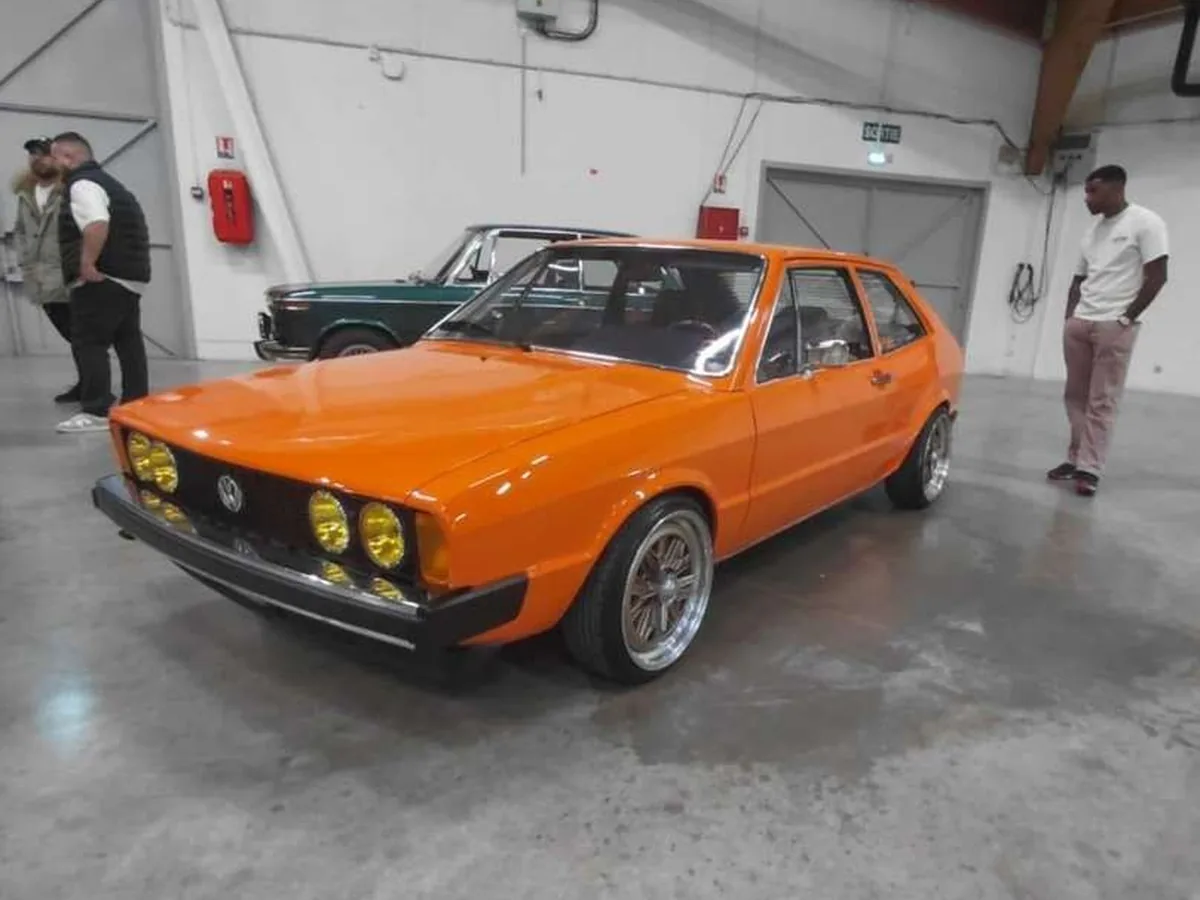
Volkswagen Scirocco photos
Model summary
Data from the ScanRacer library, organized to compare versions quickly.
Model introduction
Launched in 1974, the Volkswagen Scirocco is a front-wheel-drive 2+2 coupé developed around Volkswagen’s new technical layout, the same broad engineering direction that also produced the Golf. Its sharp-edged body was designed by Giorgetto Giugiaro, while production was handled by Karmann in Osnabrück. Two successive generations were built through 1992 before the name returned in 2008 on a thoroughly modernized coupé. The third-generation car retained the concept of a compact, sporty Volkswagen with a practical hatchback body, but used contemporary group technology and powertrains. Within the ScanRacer context, the Scirocco library covers referenced model years from 1974 to 2008 and identifies three available variants. Equipment, engine choices, trim names, and production availability can differ by market and model year, so individual records should be read with their specific year and version context.
History
The first Scirocco entered production at Karmann’s Osnabrück plant in February 1974. Volkswagen positioned it as an affordable sporty coupé, but its four usable seats, hatchback, and practical luggage area gave it more everyday flexibility than a conventional grand tourer. The car used the transverse-engine, front-wheel-drive layout that defined Volkswagen’s transition toward a newer model range. Giorgetto Giugiaro’s design, characterized by crisp surfaces and geometric lines, became central to the Scirocco’s identity. A 110-horsepower GTI joined the range in 1976 and strengthened the coupé’s performance image. Volkswagen’s historical material records 504,153 examples of the first generation. The Scirocco II appeared in 1981 with a longer body, softer contours, and a rear spoiler mounted above the rear window. One of its most notable performance versions was the 139-horsepower GTX 1.8 16V. Production ended on September 7, 1992, after 291,497 Scirocco II cars had been built. Volkswagen revived the name in 2008 with a third generation produced in Portugal. A substantial update followed in 2014, bringing revised styling and changes to the engine range. The European model’s later career is commonly described as running from 2008 to 2017, although some market records refer to cars built or registered later.
Generations
Volkswagen classifies the Scirocco I as the 1974-1980 generation. It is identified by a sharply angular body, a low bonnet, extensive glass, and rectangular or twin headlamps depending on trim. The hatchback body and transverse-engine layout give it a close technical relationship with the Golf, while the cabin remains that of a compact 2+2 coupé. The GTI and GLI illustrate different priorities: the GTI emphasizes sporting performance, while the GLI follows a more upscale direction. The Scirocco II was introduced in 1981 and remained in production until 1992. Its flanks became rounder, the profile more elongated, and the spoiler above the rear window became a defining visual feature. GTX and 16V versions typically added more prominent bumpers, wheel-arch extensions, side skirts, or other sport-oriented details, although exact equipment varied by market and year. Mechanical specifications also changed throughout the production run. The Scirocco III arrived in 2008 with a low, wide, heavily sculpted body that contrasted with the sharper styling of the earlier cars. It retained the hatchback practicality and compact coupé format but adopted modern Volkswagen group equipment and TSI or TDI engines, depending on market and year. The 2014 facelift revised elements such as the bumpers, lighting, and interior details. R versions occupied the performance flagship position within the final generation.
Key differences
The clearest difference between the generations is their body design. The Scirocco I has the most rectilinear and visually lightweight appearance. The Scirocco II keeps a compact profile but introduces softer surfaces, a prominent spoiler above the rear glass, and a distinctly 1980s interpretation of the coupé. The Scirocco III is visibly wider and more contemporary, with a low front end, pronounced shoulders, and tightly shaped wheel arches. The engineering also developed substantially. The first two generations use transverse-engine, front-wheel-drive Volkswagen compact-car architecture, but their engines, transmissions, and equipment vary by model year and market. The third generation uses a newer Volkswagen Group platform and offers turbocharged petrol or diesel engines depending on specification. Its electronic systems and cabin equipment are also more modern. The 2014 revision is an update within the third generation rather than a fourth generation. Trim labels such as GTI, GTX, 16V, GTS, and R should not be treated as directly equivalent across all three generations, because Volkswagen used them in different technical and market contexts.
Photo recognition
To identify a Scirocco I, look for Giugiaro’s sharply angular body, a flat bonnet, a narrow grille, and rectangular or twin headlamps. The steep hatchback and compact proportions are also important clues. GTI versions may have a deeper front spoiler and distinctive trim, but older cars are often modified, so exterior details alone are not conclusive. The Scirocco II can be recognized by its more rounded bumpers, less square surfacing, and especially the spoiler positioned above the rear window. Black wheel-arch extensions, side skirts, and special wheels may indicate a sport-oriented trim, but these features do not always identify a precise model year because equipment differed between markets and could be changed by owners. The Scirocco III has a much wider and lower stance. Early cars use a slim grille and elongated headlamp design, while the post-2014 update revised the bumpers and lighting signatures. An R badge, larger brakes, distinctive exhaust outlets, or unique trim details may suggest a high-performance version. For a dependable identification, confirm the vehicle identification number, production year, engine code, and original market rather than relying solely on badges or cosmetic parts.
Important versions
Important historical versions include the 1976 Scirocco GTI, fitted with a 110-horsepower engine and positioned as the first generation’s sporting flagship. The GLI offered a more luxurious interpretation with comparable output. In the Scirocco II range, the 139-horsepower GTX 1.8 16V is identified by Volkswagen as the most powerful version and the first Scirocco to exceed 200 km/h. The third generation expanded the line with TSI, TDI, GTS, and R versions, depending on market and model year. Following the 2014 update, the Scirocco R reached 280 horsepower according to Volkswagen’s published material. These badges are useful classification clues, but they do not replace verification of the engine, transmission, factory equipment, and original market of an individual car.
The name “Scirocco” follows Volkswagen naming, with its rules and its exceptions. Decode a Volkswagen name
References
- SciroccoVolkswagen Newsroom
- SciroccoVolkswagen Newsroom
- The New Scirocco: International Driving Presentation Portugal, June 2008Volkswagen
- Scirocco 3 (2008-2017): Models & equipmentVolkswagen Ireland
- Scirocco : l’icône qui a marqué sa générationVolkswagen France
- Used Scirocco for saleVolkswagen UK
- https://www.volkswagen-newsroom.com/en/vehicle-data-scirocco-3-profile-19655volkswagen-newsroom.com
- https://www.volkswagen-group.com/de/publikationen/weitere/modellgeschichten-scirocco-1764/download?disposition=attachmentvolkswagen-group.com
Technical specifications
Structured data available for versions linked to this model.
| Version | Power | Torque | Top speed | Drivetrain | Fuel |
|---|---|---|---|---|---|
| Base | 103 KW @ 4000 RPM140 HP @ 4000 RPM138 BHP @ 4000 RPM | 236 lb-ft @ 1750-2500 RPM320 Nm @ 1750-2500 RPM | 129 mph (208 km/h) | Front Wheel Drive / Manual, 6 Speed | Diesel |
Frequently asked questions
- What years was the Volkswagen Scirocco produced?
- ScanRacer's referenced versions cover 1974 - 2008.
- How many Volkswagen Scirocco examples are documented on ScanRacer?
- 5 published scans from 5 members, with the latest photo added in September 2026.
- What is the power output of the Volkswagen Scirocco?
- The sourced technical data lists 103 KW @ 4000 RPM140 HP @ 4000 RPM138 BHP @ 4000 RPM.
What about the car you photographed?
Upload a photo to get a suggested make, model and likely year.
No account needed for the result · Publish only if you choose