Volkswagen Golf Hatch 1997
The 1997 Volkswagen Golf belongs to a transitional year for the German compact car. Depending on the market and build date, the name may refer to the final development of the Golf III, built until December 1997, or to the first Golf IV cars introduced that same year. When no generation is specified, the Golf III is the most cautious reference for a 1997 model year entry. It brought a more safety-focused body than its predecessor, a broader engine range and several important milestones in Golf history, including the VR6, TDI diesel technology and side airbags. The hatchback remained the core of the range, although equipment, engines and body configurations varied considerably between countries. (volkswagen-newsroom.com)
History
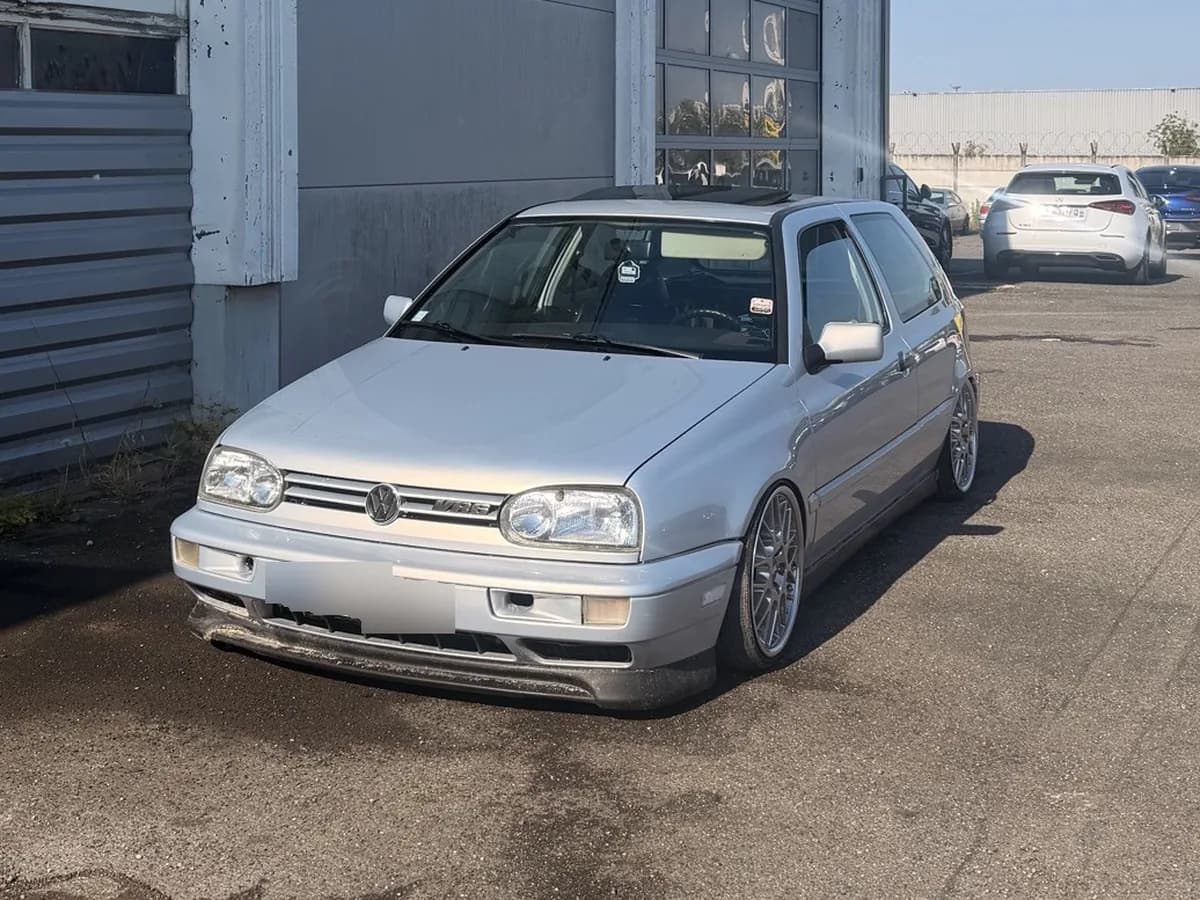
Introduced in August 1991, the Golf III expanded the established Golf formula with a stronger focus on structural safety and modern equipment. Volkswagen reinforced the passenger compartment, developed more controlled deformation zones and improved resistance to side impacts. Designed under chief stylist Herbert Schäfer, the car adopted softer, more contemporary lines and grew slightly in overall dimensions while retaining the familiar front-wheel-drive compact layout. (volkswagen-newsroom.com)
The third generation also became an important technical milestone for the Golf family. It introduced the model’s first six-cylinder engine, the narrow-angle VR6, followed by direct-injection diesel technology in TDI and SDI form. Front airbags became available from 1992, side airbags arrived in 1996, and Volkswagen states that ABS became standard across the Golf range from September 1996. Golf III production ended in December 1997 after 4,805,900 units, as the newer Golf IV gradually took over. (volkswagen-newsroom.com)
Latest scans
Photos added by the community for this page.
Anecdotes
The Golf III introduced several firsts for the model line. It was the first Golf available with a six-cylinder engine through the VR6, the first to receive TDI technology and the first to offer side airbags. Volkswagen also notes that the Golf III era coincided with the production of the 15-millionth Golf in May 1994, underlining the scale reached by the nameplate before the fourth generation arrived. (volkswagen-newsroom.com)
Production
Golf III production ran from 1991 to 1997 for the compact hatchback, with different end dates for some derivatives and markets. Volkswagen records 4,805,900 Golf III cars built when production of the saloon hatchback ended in December 1997. The Golf Variant estate continued until 1999, so the various body styles based on this generation did not all follow the same production timeline. (volkswagen-newsroom.com)
The 1997 model year therefore needs careful interpretation. Golf III production was ending while the Golf IV was being introduced progressively. Volkswagen’s figure of 4,805,900 applies to the Golf III generation as a whole, not to a particular hatchback trim, engine or body configuration. A precise production total for an unspecified 1997 hatchback cannot be established from the available evidence. (volkswagen-newsroom.com)
Press reception
Reception of the Golf III was mixed but broadly respectful. Specialist commentary often credits it with improved safety, useful interior space and technically interesting versions such as the VR6. Retrospective reviews also criticize its less distinctive styling, restrained cabin and driving character compared with the highly regarded Golf II. Honest John presents this balance clearly, pairing the generation’s innovations with reservations about handling, finish and long-term body corrosion. (classics.honestjohn.co.uk)
In the United States, Edmunds described the 1997 Golf as stable at highway speeds, enjoyable to drive and unusually communicative for an economy hatchback. The same review criticized the relatively weak four-cylinder engine and suggested that reliability did not match leading Japanese rivals. Those comments primarily concern the U.S.-market car and should not be applied automatically to European engines or trims. (edmunds.com)
Evolution
By 1997, the Golf was reaching the end of the Golf III production cycle. The final changes focused mainly on equipment, safety and limited editions rather than a completely new body design. Volkswagen replaced the former CL and GL trim names with Trendline and Comfortline. Final Golf III special editions included the Joker, Family and Otmar Alt, while Yachting was associated with the Golf Variant estate. (volkswagen-newsroom.com)
The Golf IV transition also began in 1997. It introduced a cleaner exterior treatment and a more ambitious interior presentation. As a result, a 1997 Golf cannot be assigned a precise engine, gearbox or equipment level from the year alone. The generation, sales market and build date must be established first, particularly because Golf III and Golf IV cars overlapped during the changeover period. (volkswagen-newsroom.com)


Variants
References
- Golf 3rd Generation (1991–1997)Volkswagen Newsroom
Supports the Golf III timeline, safety developments, technical milestones and generation-level production context.
- Golf III (1991–1997)Volkswagen Newsroom
Supports dimensions, design evolution, 1997 equipment changes, special editions and the 4,805,900 production figure.
- Safety wins: Golf III – 1991 to 1997Volkswagen Newsroom
Supports airbags, ABS, VR6, TDI, SDI, Golf Variant, the 15-millionth Golf milestone and generation history.
- Golf IV (1997–2003)Volkswagen Newsroom
Supports the 1997 introduction of the Golf IV and the transitional nature of the model year.
- 1997 Volkswagen Golf ReviewEdmunds
Supports the U.S.-market driving impressions, equipment context and critical comments about the four-cylinder engine and reliability.
- Volkswagen Golf Mk3 (1992–1997) ReviewHonest John Classics
Supports the cautious summary of retrospective specialist reception and criticisms of the Golf III.
- History of the VW Golf MK3Volkswagen UK
Supports the 1997 transition from Golf III to Golf IV and the 4.83-million production summary.
- https://www.hagerty.com/valuation-tools/volkswagen/golf/1997/1997-volkswagen-golfhagerty.com
Source found by OpenAI web search for this vehicle page.