
Atlas
Introduced in the United States in 2017, the Volkswagen Atlas is a large three-row family SUV developed around the needs of the North American market. Built in Chattanooga, Tennessee, it uses Volkswagen’s modular MQB architecture and can seat up to seven people, depending on the interior layout. Early models combined a turbocharged four-cylinder engine with an available VR6, an eight-speed automatic transmission, and optional 4MOTION all-wheel drive on selected configurations. For the 2024 model year, Volkswagen substantially revised the cabin, added more standard equipment, and made a 2.0-liter turbocharged engine the sole powertrain. The 2027 model year then introduced a fully redesigned Atlas, bringing a new interior and a significant update to the vehicle’s digital interfaces.
What about the car you photographed?
Upload a photo to get a suggested make, model and likely year.
No account needed for the result · Publish only if you choose
Variants by year
Make: Volkswagen · Model: Atlas
6 / 6 versions shown
2027
2023
2020
2017
Volkswagen Atlas photos
Model summary
Data from the ScanRacer library, organized to compare versions quickly.
Model introduction
Introduced in the United States in 2017, the Volkswagen Atlas is a large three-row family SUV developed around the needs of the North American market. Built in Chattanooga, Tennessee, it uses Volkswagen’s modular MQB architecture and can seat up to seven people, depending on the interior layout. Early models combined a turbocharged four-cylinder engine with an available VR6, an eight-speed automatic transmission, and optional 4MOTION all-wheel drive on selected configurations. For the 2024 model year, Volkswagen substantially revised the cabin, added more standard equipment, and made a 2.0-liter turbocharged engine the sole powertrain. The 2027 model year then introduced a fully redesigned Atlas, bringing a new interior and a significant update to the vehicle’s digital interfaces.
History
The Volkswagen Atlas was unveiled in California in October 2016 before reaching U.S. dealerships as a 2018 model. Volkswagen positioned it as a three-row SUV designed to strengthen the brand’s presence in the North American family-vehicle market. Production was assigned to the company’s Chattanooga, Tennessee, plant, which remains central to Volkswagen’s U.S. manufacturing operations. The Atlas belongs to Volkswagen’s MQB-based vehicle family, but its larger dimensions and three-row layout give it a more family-focused role than the Tiguan sold in the same market. Early Atlas models offered a 2.0-liter turbocharged four-cylinder engine or a 3.6-liter VR6, depending on trim and drivetrain configuration. An eight-speed automatic transmission was standard across the range, while 4MOTION all-wheel drive was available on selected versions. Volkswagen added the Atlas Cross Sport in 2020 as a shorter, more style-oriented derivative with two rows of seats. The Atlas family received a major update for 2024, including revised exterior styling, a 12-inch central display, more standard equipment, and a single 2.0-liter turbocharged engine. The new 2027 Atlas, unveiled on March 31, 2026, represents the next major step, with updated exterior design and a completely reworked cabin.
Generations
The Volkswagen Atlas has not yet gone through a long series of separately named generations. For North American vehicles, the first generation covers the models introduced from the 2018 model year onward and developed through several major updates. Early examples are defined by the choice of a turbocharged four-cylinder engine or a VR6, along with a more conventional cabin layout. This initial phase includes the model years associated with the Base version and the other trim levels sold before the 2024 redesign. The 2024 model year brought a substantial visual and technical change, although Volkswagen did not frame it as a completely separate generation. The VR6 was discontinued, replaced by a 2.0-liter turbocharged four-cylinder engine, while the cabin gained a revised dashboard, a 12-inch center display, and additional standard equipment. The Cross Sport followed a related but distinct path: it is derived from the Atlas but uses a two-row body and a lower, more coupe-like profile. The 2027 model year should be separated from the earlier refreshes. Volkswagen describes it as an all-new Atlas. Its most obvious change is inside, where the dashboard, controls, and digital presentation have been redesigned. In practical catalog terms, 2017 through 2026 represent the first Atlas family and its major updates, while 2027 begins a new design phase.
Key differences
Atlas differences are driven primarily by model year and body style. Pre-2024 vehicles could be equipped with either a 2.0-liter turbocharged four-cylinder or a VR6, while the 2024-2026 Atlas uses only the turbocharged four-cylinder. 4MOTION all-wheel drive is not universal; availability depends on trim and drivetrain specification. The Cross Sport differs from the standard Atlas through its two-row body, altered proportions, and more athletic roofline. It should therefore be treated as a related body style rather than simply an Atlas trim. Inside, the gap between early models and the 2024 update is easy to identify: later vehicles use a larger center display, a revised dashboard, and more comprehensive standard or available driver-assistance equipment. The 2027 model adds another clear break with a fully redesigned cabin. Commercial names such as Base, SE, SEL, R-Line, and Peak Edition describe equipment levels and appearance packages; they do not automatically indicate separate generations.
Photo recognition
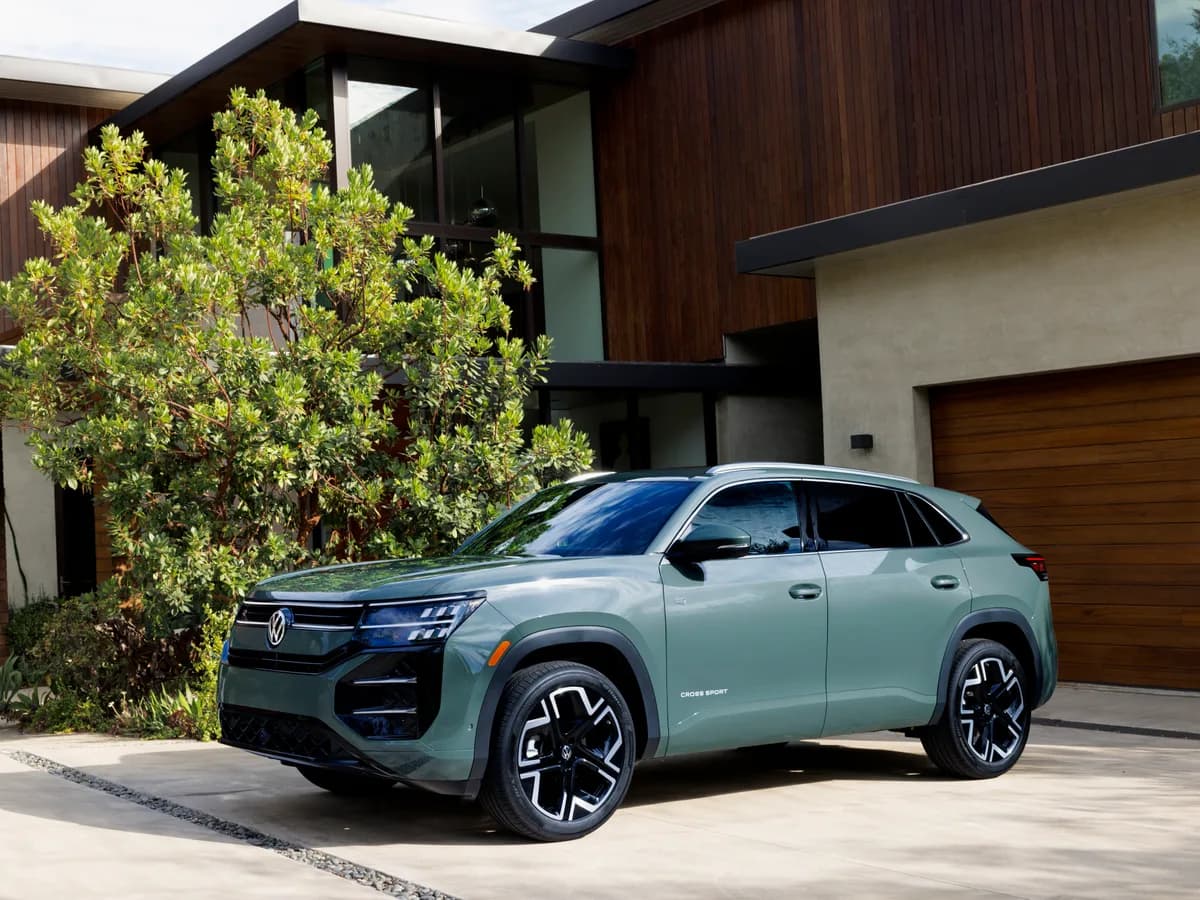
To identify an Atlas, begin with its large three-row SUV shape, horizontal grille, and noticeably substantial proportions compared with the Tiguan. Standard Atlas models have three main side-window sections and a relatively upright liftgate, while the Cross Sport has two seating rows and a more sloping roofline. Early Atlas vehicles can usually be recognized by their lower dashboard design and smaller center display. The 2024 update introduced a newer interior layout, including a centrally mounted 12-inch screen and a revised console. On these models, the absence of the VR6 is an important mechanical clue, although engine sound or exhaust appearance alone is not a reliable identification method. The 2027 model requires separate attention. Its cabin is completely redesigned, while the exterior retains recognizable Atlas proportions but adds a more modern lighting signature. For accurate identification, combine the model year, body style, trim badges, headlamp shape, and the manufacturer label. A single visual detail can be misleading, especially because equipment, wheels, lighting, and exterior packages changed across model years.
Important versions
The Base version is a useful reference point for early Atlas vehicles because it represents the entry-level specification during the model’s initial phase. It provides a straightforward comparison with the more highly equipped trims introduced throughout the following model years. The Cross Sport is the family’s other major derivative. Introduced for the 2020 model year, it gives up the third seating row for a shorter, more dynamic body. R-Line versions generally emphasize sportier styling and added equipment, while Peak Edition brings a more rugged theme to the recent range. These names should be interpreted as body-style or equipment distinctions rather than automatic indicators of a new generation. The model year remains essential when determining the exact engine, drivetrain, interior technology, and standard equipment.
The name “Atlas” follows Volkswagen naming, with its rules and its exceptions. Decode a Volkswagen name
References
- AtlasVolkswagen Newsroom
- World premiere of the Volkswagen Atlas – all-new seven-seater SUV for AmericaVolkswagen Newsroom
- 2024 Atlas Press KitVolkswagen of America Newsroom
- All-new 2027 Volkswagen Atlas debuts at the New York International Auto ShowVolkswagen of America Newsroom
- Volkswagen Atlas: Model Years, Generations & NewsCars.com
- Explore Generations and Year-by-Year Changes of the Volkswagen AtlasCarMax, with Edmunds contributor research
- https://www.iseecars.com/car/volkswagen-atlas/generationsiseecars.com
- https://www.jdpower.com/cars/history/volkswagen/atlasjdpower.com
Frequently asked questions
- What years was the Volkswagen Atlas produced?
- ScanRacer's referenced versions cover 2017 - 2027.
- How many Volkswagen Atlas examples are documented on ScanRacer?
- 6 published scans from 1 member, with the latest photo added in August 2026.
What about the car you photographed?
Upload a photo to get a suggested make, model and likely year.
No account needed for the result · Publish only if you choose