
1000
Introduced in 1961, the Simca 1000 was a compact French four-door saloon with a rear-mounted four-cylinder engine and rear-wheel drive. Its three-box body kept a straightforward appearance while making efficient use of a relatively small footprint. Built mainly at Poissy, the car evolved through a succession of engines, equipment levels and exterior revisions. The range also produced a series of sporting derivatives, including the Rallye, Rallye 1 and Rallye 2. Launched in 1972, the Rallye 2 turned the practical family saloon into a serious performance car, using a 1,294 cc four-cylinder engine fed by twin twin-choke carburetors. The Simca 1000 therefore occupies an unusual place in French automotive history: it began as an economical everyday car, yet its rear-engine layout, light body and competition potential eventually made it a respected club-racing and hill-climb machine.
What about the car you photographed?
Upload a photo to get a suggested make, model and likely year.
No account needed for the result · Publish only if you choose
Variants by year
Make: Simca · Model: 1000
2 / 2 versions shown
1972
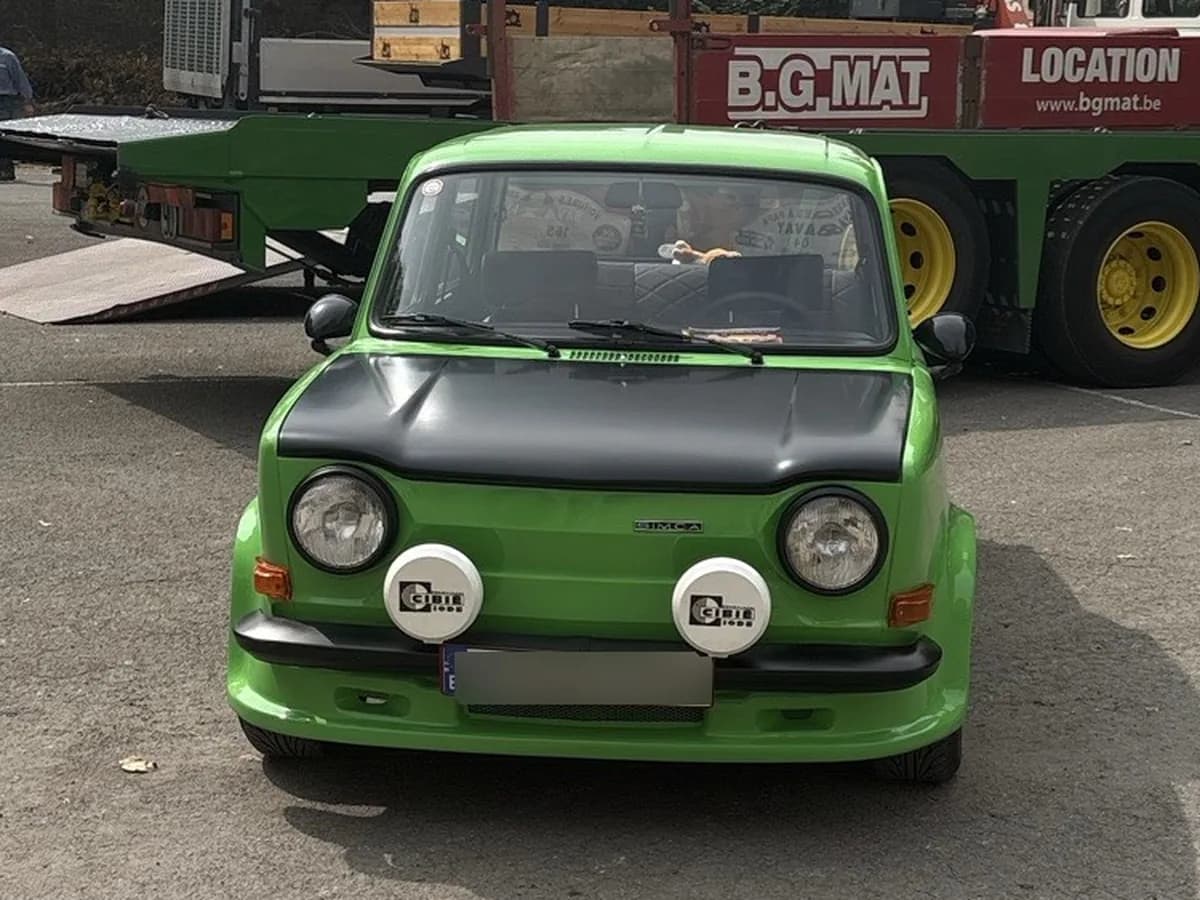
1961

Simca 1000 photos
Model summary
Data from the ScanRacer library, organized to compare versions quickly.
Model introduction
Introduced in 1961, the Simca 1000 was a compact French four-door saloon with a rear-mounted four-cylinder engine and rear-wheel drive. Its three-box body kept a straightforward appearance while making efficient use of a relatively small footprint. Built mainly at Poissy, the car evolved through a succession of engines, equipment levels and exterior revisions. The range also produced a series of sporting derivatives, including the Rallye, Rallye 1 and Rallye 2. Launched in 1972, the Rallye 2 turned the practical family saloon into a serious performance car, using a 1,294 cc four-cylinder engine fed by twin twin-choke carburetors. The Simca 1000 therefore occupies an unusual place in French automotive history: it began as an economical everyday car, yet its rear-engine layout, light body and competition potential eventually made it a respected club-racing and hill-climb machine.
History
The Simca 1000 appeared in the early 1960s as Simca sought a compact model to extend its range downward. Introduced in France in 1961, it used a rear-engine layout: the longitudinal engine sat behind the rear axle and drove the rear wheels. This arrangement was common among small European cars of the period, helping preserve cabin space while keeping the mechanical package relatively straightforward. The car also used a four-speed fully synchronized manual gearbox, while selected versions could be ordered with a semi-automatic transmission. Simca gradually developed the car through changes in displacement and equipment. Early examples used a 944 cc member of the Poissy engine family. More economical versions followed, while larger 1,118 cc and 1,294 cc engines eventually became available within the range. A substantial update arrived for the 1969 model year: rack-and-pinion steering replaced the earlier system, the headlamps and rear lights were redesigned, and several chassis details were revised. In 1970, the first Simca 1000 Rallye gave the model a clearer sporting identity. The Rallye 1 followed in 1972, ahead of the more powerful Rallye 2. Production of the 1000 family continued until 1978, when ordinary versions were renamed Simca 1005 and 1006 as part of the final phase of the model’s career.
Generations
The Simca 1000 does not have an official generation breakdown in the modern sense. It is more useful to identify several broad development phases. The first phase covers the cars introduced in 1961. These early models have a particularly simple presentation, small round rear lamps and the initial 944 cc versions of the Poissy engine. During the following years, Simca added different equipment levels and economy derivatives, including the Sim'4 or Simca 4 CV, depending on market and model year. The second phase begins with the major update for the 1969 model year. Rack-and-pinion steering, larger headlamps, indicators moved out toward the front wings, rectangular rear lamps and 13-inch wheels are useful visual clues. The mechanical specification also progressed, with more powerful engines from the wider Poissy family becoming available. The third phase is defined by the sporting cars. The 1970 Rallye, the 1972 Rallye 1 and the Rallye 2 retained the rear-engine saloon body but added more purposeful styling, revised mechanical equipment and a stronger performance focus. During the final years, Simca continued to alter the names and smaller exterior details of the standard cars, but the basic architecture remained recognisably related to the original 1961 design. These phases are therefore practical identification groups rather than factory-designated generations.
Key differences
The standard Simca 1000 was primarily designed for economical motoring, everyday comfort and understated styling. Its smaller engines, variable equipment and ordinary chassis settings suited normal road use. Later versions nevertheless gained significant improvements, particularly rack-and-pinion steering and larger engines from the Poissy family. The Rallye 2 had a distinctly sporting purpose. It used a 1,294 cc Poissy engine, twin twin-choke carburetors, power quoted at 82 hp by period and museum sources, and a four-speed manual gearbox. The car retained independent suspension at all four wheels, while braking combined front discs with rear drums. Its four-door saloon body remained recognisable, but the trim, seats, instruments and chassis calibration gave it a much more focused character. An original Rallye 2 should not automatically be confused with an ordinary Simca 1000 converted for competition: owner modifications and racing preparation can substantially alter both appearance and performance. Exact specifications may also vary with model year, market and subsequent restoration work.
Photo recognition
To identify a Simca 1000, start with the four-door three-box body, short front compartment and comparatively substantial rear section containing the mechanical package. Because the engine is mounted at the rear, the front grille does not have the layout associated with a conventional front-engine car. Early cars generally use small round rear lamps and a simple front treatment. Cars updated for the 1969 model year are easier to distinguish through their larger headlamps, indicators mounted on the front wings and rectangular rear lamps. Thirteen-inch wheels and revised trim can provide additional clues, although neither is sufficient on its own to date a restored example. A Rallye 2 normally combines brighter sporting decoration with bucket or strongly contoured seats, sport-oriented instruments, distinctive wheels and a more purposeful stance. These visual details should be checked against the identification plate, chassis numbers, engine specification and period documentation. Replicas and competition-prepared cars are common, and modifications can make an ordinary Simca 1000 resemble a factory sporting derivative. Restoration history is therefore essential when making a precise identification.
Important versions
The base version introduced in 1961 represents the Simca 1000’s original purpose: a small family saloon that was simple, accessible and powered from the rear. Its historical importance lies in its architecture and long-lasting market role rather than in luxury equipment. The Rallye 2, introduced in 1972, is the most significant sporting derivative among the versions considered here. Its 1,294 cc four-cylinder engine, twin twin-choke carburetors and competition-minded equipment explain its presence in national events, hill climbs and historic racing. The FIA homologated it in Group 2 at the beginning of 1973 as the Simca Chrysler 1000 Rallye 2. The Rallye, Rallye 1 and Rallye 3 belong to the same sporting family, but they should not be treated as interchangeable names. Engine specification, trim and competition preparation are important when distinguishing them.
References
- Simca 1000Honest John Classics
- Club Simca France – Simca 1000Club Simca France
- Simca 1000 Rallye 2Museu do Caramulo
- Simca 1000 brochure archiveOld Car Manual Project
- https://www.automobile-catalog.com/car/1975/3107075/simca_1000_rallye_2.htmlautomobile-catalog.com
- https://www.automobile-sportive.com/guide/simca/1000rallye.phpautomobile-sportive.com
Frequently asked questions
- What years was the Simca 1000 produced?
- ScanRacer's referenced versions cover 1961 - 1972.
- How many Simca 1000 examples are documented on ScanRacer?
- 4 published scans from 3 members, with the latest photo added in September 2026.
What about the car you photographed?
Upload a photo to get a suggested make, model and likely year.
No account needed for the result · Publish only if you choose