
Polestar
Polestar is a Swedish automotive brand focused on electric performance cars. Its modern history began in 2017, when Volvo Cars and Geely Holding announced the creation of an independent marque dedicated to electrification, design, and technology. The first model to carry the Polestar name as a standalone brand was the low-volume Polestar 1, a plug-in hybrid grand touring coupé that entered production in 2019. The Polestar 2 followed in the same year as the company’s first fully electric model intended for broader distribution, using a fastback body and a technology-led interior. The range later expanded into the SUV market with the Polestar 3 and Polestar 4, while the Polestar 5 was announced as a four-door electric grand tourer. This chronology covers the Polestar models referenced from 2019 through 2026, from Polestar 1 to Polestar 5.
Models from A to Z
Polestar overview
Polestar history
Polestar’s roots lie in Swedish motorsport. The organisation originally known as Flash Engineering was established in 1996 and later became involved in developing and racing Volvo-based cars. The Polestar name gradually became associated with Volvo performance upgrades and competition engineering. In 2009, Polestar became Volvo Cars’ official performance partner for road-car enhancements. Volvo acquired the road-car performance business in 2015, while the racing operation continued separately under the Cyan Racing name. This separation created the foundation for Polestar’s later transformation into an independent car brand. In October 2017, Volvo Cars and Geely Holding introduced Polestar as a standalone brand focused on electric performance vehicles. The Polestar 1 opened this new chapter. Inspired by Volvo’s Concept Coupé, it entered low-volume production in Chengdu in 2019 as a carbon-fibre grand tourer combining a combustion engine with electric drive. The Polestar 2, revealed in February 2019, took a more broadly marketable approach and became the brand’s first fully electric high-volume model. Polestar then expanded into electric SUVs with the Polestar 3, revealed in 2022, and the Polestar 4, launched in 2023. The Polestar 5, developed from the Precept concept, continues the move toward high-end four-door electric performance. Polestar announced deliveries from summer 2026, although timing remains subject to production and market rollout.
Polestar positioning
Polestar positions itself as a premium electric-performance brand built around Scandinavian design, driving dynamics, and integrated technology. The company presents design as a central product tool rather than as a styling layer, combining restrained exterior forms with software-led interiors and electrified powertrains. This gives Polestar a distinct identity from Volvo, even though the two companies remain connected through their corporate history, technology relationships, and manufacturing partnerships involving Geely Holding. The model range reflects a gradual expansion in market coverage. Polestar 1 acts as a technology-led halo car, while Polestar 2 addresses the core electric fastback market. Polestar 3 and Polestar 4 move the brand into premium SUV and SUV-coupé segments, and Polestar 5 is intended to occupy the role of a high-end four-door grand tourer. It is therefore more accurate to describe Polestar as a young global premium EV brand than as a full-range manufacturer. Its portfolio remains deliberately compact, with some vehicles newly launched and others still dependent on production ramp-up and market-specific delivery schedules.
Recognizing a Polestar in a photo
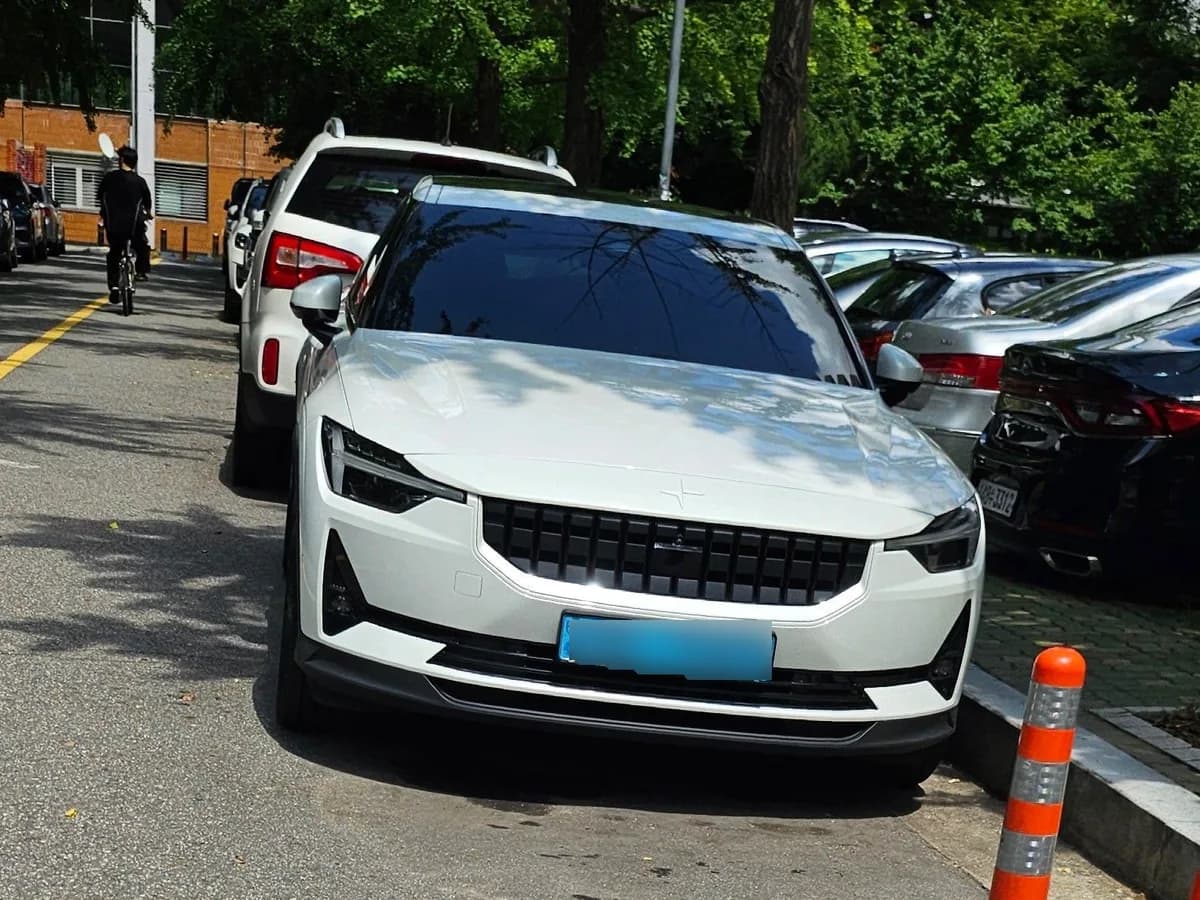
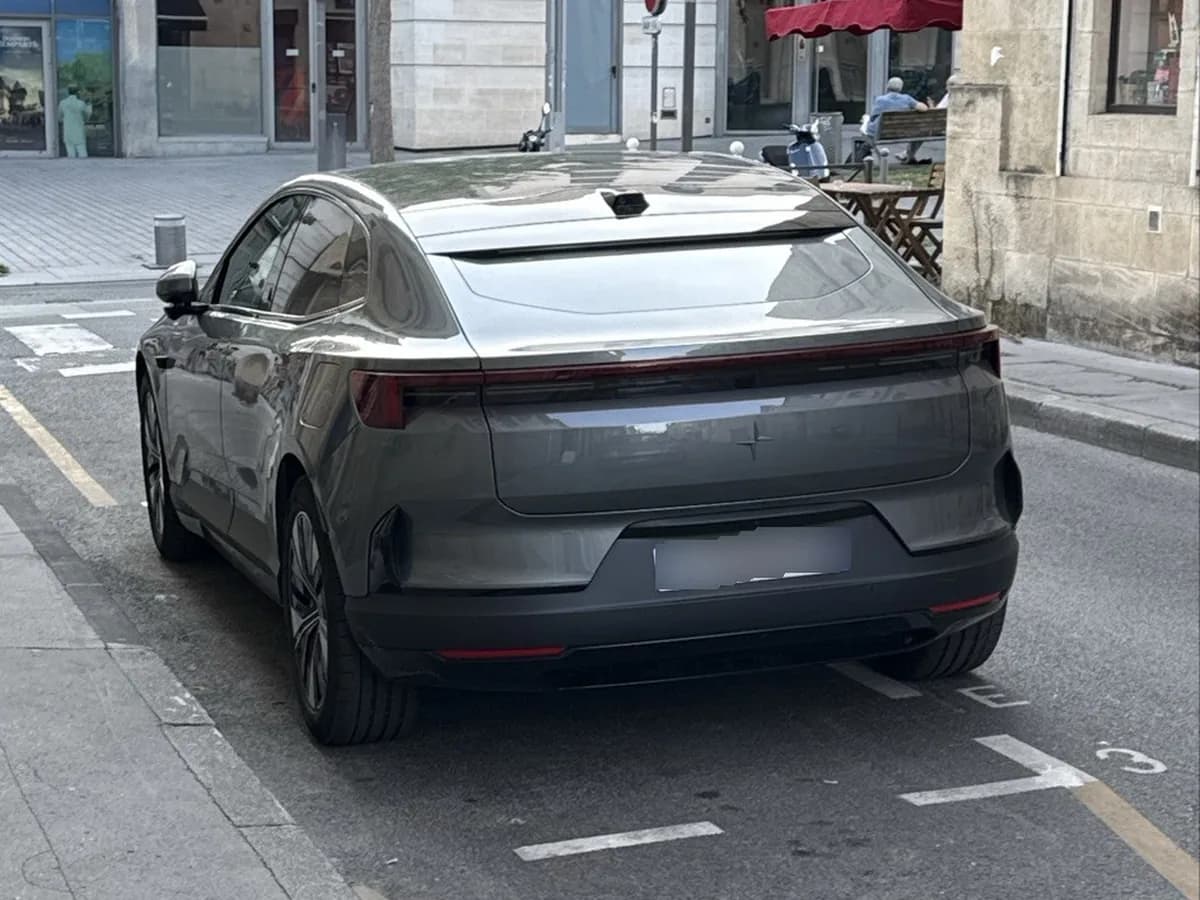
Polestar vehicles are primarily identified by their clean, geometric design language and the angular North Star emblem. The Polestar 1 is the easiest to separate from the rest of the range: it is a low two-door grand touring coupé with proportions closely related to the Volvo Concept Coupé. The Polestar 2 uses a five-door fastback body, a closed-off front design, and a full-width rear lighting signature. The Polestar 3 is a larger electric SUV with a high body, tight roofline, and horizontal rear light treatment. The Polestar 4 has a more pronounced SUV-coupé profile and is notable for eliminating the conventional rear window, using a roof-mounted camera and digital rear-view display instead. The Polestar 5 returns to a lower four-door grand touring shape, making it visually distinct from the taller 3 and 4. Wheels, trim packages, lighting details, and equipment can differ by market and model year, so body style and generation are more reliable identification clues than individual exterior options.
Important Polestar models
Polestar 1 is important because it introduced the standalone Polestar brand after its 2017 launch announcement and entered production in 2019. Its plug-in hybrid powertrain, carbon-fibre body, and limited production gave it a halo-car role rather than a volume-selling mission. Polestar 2 is the pivotal model in the brand’s modern story. Revealed in 2019, it became Polestar’s first fully electric car aimed at broader distribution and helped establish the company in the premium EV market. Polestar 3 and Polestar 4 represent the brand’s move into electric SUVs. Revealed in October 2022, Polestar 3 was the company’s first SUV and was planned for production in both China and the United States. Polestar 4 followed in 2023, entering production late that year with a coupé-like SUV body and no conventional rear window. Polestar 5 completes the ScanRacer chronology through 2026. It is positioned as a four-door electric grand tourer and brand halo model, with deliveries announced from summer 2026. That delivery timing should be treated as a planned rollout rather than proof that every market received the car during the same calendar year.
References
- About PolestarPolestar
- Production of the Polestar 2 Electric Vehicle BeginsPolestar Global Media Newsroom
- Polestar 3 is the SUV for the electric agePolestar Canada Newsroom
- Polestar 4 is a new breed of SUV coupéPolestar United States Newsroom
- Polestar starts largest model offensive in its history: four new cars in three yearsPolestar Canada Newsroom
- Polestar Vehicles, Trucks and SUVs: Reviews, Pricing, and SpecsEdmunds
- https://www.jdpower.com/cars/shopping-guides/who-makes-polestar-carsjdpower.com