
Qashqai
Introduced in Europe in early 2007, the Nissan Qashqai helped popularise the compact crossover by combining a raised driving position and SUV-inspired styling with dimensions close to those of a family hatchback. Nissan developed it with European customers, roads and usage patterns in mind, using engineering input from its European technical centres. The first model, commonly identified by its J10 designation, established the Qashqai between conventional family cars and larger SUVs. An extended seven-seat version, known as the Qashqai+2, joined the range from 2008. The second generation arrived for the 2014 model year, followed by the third generation in 2021. Nissan states that more than 6.5 million Qashqais from the three generations had been delivered worldwide since the model’s 2007 launch.
What about the car you photographed?
Upload a photo to get a suggested make, model and likely year.
No account needed for the result · Publish only if you choose
Variants by year
Make: Nissan · Model: Qashqai
9 / 9 versions shown
2024

2021
2017
2014
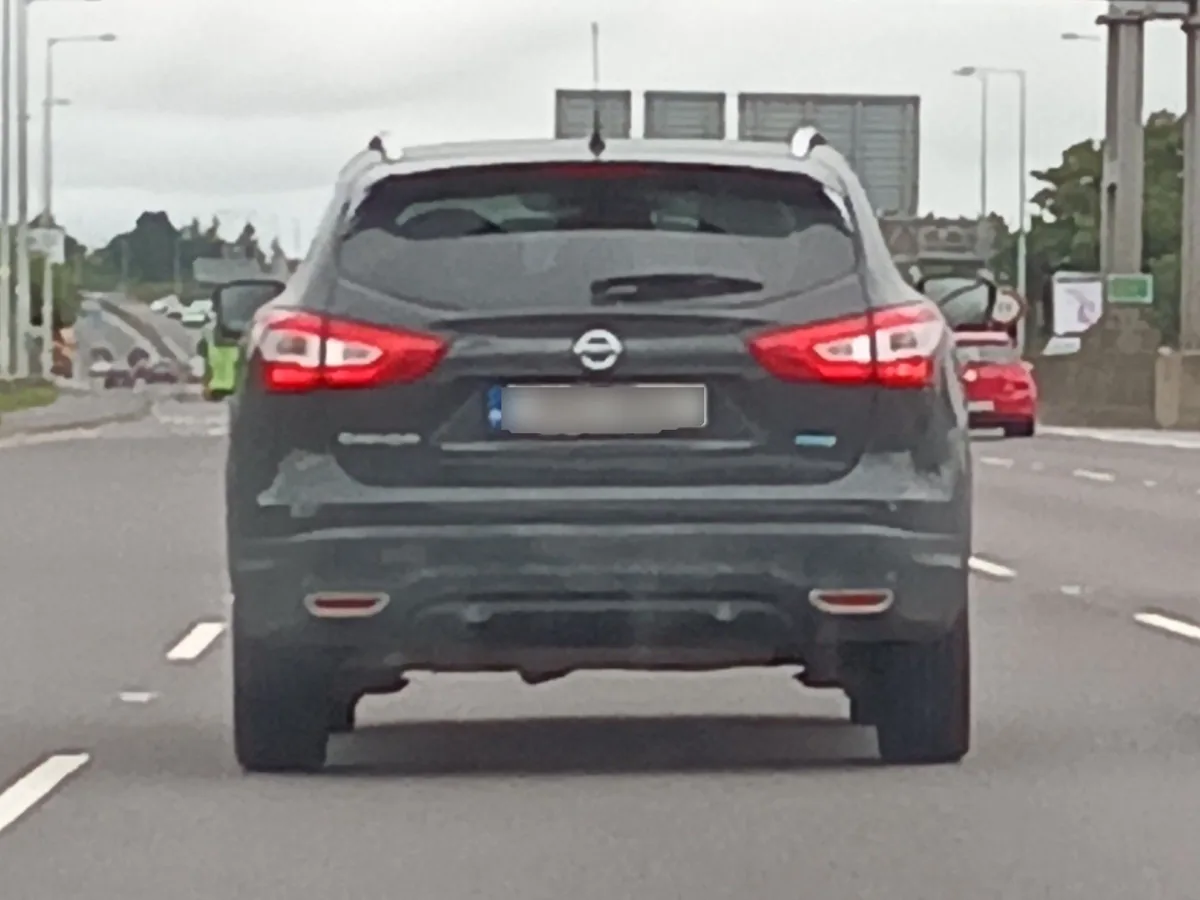
2009

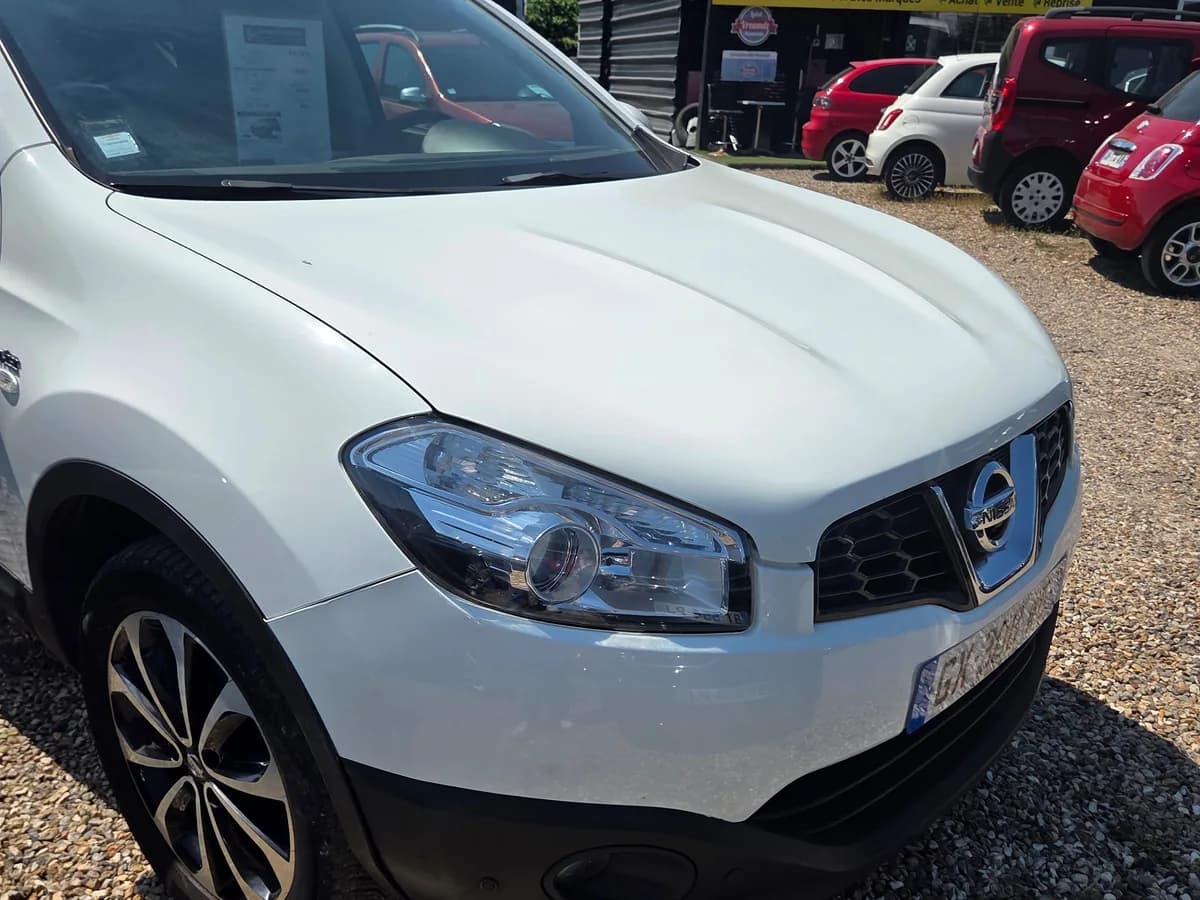
2008
2007
Nissan Qashqai photos
Model summary
Data from the ScanRacer library, organized to compare versions quickly.
Model introduction
Introduced in Europe in early 2007, the Nissan Qashqai helped popularise the compact crossover by combining a raised driving position and SUV-inspired styling with dimensions close to those of a family hatchback. Nissan developed it with European customers, roads and usage patterns in mind, using engineering input from its European technical centres. The first model, commonly identified by its J10 designation, established the Qashqai between conventional family cars and larger SUVs. An extended seven-seat version, known as the Qashqai+2, joined the range from 2008. The second generation arrived for the 2014 model year, followed by the third generation in 2021. Nissan states that more than 6.5 million Qashqais from the three generations had been delivered worldwide since the model’s 2007 launch.
History
The Qashqai story began with Nissan Design Europe, established in London in 2003. The Qashqai Concept shown at the 2004 Geneva Motor Show used the footprint of a C-segment car but added a higher body and styling cues associated with a four-wheel-drive vehicle. The production model was unveiled in Paris in autumn 2006 before going on sale in Europe in early 2007. Nissan says the car was engineered around the needs of European customers and roads, and that its early response exceeded the company’s expectations. The Qashqai+2 arrived in 2008 as a longer derivative for buyers needing greater flexibility. Its extended body accommodated a third row of seats, making it a distinct alternative to the standard five-seat Qashqai. The second generation was revealed on 7 November 2013 and went on sale from 2014. It introduced the CMF-C architecture to the European model and moved the range away from the +2 body style, concentrating instead on the compact crossover format. The third generation made its European debut in 2021. It retained the Qashqai’s basic concept while updating the exterior design, equipment and powertrain range. Nissan subsequently introduced e-POWER in Europe in 2022, followed by a third-generation e-POWER system launched in 2025, outside the main 2007–2024 coverage represented by the supplied ScanRacer data.
Generations
The first generation, generally identified as J10, covers the 2007 launch and most of the model’s first decade. Its identity is defined by a visibly raised body, pronounced wheel-arch treatment and a compact five-door layout. Depending on the market, four-wheel drive was available, but engines, transmissions and equipment varied from country to country. The Qashqai+2 is best understood as a derivative of this generation rather than a separate generation: its longer body and wheelbase created room for two additional seats. The second generation, introduced from 2014, adopted sharper styling and a presentation closer to Nissan’s other crossovers of the period. Nissan describes it as an all-new model based on the CMF-C architecture. Driver-assistance and connectivity features became more prominent, while the +2 body style was not continued within the Qashqai range. The third generation appeared in 2021. It can be recognised by a more assertive front end, slim headlamps and more defined body surfacing. It also introduced a gradual move toward electrification: mild-hybrid petrol powertrains in selected markets, followed by e-POWER in Europe from 2022. Exact names, transmissions, engines and equipment levels remain market- and year-dependent, so a badge or trim name should not be treated as proof of a single global specification.
Key differences
The clearest differences between generations are found in the body design. The J10 has rounder volumes and the compact-SUV appearance associated with the early 2000s. The Qashqai+2 is identified by its greater length, revised roofline and third seating row. The J11, introduced for 2014, uses sharper body surfacing and Nissan’s design language from that period, including a more pronounced front treatment. The J12, launched in 2021, stands out through slim headlamps, a larger grille and more angular detailing. Cabin technology generally progressed with each generation, bringing more screens, connectivity functions and driver-assistance systems, although equipment varied by market. The most significant mechanical distinction concerns electrification in the J12. Some versions use mild-hybrid assistance, while e-POWER uses an electric motor to drive the wheels and a petrol engine primarily as an electricity generator. The Base, Glory and +2 labels appearing in the supplied ScanRacer data should therefore be treated as library variants, not as universally standardised trim levels across every country.
Photo recognition
When identifying a Qashqai, start with the body shape and production period rather than relying on a badge alone. A first-generation J10 has relatively soft, compact-SUV styling, with tall or strongly rising rear lamps depending on the model year. The +2 is longer and has a different roof profile; a third seating row confirms the derivative, but its absence in a used vehicle does not always rule it out if the seats are folded. The J11 can usually be recognised by sharper surfacing, a V-shaped grille and more pronounced bonnet lines. Facelifted cars may have different headlamps, bumpers and grille details, so the model year and market should be checked against the vehicle identification number or manufacturer documentation. The J12 uses narrow headlamps with a separate lighting signature, a more upright front end and more defined body contours. An e-POWER badge indicates a specific electrified layout, but the exact output, transmission arrangement and equipment still need to be confirmed from the vehicle’s documents. Trim names alone are not reliable identifiers because Nissan changed specifications between markets and model years.
Important versions
The most historically important version is the five-seat first-generation Qashqai, which established the model in the compact-crossover segment from 2007. The Qashqai+2, listed in the supplied ScanRacer data for 2008 and 2009, deserves special attention because it used a longer body and could provide seating for up to seven occupants, depending on configuration. The third generation is also significant for the model’s gradual move toward electrification, with e-POWER introduced in Europe from 2022. Within the supplied ScanRacer coverage, the “Base” variant spans 2007 to 2024 and is the broadest category. “Glory” is listed for 2024. These names should be understood as library variant labels; by themselves, they do not prove a globally consistent trim level, engine or equipment specification. Nissan’s naming and available powertrains differed between markets and model years.
References
- Nissan Heritage Stories: QashqaiNissan Motor Corporation
- New Nissan Qashqai: The Original Crossover ReinventedNissan International SA
- All-New Qashqai breaks coverNissan South Africa
- Nissan Qashqai: All-new Qashqai makes European debutNissan Motor Corporation
- Qashqai e-POWER: How the system worksNissan UK
- Qashqai+2 technical and road-test coverageheise autos
- https://www.nissan.co.uk/vehicles/new/qashqai.htmlnissan.co.uk
- https://www.nissan.co.uk/owners/car-repair/car-owner-manual/manuals/iom/qashqaiepower/hj12/e1/2024.shtmlnissan.co.uk
Technical specifications
Structured data available for versions linked to this model.
| Version | Power | Torque | Top speed | Drivetrain | Fuel |
|---|---|---|---|---|---|
| Base | 139.7 kw (190 hp) | 243.4 lb-ft (330 Nm) | 106 mph (171 km/h) | Front Wheel Drive / 1-speed automatic | Hybrid Gasoline |
Frequently asked questions
- What years was the Nissan Qashqai produced?
- ScanRacer's referenced versions cover 2007 - 2024.
- How many Nissan Qashqai examples are documented on ScanRacer?
- 6 published scans from 5 members, with the latest photo added in September 2026.
- What is the power output of the Nissan Qashqai?
- The sourced technical data lists 139.7 kw (190 hp).
What about the car you photographed?
Upload a photo to get a suggested make, model and likely year.
No account needed for the result · Publish only if you choose