
Geely
Founded in China’s Zhejiang province in 1986, Geely entered the automotive industry in 1997 after beginning with refrigerator components and later motorcycles. Its first Geely automobile, the Haoqing, reached production in the late 1990s. The company has since built a range covering compact sedans, family SUVs, sportier crossovers, and electric vehicles. Emgrand, Boyue, Atlas, Binyue, and Galaxy represent several important stages in that development. More recent products reflect Geely’s move toward electrification, modular vehicle architectures, connected cabins, and software-led features. The Geely chronology available in the library runs from 1998 to 2026, while model names, equipment, and powertrains may differ between markets. For reliable identification, the badge should therefore be considered alongside the production year, body design, engine or electric system, and destination market. (geely.com)
Models from A to Z
Atlas
Azkarra
Binray
Binyue
BO
Borui
Borui GE
Boyue
Cityray
CK
Coolray
Emgrand
Emgrand 7
Emgrand GL
Emgrand GS
Emgrand GSe
Emgrand GT
Emgrand L
Emgrand S
Emgrand X7
EX2
FC
Galaxy A7
Galaxy E5
Galaxy E8
Galaxy L6
Galaxy L7
Galaxy Starshine 7
Galaxy Starshine 8
Galaxy V900
GC2
GC5
GC6
GC7
GC9
GE
Geometry C
GX7
Haoqing
Haoqing GX9
Haoyue
HQ
Icon
Jiaji
Jingang
Jinying
LC
Merrie
MK
Monjaro
Okavango
Otaka
Preface
Remote FX - Yuancheng FX
SC-5 RV
SC7
SL
Starray
Tugella
Uliou
Vision
Vision (Yuanjing) X1
Vision (Yuanjing) X3
Vision (Yuanjing) X6
Xingyuan
Xingyue
Zhongguolong
Ziyoujian
Geely overview
Geely history
Geely’s history begins in 1986 with the creation of Zhejiang Geely Holding. After early business activities in refrigerator components, the company moved into motorcycle production before entering the automotive industry in 1997. The Haoqing was one of the first vehicles produced under the Geely name and is identified by the company as a milestone in its early automotive development. In 2003, Geely Holding consolidated its automotive activities within Geely Automobile, which later became listed in Hong Kong. (geely.com) A major strategic shift came in 2007 with the Ningbo Declaration. Geely presented the change as a move away from a mainly low-price strategy toward stronger quality, technology, and research capabilities. During the following decade, the product range expanded quickly across several segments through models such as Emgrand, GC5, Boyue, Emgrand GS, Emgrand GL, and Binyue. The 2016 launch of the Boyue was especially significant in the growth of Geely’s SUV range. (global.geely.com) At group level, Geely Holding signed the purchase of Volvo Cars from Ford on March 28, 2010, completing the transaction on August 2, 2010. The deal strengthened Geely Holding’s international reach, while Geely and Volvo remained separate marques. The current period adds increasingly electrified products, including the Galaxy family. The Galaxy E5 is one of the newer examples of Geely Auto’s move into battery-electric vehicles and software-connected cabins. (global.geely.com)
Geely positioning
Geely first positioned itself as a Chinese manufacturer of affordable cars, then gradually placed greater emphasis on perceived quality, technology, safety, and broader product coverage. The 2007 Ningbo Declaration is a useful reference point for understanding that transition. Emgrand sedans became important family and compact offerings, while the Boyue, Atlas, and Binyue SUVs reflected Geely’s growing presence in high-demand segments in China and selected export markets. (global.geely.com) The current positioning combines combustion engines, hybrid systems, and battery-electric vehicles. The Geely Auto marque remains distinct from other brands within Zhejiang Geely Holding, including Volvo, Lotus, Polestar, Zeekr, and Lynk & Co. This structure allows the wider group to address different price points and uses, but it can make international naming difficult to follow. The Boyue, for example, has been sold as the Atlas in some markets. Identification is therefore more reliable when the badge is checked together with the body style, production year, powertrain, and destination market. (global.geely.com)
Recognizing a Geely in a photo
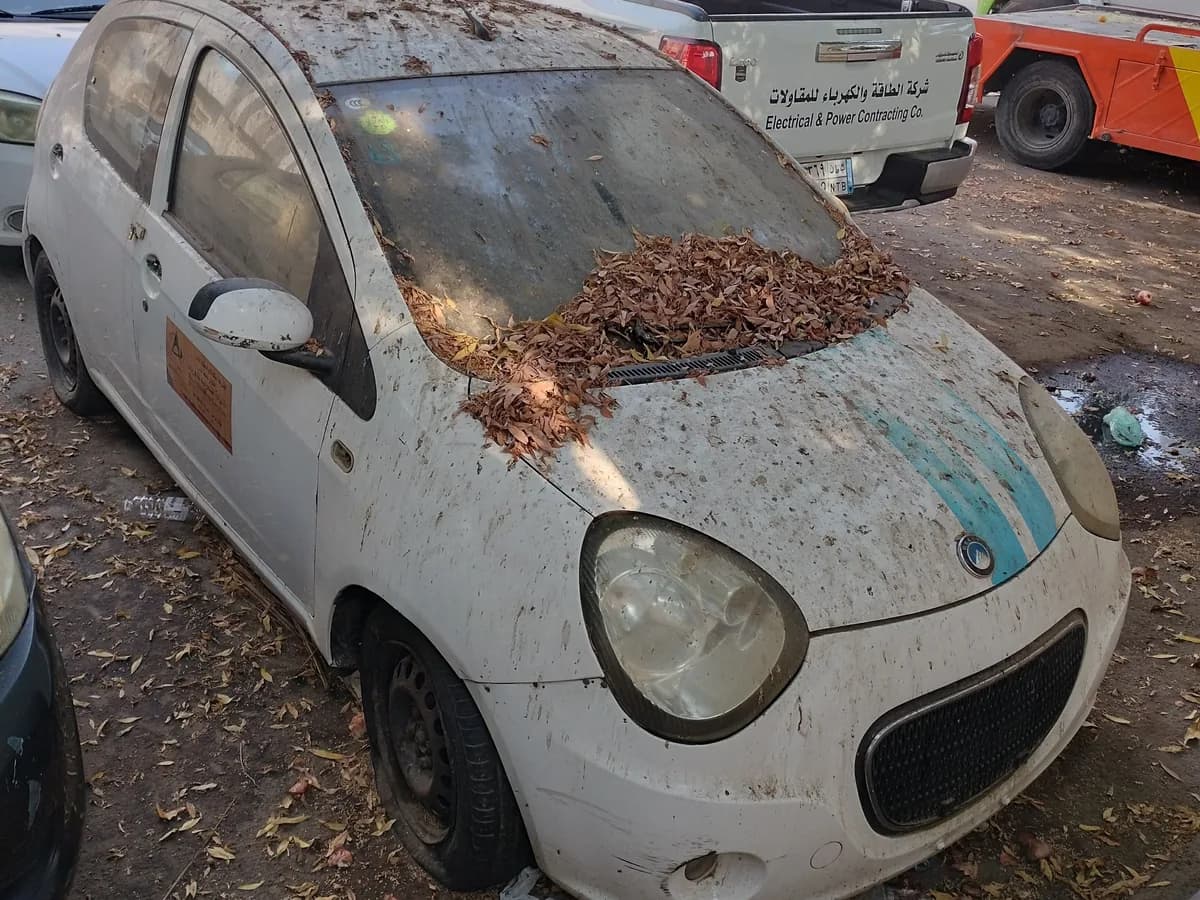
To identify a Geely, first separate the major body styles and design periods. Older Haoqing, HQ, and MK examples are generally small sedans or compact cars associated with the brand’s early automotive years. Emgrand models usually serve as compact or family-oriented sedans, although grille shapes, lamps, dimensions, and trim details changed substantially between generations. (geely.com) SUV identification requires more caution. Boyue and Atlas can refer to the same basic model in different markets, while the Emgrand X7 belongs to a separate SUV line. The Binyue is typically smaller and more visibly sport-oriented. On newer vehicles, slim lighting signatures, large central displays, flush door handles, and simplified grilles may suggest an electrified generation, but none of these details is conclusive on its own. The vehicle plate, model code, wheel design, rear-lamp shape, and production year are stronger clues when separating variants. Export badges should always be checked against the market where the vehicle was sold. (boyue.geely.com)
Important Geely models
Emgrand is one of the most extensively represented names in Geely’s chronology. It covers sedan and compact-car applications and accompanied the brand’s move toward stronger equipment, design, and perceived quality. The Boyue, launched in 2016, is a key reference in Geely’s SUV expansion and has also been sold as the Atlas in selected markets. (dm30webimages.geely.com) Xingyue and Binyue show how Geely broadened its SUV range with more distinctive and sportier designs. MK, GC5, Haoqing, and HQ point back to the company’s earlier passenger cars, while the Emgrand X7 represents another stage in Geely’s SUV development. More recently, the Galaxy E5 reflects the shift toward battery-electric vehicles and connected interiors. These model families are among the important Geely references recorded in the ScanRacer library, although the listed years and variants should not be treated as a complete global production record. Names, specifications, and availability can change by country, so market-specific badges remain essential when comparing generations. (geely.com)
References
- Geely Brand HistoryGeely Auto
- See the World in FullZhejiang Geely Holding Group
- Eric Li New Year Letter 2026Zhejiang Geely Holding Group
- Geely Holding Group Sustainability Report 2020Zhejiang Geely Holding Group
- Geely Holding Group Sustainability Report 2018Zhejiang Geely Holding Group
- Geely Holding Group Corporate Social Responsibility Report 2016Zhejiang Geely Holding Group
- Geely Galaxy E5 Specification TableGeely Auto
- New Geely BoyueGeely Auto