
Daihatsu
Founded in Osaka on March 1, 1907, as Hatsudoki Seizo, Daihatsu is one of Japan’s oldest automobile manufacturers still in operation. The company initially developed internal-combustion engines before producing its first vehicle, the three-wheeled Model HA, in 1930. It adopted the name Daihatsu Motor Co., Ltd. in December 1951 and later built its reputation around compact cars, kei vehicles, and light commercial models. Its history includes very different products, from the three-wheeled Midget and the Hijet to the Mira, Move, Charade, and Copen roadster. A business relationship with Toyota began in 1967 and gradually expanded, leading to Daihatsu becoming Toyota’s wholly owned subsidiary in 2016. Daihatsu’s model history therefore reflects several decades of Japanese automotive development, with an emphasis on compact dimensions, practical packaging, accessible ownership, and everyday mobility.
Models from A to Z
Altis
Applause
Atrai
Ayla
Be-Go
Boon
Cast
Ceria
Charade
Charmant
Citivan
Compagno
Coo
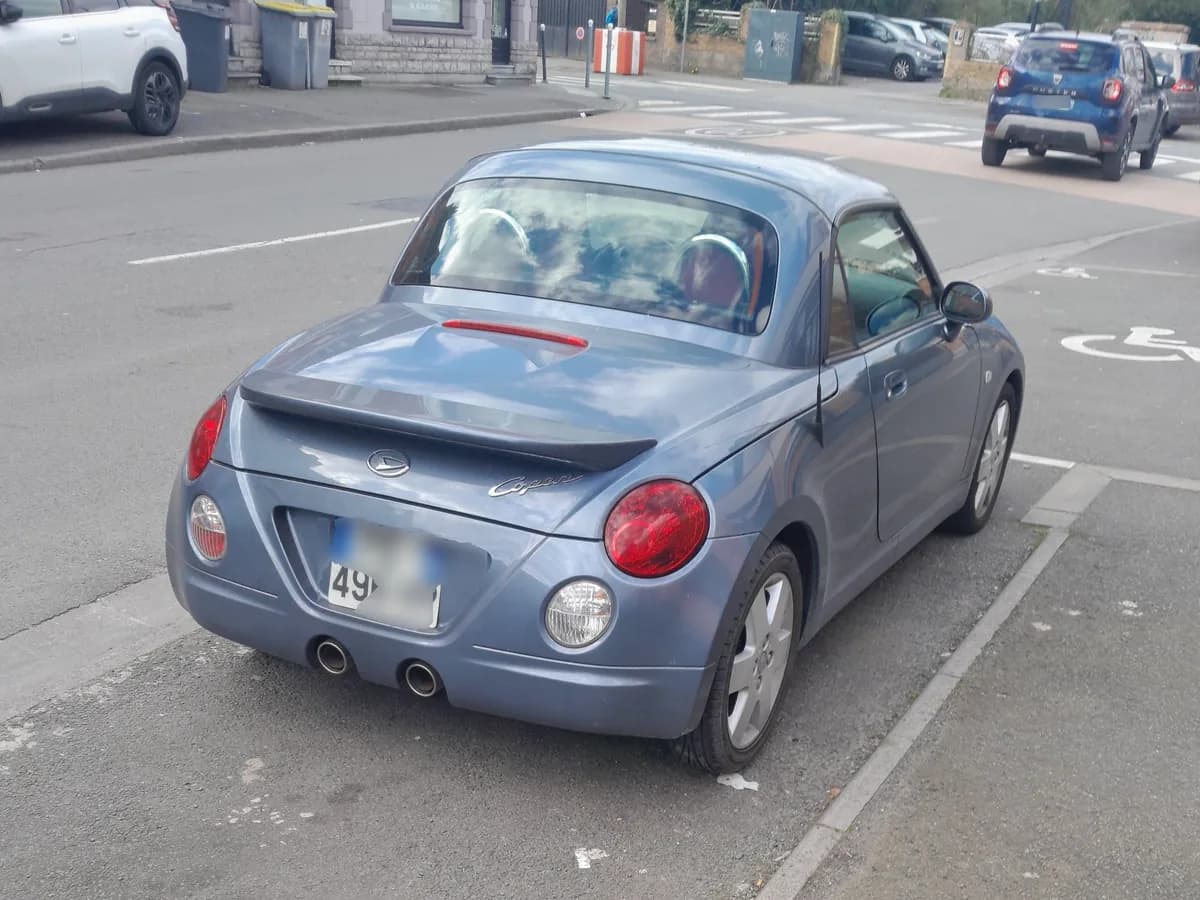
Copen
Cuore
Delta
Domino
Esse
Extol
Feroza
Fourtrak

Gran Max
Gran Move
Hijet
Hijet Caddie
Leeza

Materia
Max
Mebius
Midget

Mira
Mira Cocoa
Mira e S
Mira Tocot
Move
Naked
Opti
Pyzar

Rocky
Sigra
Sirion
Sonica
Sportrak
Storia

Taft
Tanto
Tanto Exe
Taruna

Terios
Terios Kid
Terios Lucia
Thor
Trevis
Wake
Xenia
YRV
Zebra
Daihatsu overview
Daihatsu history
Daihatsu’s history began in 1907 with Hatsudoki Seizo, a company established to manufacture and sell internal-combustion engines. After developing gasoline engines and industrial products, the business entered automobile production with the three-wheeled Model HA, introduced in December 1930. The Model HB Tsubasa followed in 1931, while the four-wheeled Model FA arrived in 1937. After World War II, the company formally adopted the name Daihatsu Motor Co., Ltd. in December 1951. The Midget, launched in 1957, became one of its most recognizable historic products, while the Hijet, introduced in 1960, established a lasting role in compact commercial vehicles. Daihatsu later expanded its passenger-car range with models such as the Compagno, Fellow Max, Charade, and Mira. Cooperation with Toyota began in 1967 and entered a new phase when Toyota became Daihatsu’s sole shareholder in 2016. During the twenty-first century, Daihatsu has continued to focus on mini vehicles and compact cars while also producing enthusiast-oriented models such as the Copen. In 2025, Daihatsu announced that production of the current Copen would end in August 2026, while stating that it was continuing research related to the model’s future.
Daihatsu positioning
Daihatsu has built its identity around expertise in small vehicles. In Japan, this includes kei cars, a category subject to regulatory limits on dimensions and engine displacement, as well as mini commercial vehicles designed for urban deliveries, tradespeople, and local business use. This specialization explains the importance of models such as the Mira, Move, Atrai, and Hijet in the company’s history. Daihatsu has not, however, restricted itself to purely utilitarian or economy-focused products. The Charade represented a small passenger car aimed at broader markets, while the Copen added a sporting and playful dimension to the range. Cooperation with Toyota also strengthened Daihatsu’s role in developing small cars for Japan and selected emerging markets. Taken together, the brand’s positioning is based less on prestige or outright performance than on efficient use of space, manageable dimensions, accessible ownership, and practical adaptation to everyday mobility.
Recognizing a Daihatsu in a photo
Identifying a Daihatsu starts with its proportions and original market. Japanese kei cars are typically very compact, relatively tall for their length, and powered by small-displacement engines. The Mira is recognizable as a small hatchback, while the Move uses the taller profile of a mini MPV. The Atrai and Hijet have more obviously commercial shapes, often with a cab-forward layout and a practical rear load area. The Copen stands out immediately as a two-seat roadster with an electrically retractable hardtop. The Charade is lower and more conventional in appearance, reflecting its role as a small car for markets beyond Japan’s kei segment. Identification should also take account of the model name, generation, and country of sale. A Daihatsu-based vehicle may have carried a different name overseas, and some related products were sold through Toyota or other partner brands. Badges, body dimensions, roof design, lamps, and chassis codes can help distinguish closely related versions.
Important Daihatsu models
The Mira is one of the key reference points in Daihatsu’s modern history. Introduced in 1980, it belongs to the small-car category and went through many updates, including 660cc versions designed for Japan’s kei regulations. The Move, launched in 1995, helped establish the tall, practical profile that became common among kei cars. The Copen occupies a different position: introduced in 2002, this small sports convertible combined a motorized hardtop with an emphasis on driving enjoyment and personal expression. The Charade, launched in 1977, represents Daihatsu’s effort to compete in small cars aimed at broader international markets and received Japan’s Car of the Year award for 1977. The Atrai continues the company’s tradition of compact practical vehicles, while the Boon represents a more conventional small passenger car. The Cast, Leeza, Cuore, and Gran Max add further variety, illustrating a product history that spans urban transportation, family use, light commercial work, and recreational driving.
References
- Daihatsu History: Origins and the beginning of automobile productionDaihatsu Motor Co., Ltd.
- Main Events: From 1907Daihatsu Motor Co., Ltd.
- Main Products: From 1907Daihatsu Motor Co., Ltd.
- Main Products: From 1975 and From 1985Daihatsu Motor Co., Ltd.
- COPEN Mini Convertible Sports Vehicle Celebrates its 20th AnniversaryDaihatsu Motor Co., Ltd.
- Toyota and Daihatsu to Strengthen Small Car Operations through Unified Global StrategyToyota Motor Corporation
- Production of Current Model of Daihatsu COPEN to End in August 2026Daihatsu Motor Co., Ltd.
- https://www.daihatsu.com/company/history/daihatsu.com