Citroën Méhari 1968
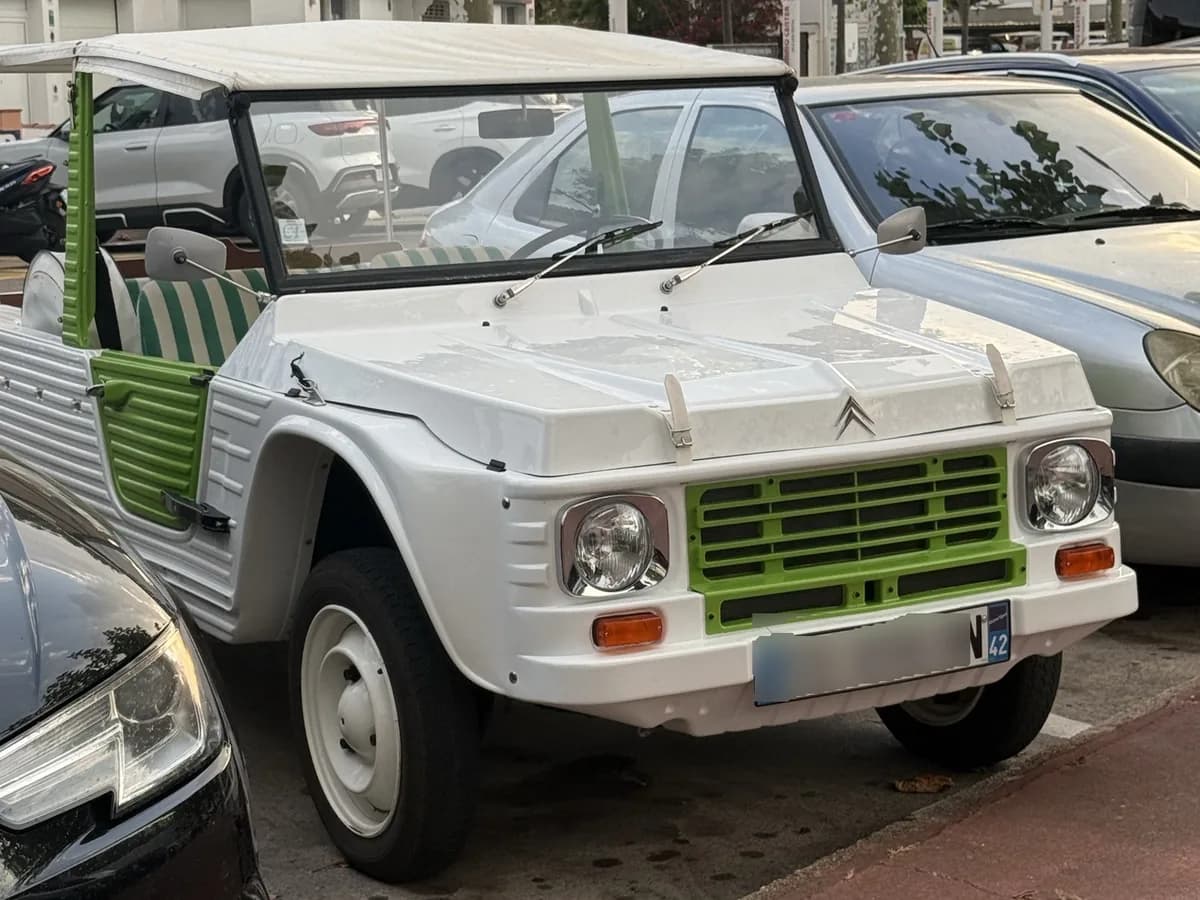
Presented on the Deauville golf course on 16 May 1968, the Citroën Méhari introduced an unusually simple and versatile concept for its time. Its Dyane 6-based chassis was fitted with an open ABS plastic body designed to withstand minor impacts and resist corrosion. Initially marketed as the Dyane 6 Méhari, it combined straightforward mechanical components with a flexible interior and a dual role as both a leisure vehicle and a light utility model. The 1968 Base version belongs to the earliest production cars, offered with a four-seat body and a folding rear arrangement that could create a flat loading area. Bright colours, minimal trim and an adaptable body gave the Méhari a distinctive place in Citroën’s range from its first year.
History
The Méhari project is associated with Roland de La Poype and the Société d’Études et d’Applications des Plastiques, which developed a plastic body concept for Citroën. The vehicle retained the platform and mechanical principles of the A-Series family while adopting a body radically different from the 2 CV and Dyane saloons. Early pre-production cars were assembled before the official press presentation held at Deauville on 16 May 1968. Production of the first batch was assigned to ENAC in Bezons as Citroën prepared the model for wider industrial production. At launch, the vehicle was called the Dyane 6 Méhari, reflecting its technical relationship with the Dyane 6. The body was made from moulded, colour-through thermoplastic, reducing corrosion concerns and making the vehicle easy to wash. A folding rear seat broadened its usefulness, from everyday transport to outdoor activities. The Méhari remained in production for almost two decades and received several mechanical updates, special versions and market-specific derivatives.
Latest scans
Photos added by the community for this page.
Anecdotes
The name “Méhari” refers to a fast dromedary traditionally used for transport and travel in North African desert regions. The choice reflected the vehicle’s intended combination of endurance, utility and freedom of movement. The Deauville presentation took place on 16 May 1968, during a particularly turbulent period in France. Its colour-through plastic body could be washed with a jet of water, a practical feature that suited the seaside environments and outdoor activities associated with the car. This unusual combination of utility and leisure helped make the Méhari immediately recognisable.
Production
Méhari production began in 1968 after the official Deauville presentation and an initial pre-production run that included cars prepared for the press. The first production vehicles were built by ENAC in Bezons before manufacturing was distributed among several plants according to period and market requirements. Citroën states that 144,953 Méharis were produced between 1968 and 1987, including 1,213 four-wheel-drive examples. Most later production is associated with Citroën’s Forest plant in Belgium. The published total covers the model’s entire career and does not identify how many cars were built specifically as 1968 Base versions. Available sources therefore support the overall production figure but not a precise breakdown by model year, trim level or colour.
Press reception
The Méhari was presented to the motoring press at Deauville on 16 May 1968, in a setting chosen to emphasise its open-air character. Citroën’s later historical material describes the model as receiving enough public interest to remain in production for many years and to become an unexpectedly successful product. That conclusion should be treated with some caution: the sources consulted do not provide a complete survey of contemporary road tests or a detailed comparison with rival vehicles published in 1968. The documented reception is instead reflected in the model’s long production run, its use by private owners and professionals, and its later appearances in French military service and cinema.
Evolution
Variants
References
- CITROËN MEHARI: 55 YEARS AND STILL INSPIRINGCitroën / Stellantis Media
Supports the 16 May 1968 Deauville presentation, Roland de La Poype, ABS body, Dyane 6 platform, 28–32 hp range, production total and four-wheel-drive production figure.
- Brochure Dyane 6 Mehari 1968Citroën Origins
Provides access to the original 1968 Citroën brochure and supports period identification and launch-era equipment research.
- Citroën Centenary History: MéhariCitroën
Supports the model’s derivation from the Dyane and 2 CV, ABS construction, 144,953-unit production total, 525 kg unladen weight and 1987 end of marketing.
- Histoire de la MéhariMéhari La Baule
Supports details about the 1968 pre-production cars, the Deauville press presentation, launch colours, four-seat layout, folding rear seat and early production arrangements.
- Citroën Méhari 55 Yaşında!Citroën Türkiye
Provides an official Citroën summary of the model’s 1968–1987 production period, 144,953-unit total, ABS body, Dyane 6 basis and historical uses.
- Collection in action: Citroën MéhariFranschhoek Motor Museum
Supports the association of the Méhari concept with SEAP and its launch in May 1968.
- https://cqsclassics.com/en/restoration-service/service/citroen-mehari/history/cqsclassics.com
Source found by OpenAI web search for this vehicle page.
- https://www.citroen.ro/despre-citroen/news/news-citroen-mehari-dupa-55-ani.htmlcitroen.ro
Source found by OpenAI web search for this vehicle page.