Citroën 2CV Sedan 1949
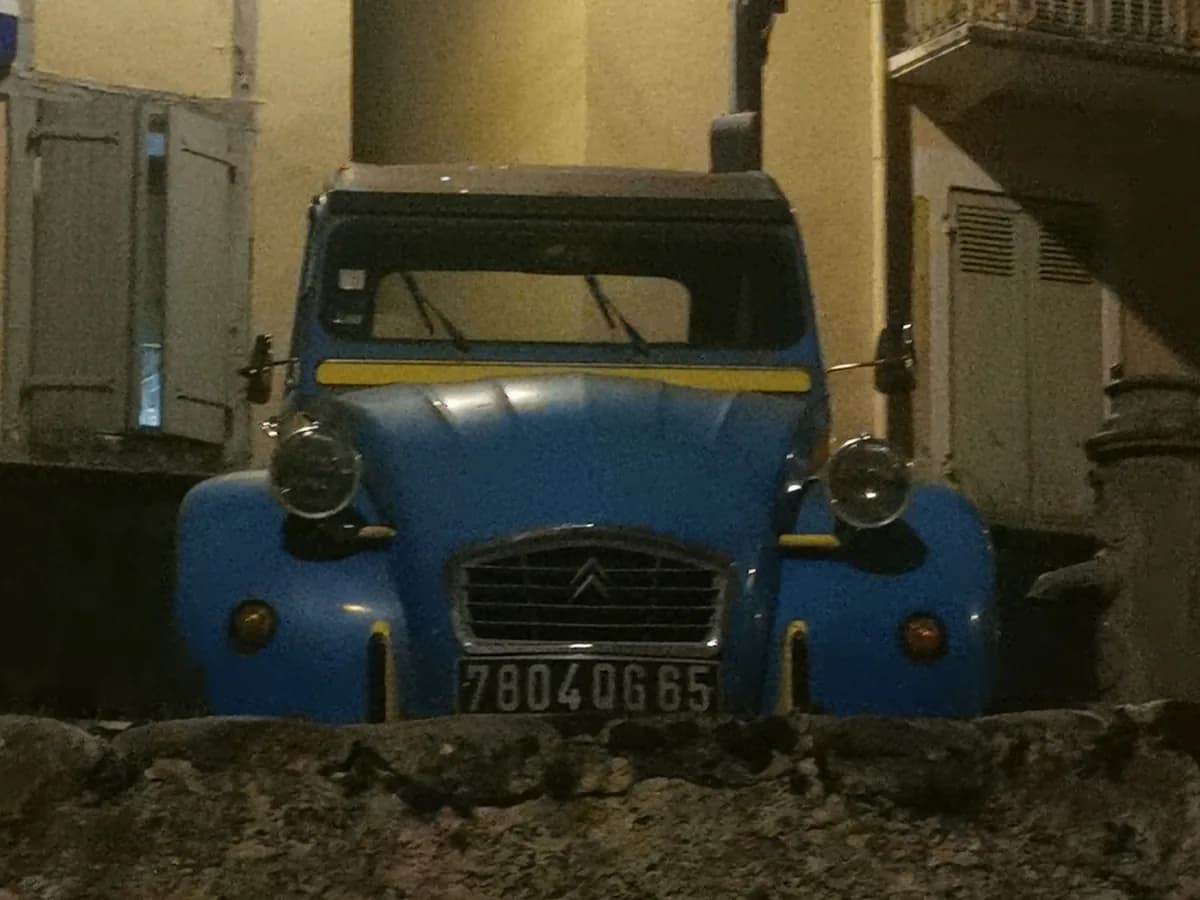
The 1949 Citroën 2CV Sedan was the first production version of the small car unveiled at the Paris Motor Show on 7 October 1948. Series production began in July 1949, introducing an unusually distinctive formula for an affordable car: an air-cooled flat-twin engine, front-wheel drive, long-travel independent suspension and a lightweight four-door body. The Type A used a 375 cc engine rated at 9 bhp and paired it with a four-speed manual gearbox. Designed to provide simple, economical mobility in post-war France, the 2CV focused on accessibility, ease of maintenance and ride comfort over rough roads rather than outright performance. (media.stellantis.com)
History
The 2CV project emerged at Citroën under the name TPV, meaning “Very Small Car,” in response to the needs of rural France and the post-war economy. The intention was to create a simple, versatile vehicle able to carry people and modest loads over poor roads while remaining economical to operate. Prototypes were developed before the Second World War, and the programme resumed after the conflict. The final car was unveiled at the Paris Motor Show in October 1948 before entering production in July 1949. The first production version was the 2CV Type A, also known as the Berline A. It combined a 375 cc flat-twin engine with front-wheel drive, an interconnected independent suspension system and a four-door body. Its lightweight and deliberately simple construction helped control costs and made everyday use easier. The 2CV therefore introduced a different idea of the affordable car, prioritising practical mobility, durability and comfort over prestige or speed. (lanemotormuseum.org)
Latest scans
Photos added by the community for this page.
Anecdotes
The TPV brief is often summarised through the idea that the car should carry a basket of eggs across a freshly ploughed field without breaking them. The story reflects the priority given to suspension travel and compliance. It is repeated by museums and publications covering the 2CV’s history, but it should be understood as a design objective rather than an official test specification for the production car. (lanemotormuseum.org)
Production
2CV production began in July 1949, following the car’s public unveiling at the Paris Motor Show in October 1948. The earliest cars were Type A models powered by the 375 cc engine. Available sources establish the launch date and the model’s exceptionally long production career, but they do not support a precise production total for the 1949 calendar year or for the Sedan body alone. For the 2CV family as a whole, Citroën states that more than five million examples of all variants were built before production ended in 1990. (media.stellantis.com)
Press reception
The 2CV made a strong impression on observers when it was unveiled. Its modest power, sparse equipment and unusual appearance differed sharply from conventional expectations for a new car, and parts of the motoring press responded with scepticism or humour. That critical reaction did not prevent commercial success. Citroën soon faced substantial demand and lengthy waiting periods, while the car gradually established its appeal through affordability, simplicity and suitability for rural and family transport. Its success demonstrated that practical usefulness could matter more to many buyers than speed, refinement or status. (hagerty.com)
Evolution
Variants
References
- Historic, Iconic and Popular: The 2 CV Celebrates Its 75th BirthdayCitroën / Stellantis Media
Supports the 1948 Paris unveiling, July 1949 production start, 375 cc engine, 9 bhp output and 50 km/h top speed.
- Citroën Cars & Automotive History Since 1919Citroën UK
Supports the 1948-1953 2CV period and total production exceeding five million vehicles of all variants by 1990.
- C’est la Vie en 2CVLane Motor Museum
Supports the TPV project context, the 1948 unveiling, production from 1949 and the design brief involving rural transport and eggs.
- 2CV Production Models 1949 Berline ACitroënët
Supports the 1949 Berline A identification, 375 cc flat-twin engine, 9 bhp output, front-wheel drive and four-speed gearbox.
- Citroën A SeriesCitroënët
Supports the Type A body and mechanical specifications, its 1949-1959 production period and later A-series evolution.
- 1949 Citroen 2CV BaseHagerty
Supports early 2CV characteristics, the 375 cc engine, early body details and the later transition to larger engines.
- https://citroen2cv.fr/2cv_citroen/mecanique.htmlcitroen2cv.fr
Source found by OpenAI web search for this vehicle page.
- https://www.lanemotormuseum.org/collection/cars/item/citroen-naked-2cv/lanemotormuseum.org
Source found by OpenAI web search for this vehicle page.